


Today I would like to write about all crypto terms every beginner should know as clearly as possible. Learn fundamentals of topics including blockchain, Bitcoin, wallets, private keys and others.
These basics will give you a solid understanding of cryptocurrency and how to navigate the crypto world before you start any investment or trade.
Key Poinst & Crypto Terms Every Beginner Should Understand
Blockchain – Distributed digital ledger storing transactions securely across multiple computers without central authority control.
Cryptocurrency – Digital currency secured by cryptography, operating independently of banks and traditional financial systems globally.
Bitcoin – First decentralized cryptocurrency created by Satoshi Nakamoto, enabling peer-to-peer digital payments worldwide securely.
Altcoin – Any cryptocurrency other than Bitcoin, including Ethereum, Solana, and thousands of alternative blockchain projects.
Wallet – Digital tool or device storing private keys, allowing users to send, receive cryptocurrency safely.
Private Key – Secret cryptographic code granting access and control over cryptocurrency funds stored in wallet.
Public Key – Cryptographic address shared publicly to receive cryptocurrency transactions securely without exposing private credentials.
Mining – Process of validating blockchain transactions using computational power, rewarding miners with new cryptocurrency coins.
Exchange – Online platform where users buy, sell, or trade cryptocurrencies using fiat or digital assets.
Token – Digital asset built on existing blockchain, representing utility, ownership, or project-specific value rights.
DeFi – Decentralized finance ecosystem offering financial services like lending and trading without traditional intermediaries or banks.
NFT – Non-fungible token representing unique digital ownership of art, collectibles, or virtual assets on blockchain.
12 Crypto Terms Every Beginner Should Understand
1. Blockchain
Blockchain is a public digital ledger of transactions that are replicated across multiple computers in a secure, transparent, or immutable manner. It consists of many transactions written in blocks, and when it is written into the existing chain, it can not be changed without changing all previous blocks.

Thus eliminating the reliance on any centralized authority, while increasing security confidence in systems worldwide with these technologies. More than anchor for currencies like Bitcoin, blockchains deploy solutions that can strengthen the workings of finance, supply chains, health care systems and some digital identity system all over the world.
| Feature | Explanation |
|---|---|
| Decentralized System | Operates without a central authority controlling the network. |
| Transparency | All transactions are visible and verifiable by participants. |
| Immutability | Once recorded, data cannot be changed or deleted. |
| Security | Uses cryptography to protect data from hacking or tampering. |
2. Cryptocurrency
Cryptocurrency is a type of digital currency or virtual asset that relies on cryptography to secure transactions and exists outside the control of a central authority. Based runs on blockchain technology that makes the project decentralized, transparent and immune to manipulation.

They can be used as a payment method, an investment asset and they allow for low-fee money transfer of value across borders. Two examples of its use: Bitcoin and Ethereum. Their worth is very unstable through request, market patterns and the advancements in the blockchain biological system.
| Feature | Explanation |
|---|---|
| Digital Nature | Exists only in electronic form, no physical coins. |
| Decentralized | Not controlled by banks or government authorities. |
| Secure Transactions | Uses cryptography for safe and verified transfers. |
| Global Usage | Can be sent and received anywhere in the world instantly. |
3. Bitcoin
Bitcoin is a decentralized peer-to-peer digital currency, first released in 2009 following the word of Satoshi Nakamoto [Link: bitcoin.org/en/about]. In other words, it enables transactions directly between users without middlemen such as banks.

Bitcoin runs on a public blockchain that is fully decentralized and transparent. The limited supply — only 21 million coins. Bitcoin is used globally as a value store, investment vehicle or digital money.
| Feature | Explanation |
|---|---|
| Limited Supply | Only 21 million Bitcoins will ever exist. |
| Peer-to-Peer System | Allows direct transactions without intermediaries. |
| High Security | Protected by strong blockchain encryption technology. |
| Store of Value | Often used as digital gold for long-term investment. |
4. Altcoin
Altcoins are all cryptocurrencies beside, Bitcoin. The term is short for “alternative coins” which encompasses a wide range of digital currencies, including Ethereum, Solana, Ripple and Cardano.
These are often created to provide an enhancement or alternative functionality (faster transactions, smart contracts, lower transaction fees) relative to Bitcoin.
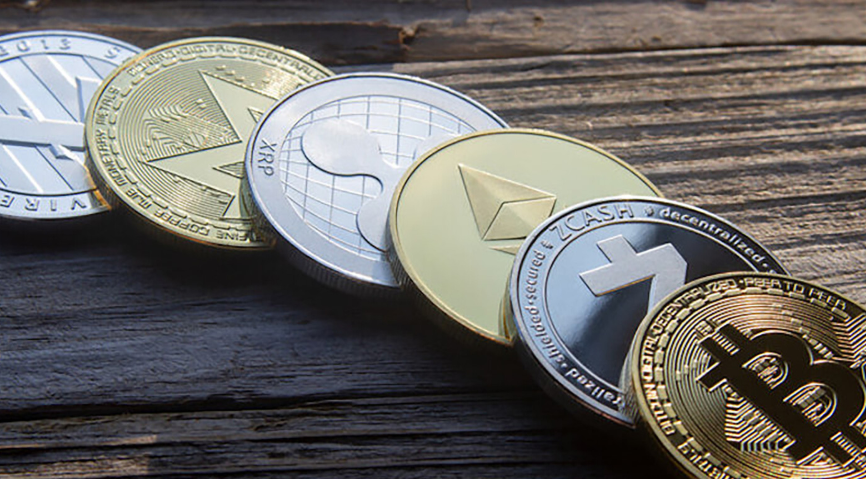
Others are specifically oriented around certain use cases, such as gaming, finance or NFTs. They are key in pushing the blockchain use case beyond Bitcoin.
| Feature | Explanation |
|---|---|
| Bitcoin Alternatives | Any cryptocurrency other than Bitcoin. |
| Diverse Functions | Offers smart contracts, DeFi, gaming, and more use cases. |
| Innovation Driven | Improves blockchain speed, scalability, and efficiency. |
| High Variety | Includes thousands of different crypto projects worldwide. |
5. Wallet
A cryptocurrency wallet is a digital program or device that allows you to store, send and receive crypto assets. Wallets do not store coins, but actually keeps the private and public keys, which will provide access to funds on a blockchain. Wallets can be hard, software, portable, or web-based wallets.

They offer user trust of controlling funds without needing banks. Security is a high priority, as loss of wallet access or private keys often leads to irretrievable funds.
| Feature | Explanation |
|---|---|
| Key Storage | Stores private and public keys securely. |
| Transaction Access | Allows sending and receiving cryptocurrencies easily. |
| Multiple Types | Available as hardware, software, mobile, and web wallets. |
| User Control | Gives full control of funds without third parties. |
6. Private Key
Private key: A private key is a secret code used to access a crypto wallet as well as the funds within. It behaves like a password which you must never have to share with anyone. If we hold the private key, we control the assets that are related to it.
As you cannot recover the crypto if it gets lost. Private keys are randomly generated and stored safely in wallets. They are needed to sign transactions and show the ownership of digital assets.
| Feature | Explanation |
|---|---|
| Secret Code | Must be kept confidential at all times. |
| Full Control | Gives complete access to wallet funds. |
| Irrecoverable Loss | Lost key means permanent loss of crypto. |
| Transaction Signing | Used to authorize blockchain transactions securely. |
7. Public Key
Public key is a cryptographic code that the wallet gets from the private key and creates it into a wallet address. Has to be exposed safely for receiving cryptocurrency with others openly
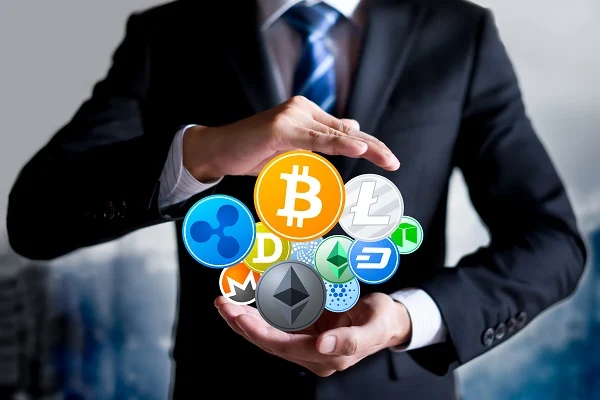
The public key may allow people to deposit money into your wallet, but it will not allow access to your assets. It collaborates with the private key to facilitate secure transactions on the blockchain. This is one of the biggest components of asymmetric encryption technology in crypto systems.
| Feature | Explanation |
|---|---|
| Shareable Address | Can be safely shared with others. |
| Receive Funds | Used to accept cryptocurrency payments. |
| Derived from Private Key | Generated mathematically from private key. |
| Security Layer | Does not expose wallet access or control. |
8. Mining
Mining uses powerful computers to validate and add new transactions, in a sequence of records called a blockchain. Miners compete to solve complex mathematical problems in order to anchor transactions to the blockchain and maintain security for it.

In exchange, they receive new cryptocurrency coins and transaction fees for each completed block. It consumes a huge amount of computing power and energy while mining. It is important for keeping proof-of-work blockchains like Bitcoin decentralized and secure. Automatic mining difficulty adjustment with respect to network activity
| Feature | Explanation |
|---|---|
| Transaction Validation | Confirms and records blockchain transactions. |
| Reward System | Miners earn crypto for successful mining. |
| High Computation | Requires powerful hardware and energy usage. |
| Network Security | Helps protect and decentralize the blockchain. |
9. Exchange
A cryptocurrency exchange: Cryptocurrency exchanges are platforms that allow users to trade various cryptocurrencies. It serves as a marketplace, bringing together buyers and sellers.
Centralized Exchange: Minted on exchanges like Binance and Coinbase (Some of crypto-winter) Decentralized wallets: Minted at Uniswap. They allow for trading of crypto-to-crypto and fiat-to-crypto pairings.

The exchanges also offer price tracking and portfolio management, as well as trading charts. Cue the ever present trifecta of security/liquidity/fees when selecting an exchange.
| Feature | Explanation |
|---|---|
| Trading Platform | Enables buying and selling of cryptocurrencies. |
| Centralized/Decentralized | Available in both controlled and peer-to-peer forms. |
| Liquidity Access | Provides easy conversion between assets. |
| Trading Tools | Offers charts, analytics, and price tracking features. |
10. Token
A token is a digital asset that is built on top of an existing blockchain, which represents some sort of value, utility, or ownership. Tokens, on the other hand, are not their own blockchain like a coin such as bitcoin is.

As is their basis on platforms such as Ethereum using smart contracts. Tokens may reflect value, services or supplies of a project and can represent assets, utility to access services, governance rights and rewards. They are widely used in various economic functions within the space of decentralized applications, gaming, DeFi platforms and NFT ecosystems.
| Feature | Explanation |
|---|---|
| Blockchain-Based | Built on existing blockchain networks like Ethereum. |
| Smart Contract Use | Created and managed through smart contracts. |
| Multiple Utilities | Represents assets, rewards, or access rights. |
| No Own Blockchain | Operates on another blockchain infrastructure. |
11. DeFi
DeFi, or Decentralized Finance — is a financial system that eliminates middlemen such as banks and generates on the blockchain. It enables users to lend, borrow, trade and earn interest directly via smart contracts. DeFi platforms are open protocol and available for anyone with internet access, working in manner of full transparency.

By providing services like decentralized exchanges, yield farming, and staking. But DeFi also comes with hazards such as smart contracts and market investors need to use it more carefully.
| Feature | Explanation |
|---|---|
| No Intermediaries | Removes banks and financial middlemen. |
| Smart Contracts | Automates financial services securely. |
| Open Access | Anyone with internet can use DeFi platforms. |
| Financial Services | Includes lending, borrowing, staking, and trading. |
12. NFT
NFT — Non-Fungible Token : A token that is unique and represents ownership of a particular item on the blockchain. Each NFT from its smart contract is unique, so they are not interchangeable like cryptocurrencies.

Most popularly used for these are digital art, music, collectibles, gaming items and virtual property. NFTs use blockchain to validate ownership and identity. NFTs have gained traction among creative and entertainment industries for enabling artists and creators to monetize digital work directly.
| Feature | Explanation |
|---|---|
| Unique Asset | Each NFT is one-of-a-kind and non-replaceable. |
| Ownership Proof | Verifies digital ownership on blockchain. |
| Digital Collectibles | Used in art, gaming, and media industries. |
| Transferable | Can be bought, sold, or traded easily online. |
Conclusion
In conclusion, knowing these 12 must-know crypto terms for beginners will help you to build the solid foundation of cryptocurrency. Terms like blockchain, Bitcoin, wallets, DeFi and NFTs guide you through the crypto jungle confidently.
Having this in the back of your mind will allow you to avoid confusion and gain insights on how to get started safely in trading, investing & digital assets.
FAQ
What is blockchain?
Blockchain is a distributed digital ledger that records transactions across many computers securely and transparently.
What is Bitcoin?
Bitcoin is the first cryptocurrency, created in 2009, used for peer-to-peer digital payments without banks.
What is a crypto wallet?
A crypto wallet is a digital tool that stores private and public keys to manage cryptocurrencies safely.
What is a public key?
A public key is an address used to receive cryptocurrency safely without exposing wallet security.
