


In this article, I would cover the best Smart-Account SDKs for creating invisible crypto apps and make Web3 development easier. This allows devs to create easy-to-use experience with features like one-click onboarding, gasless transactions, programmable wallets etc.
With growing adoption of blockchain, selecting an appropriate SDK becomes crucial to developing fast, effective and user-friendly decentralized applications without the technical complications appearing in front-end consumer.
Key Points & Top “Smart-Account” SDKs for Building Invisible Crypto Apps
| SDK | Explanation (15 words) |
|---|---|
| Openfort | Provides developer-friendly SDK for embedded wallets, enabling gasless transactions, social logins, and seamless onboarding experiences. |
| ZeroDev | Modular smart account infrastructure enabling gas abstraction, session keys, batching, and cross-chain interactions efficiently. |
| Alchemy | Enterprise-grade smart wallet SDK offering gasless transactions, onboarding tools, batching, and customizable security policies. |
| Particle Network | Provides universal accounts with social login, cross-chain identity, and seamless Web3 onboarding infrastructure tools. |
| Privy | Embedded wallet SDK enabling smart accounts with gas sponsorship, batching, and programmable transaction capabilities easily. |
| Magic (Magic Labs) | Authentication-focused wallet SDK enabling passwordless login, embedded wallets, and integration with smart account infrastructure. |
| Coinbase Wallet (Embedded) | Embedded wallet SDK supporting smart accounts with batching, gas spo |
| Para | Developer toolkit for embedded wallets focusing on user onboarding, key management, and seamless crypto interactions. |
| Circle (Embedded Wallets) | Enterprise wallet infrastructure enabling embedded custody, payments, and programmable wallet experiences for Web3 applications globally. |
| Fireblocks | Institutional-grade custody and wallet infrastructure providing secure MPC wallets, automation, and scalable digital asset operations. |
Top 10 “Smart-Account” SDKs for Building Invisible Crypto Apps
1. Openfort
Openfort is a full stack wallet infra platform for building invisible crypto apps on smart accounts. It packs authentication, embedded wallets, account abstraction and gas sponsorship in one SDK without the need for multiple vendors.
It also enables seamless onboarding via email, social login, or passkeys and automatic provisioning of smart accounts for users. It is compatible with ERC-4337 and EIP-7702 standards, allowing for functionality such as batched transactions and programmable permissions.
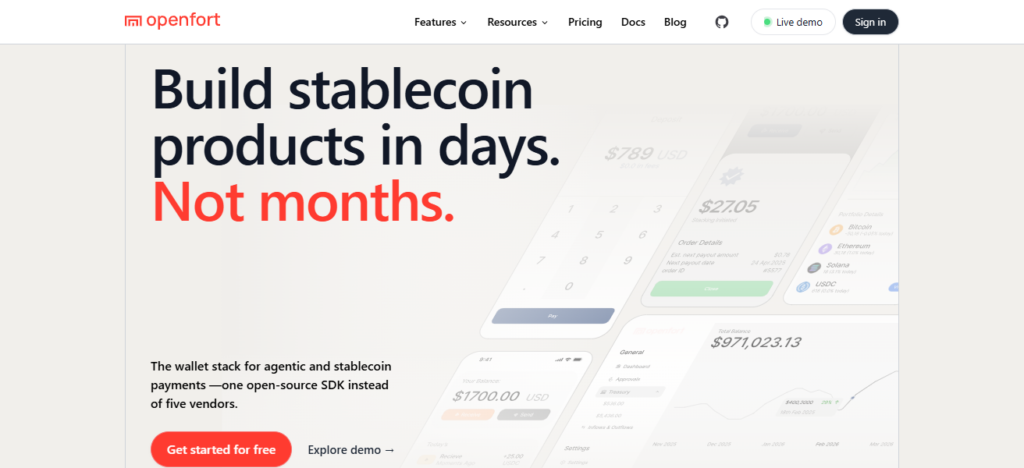
Openfort includes backend wallet automation for AI agents and server-side actions, the perfect combo with scalable Web3 apps. This single unified approach greatly reduces complexity and significantly speeds up dev.
| Feature | Explanation |
|---|---|
| All-in-One Infrastructure | Combines authentication, embedded wallets, and account abstraction into one unified SDK platform |
| Gasless Transactions | Integrated paymaster enables users to perform transactions without paying gas fees directly |
| Seamless Onboarding | Supports email, social login, and passkeys for frictionless user account creation |
| Backend Automation | Enables server-side wallets and automated transaction execution for scalable applications |
2. ZeroDev
ZeroDev is known for being an industry-leading smart account SDK that allows devs to offer gasless and seamless Web3 experiences. ERC-4337 and EIP-7702 are supported by it, which provides key abstraction, gas abstraction as well as transaction batching and chain abstraction.
Users can log in via social accounts or passkeys, making seed phrases unnecessary. Session keys can be utilized by developers to automate workflows, bundling multiple transactions in one transaction.
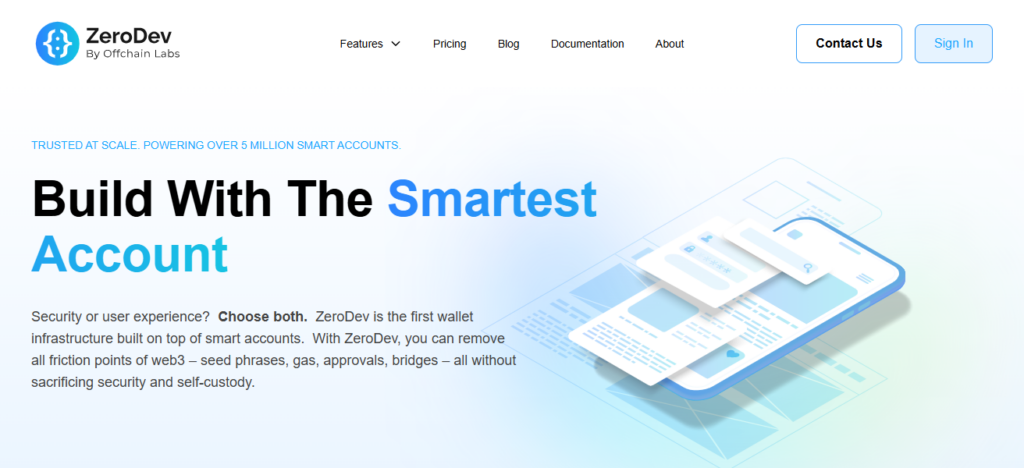
ZeroDev is the underlying technology behind millions of smart accounts across chains and offers a modular Kernel architecture that has landed it widespread adoption. However, it does require some integrations with other services for authentication and embedded wallets in production apps.
| Feature | Explanation |
|---|---|
| Account Abstraction | Native support for ERC-4337 and EIP-7702 smart account standards |
| Modular Architecture | Kernel design allows flexible customization and developer control over smart accounts |
| Session Keys | Enables automated and permissioned transactions without repeated user approvals |
| Transaction Efficiency | Supports batching and gas abstraction for optimized blockchain interactions |
3. Alchemy
Alchemy Account Kit: A powerful smart account SDK specifically designed for developers using Alchemy infrastructure. It features LightAccount — a minimalist implementation of ERC-4337 smart account, and bundled integrated bundler and paymaster services for gas abstraction.
Specifically, this SDK allows developers to create apps with functionality such as gasless transactions, batching and secure account management. It’s highly reliable and performant due to how tightly it’s integrated with Alchemy’s RPC services.
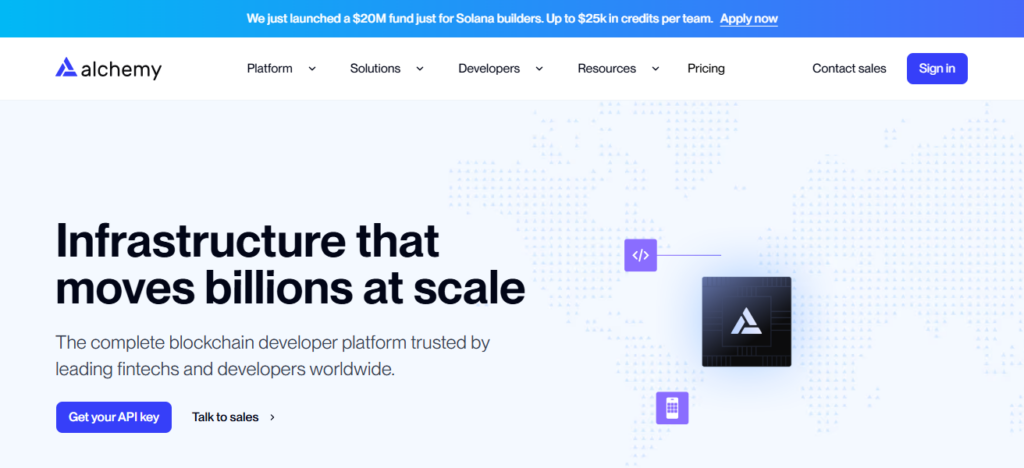
It is simple, provides great enterprise support, but it makes less sense as compared to the more modular architecture of alternative solutions like ZeroDev. This is optimal for teams looking to implement the Alchemy framework with a lightweight development experience.
| Feature | Explanation |
|---|---|
| LightAccount | Simplified smart account implementation for faster deployment and integration |
| Gas Management | Built-in bundler and paymaster for efficient gasless transaction execution |
| Reliable Infrastructure | High-performance RPC services ensure scalability and stability across networks |
| Developer Ecosystem | Tight integration with Alchemy tools simplifies development workflows |
4. Particle Network
Particle Network provides a universal account framework that unifies smart accounts with cross-chain identity and social login solutions. Hence, its SDK aimed at building a seamless Web3 with single identity across different blockchains.
With account abstraction, developers can implement seamless onboarding with familiar authentication methods more efficiently and use gasless and batched transactions.
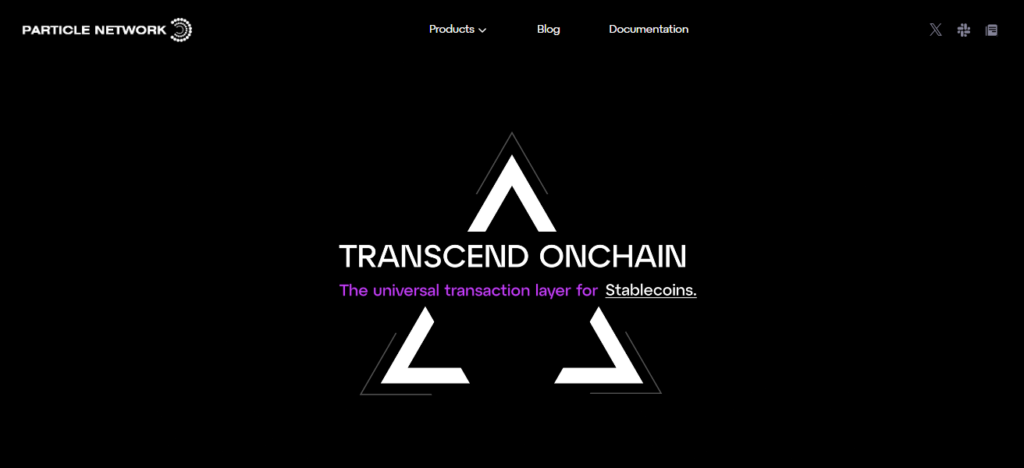
Particle Network focuses on interoperability, enabling assets and identities to work seamlessly across chains without manual bridging. This makes it especially beneficial for multi-chain ecosystems and gaming platforms; Its modular architecture allows for scalability alongside a user-friendly experience that feels similar to traditional Web2 apps.
| Feature | Explanation |
|---|---|
| Universal Accounts | Single identity across multiple blockchains for unified user experience |
| Social Login | Enables onboarding via familiar Web2 authentication methods |
| Cross-Chain Support | Allows seamless asset and identity usage across different blockchain networks |
| Gaming Focus | Optimized for gaming and multi-chain applications requiring smooth UX |
5. Privy
Privy: An embedded wallet and smart account SDK that helps Web3 apps onboard users, with a tap setting up wallets across many chains. It offers developers the ability to build ERC-4337 smart wallets with only a small amount of code while managing key management and signer infrastructure on its end.
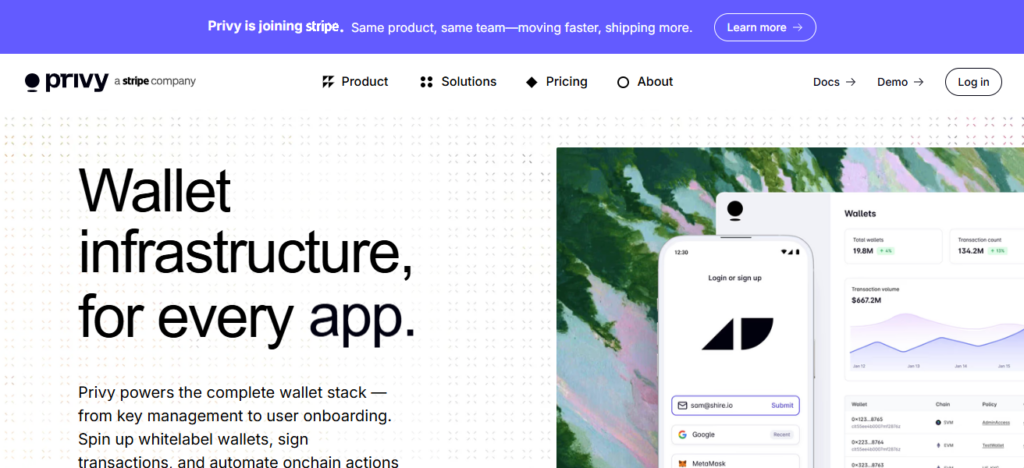
Privy supports gas sponsorship, transaction batching and permission delegation features that deliver frictionless user experiences. A developer can implement authentication method like email, social login making on-boarding a no-brainer.
Privy is also compatible with different smart account providers, such as ZeroDev and Alchemy. Its emphasis on ease of use and abstraction makes it the go-to for consumer-facing dapps.
| Feature | Explanation |
|---|---|
| Embedded Wallets | Simplifies wallet creation directly within applications |
| Gas Sponsorship | Enables gasless transactions for improved user experience |
| Flexible Authentication | Supports email and social login onboarding methods |
| Multi-Provider Support | Compatible with different smart account infrastructures like ZeroDev and Alchemy |
6. Magic (Magic Labs)
Magic (also known as Magic Labs) is an auth and embedded wallet SDK focused on seamless Web3 onboarding integrated with smart account infrastructure.
It allows you to log in without a password using your email address, social accounts, or biometrics while removing the need for your user do private key management.
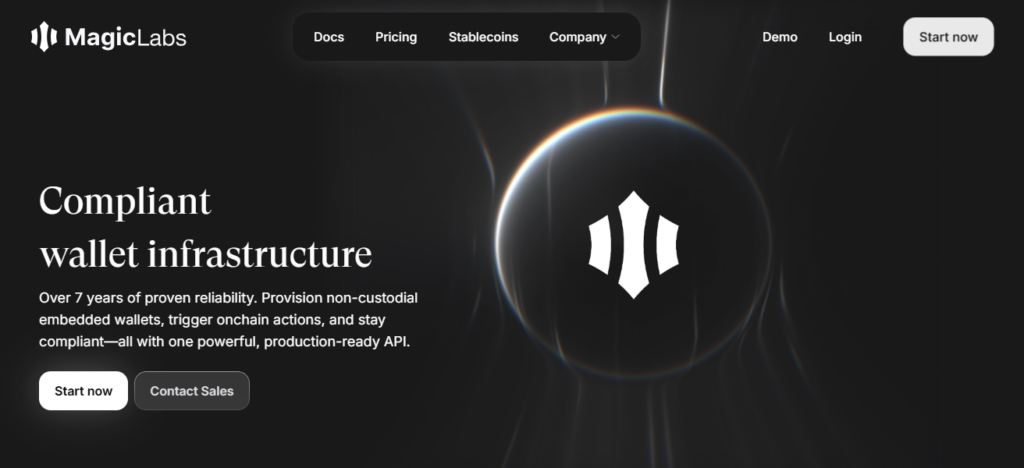
Though Magic is not native smart account provider, it fills the role of an identity bridge above account abstraction systems. Developers can integrate it with smart account SDKs such as ZeroDev or Alchemy to enable gasless transactions and advance wallet capabilities. Magic is heavily leveraged in consumer applications where the user experience and ease of use are key enabling factors for adoption.
| Feature | Explanation |
|---|---|
| Passwordless Login | Allows login via email, biometrics, or social accounts securely |
| Embedded Wallets | Removes need for manual private key management by users |
| Easy Integration | Works with smart account SDKs for advanced blockchain functionality |
| User Experience Focus | Designed to make Web3 apps feel like traditional Web2 platforms |
7.Coinbase Wallet (Embedded)
The Coinbase Embedded Wallet SDK allows developers to integrate smart accounts right into their app with very little friction. It supports ERC-4337 smart accounts, which enables it to offer services such as gas sponsorship, transaction batching, and multi-chain compatibility.
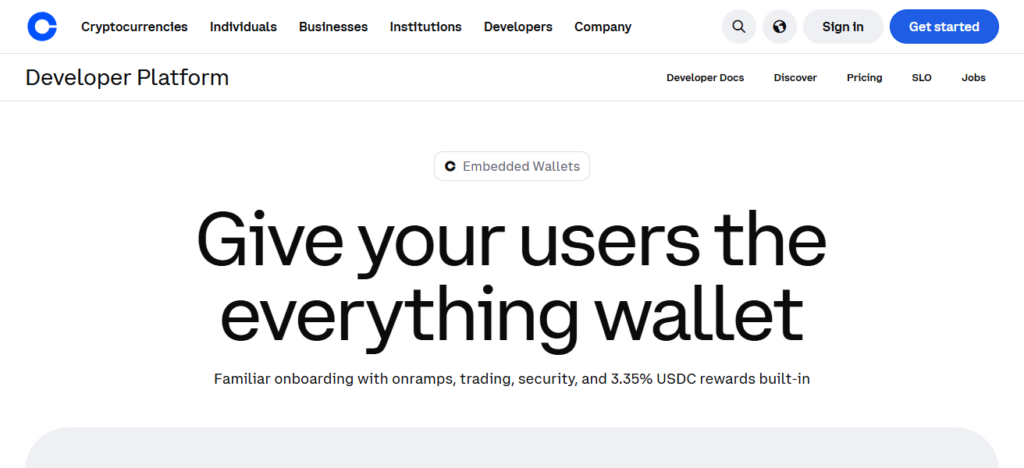
Smart accounts can be created by operators automatically at the time of onboarding, improving the experience for users. The SDK establishes an interface to bridge to Coinbase’s infrastructure, giving secure account management and scalability across several EVM networks.
It also has paymaster support for gasless transactions, which aids developers in building better UX. Such a solution is particularly well-suited for developers that demand enterprise-grade reliability and seamless integration with the Coinbase’s ecosystem.
| Feature | Explanation |
|---|---|
| Smart Account Support | Supports ERC-4337 accounts with batching and gas sponsorship |
| Instant Wallet Creation | Automatically creates wallets during user onboarding |
| Multi-Chain Compatibility | Works across multiple EVM-compatible blockchain networks |
| Enterprise Reliability | Backed by Coinbase infrastructure for security and scalability |
8. Para
Para is another up and coming threaded embedded wallet & smart account toolkit catering to ease of crypto onboarding and interaction. This is a wallet and transaction-friendly APIs that simplify the process of creating wallets, managing keys, and sending transactions.
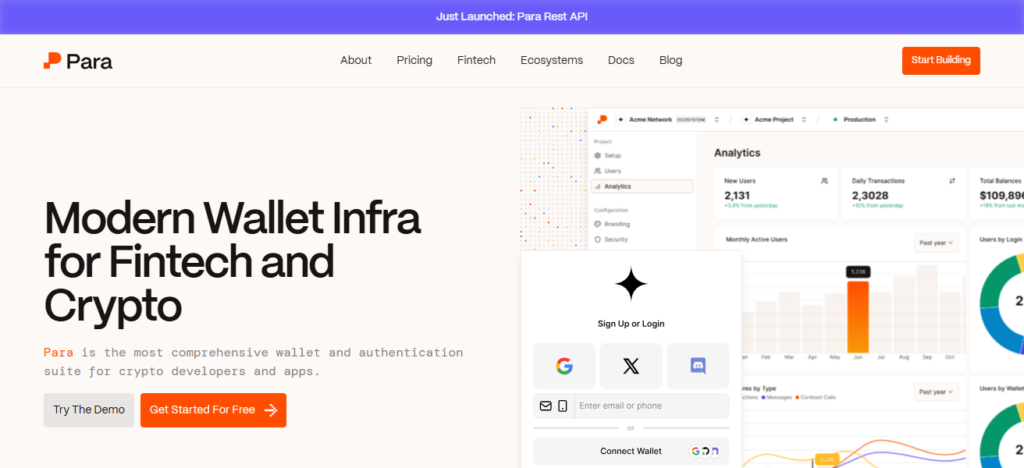
Para abstracts complex interactions with the underlying blockchain to enable smooth user experiences, so applications can operate without exposing technical details. Though it remains smaller than major providers, Para promotes modularity and straightforward integration.
It is convenient for beginners and developers who want lightweight infrastructure to build invisible crypto applications. Its flexible nature enables its integration into wider smart account ecosystems for greater power and scalability.
| Feature | Explanation |
|---|---|
| Developer-Friendly APIs | Simplifies wallet creation and blockchain interaction for developers |
| Key Management | Handles secure storage and usage of private keys |
| Modular Design | Allows integration with other smart account providers |
| Startup Focus | Ideal for lightweight and scalable crypto application development |
9. Circle (Embedded Wallets)
Circle Embedded Wallets are enterprise-grade wallet infrastructure with integrated programmable smart account functionality. Developed by the team behind USDC, this specific SDK provides payments, custody and compliance ready wallet solutions.
It allows developers to embed the wallets directly into apps, seamlessly facilitating crypto payments and financial services. The infrastructure by Circle provides secure key management, transaction automation and scalable global operations.
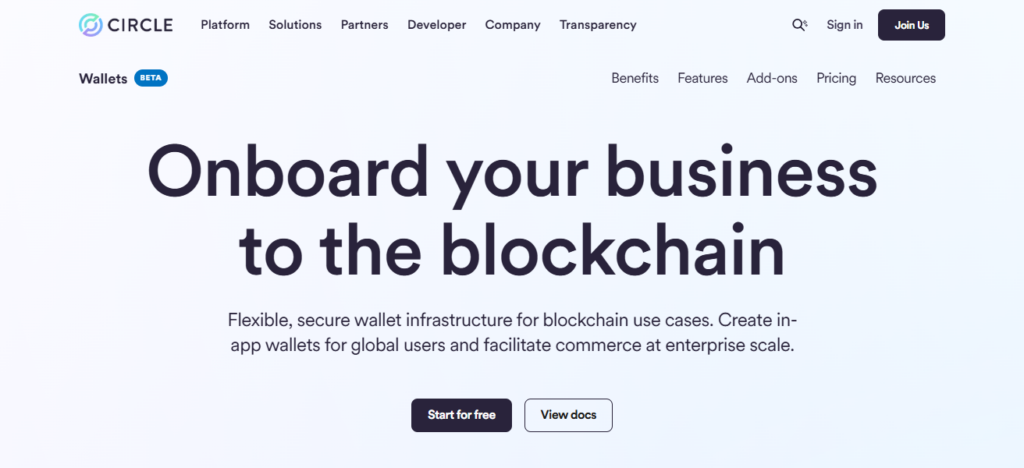
It is not about account abstraction per se but it works nicely with smart account features for added programmability. And it’s the perfect solution for fintech and enterprise applications that need regulatory compliance, reliability, and stablecoin-based economic ecosystems.
| Feature | Explanation |
|---|---|
| Payment Infrastructure | Built for stablecoin payments and financial applications |
| Compliance Ready | Designed to meet regulatory and enterprise requirements |
| Secure Wallets | Provides robust key management and transaction security |
| Programmable Features | Enables automation of financial workflows and transactions |
10. Fireblocks
Fireblocks is a digital asset platform designed for institutions, and provides secure wallet infrastructure with features that appy smart account-like functionality. Utilizing MPC (Multi-Party Computation) technology, it protects private keys and facilitates secure signing of transactions.
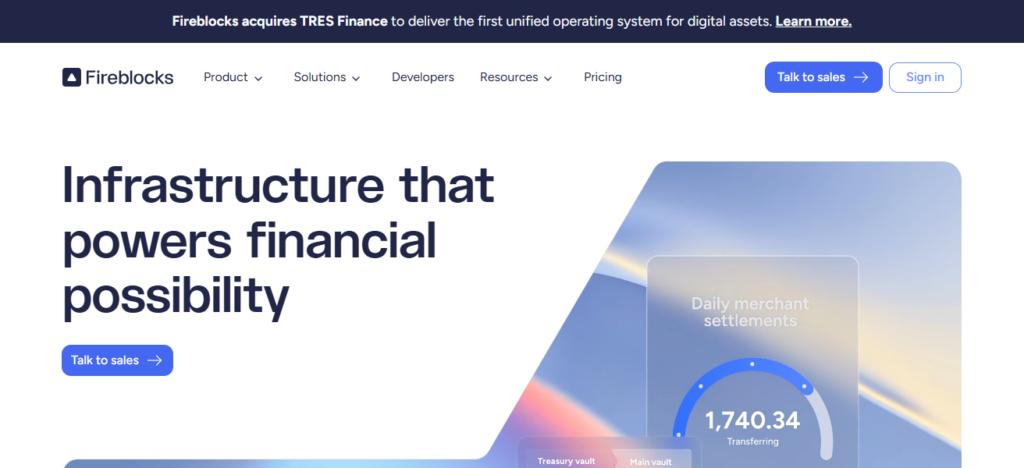
Supports automation and policy-based controls, as well as integration into decentralized applications so its fitz for big operations. Historically limited to custody, it is expanding its role into programmable wallet experiences that reflect the ethos of account abstraction.
Fireblocks is used by enterprises to securely manage treasury payments and DeFi interactions. Designed for institutional adoption in the Web3 ecosystem, it balances security, scalability and compliance like no other.
| Feature | Explanation |
|---|---|
| MPC Security | Uses Multi-Party Computation for secure private key management |
| Institutional Grade | Designed for enterprises handling large-scale digital assets |
| Automation Controls | Policy-based transaction approvals and workflow automation |
| Scalable Operations | Supports treasury management, payments, and DeFi integrations |
Cocnlsuion
Conlcusion Smart-Account SDKs are paving the way for a more user-friendly and seamless Web3 experience, with invisible crypto experiences made possible through easy onboarding flows, gasless transactions, and programmable wallets.
Openfort, ZeroDev and Alchemy are some solutions thatcan streamline development as well as enhance the user experience. For example, adoption will be a key driver of the need for these tools as projects build scalable and user-friendly decentralized applications that feel as natural and frictionless to use as their Web2 counterparts.
FAQ
Which are the top Smart-Account SDKs in 2026?
The leading SDKs include Openfort, ZeroDev, Alchemy, Particle Network, Privy, Magic Labs, Coinbase (Embedded Wallet), Para, Circle, and Fireblocks. Each offers different strengths such as onboarding, security, or enterprise scalability.
What is account abstraction (ERC-4337)?
Account abstraction is a blockchain innovation that turns wallets into programmable smart contracts. It enables features like batching multiple actions into one transaction and sponsoring gas fees. For example, users can perform several operations in a single click instead of multiple approvals.
What are gasless transactions and why do they matter?
Gasless transactions allow users to interact with blockchain applications without paying transaction fees directly. Instead, developers or applications cover the cost using paymasters. This improves user experience, especially for beginners who may not own native tokens required for fees.
What is transaction batching in smart accounts?
Transaction batching allows multiple blockchain actions—such as approval, swap, and staking—to be combined into a single transaction. This reduces costs, saves time, and simplifies user interactions. It also ensures all actions execute together or fail together atomically.
