

In this article, I will cover the top Solana Blinks and Actions for X (Twitter), and equivalent services. These are systems that let users engage with blockchains and services via social media posts.
For each service, I will cover Solana integration, Actions, cases illustrating use with X, transactions, fees, pros, and cons. Finally, the article will serve as a resource to gain a better understanding of using Solana’s web3 services through the X app.
Key Points & Best Solana Blinks and Actions for X (Twitter)
Best Solana Blinks and Actions for X (Twitter)
- Jupiter Exchange: Enables token swaps through Solana-powered Actions shared directly across X posts.
- Phantom: Provides wallet-based Solana Actions for signing, swapping, sending, and approving transactions.
- Tensor: Brings Solana NFT trading Actions into social posts through streamlined transaction experiences.
- Sanctum: Enables staking and liquid-staking interactions using Solana Actions distributed through X.
- Meteora: Supports Solana liquidity interactions through Actions, simplifying DeFi transactions from social platforms.
- Access Protocol: Enables creator subscriptions and digital access through token-powered Solana Actions.
- Helium: Connects Solana-powered DePIN token interactions with shareable Actions across social platforms.
- Dialect: Provides infrastructure for developers building interactive Solana Actions and transactional social experiences.
- Baxxis: Offers Solana-based interactive Actions enabling users to complete supported transactions directly through X.
- Audius: Connects decentralized music experiences with Solana-powered interactions and social sharing through X.
10 Best Solana Blinks and Actions for X (Twitter)
1. Jupiter Exchange
Jupiter Exchange is a Solana exchange and liquidity pool that provides users with Actions to create tradeable links. Users can perform swaps directly from the Jupiter Exchange without going through the whole process of going to the exchange, thanks to Jupiter’s integration with Solana.
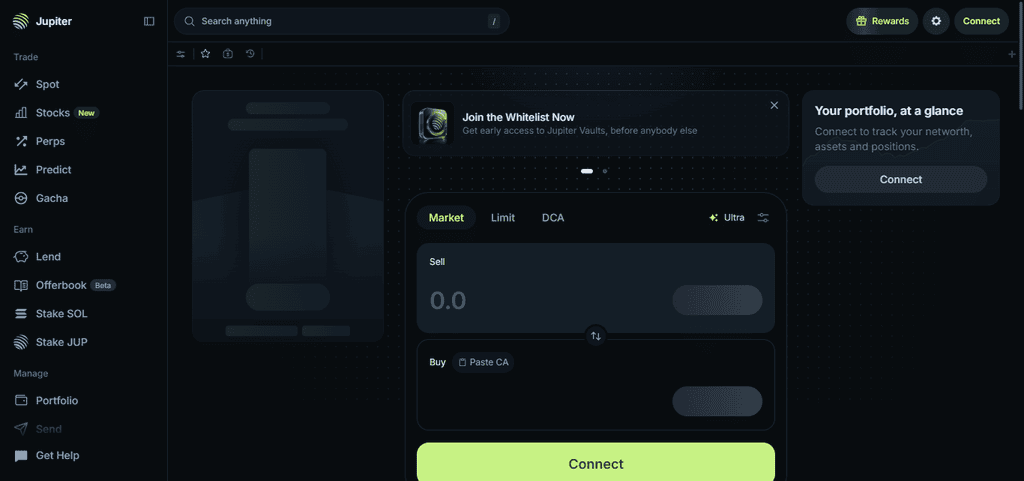
With Jupiter Blink, swap opportunities can be presented, and users can select the tokens they wish to swap. Jupiter Blink presents users with the opportunity to review the swap, and if everything is correct, confirm the swap. Jupiter Blink, combined with Actions, reduces the effort required to create and perform swaps.
Jupiter Exchange Pros & Cons
| Pros | Cons |
|---|---|
| Enables convenient Solana token-swap interactions | Requires compatible Solana wallet support |
| Provides access to broad token liquidity | Swap execution can involve price impact |
| Reduces steps between X discovery and trading | Network fees still apply to transactions |
| Useful for sharing trading opportunities socially | Available Actions may change over time |
| Built around Solana-native DeFi infrastructure | Users must review transactions before signing |
2. Phantom
Phantom is a cryptocurrency wallet that supports Solana. Like other cryptocurrency wallets, it can sign messages and transactions. This feature allows Phantom to support Actions and Blinks. Phantom’s main purpose is to connect users’ assets to transactions on the blockchain and support transactions.
Phantom supports Blinks to allow users to review and approve transactions. Users can perform reviewed and approved transactions through Phantom and other supported wallets. Phantom determines the kinds of transactions that can be performed through supported Blinks.
Some supported transactions can be swapping, staking, and lending, among others. Like other transactions on the blockchain, users are charged a network fee.
Phantom Pros & Cons
| Pros | Cons |
|---|---|
| Provides straightforward wallet transaction approvals | Users remain responsible for transaction verification |
| Supports Solana assets and applications | Requires sufficient SOL for applicable fees |
| Works with compatible Actions and Blink experiences | Not every Blink supports every wallet function |
| Makes signing social transactions more convenient | Malicious links can create security risks |
| Offers a familiar wallet experience | Users must understand blockchain transaction permissions |
3. Tensor
Tensor is an NFT marketplace connected to Solana Actions and Blinks. It uses Solana to bridge NFT interactions to social posts. Transactions on Solana are processed by the blockchain and Action infrastructure to prepare transactions to be sent to the user’s wallet.
Blinks can be used to create NFT interactions, collections, or social experiences. On Tensor, users can create NFT collections to be posted or shared on social media using Tensors social integrations.

Users can also post NFTs to social media using the Tensors Action infrastructure. Users can interact with Tensors NFT collection using a supported Solana Wallet. There are costs associated with the NFT interactions and transactions, which users must approve.
Tensor Pros & Cons
| Pros | Cons |
|---|---|
| Provides Solana-focused NFT marketplace functionality | Primarily suited to NFT-related activities |
| Connects NFT discovery with social sharing | NFT market conditions can change quickly |
| Supports blockchain-based NFT transactions | Marketplace fees may apply to transactions |
| Can reduce friction for eligible NFT interactions | Compatible Blink availability can vary |
| Useful for Solana NFT communities and creators | Users need a compatible Solana wallet |
4. Sanctum
Sanctum is a Solana staking and liquid staking service. It allows users to stake, unstake, migrate, and swap staked tokens. Sanctum integrates Actions to allow users to perform the staking interactions and approve the requests to process the staking transactions.
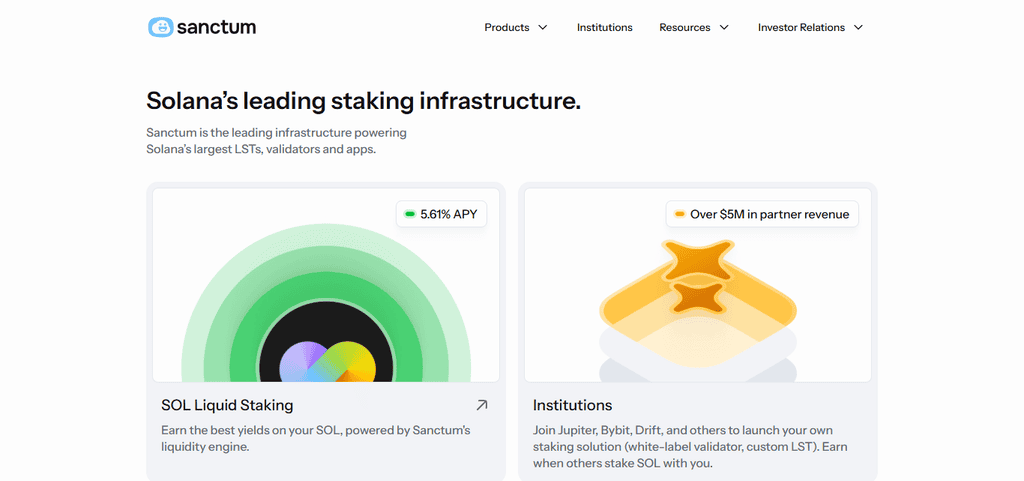
On X, Sanctum may use a Blink to allow users to perform staking and unstaking interactions to Sanctums staking pools. There is a small unstaking fee charged by Sanctum. Delayed unstaking charges a 10 basis point fee.
Sanctum Pros & Cons
| Pros | Cons |
|---|---|
| Provides Solana liquid-staking functionality | Staking involves blockchain transaction requirements |
| Supports multiple liquid-staking token interactions | Different operations can have different fees |
| Makes staking-related opportunities shareable | LST values can differ from underlying SOL |
| Integrates closely with Solana staking infrastructure | Users need to understand staking-related risks |
| Offers several staking and liquidity-related functions | Available social Actions may change over time |
5. Meteora
Meteora is a Solana-based decentralized finance (DeFi) system. It specializes in decentralized finance services such as lending, trading, and other financial activities. Meteora provides on-chain services for users to perform transactions and uses other services available through supported wallets.
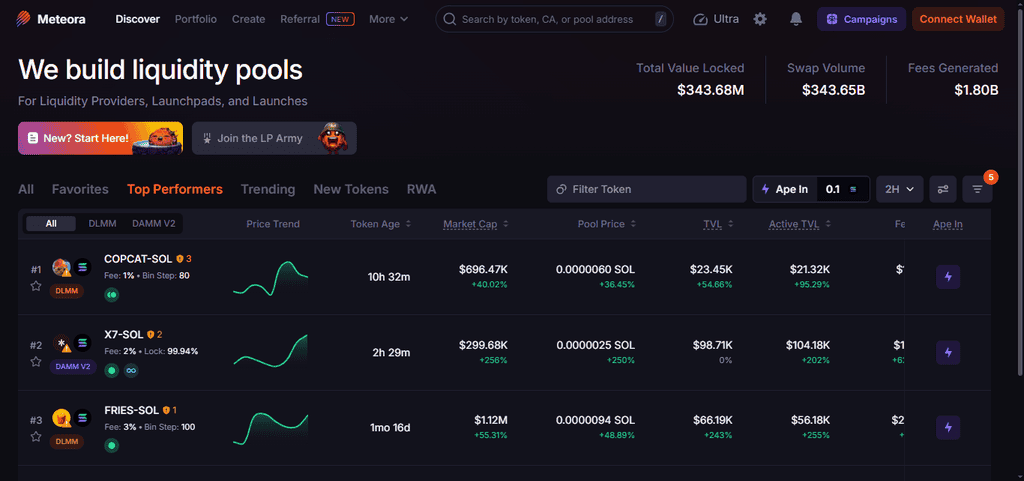
Blinks facilitate transactions related to liquidity and other functions without the need for users to interact with different interfaces of Meteora. From X, Meteora allows users to access various DeFi services, particularly transactions, using social media.
The services and functions offered by Meteora depend on the smart contract logic deployed in the blockchain. Therefore, users are advised to evaluate the business logic prior to executing any transactions. In general, users must have supported Solana wallets, cryptocurrencies, and Solana (SOL) to pay for transaction fees.
Meteora Pros & Cons
| Pros | Cons |
|---|---|
| Provides Solana-focused DeFi liquidity functionality | DeFi transactions involve smart-contract risks |
| Supports token and liquidity-related activities | Liquidity positions can experience impermanent loss |
| Enables potentially convenient transaction workflows | Fees vary according to specific transactions |
| Fits Solana-native DeFi use cases | Users need sufficient supported assets |
| Can make DeFi opportunities easier to share | Blink availability depends on specific integrations |
6. Access Protocol
Access Protocol is a blockchain service to create and monetize digital content and other products. It provides access and use of content and other products through a blockchain token. The protocol uses Solana to process transactions related to tokens.
Using Access Protocol, creators and content owners can manage access and subscriptions to their content. Through its tokenization feature, Access Protocol offers content creators the means to enable their customers to access content using social media.
Content creators can reduce the number of steps required for their consumers to access their content. Functions offered by Access Protocol are determined by content tokenized and created by content owners. Consumers need supported Solana wallets, tokens issued by Access Protocol and Solana (SOL) to transact.
Access Protocol Pros & Cons
| Pros | Cons |
|---|---|
| Connects blockchain technology with digital content access | Supported content depends on participating creators |
| Uses Solana-based token functionality | Users need compatible wallets and tokens |
| Can simplify eligible access transactions | Token values can fluctuate |
| Supports creator-focused Web3 use cases | Available Actions depend on implementation |
| Social sharing can improve content discoverability | Transaction fees may apply on Solana |
7. Helium
Helium is a decentralized network utilizing a localized blockchain for various services. The Helium network allows users to set up their own nodes and offers a native token and tokens for other associated services built on the Solana blockchain.
Actions can provide links for network services and associated token operations, depending on the selected Provider. On X, users can post links to eligible Helium token operations and associated services through social content.
The users of the content must identify supported assets and functions from the associated Actions; not all Helium services will have associated Actions. Users will need to obtain the supported tokens on the Solana blockchain, as well as SOL to transact on the blockchain, to use the associated services.
Helium Pros & Cons
| Pros | Cons |
|---|---|
| Provides Solana-based infrastructure for DePIN activities | Network-related concepts may confuse new users |
| Connects blockchain with real-world wireless networks | Token values can fluctuate significantly |
| Supports multiple ecosystem-related tokens | Different Helium services have different requirements |
| Benefits from Solana transaction infrastructure | Some interactions require specific compatible wallets |
| Social Actions can improve Web3 accessibility | Blink functionality depends on available integrations |
8. Dialect
Dialect focuses on building infrastructure that enables Solana Actions and Blinks and is not just a Solana-based application. The Dialect application Program Interface (API) allows developers to incorporate Solana Blockchain interactions into other applications.

Dialect’s Blink services allow developers to incorporate similar features into their applications and return metadata associated with the transactions.
Dialect is connected to X to allow users to review and sign transactions for supported Actions. Users are required to use their own Solana wallets to complete the transactions and pay a fee to the network.
Dialect Pros & Cons
| Pros | Cons |
|---|---|
| Provides infrastructure for Solana Actions and Blinks | Primarily developer-focused infrastructure |
| Enables interactive blockchain transaction experiences | User experience depends on individual implementations |
| Supports shareable transaction experiences | Not every Action is available on every platform |
| Helps developers distribute on-chain functionality | Requires technical integration for creators |
| Connects Web3 actions with social distribution | Users must verify unfamiliar Actions carefully |
9. Baxxis
This time, specific details relating to the Solana Action implementation of Baxxis should be included in the review. Teller has stated that Baxxis may include Blink capabilities in the future; however, these should not be speculatively included in the current review.
What should be included is what Baxxis does, how it integrates with Solana, and the transaction/interaction functions supported by its Action endpoint. If a related Blink is developed and published, users may be able to interact with the supported function via an X-interconnected end point.
Therefore, an assessment of the supported functions, assets, buttons, and transactions should be determined from the Baxxis Action. Interacting with the supported function may require the user to provide a Solana wallet to cover the transaction fee. The supported function and the associated benefits should be determined from the Baxxis Action.
Baxxis Pros & Cons
| Pros | Cons |
|---|---|
| Can provide interactive Solana-based transaction experiences | Specific functionality depends on implementation |
| Potentially simplifies supported blockchain interactions | Available Actions may be limited |
| Can benefit from Solana transaction infrastructure | Users need compatible wallet support |
| Social distribution can improve accessibility | Transaction fees may still apply |
| Useful for eligible Web3 workflows | Current integrations should be verified before use |
10. Audius
As a decentralized music platform, Audius leverages blockchain technology to reward content creators and offers Solana-based social and interactive Web3 services. When covering Actions, Aamna will need to assess which Audius features are integrated with Solana and exposed via a Blink or Action.
For instance, Wallet Audius may allow users to tip content creators through Audius using SPL Tokens. A compatible Wallet Audius action may integrate Solana and allow users to tip content creators.
Solana may function as the distribution layer for tipping actions. Support and requirements for tipping transactions and other functions are determined by the integrated Solana Action.
Audius Pros & Cons
| Pros | Cons |
|---|---|
| Connects decentralized music with Web3 technology | Music-focused functionality limits broader use cases |
| Provides opportunities for creator-focused interactions | Blockchain features may require wallet knowledge |
| Social sharing can increase creator discoverability | Supported Actions depend on current integrations |
| Can connect Web3 communities with music content | Token-related values can fluctuate |
| Offers a decentralized approach to music distribution | Users may need compatible wallets for transactions |
Conclusion
Finally, Solana Blinks and Actions provide unique opportunities to integrate Web3 within social media. For instance, X lets users add polls and tips to their tweets, which are then permanently archived on-chain.
Third-party programs like Jupiter and Phantom provide wallets and trading interfaces, and Tensor and Sanctum provide staking and NFTs. Meanwhile, other Blinks and Actions help developers provide various Web3 financial and DeFi services.
Before interacting with a Blink or Action, users should understand the supported functions, compare wallet integration, and determine transaction costs and usage requirements.
FAQ
How do Solana Blinks work on X?
Blinks turn supported Solana Actions into interactive experiences shared through X posts.
Which wallets support Solana Blinks?
Compatible Solana wallets let users connect, review, and approve supported transactions.
What can users do with Solana Actions?
Users can swap tokens, stake assets, transfer funds, mint NFTs, and more.
Are Solana Blinks available for every X post?
No, only compatible Actions and supported Blink implementations provide interactive functionality.
