


In this article, I define and explain the leading apps in this space and provide information on how these apps help users add diversity to their financial portfolio and collectibles.
I will also explain how these apps help users manage their collections and give users access to exclusive investment opportunities.
Key Points & Best Luxury Asset and Art Investing Apps
- Masterworks — Fractional blue‑chip art shares enabling accessible investment in renowned masterpieces.
- Yieldstreet — Multi‑asset platform offering diversified exposure across luxury and alternative investments.
- Vinovest — AI‑curated wine portfolios providing managed access to rare collectible bottles.
- Public.com — Mixes equities with fractional cultural assets for broader alternative investing opportunities.
- Artemundi — Institutional art funds delivering curated exposure to high‑end global artworks.
- Anthea Art Investments — Focused strategies targeting post‑war and contemporary art market performance.
- MoneyMade — Discovery engine tracking luxury collectibles and niche alternative investment categories.
- Artwork Archive — Portfolio analytics platform managing provenance, valuations, and detailed collection records.
- Collector Systems — Institutional‑grade tracking software for high‑value art and luxury inventories.
- Collectify — Simple cataloging tool helping individuals monitor and organize personal luxury collections.
10 Best Luxury Asset and Art Investing Apps
1. Masterworks
Masterworks is a company that allows people to purchase shares of higher priced artistic investments that are typically reserved for wealthier people.
Masterworks purchases art pieces from famous artists, secures them, and gives people the opportunity to buy shares of the pieces. Masterworks is looking to make money from the art pieces by selling them in the future for a higher price.
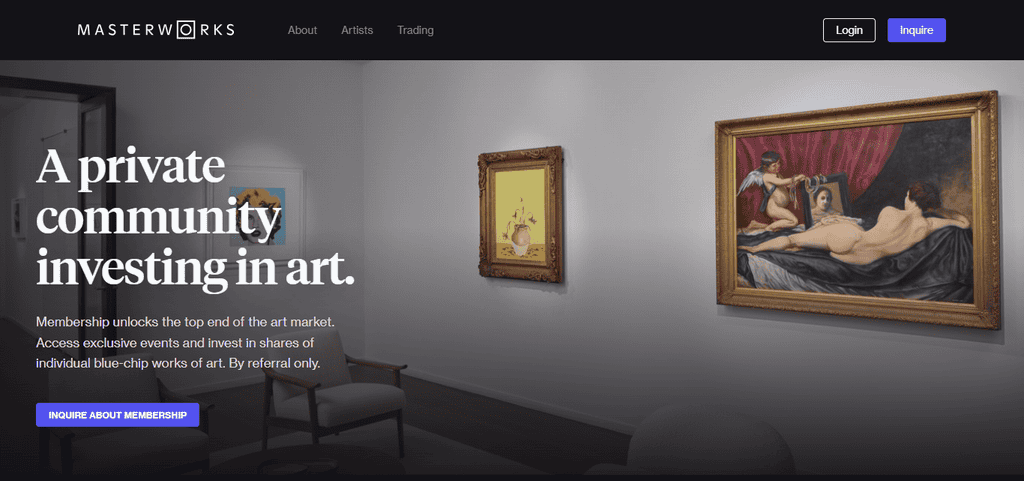
Masterworks make their art pieces available for investment and give the potential returns and risks for each investment. By using the Masterworks service, people can add alternative investments to their portfolio.
Masterworks Feature
| Feature | Description |
|---|---|
| Asset Type | Fractional shares of blue‑chip fine art |
| Artist Coverage | Picasso, Basquiat, Warhol, and other museum‑grade artists |
| Investment Model | SEC‑qualified fractional offerings |
| Holding Period | Typically 3–10 years |
| Risk Disclosure | Detailed offering documents and market analysis |
| Storage & Insurance | Fully managed by Masterworks |
| Liquidity | No instant liquidity; exit occurs upon artwork sale |
| Minimum Investment | Low entry barrier compared to traditional art funds |
| Portfolio Use | Alternative diversification |
| Target Users | Retail investors seeking exposure to fine art |
2. YieldStreet
YieldStreet provides people the ability to make alternative investments by offering opportunities in a variety of areas including art, real estate, and other investment areas that are usually reserved for bigger and more established investors.
YieldStreet creates and offers investment opportunities in a number of areas to allow investors to have a diverse portfolio. YieldStreet gives investors the opportunity to make alternative investments in a structured environment.
YieldStreet helps investors feel more secure by controlling how the investments are made and by evaluating the potential investments in the same manner as an established institutional investor.
YieldStreet Feature
| Feature | Description |
|---|---|
| Asset Classes | Art, real estate, private credit, marine finance |
| Investment Structure | Curated institutional‑style offerings |
| Risk Management | Underwriting similar to institutional investors |
| Prism Fund | Multi‑strategy diversified alternative fund |
| Liquidity | Varies by offering; mostly long‑term |
| Minimum Investment | Higher than retail apps; varies per deal |
| Transparency | Detailed memoranda and risk disclosures |
| Investor Type | Accredited + retail (depending on product) |
| Portfolio Diversification | Multi‑asset exposure |
| Platform Strength | Broadest alternative‑asset coverage |
3. Vinovest
Vinovest uses artificial intelligence to create wine and spirit portfolios for investing. Wine and spirits are examples of alternative assets, meaning they are not traditionally used for investing. Vinovest ensures their investor’s wine and spirits are kept in safe and secure locations and provides insurance.
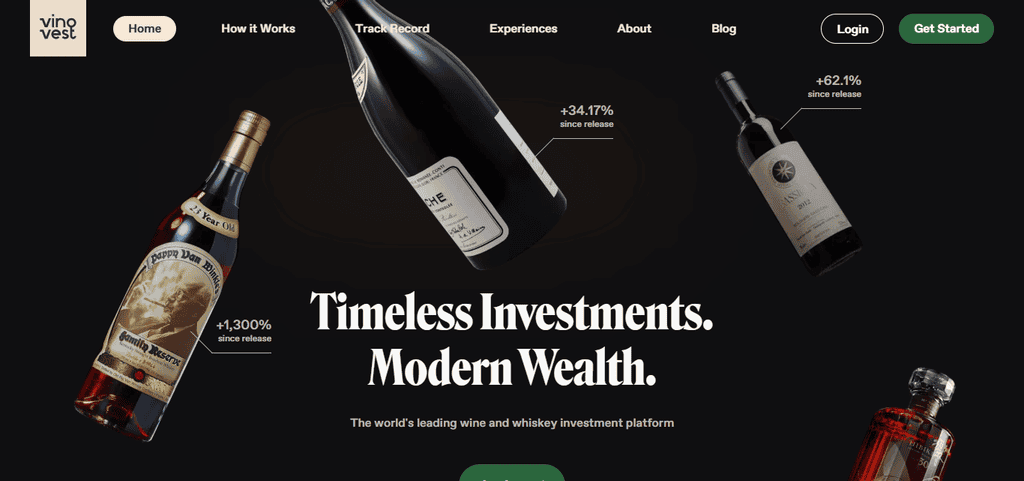
Vinovest is able to create portfolios using various metrics including wine critic scores and anticipated global wine consumption.
Investors can buy and sell wine through a secondary market that is facilitated by Vinovest. Making investments in fine wine is a strategy that can be used to accomplish portfolio diversification.
Vinovest Feature
| Feature | Description |
|---|---|
| Asset Type | Fine wine & rare spirits |
| Portfolio Construction | AI‑driven selection models |
| Storage | Climate‑controlled, insured global facilities |
| Liquidity | Secondary marketplace for buying/selling |
| Data Inputs | Critic scores, scarcity, consumption trends |
| Insurance | Full coverage for stored bottles |
| Minimum Investment | Multiple tiers available |
| Portfolio Types | Long‑term appreciation or trading‑focused |
| Diversification Role | Non‑correlated alternative asset |
| Target Users | Wine collectors & alternative‑asset investors |
4. Public.com
Public.com allows users to invest in stocks, ETFs, and other alternative investments. Alternative investments on Public.com includes artwork, collectibles and other assets. Public.com employs an educational philosophy where users are able to learn investing strategies by observing and following other users on the app.
Public.com has expanded users’ opportunities to invest based on their interest and passion by offering alternative investments. To supplement their alternative investments, Public.com provides user education by presenting investment data and analyses.
Public.com Feature
| Feature | Description |
|---|---|
| Asset Classes | Stocks, ETFs, art, collectibles, cultural assets |
| Social Learning | Follow investors, creators, experts |
| Fractional Investing | Available for both equities & alternatives |
| Education Tools | Data, charts, insights, community discussions |
| Liquidity | High for equities; varies for alternatives |
| Minimum Investment | Very low (fractional shares) |
| User Experience | Community‑driven investing |
| Alternative Access | Sneakers, cards, art, memorabilia |
| Risk Transparency | Asset‑specific risk explanations |
| Target Users | Beginners & culture‑driven investors |
5. Artemundi
Artemundi is an art fund management company with a focus on institutional art funds. Artemundi has many years of experience operating in the art fund management industry. The company has invested capital to acquire prominent works of art of some of the world’s greatest artists of our time.
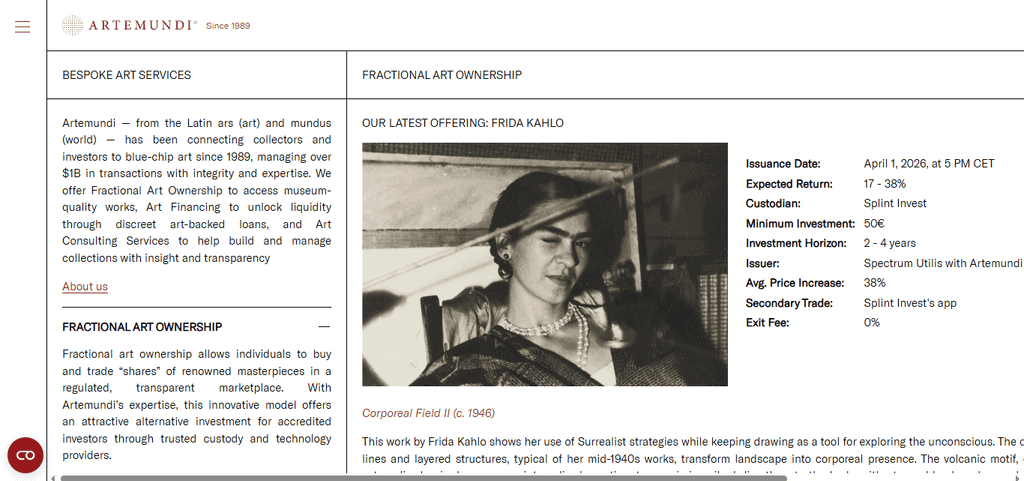
Artemundi prides itself on the full lifecycle management of all works of art acquired by its funds. Artemundi’s funds aim to capitalize on the long term, appreciated values of art.
With its expertise in the analysis of the art market and financial sector, Artemundi offers potential investors an opportunity to acquire art in a structured, private equity fund style investment vehicle.
Artemundi Feature
| Feature | Description |
|---|---|
| Asset Type | High‑end fine art |
| Investment Vehicle | Institutional‑grade private art funds |
| Artist Coverage | Blue‑chip, museum‑quality works |
| Lifecycle Management | Acquisition → authentication → storage → sale |
| Due Diligence | Deep art‑market + financial analysis |
| Minimum Investment | High (accredited investors only) |
| Liquidity | Long‑term fund cycles |
| Risk Management | Professional valuation & market tracking |
| Portfolio Strategy | Appreciation‑focused |
| Target Users | Institutional & accredited investors |
6. Anthea Art Investments
Anthea Art Investments concentrates on segments of the art market that are characterized by positive long term growth, e.g. the post-war and contemporary art markets.
Using its expertise in traditional finance and art market fundamentals, Anthea evaluates potential opportunities based on the projected trajectory of the artist, market liquidity, and other variables.
Unlike traditional investment vehicles, Anthea’s investment offerings are structured to provide exposure to specific art markets. Anthea utilizes financial valuation and other analytical tools to identify art market inequities and to make investments in art before market recognition.
Through the full lifecycle management of art, including security and sale, Anthea offers investors the opportunity to invest in art market sectors that are typically only accessible to a select group of patrons.
Anthea Art Investments Feature
| Feature | Description |
|---|---|
| Market Focus | Post‑war & contemporary art |
| Strategy Type | Sector‑specific art investment |
| Analysis Inputs | Artist trajectory, liquidity, valuation models |
| Investment Structure | Curated offerings for accredited investors |
| Lifecycle Management | Acquisition → storage → sale |
| Risk Approach | Identifies undervalued works pre‑recognition |
| Liquidity | Long‑term |
| Minimum Investment | High |
| Portfolio Role | Targeted art‑sector exposure |
| Target Users | Investors seeking specialized art strategies |
7. MoneyMade
MoneyMade provides users with access to alternative investment opportunities and helps them discover various cash-flowing assets and investments. The platform collects and provides users with data about various investments and helps them analyze risk and return.
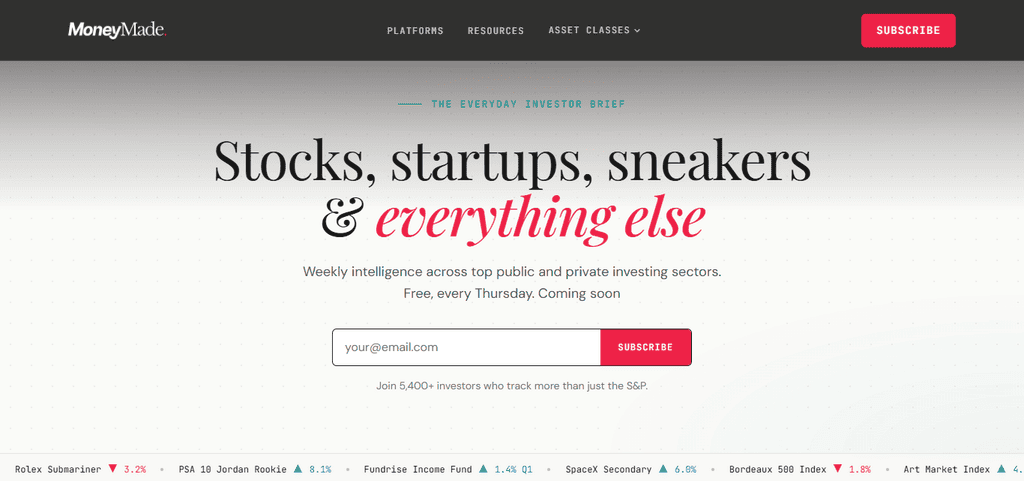
To simplify investment analysis, MoneyMade, groups various investment opportunities into thematic groups and offers educational materials. MoneyMade does not assist users in making investment decisions and does not function as a broker-dealer.
The platform serves as a gateway to several alternative investments and helps users make informed decisions. MoneyMade assists users in identifying and evaluating cash-flowing opportunities.
MoneyMade Feature
| Feature | Description |
|---|---|
| Platform Type | Alternative‑investment discovery engine |
| Asset Coverage | Art, wine, crypto, real estate, collectibles |
| Education Tools | Guides, risk breakdowns, thematic categories |
| Brokerage Role | Not a broker‑dealer |
| Data Insights | Risk, returns, platform comparisons |
| User Tools | Portfolio exploration & filtering |
| Minimum Investment | Depends on external platforms |
| Liquidity | Varies by asset class |
| Portfolio Role | Research & discovery |
| Target Users | Investors exploring new alternative assets |
8. Artwork Archive
Artwork Archive helps users manage and analyze data related to art collections. The platform helps users document and analyze data related to art collections, including appraisals, insurance, and ownership. The platform also offers tools to assist users in managing art exhibitions and documenting the art collection’s history and provenance.
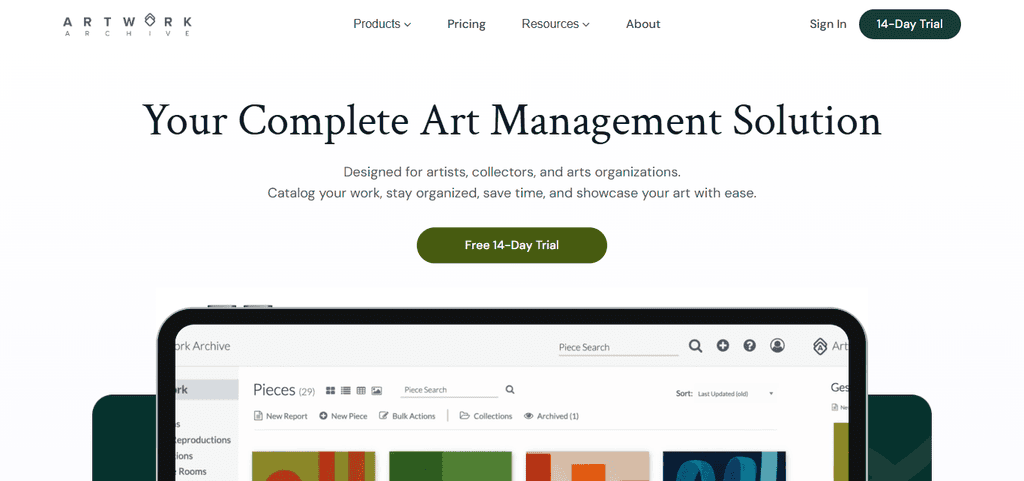
Artwork Archive helps users and collections analyze and make data-driven decisions related to art. Artwork Archive’s online and cloud-computing technology helps art collectors manage their collections, maintain data, and analyzes art-related data.
Artwork Archive Feature
| Feature | Description |
|---|---|
| Platform Type | Art collection management system |
| Data Tracking | Valuations, provenance, insurance, appraisals |
| Cloud Access | Web‑based, secure, multi‑device |
| Exhibition Tools | Show planning & documentation |
| Reporting | Dashboards & analytics |
| Inventory Management | Full cataloging system |
| User Type | Collectors, galleries, institutions |
| Portfolio Insights | Market trends & valuation updates |
| Security | Encrypted cloud storage |
| Strength | Professional‑grade collection analytics |
9. Collector Systems
Collector Systems is a high-end collection management system used by museums and other entities that possess significant holdings. Like other collection management systems, it allows the user to catalog a variety of holdings, from fine art to rare books to precious jewelry and antiquities.
What makes Collector Systems unique, however, is that it offers a great deal of flexibility in defining the various characteristics (e.g., provenance, condition and value, for example) of the holdings being managed.
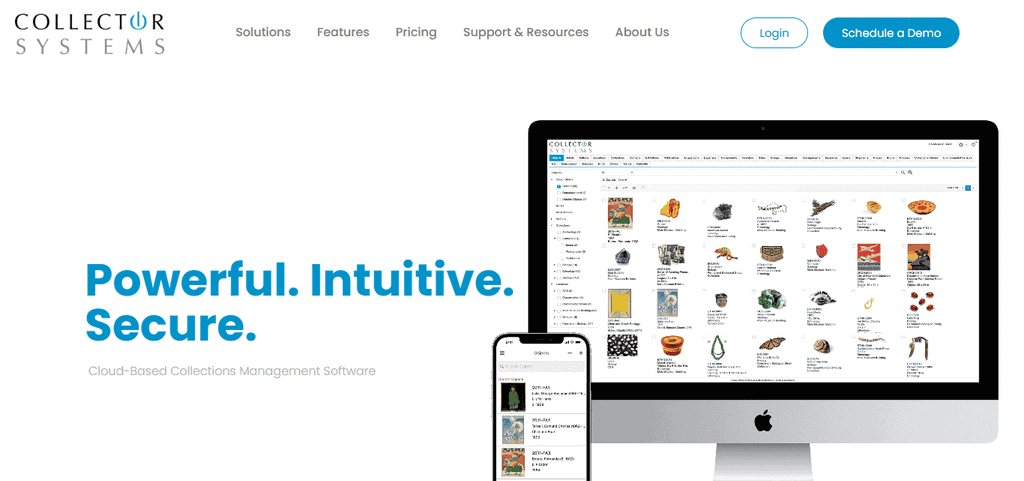
The software is designed to allow management of extremely large collections. It provides secure access via the Internet and allows multiple users to manage a collection.
Collector Systems allows its users to create and maintain management records in a format suitable for audit and examination by outside entities.
Collector Systems Feature
| Feature | Description |
|---|---|
| Platform Type | Institutional collection‑management software |
| Asset Coverage | Art, jewelry, books, antiquities |
| Custom Fields | Provenance, condition, value, storage |
| Multi‑User Access | Yes, cloud‑based |
| Audit‑Ready Records | Designed for compliance & examination |
| Inventory Scale | Supports extremely large collections |
| Security | High‑level encrypted access |
| Reporting | Advanced documentation tools |
| User Type | Museums, large collectors |
| Strength | Deep data flexibility & institutional reliability |
10. Collectify
Collectify is an online application that enables its users to electronically manage and catalog their collections of art, memorabilia and other personal valuables.
The system allows users to capture and maintain a variety of information about each item in their collection including the date and location of purchase, a description of the item and the price paid.
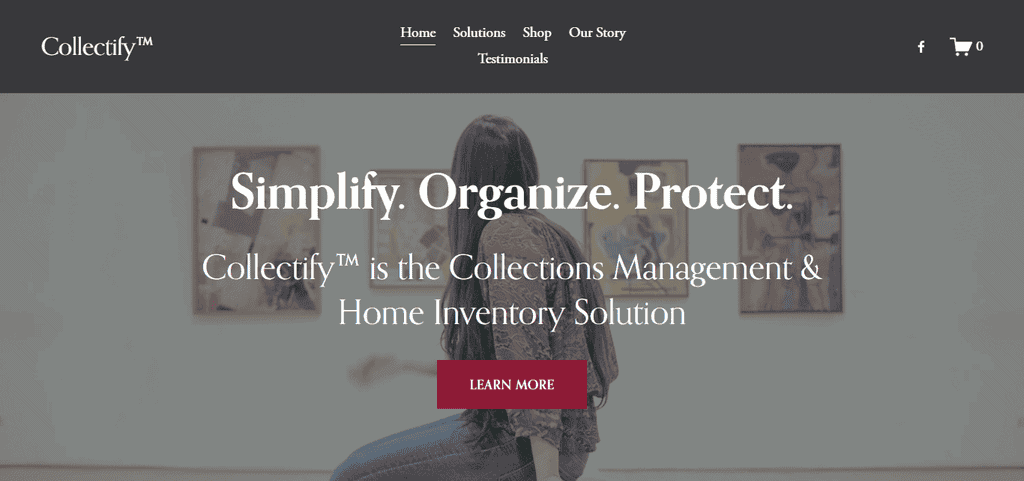
It provides users with information about the current market value of the item and suggests when an item should be appraised or insurance renewed. Although originally designed to meet the needs of individual art collectors
The system has the potential to be adapted to a number of other uses, including management and cataloging of individual or family archives and rare book collections.
Collectify Feature
| Feature | Description |
|---|---|
| Platform Type | Personal collection cataloging app |
| Asset Coverage | Art, memorabilia, valuables |
| Data Fields | Purchase details, descriptions, valuations |
| Market Value Tracking | Automated updates |
| Insurance Alerts | Renewal & appraisal reminders |
| User Experience | Simple, intuitive dashboards |
| Storage | Cloud‑based |
| Portfolio Role | Personal asset organization |
| Adaptability | Can manage archives & rare books |
| Target Users | Hobbyists & emerging collectors |
Conclsuion
Conclusion The leading apps in luxury investing offer users secure access to exclusive financial markets made up of items such as fine art and other luxury assets. These apps provide users the ability to research and manage their investment portfolios in a way that gives the users control and transparency.
The best luxury investing apps provide users the ability to add investments that other users may not have access to. Ultimately, the best luxury investing apps allow users to protect their wealth and build an investment portfolio made up of culturally valuable assets.
FAQ
What are luxury asset and art investing apps?
Apps that help users discover, research, buy, sell, or invest in assets such as fine art, watches, collectibles, wine, and other alternative investments.
How do art investing apps work?
They may offer direct ownership, fractional ownership, curated investment opportunities, marketplace access, or portfolio-tracking features, depending on the platform.
Can beginners use luxury asset investing apps?
Yes. Beginners can use them to research markets and explore different assets, but they should understand fees, liquidity, ownership structures, and investment risks first.
What luxury assets can I invest in through apps?
Common categories include artwork, rare watches, classic cars, collectibles, wine, jewelry, and other high-value alternative assets.
Are art investments considered risky?
Yes. Art values can fluctuate, assets may be difficult to sell quickly, and valuations can depend on factors such as artist reputation, provenance, condition, and market demand.
