


I will review the Best Open Banking APIs for Real-Time Commercial Bank Account Verification in this article.
These APIs are essential in tackling the issues of business bank account verification and fraud for financial services onboarding and integrations because of the rapid advancement and the need for secure and immediate financial onboarding.
You will find leading solutions, the features of each API, and how efficiently these APIs accomplish real-time verification for businesses.
Key Points & Best Open Banking APIs for Real-Time Commercial Bank Account Verification
1. Plaid API
Plaid is arguably the most popular Open Banking API for real-time bank account verification and for good reason.
Its vast reach in North America, the UK, and Europe gives it the ability to authenticate users in real-time and verify bank account ownership.
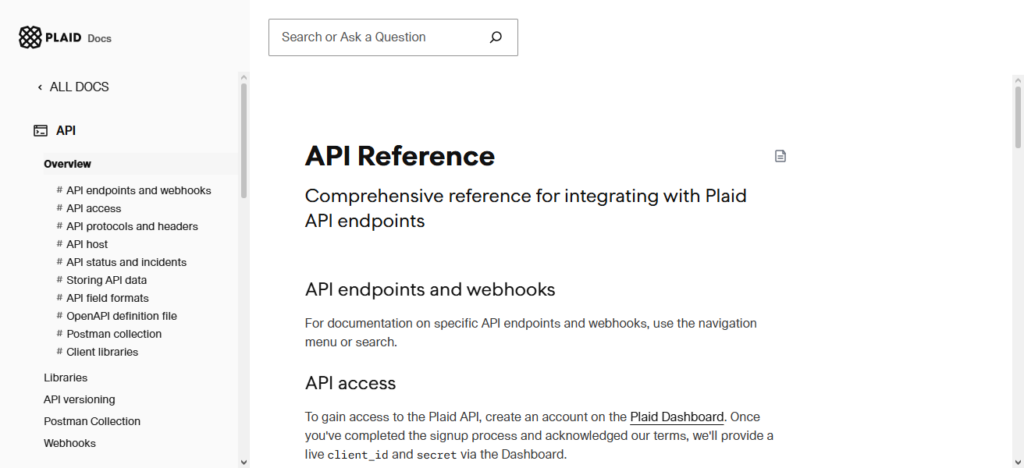
Plaid also helps its users find bank transactions. Because Plaid manages access through secure tokens, it also helps users reduce their exposure to fraud.
This API is perfect for integrating ACH payments, verifying identities, and checking income, especially for digital lending solutions, digital wallets, and subscriptions that require on-demand compliance.
| Pros | Cons |
|---|---|
| Strong coverage in US, UK, and EU banks | Expensive for high-volume usage |
| Real-time account verification | Limited coverage in some regions |
| Highly secure token-based system | Complex pricing structure |
| Supports income & identity verification | Requires technical setup effort |
2. TrueLayer API
TrueLayer is another amazing Open Banking API focused on the European markets to offer real-time bank account verification and payment solutions through Open Banking.
This API also provides real-time account authentication and IBAN verification, and gives access to transaction data.
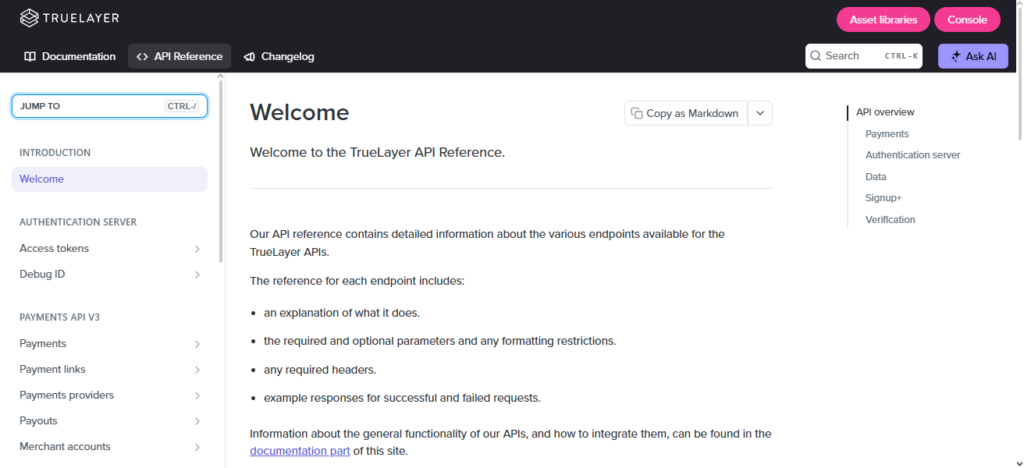
When it comes to compliance with the PSD2 regulations, TrueLayer delivers secure and ample data.
Developers love this API because of ease of integration and speed, and this API reigns supreme in verifying user and commercial account payment and satisfaction in a fintech app.
| Pros | Cons |
|---|---|
| Excellent EU banking coverage | Limited global presence |
| PSD2-compliant and secure | Not ideal outside Europe |
| Fast integration and APIs | Dependency on bank connectivity |
| Supports payments and data access | Slight learning curve for beginners |
3. Yodlee API
Yodlee is considered the grandfather of Financial Aggregation and Open Banking solutions. Thanks to this API, users can verify real-time bank account data from most financial institutions around the globe.
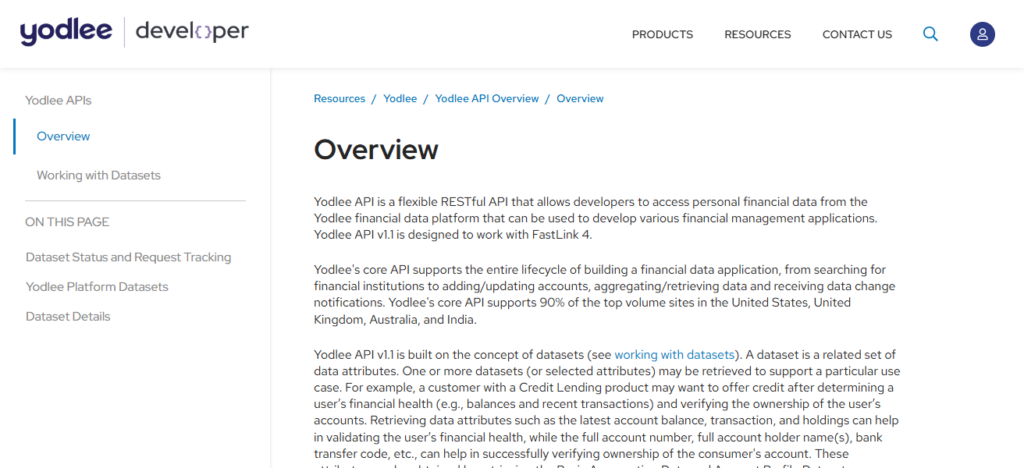
Yodlee delivers account ownership, balance, and transaction data. Enterprises, Banks, and large Fintechs love this API because of its ability to scale seamlessly.
Data enrichment is a special focus of Yodlee, and lets its users estimate the creditworthiness of their customers and reduce fraud for payment and onboarding processing.
| Pros | Cons |
|---|---|
| Global bank coverage | Integration can be complex |
| Strong data enrichment capabilities | UI/UX not very modern |
| Ideal for enterprise use | Higher cost for small businesses |
| Supports credit risk analysis | Slower updates in some regions |
4. Tink API
Tink is a European Open Banking API that focuses on real-time account verification and the aggregation of banking data.
Tink supports instant account verification, the initiation of payments, and the ability to gain insights into bank transactions.
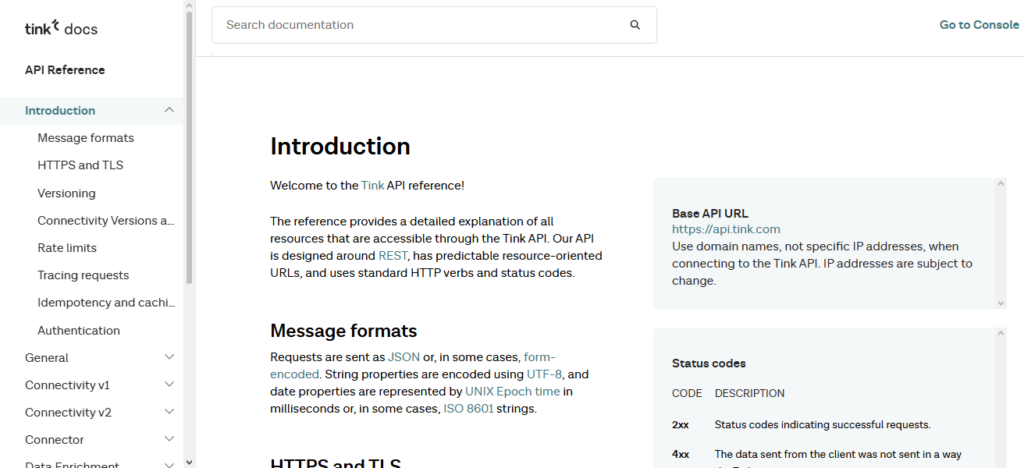
Tink also boasts developer-friendly APIs and great compliance with PSD2. Because of this, Tink also helps ease the burdens of onboarding and the verification of commercial banking accounts.
Tink’s services are also great for companies focusing on the rapidly growing European Fintech sector due to Tink’s coverage of the majority of Europe’s largest commercial banks.
| Pros | Cons |
|---|---|
| Strong EU banking connectivity | Limited outside Europe |
| Easy developer integration | Requires bank authorization delays |
| Real-time transaction data | Pricing not transparent publicly |
| Secure PSD2 compliance | Dependent on regional banks |
5. Finicity API
Finicity is a Mastercard subsidiary that offers Open Banking APIs that are easy to use and provide instant access to the verification of bank accounts and the control of bank data.
In particular, Finicity is well known for its lending solutions, which include the ability to verify income, account ownership, and cash flow.
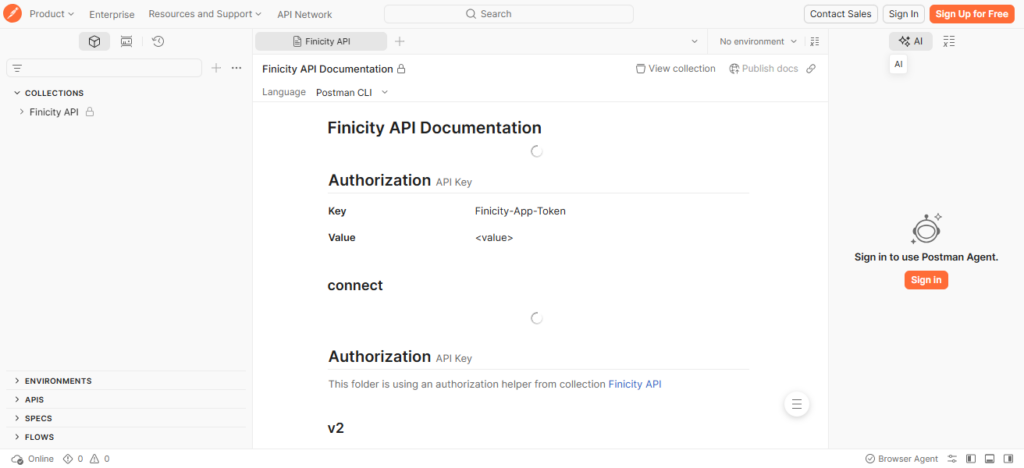
Finicity’s APIs provide banks and Fintech companies with the ability to easily automate the underwriting process and accelerate the time required to process loans.
| Pros | Cons |
|---|---|
| Excellent for lending use cases | Primarily US-focused |
| Income & cash flow verification | Limited global reach |
| Strong underwriting support | Enterprise pricing model |
| High security standards | Setup can be slow |
6. Salt Edge API
Salt Edge offers very compliant Open Banking APIs that also provide access to banks from all over the world.
Salt Edge’s APIs provide the ability to verify accounts held with banks, obtain transactional data, and initiate payments. Salt Edge also makes it easy for its clients to comply with differing regulations, such as PSD2.
For these reasons, Salt Edge’s APIs are popular among both Fintech start-ups and companies that require banking solutions with a high level of global coverage.
Salt Edge’s Unified API is also well known for making it easy for companies to integrate banking APIs from numerous banks across many geographies.
| Pros | Cons |
|---|---|
| Global bank coverage | Some banks have limited features |
| Strong compliance support | Slight latency in data sync |
| Unified API system | Documentation can be complex |
| Easy multi-region integration | UI tools are limited |
7. Open Banking UK API
Open Banking UK API is a regulated API used by banks in the UK for secure, real-time bank account verification, data sharing, and payment requests.
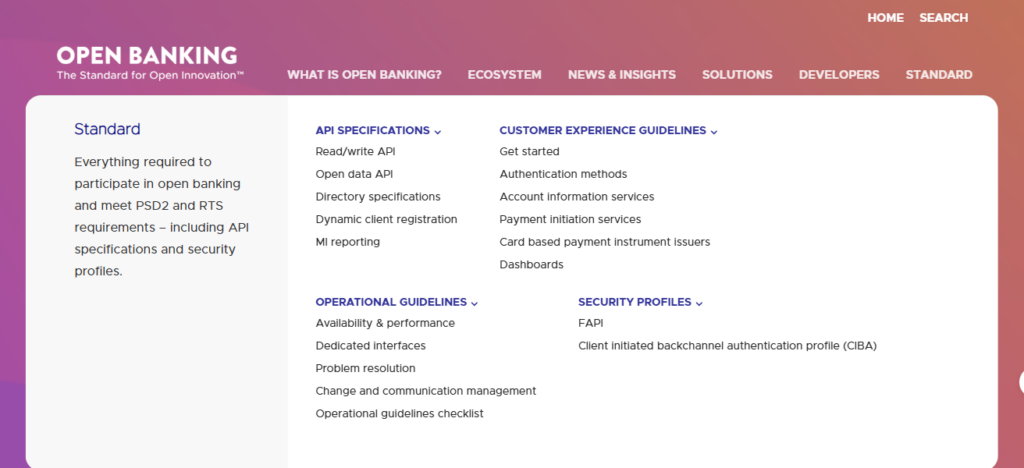
It is developed under regulatory watch, allowing the API to maintain integrity and safety. During the onboarding process, fintech companies use the API to verify bank accounts.
This API is useful for UK financial services that are compliant with the FCA and the use of PSD2.
| Pros | Cons |
|---|---|
| Highly secure and regulated | Only available in the UK |
| Free standardized API system | Limited customization options |
| Strong FCA compliance | Bank approval required |
| Reliable data accuracy | Not suitable for global apps |
8. Finastra Fusion Fabric API
Finastra Fusion Fabric API is an enterprise Open Banking APl designed for large Financial Institutions.
This API provides services for real-time bank account verification and payments, as well as the aggregation of financial data.
This API is highly scalable and is designed to facilitate deployment on hybrid clouds. Finastra is a bank modernization API used by many global banks to open finance.
This API is highly secure and has a modular API design; it is safe to use in complicated commercial banking.
| Pros | Cons |
|---|---|
| Highly scalable enterprise system | Expensive for SMEs |
| Strong security architecture | Complex implementation |
| Hybrid cloud support | Requires technical expertise |
| Modular API design | Longer deployment time |
9. Token.io API
Open Banking API of Token.io is a highly secure API that focuses on payments and the verification of bank accounts.
This API provides users the ability to authenticate, link accounts, and pay directly from their bank accounts in a secure manner.
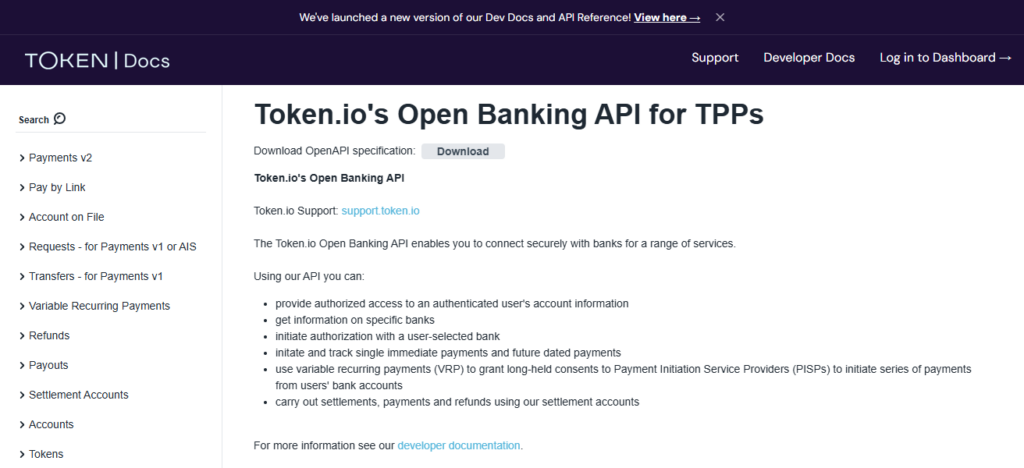
Because of the emphasis on security and user consent, the Token.io API is compliant with the European Banking regulations.
This API is particularly useful for assisting with onboarding customers and for decreasing failed payment transactions.
| Pros | Cons |
|---|---|
| High security and compliance | Limited feature set beyond payments |
| Strong user consent model | EU/UK focused |
| Reduces failed payments | Smaller global coverage |
| Fast onboarding process | Not ideal for data analytics |
10. Bud API
Bud is a blend of Open Banking API and AI, which offers financial data and insights. It provides real-time bank account verification and analysis of users’ transactions and profiles.
Bud allows companies to analyze customer financial behaviors and gain secure data access. The API is popular among fintech startups and digital banks.
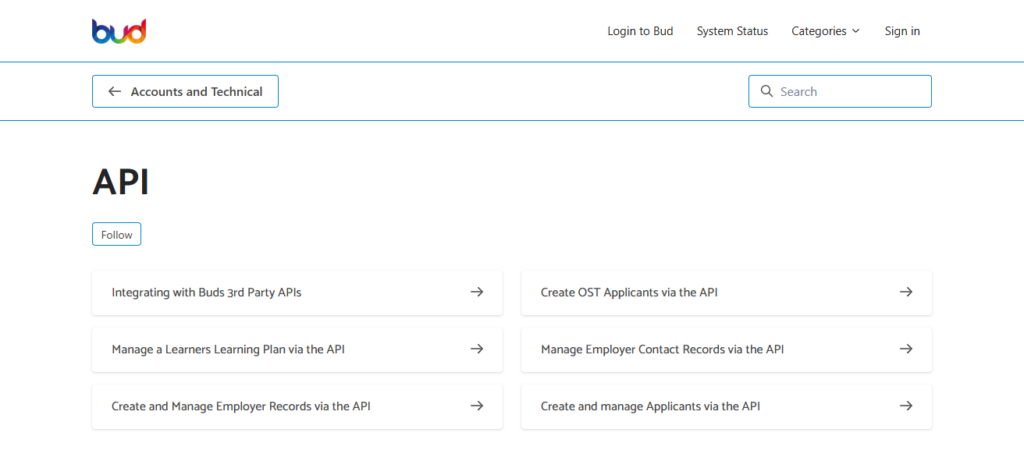
It uses machine learning to go beyond verification APIs and offers financial intelligence for front-end customization, fraud detection, and credit score analysis.
| Pros | Cons |
|---|---|
| AI-powered financial insights | Still evolving ecosystem |
| Strong fraud detection | Limited enterprise adoption |
| Transaction categorization | Not as widely available globally |
| Great for personalization | Higher complexity for small teams |
Conclusion
In conclusion, Open Banking APIs are changing businesses’ processes for real-time bank account verification.
Plaid and TrueLayer lead with better user experience and speed. Yodlee and Salt Edge provide better international coverage, while innovations like Bud are adding AI.
The API you use will depend on the area you work in, how big you want to scale, and what the laws are where you work.
FAQ
What is an Open Banking API used for?
It is used for secure bank account verification, financial data access, and payment initiation.
Which Open Banking API is best for startups?
Plaid and TrueLayer are popular choices due to easy integration and strong documentation.
Are Open Banking APIs safe?
Yes, they use encryption, tokenization, and regulatory compliance like PSD2 and FCA standards.
Which API has global coverage?
Yodlee and Salt Edge offer the most global connectivity.
