

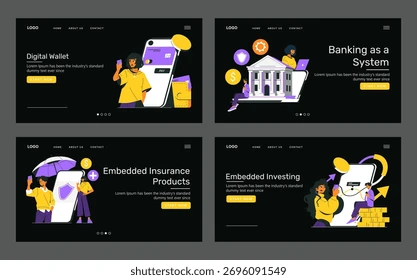
I will cover the Best Embedded Finance APIs for Implementing White-Label Credit Solutions in this article and how they allow companies to quickly and easily roll out integrated lending, credit, and banking offerings.
With the rise of embedded finance, selecting an appropriate API has a direct impact on scalability, compliance, and customer experience.
In this article, I will identify the leading platforms and discuss essential features, pros and cons, and possible applications for contemporary businesses.
What Are Embedded Finance APIs?
Embedded finance APIs allow companies to build integrated lending or banking capabilities, credit lines, payment processing, or digital accounts directly into their systems.
APIs enable companies to build branded financial products on their systems quickly and affordably, avoiding the time-consuming and expensive process of designing and developing financial infrastructure.
The operational advantages of using embedded finance APIs include new sources of revenue, increased user engagement, accelerated solutions and compliance with the embedded finance company’s partner banking and fintech firm infrastructure, and security.
Key Poinst & Best Embedded Finance APIs for Integrating White-Label Credit Features
| Embedded Finance API | Explanation |
|---|---|
| Stripe Treasury | Enables embedded credit, banking, and financial services integration seamlessly. |
| Marqeta | Provides customizable credit card issuance and payment infrastructure solutions. |
| Unit | Offers white-label credit products with compliant banking infrastructure support. |
| Bond | Simplifies launching embedded credit features through modern API architecture. |
| Synctera | Connects fintechs with banks for scalable credit product deployment. |
| Galileo Financial Technologies | Delivers credit account management, processing, and payment capabilities. |
| Treasury Prime | Enables embedded lending and credit services through banking APIs. |
| Railsr | Supports white-label credit products with flexible embedded finance tools. |
| Weavr | Accelerates integration of credit features into digital platforms quickly. |
| Solaris | Provides regulated banking infrastructure for embedded credit and lending. |
10 Best Embedded Finance APIs for Integrating White-Label Credit Features
1. Stripe Treasury
Stripe Treasury integrates Financial, Payment, and Lending services into business applications. It’s ideal for companies looking for embedded finance solutions with white-label credit features.
Its developer-friendly API, embedded compliance and frictionless integration, allow business to build custom financial solutions.
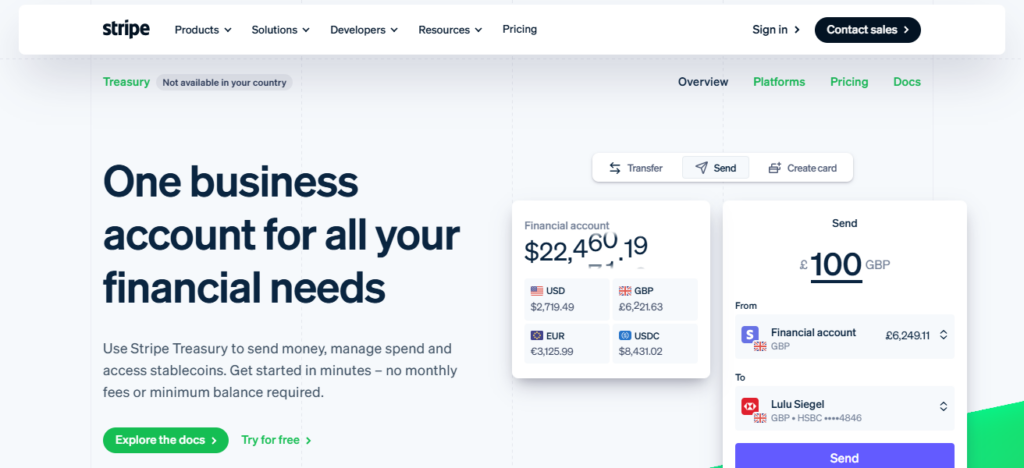
Stripe Treasury can help fintech applications with high operational barriers and market competitiveness, displace competitors and simplify complex financial operations.
Stripe Treasury Pros & Cons
| Pros | Cons |
|---|---|
| Seamless integration with Stripe ecosystem | Limited availability in some regions |
| Strong compliance and security framework | Can become expensive at scale |
| Developer-friendly documentation and APIs | Requires Stripe infrastructure adoption |
| Fast deployment for embedded finance products | Custom configurations may need technical expertise |
| Scalable for startups and enterprises | Fewer banking partner options than some competitors |
2. Marqeta
Marqeta’s API-first payment infrastructure and card issuing platform means that companies looking to launch credit products and Virtual Cards can do so with ease, especially in the context of payment and commerce solutions.
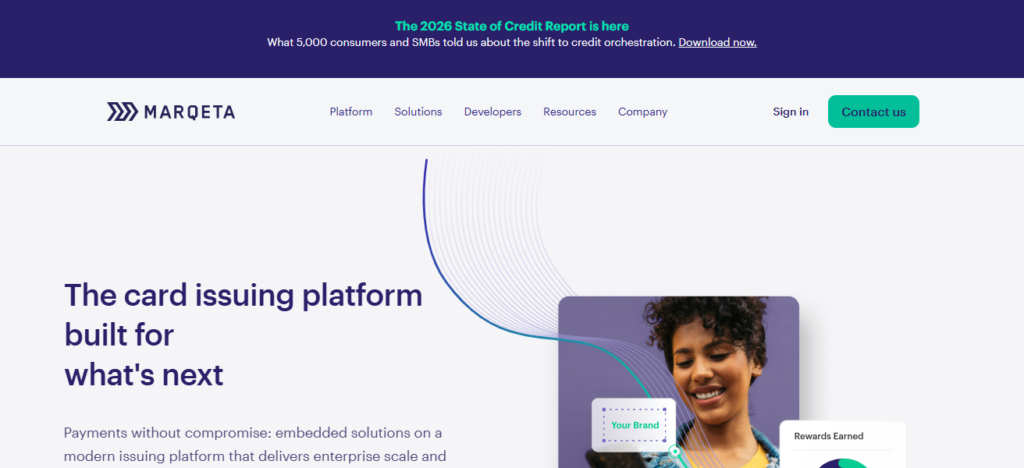
This makes Marqeta a popular choice for emerging FinTechs and Digital Banks. Marqeta offers greater control on customer spend and risk, enhanced credit features, and frictionless real time transaction management.
Marqeta Pros & Cons
| Pros | Cons |
|---|---|
| Advanced card issuing capabilities | Primarily focused on card-based products |
| Real-time transaction controls | Pricing may be complex for small businesses |
| Highly customizable credit programs | Integration can require development resources |
| Strong fraud prevention tools | Not ideal for every lending use case |
| Trusted by major fintech companies | International coverage varies by market |
3. Unit
Unit is a comprehensive embedded finance API that allows companies to offer white-label lending and banking solutions.
Unit simplifies the process of adding Lending, Banking, Payments and Card services to existing applications.
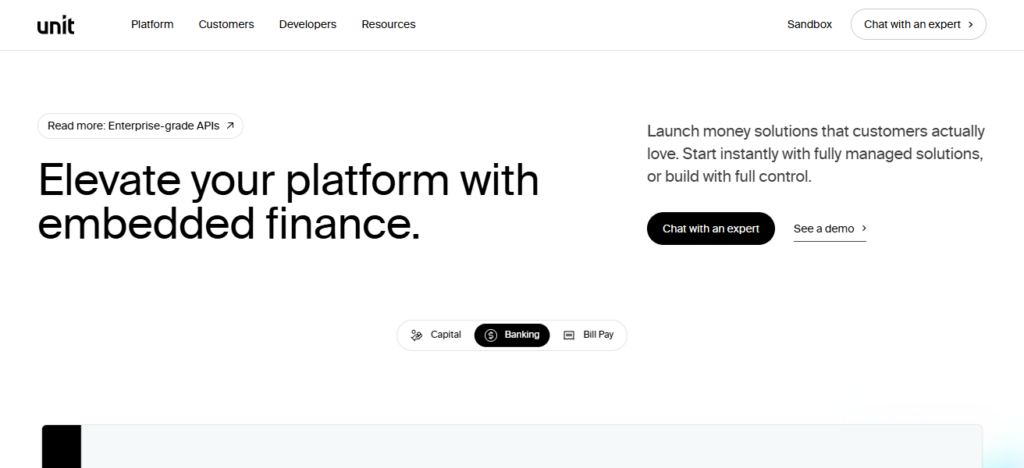
Unit’s API and infrastructure takes on the majority of the compliance and regulatory burden, thus allowing companies to focus on the customer experience and service innovation.
Unit’s flexible and scalable solutions means that both startups and large corporations can justify the expense of adding financial services in a regulatory compliant manner.
Unit Pros & Cons
| Pros | Cons |
|---|---|
| All-in-one banking and credit infrastructure | Limited global availability |
| Handles many compliance requirements | Dependence on partner banking network |
| Fast API integration process | Advanced customization may require support |
| Startup-friendly platform | Fewer enterprise features than older providers |
| Supports accounts, cards, and lending | Feature availability differs by region |
4. Bond
Bond enables businesses to easily offer their own lending and other financial solutions with quick API integrations.
Businesses can build their own financial experiences on the platform and customize them, while Bond’s network of banking partners handles the background work on compliance.
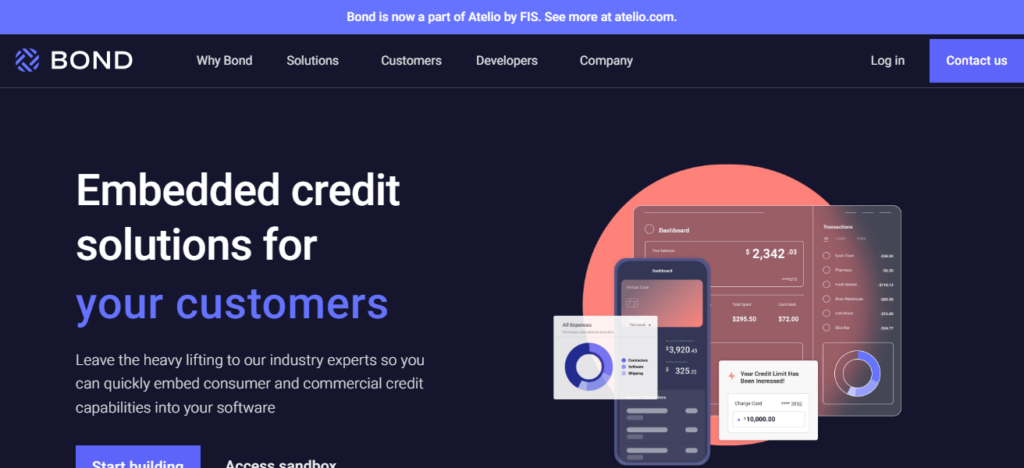
By focusing on the development and operational costs, Bond helps non-financial companies access the opportunities in the fintech industry.
Using Bond’s infrastructure, businesses can offer their customers more engagement with their solutions as well as added revenue opportunities for the company.
Bond Pros & Cons
| Pros | Cons |
|---|---|
| Easy-to-use API architecture | Banking partner options may be limited |
| Accelerates product launch timelines | Platform changes can impact integrations |
| Strong compliance support | Premium services can increase costs |
| Suitable for non-financial businesses | Smaller ecosystem than larger competitors |
| Flexible white-label solutions | Regional service restrictions may apply |
5. Synctera
Synctera provides a platform for integrated banking solutions for the fintech industry by connecting fintech companies with compliant banking partners.
With Synctera’s simplified API, companies can embed credit solutions and lending services with easy-to-use financial accounts.
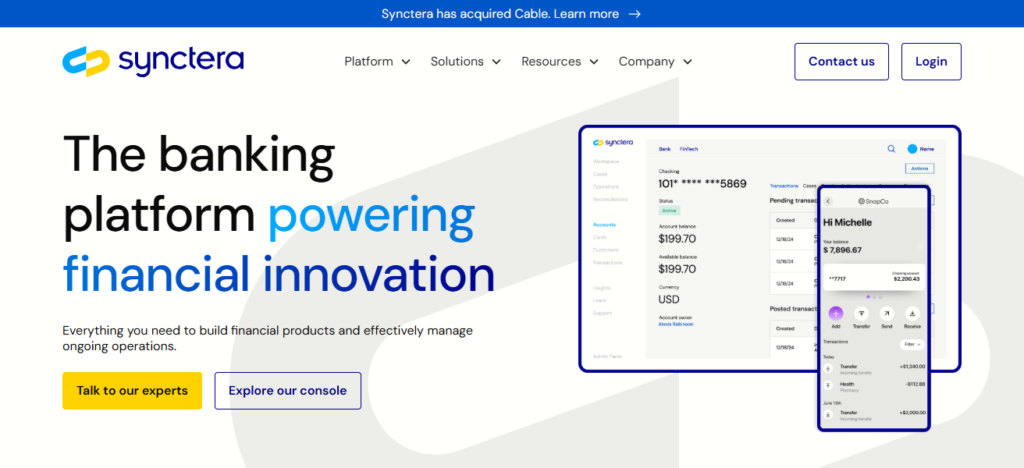
With a growing network of banking partners, Synctera provides a great deal of flexibility and infrastructure to support compliant credit solutions for evolving market needs.
Synctera Pros & Cons
| Pros | Cons |
|---|---|
| Connects fintechs directly with banks | Primarily focused on U.S. market |
| Simplifies compliance management | Bank selection may influence capabilities |
| Flexible embedded finance infrastructure | Requires fintech compliance understanding |
| Streamlined onboarding workflows | Newer platform than established rivals |
| Growing banking partner network | Enterprise pricing may be higher |
6. Galileo Financial Technologies
Many of the successful digital banking applications and fintech solutions available globally have been built with the help of Galileo Financial Technologies.
Issuing, managing, and utilizing credit accounts can be built easily through Galileo’s API and integrated with transaction processing, card services, and payment services.
Companies can have powerful lending and credit solutions while relying on the depth of Galileo’s financial services expertise.
Companies can trust Galileo’s infrastructure and services while conducting a large volume of transactions.
Galileo Financial Technologies Pros & Cons
| Pros | Cons |
|---|---|
| Proven enterprise-grade infrastructure | More suitable for larger organizations |
| Supports high transaction volumes | Implementation can be complex |
| Extensive fintech industry experience | Pricing may not suit startups |
| Reliable payment processing systems | Longer deployment timelines possible |
| Comprehensive API ecosystem | Requires dedicated technical resources |
7. Treasury Prime
Incorporating Treasury Prime’s banking API into your business provides direct access to lending and credit services from your own product or service.
Treasury Prime serves as a connector for banking institutions and fintech players, making the integration of financial services to products seamless.
Treasury Prime’s design and infrastructure guarantee custom credit solutions in a regulated and operationally responsive framework.
Organisations can provide a rapid rollout of embedded financing services to their customers and can realise significant new revenue and greater customer loyalty.
Treasury Prime Pros & Cons
| Pros | Cons |
|---|---|
| Strong banking API connectivity | Mainly concentrated in North America |
| Flexible lending and credit integrations | Banking partner availability may vary |
| Supports rapid product development | Regulatory complexity still exists |
| Robust compliance capabilities | Smaller global footprint |
| Scalable infrastructure for growth | Advanced features may cost extra |
8. Railsr
Railsr combines infrastructure for Banking, Cards, and Lending, making it the most advanced embedded finance API in the market.
Organisations can launch custom finance ecosystems by overcoming the primary issue of cost associated with back-end financial infrastructure.
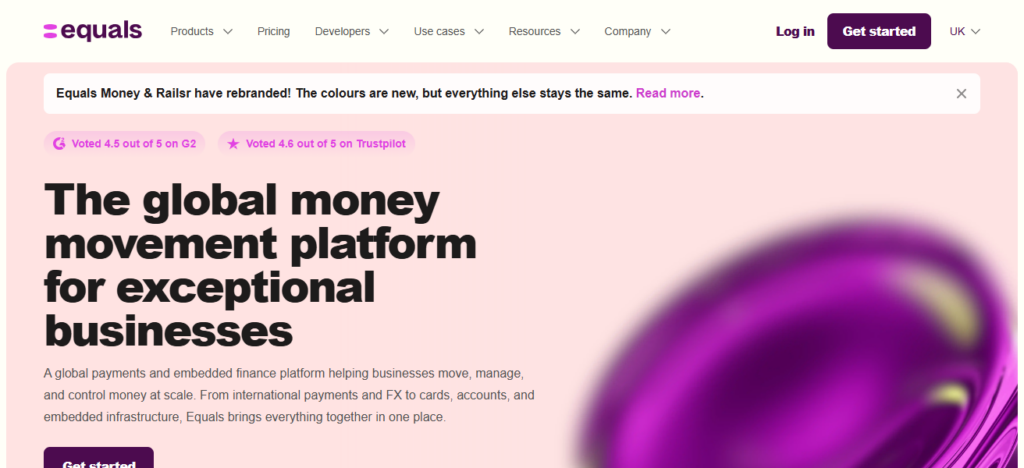
Railsr’s banking API speeds development and implementation of new financial services while reducing financial regulation and banking complexity.
Railsr Pros & Cons
| Pros | Cons |
|---|---|
| Unified banking, cards, and lending platform | Regulatory requirements vary by region |
| Flexible embedded finance solutions | Some integrations may require customization |
| Helps reduce development costs | Product availability differs across markets |
| Supports white-label financial products | Service expansion can depend on partnerships |
| Suitable for multiple industries | Enterprise plans can be expensive |
9. Weavr
Weavr is an embedded finance API that provides digital products with embedded credit and lending services.
Weavr is a popular solution for SaaS companies that want to implement financial services (FS) features without becoming licensed as a financial service provider (FSP).
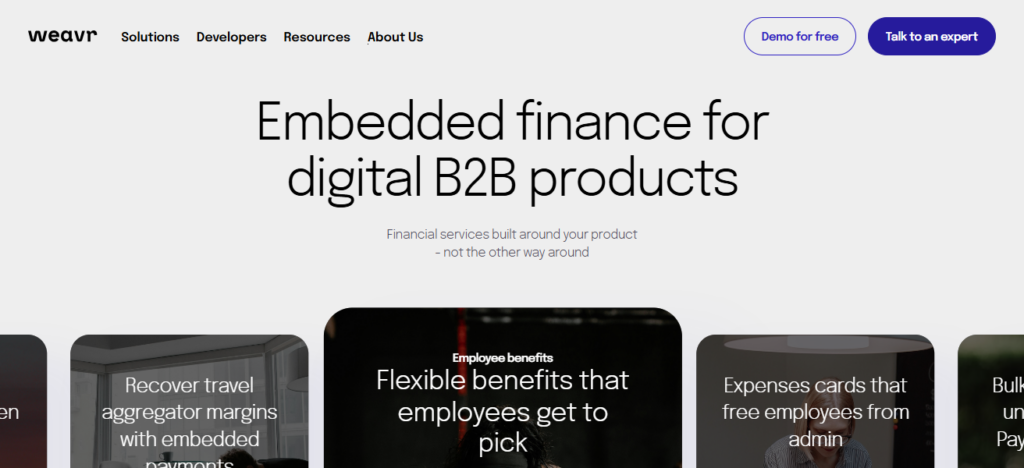
Using Weavr’s embedded finance API will help you increase customer satisfaction, user engagement, and revenue.
Weavr Pros & Cons
| Pros | Cons |
|---|---|
| Designed for SaaS and digital platforms | Less established than major competitors |
| Modular API structure | Limited banking network compared to larger providers |
| Fast implementation process | Certain advanced features may require upgrades |
| Enables new revenue streams | Regional availability may be restricted |
| Strong user experience focus | Smaller ecosystem of third-party integrations |
10. Solaris
Solaris is a Banking-as-a-Service (BaaS) provider known for embedded credit products, lending products, and payment products. Solaris operates with a lot of regulatory supervision.
Using Solarix credit services, a fully branded credit product can be built and offered by a different company as an embedded offering.
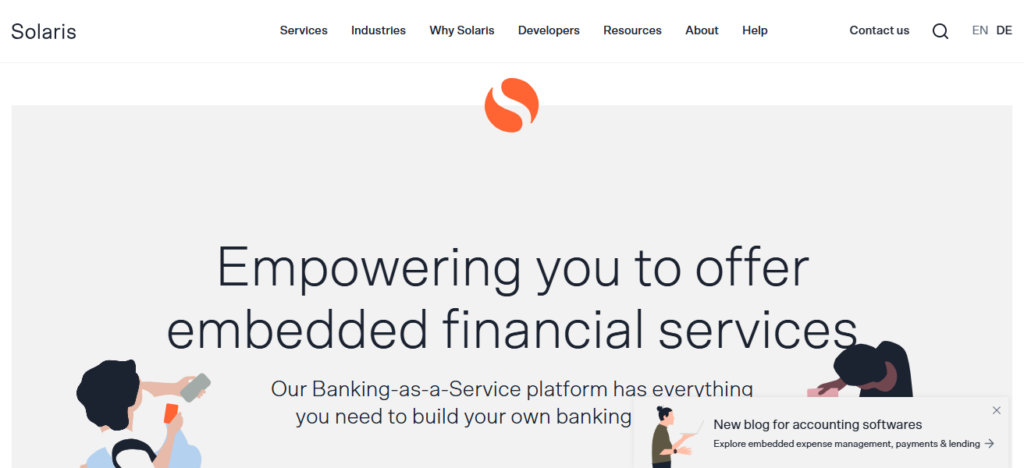
Solaris services are scalable and designed for growing needs. Solaris provides a lot of flexibility and a variety of services for BaaS.
And by bridging the gap of compliance and operational needs, Solaris gives the freedom to focus on innovation and the customer base, assuring the offering of reliable financial services.
Solaris Pros & Cons
| Pros | Cons |
|---|---|
| Fully regulated banking infrastructure | Primarily focused on European markets |
| Strong compliance and risk management | Complex regulatory processes remain |
| Supports branded financial products | Enterprise implementation may take time |
| Scalable banking-as-a-service platform | Pricing may be higher for small startups |
Criteria for Identifying the Top Embedded Finance APIs
Versatility of the API
We considered the customisation capabilities of the API. This included the presence of developer documentation, SDKs, and the average time taken to integrate and customise the API.
Regulations & Safety
We also examined the API provider’s KYC/AML support, encryption of data, fraud detection, and general regulatory and safety compliance.
Future Growth
APIs that support the growth of an organisation through expanding and sustaining high levels of operation also scored higher.
Partnerships with Banks
The value of the API provider’s banking network will be most visible in the services and products offered to clients.
Credit Offerings
We also considered the personal and business lending services that the APIs offered, as well as the issuing of credit cards, BNPL, variable credit lines, and other financing solutions. The APIs that offered other credit services scored higher.
Support and Reliability
This factor accounts for the assessment of support and technical assistance, SLAs, uptime, and reviews.
Flexibility and Innovation
This last factor considers support for new financial technologies and innovation in embedded lending and financial products.
Conclusion
In conclusion, the best embedded finance APIs for integrating white-label credit offer businesses the opportunity to seed lending, credit, and banking services without the burden of developing elaborate financial infrastructure.
Embedded finance solutions from Stripe Treasury, Marqeta, Unit, Bond, and Solaris are designed for scalability, with embedded compliance and flexible integrations.
With the right API, companies will improve customer experience, increase revenue potential, and maintain a competitive edge within the rapidly expanding embedded finance landscape.
FAQ
Which API is easiest to integrate?
Stripe Treasury, Bond, and Weavr are known for developer-friendly integrations and documentation.
Are embedded finance APIs secure?
Yes. Most leading providers offer encryption, fraud monitoring, KYC, AML, and regulatory compliance features.
Can startups use embedded finance APIs?
Absolutely. Platforms like Unit, Bond, and Weavr are specifically designed for startups and growing fintech companies.
Which embedded finance API supports banking-as-a-service?
Treasury Prime, Solaris, and Stripe Treasury are among the top Banking-as-a-Service providers.