


I will analyze the Best MPC Wallet Infrastructure Providers who enable security of digital assets using advanced Multi-Party Computation technology.
These providers implement secure key management alongside wallet-as-a-service, multi-chain, and enterprise security. We discuss the features and the benefits of these providers. Moreover, we analyze their positive impact in the field of crypto custody and Web3 security.
What is an MPC Wallet?
An MPC (Multi-Party Computation) Wallet is a system that enables a group of encrypted parties to securely control the signing of a private key for a cryptocurrency wallet, without having to reveal the complete private key to the entire group.
Traditionally, each cryptocurrency wallet has a complete private key that must be securely stored. MPC wallets offer enhanced security to planning and operations of banks and Web3 applications.
Why Use MPC Wallet Infrastructure Providers?
- Security of Digital Assets: Digital assets remain protected with MPC encryption and distributed key management.
- Removal of Single Points of Failure: Risks are eliminated when the control of private keys is divided among multiple parties.
- Institutional Crypto Custody Needs are Met: Custody solutions to banks and funds and large organizations are provided.
- Improved Controls for Compliance: Features for transaction monitoring, permissions, audit trails, and governance are provided.
- Updated Web3 Infrastructure: Businesses can effortlessly secure wallets with the use of simple APIs and SDKs.
- Enterprise Ready Scalability: The needs of the developer, fintech, and global enterprise communities are addressed.
Key Points & Best MPC Wallet Infrastructure Providers
| Platform | Explanation |
|---|---|
| Fireblocks | Industry-leading institutional wallet platform offering WaaS, tokenization, MPC security, and treasury management. |
| Cobo | Enterprise self-custody solution using MPC-TSS, controls, compliance, and SOC 2 certification. |
| Utila | Scalable institutional digital asset platform enabling secure management and blockchain infrastructure development. |
| Dfns | API-first WaaS platform helping fintechs integrate secure programmable crypto wallets easily. |
| Web3Auth | Modular MPC wallet solution enabling social login, onboarding, and non-custodial experiences. |
| Portal | Embedded MPC wallet provider offering APIs, account abstraction, and developer tools. |
| Silence Laboratories | Advanced DKLs23 protocol platform delivering post-quantum digital signature security solutions. |
| Para | Universal embedded wallet suite combining MPC, passkeys, and multi-chain functionality. |
| Particle Network | Account abstraction and MPC SDK platform enabling social logins across platforms. |
| Desig | Multi-chain MPC multisig wallet combining key generation with efficient team workflows. |
10 Best MPC Wallet Infrastructure Providers
1. Fireblocks
Fireblocks is a leading MPC wallet infrastructure provider trusted by banks, large corporations, and digital asset institutions.
Using a combination of Multi-Party Computation (MPC) Wallet-as-a-Service (WaaS) and tokenization, Fireblocks offers a secure way for institutions to manage digital currencies and digital assets.
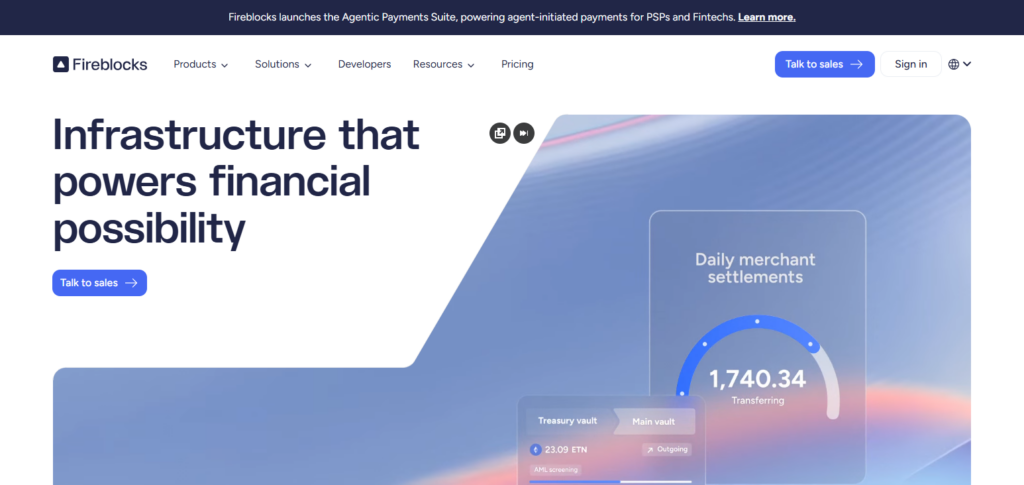
Fireblocks is the preferred provider for many large corporations who design secure Web3 financial and blockchain applications. This is due to Fireblocks’ advanced policy controls and automated workflows, along with its built-in compliance functionality.
Fireblocks – Key Features
| Feature | Description |
|---|---|
| MPC Technology | Provides advanced multi-party computation security for protecting digital assets. |
| Wallet-as-a-Service | Enables businesses to build scalable crypto wallet solutions easily. |
| Tokenization Support | Supports creation and management of tokenized assets securely. |
| Policy Management | Offers customizable transaction rules and approval workflows. |
| Institutional Security | Delivers enterprise-grade protection for banks and financial institutions. |
2. Cobo
Cobo designs enterprise-level MPC wallet infrastructure which is secure for digital asset custody and management. Using MPC-TSS technology, Cobo eliminates single points of failure, while also providing advanced permission controls and institutional security features.
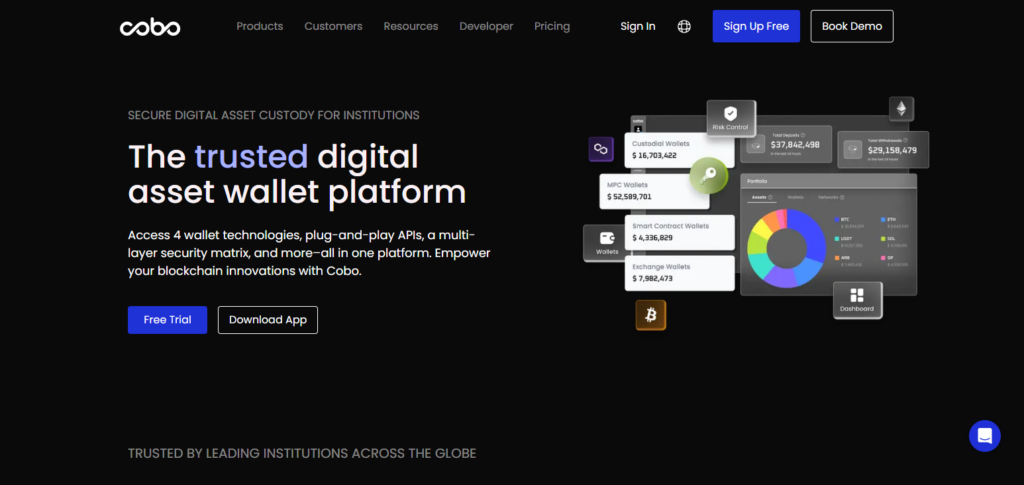
Cobo offers multiple scalable wallet solutions (i.e., self-custody and custody-as-a-service) to its Web3 customers. With strong compliance standards and having achieved a SOC 2 Type II certification, Cobo enables safe custody of digital assets at an enterprise level.
Cobo – Key Features
| Feature | Description |
|---|---|
| MPC-TSS Security | Uses threshold signatures to secure private key operations. |
| Self-Custody Wallets | Allows organizations complete control over digital assets. |
| Access Controls | Provides detailed user permissions and transaction approvals. |
| Compliance Standards | Includes SOC 2 Type II certified security practices. |
| Multi-Chain Support | Supports multiple blockchain networks for asset management. |
3. Utila
Utila is a flexible institutional MPC wallet that provides secure wallet creation with the added convenience of automated workflows. Tailored for businesses of all sizes, Utila combines the operational efficiencies of MPC security to simplicity of use.
Scalable infrastructure allows treasury functionality to be managed safely, and secure operations are maintained for business discretion.
Utila – Key Features
| Feature | Description |
|---|---|
| Institutional Wallet Management | Helps enterprises securely manage blockchain assets. |
| MPC-Based Security | Protects wallets without exposing private keys. |
| Automated Workflows | Simplifies transaction approvals and operational processes. |
| Treasury Management | Supports secure digital asset treasury operations. |
| Scalable Infrastructure | Designed for organizations of different sizes. |
4. Dfns
Dfns is an API-first, Wallet-as-a-Service that provides an avenue to integrate secure crypto wallets into applications for fintechs, businesses, and developers. Using MPC technology, programmable wallet controls, and developer-backed APIs, blockchain meets its users.
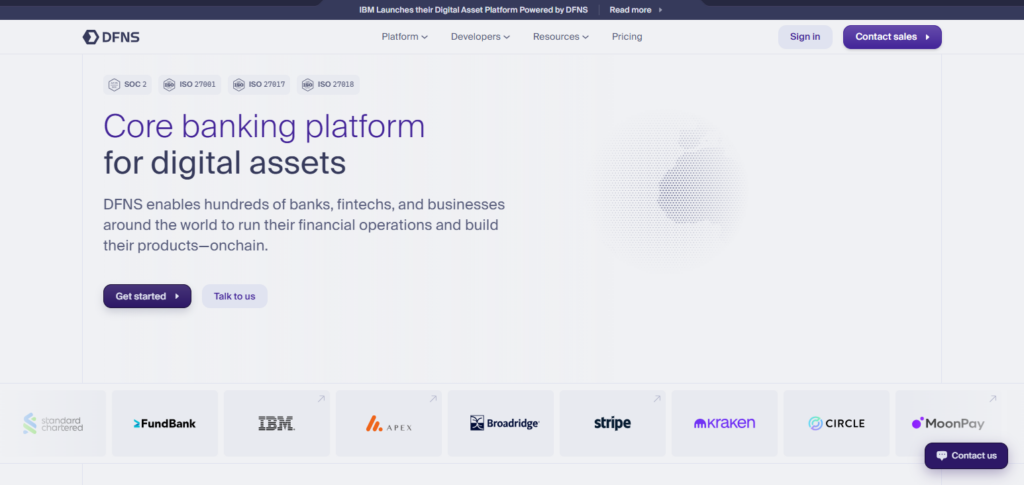
Dfns assists in the creation of non-custodial wallets, enables the automation of transactions, and allows for the custody of digital assets—all without the burden of developing a security framework.
Its adaptable design supports Web3, financially backed, and enterprise applications that require wallet frameworks that are secure and compliant and can be scaled.
Dfns – Key Features
| Feature | Description |
|---|---|
| API-First Architecture | Enables quick wallet integration through developer APIs. |
| Programmable Wallets | Allows automated crypto wallet operations and controls. |
| Non-Custodial Security | Provides users ownership without private key risks. |
| Developer Tools | Offers SDKs and APIs for Web3 applications. |
| Enterprise Integration | Supports fintech and blockchain business solutions. |
5. Web3Auth
Web3Auth, with a strong focus on improving user onboarding and access to Web3, solves some of the pain points of traditional wallet infrastructure with modular MPC technology.
The combination of social logins and MPC cryptography creates a non-custodial secure wallet with an effortless user experience.
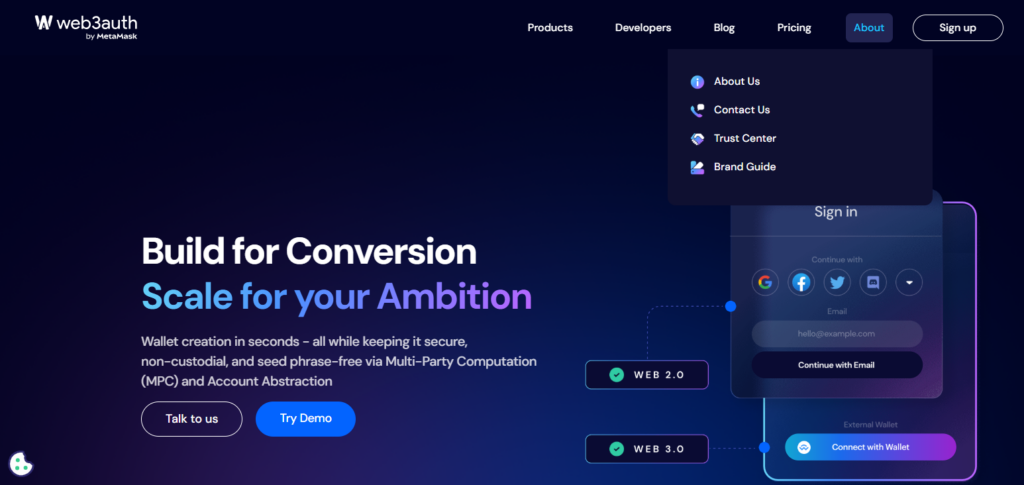
The resulting applications become user-friendly blockchain solutions. The overwhelming popularity of Web3Auth for games,
DeFi, and other Web3 applications can be attributed to the decentralized protection of user wallets, the significantly reduced effort of seed phrase management, and the ease of wallet creation.
Web3Auth – Key Features
| Feature | Description |
|---|---|
| Social Login Wallets | Enables wallet access using familiar authentication methods. |
| MPC Infrastructure | Provides secure decentralized key management technology. |
| Seedless Experience | Removes complexity of traditional seed phrase handling. |
| Consumer-Friendly Design | Improves Web3 onboarding for mainstream users. |
| Multi-Platform Support | Works with gaming, DeFi, and Web3 applications. |
6. Portal
Portal solves the challenges of building blockchain applications for developers and businesses with embedded MPC wallet infrastructure. Web3 can be integrated into applications with ease, courtesy of the wallet APIs and secure key management with account abstraction offered by the
MPC technology of Portal. Private key handling can be simplified with a customizable wallet user experience. Secure management of transactions with flexible authentication and wallet deployment make the infrastructure of Portal ideal for gaming, financial, and other decentralized applications.
Portal – Key Features
| Feature | Description |
|---|---|
| Embedded MPC Wallets | Helps developers integrate wallets directly into applications. |
| Wallet APIs | Provides flexible APIs for blockchain wallet development. |
| Account Abstraction | Enables simplified user transaction experiences. |
| Key Management | Secures private keys using advanced cryptography. |
| Enterprise Solutions | Supports scalable Web3 application deployments. |
7. Silence Laboratories
Silence Laboratories advances the ability to use more sophisticated MPC infrastructures with the innovative cryptographic technologies that they have invented, such as the DKLs23 protocol.
The company specializes in secure digital signatures and cryptography, privacy-preserving computation, and advanced security solutions for digital wallets. Their framework enhances security of blockchains and enables preparedness for cognitive threats.
Silence Laboratories supplies developers and businesses tools and infrastructure to cryptographically manage digital assets and Web3-enabled dApps safely and effectively.
Silence Laboratories – Key Features
| Feature | Description |
|---|---|
| DKLs23 Protocol | Provides advanced cryptographic security infrastructure. |
| Post-Quantum Security | Prepares wallet systems against future quantum threats. |
| Digital Signatures | Enables secure multi-party transaction verification. |
| Privacy Computing | Supports confidential blockchain operations and workflows. |
| Developer Infrastructure | Offers production-ready cryptographic solutions for applications. |
8. Para
Paras’ infrastructure provides developers embedded secure wallets for all blockchains and enables user friendly crypto wallets that span EVM, Solana, and Cosmos.
Para’s infrastructure is built for Web3, game, and consumer applications that require wallet as a service with easy to use secure authentication and flexible blockchain connectivity.
Para – Key Features
| Feature | Description |
|---|---|
| Embedded Wallet Suite | Provides simple wallet integration for developers. |
| MPC Security | Protects user assets through distributed key management. |
| Passkey Authentication | Enables passwordless and secure wallet access. |
| Multi-Chain Support | Works across EVM, Solana, and Cosmos networks. |
| User-Friendly Onboarding | Simplifies Web3 wallet creation experiences. |
9. Particle Network
Particle Network combines MPC wallet technology with account abstraction to remove the barriers of wallets for Web3 users. Their technology enables developers to create applications that cross multiple blockchains and incorporate social login wallets and universal accounts.
Particle Network’s focus on wallet simplification embraces traditional authentication methods. Their infrastructure and development tools for wallet security, user access, and management of digital assets address the needs of gaming, DeFi, and consumer Web3 focused projects.
Particle Network – Key Features
| Feature | Description |
|---|---|
| MPC Wallet SDKs | Helps developers create secure blockchain wallets. |
| Account Abstraction | Improves user experience with smart wallet features. |
| Social Login Support | Enables simple authentication across applications. |
| Cross-Chain Functionality | Supports seamless blockchain interactions across networks. |
| Gaming Integration | Designed for Web3 games and applications. |
10. Desig
Desig developed an MPC multi-sig wallet that works across multiple chains. Desig is intended for teams who wish to collaborate on certain projects, as it incorporates the means for distributed key generation and simpler workflow. Desig aims at optimizing the operation for Web3 teams, DAOs, and companies with
shared wallet control. Desig provides secure infrastructure for cross-chain access to asset management with reduced risk of distributed private key control due to its flexible MPC security and team permissions.
Desig – Key Features
| Feature | Description |
|---|---|
| MPC Multisig Wallet | Enables secure shared wallet management for teams. |
| Distributed Key Generation | Reduces private key security vulnerabilities. |
| Multi-Chain Support | Allows asset management across various blockchains. |
| Team Workflows | Simplifies collaborative transaction approvals. |
| Enterprise Security | Provides secure digital asset management infrastructure. |
Future Trends in MPC Wallet Infrastructure
- AI Transaction Monitoring: Expect improved fraud detection, risk assessment, and enhanced security of cryptocurrency transactions to develop as AI advances.
- Increased Institutional Crypto Custody: More banks and businesses will use MPC wallets for more secure management of digital assets.
- Tokenized RWA Support: MPC wallets will provide secure storage and transaction capabilities for tokenized real world assets.
- Account Abstraction Growth: Further simplification of blockchain will be achievable thorough the smart wallet’s flexible and automated control.
- Post-Quantum Cryptography: Improved methods of cryptography will provide safe storage for wallets from the threat of computing in the future.
- MPC Infrastructure Adoption: More banks and financial businesses will adopt the regulated digital asset services provided through the MPC infrastructure.
Conclusion
In Conclusion Best MPC Wallet Infrastructure ProvidersMPC Wallet Infrastructure Providers deal with modern issues around digital asset security. They provide sophisticated key management, institutional custody, and Web3 connective ease.
Scalable solutions are provided by Fireblocks, Cobo, Utila, and Dfns. As the demand for the technologies surrounding blockchain, decentralized applications, and tokenization continue
To grow, the need for MPC Wallets to securely manage and facilitate the use of digital currency will become even more valuable and unavoidable.
Frequently Asked Questions (FAQ)
How does an MPC Wallet improve crypto security?
MPC wallets split private key control among multiple parties, reducing hacking risks and single points of failure.
Why do enterprises use MPC wallet solutions?
Enterprises use MPC wallets for secure custody, transaction control, compliance, and scalable digital asset management.
Which are the best MPC Wallet Infrastructure Providers?
Popular providers include Fireblocks, Cobo, Utila, Dfns, Web3Auth, Portal, Para, and Particle Network.
Are MPC wallets better than traditional crypto wallets?
Yes, MPC wallets provide enhanced security by avoiding single private key storage and improving access controls.
