


This article will cover the Top Embedded Crypto API Providers allowing easy cryptocurrency integration for businesses. These API solutions simplify secure crypto transactions and connectivity to crypto wallets, trading, and blockchains.
Development efforts to build out these features are minimal. These providers’ solutions are great for modern digital asset experiences from fintech apps to Web3 platforms. These APIs are scalable, secure, reliable, and compliant.
What Are Embedded Crypto APIs?
Developers have APIs to facilitate the infrastructure needed to integrate cryptocurrency features into applications. APIs are available that support payments and provide wallets and the ability to trade and manage digital assets and connect to blockchains.
Fintech, marketplace and Web3 companies use crypto APIs to add digital assets to their applications. Crypto APIs help decrease complexity, ease compliance and decrease time to market for products.
Why Businesses Should Use Embedded Crypto APIs?
Lower Operational Costs: Reduces expenses related to blockchain development, maintenance, and technical management.
Faster Crypto Integration: Enables businesses to add cryptocurrency features quickly without building complex systems.
Reduced Development Complexity: Simplifies blockchain integration by providing ready-made APIs and infrastructure.
Better Customer Experience: Offers seamless crypto payments, wallets, and digital asset services for users.
Regulated Infrastructure Access: Provides compliance-ready solutions with security and regulatory support.
Key Points & 10 Best Embedded Crypto API Providers
| Embedded Crypto API Provider | Key Point |
|---|---|
| Coinbase Developer Platform | Offers secure crypto APIs for buying, selling, wallets, and blockchain integrations. |
| Fireblocks | Provides institutional-grade wallet infrastructure with advanced digital asset security solutions. |
| BitGo | Delivers enterprise crypto custody, wallets, and transaction management APIs globally. |
| Zero Hash | Enables embedded crypto trading, settlement, and compliance solutions for businesses. |
| MoonPay | Provides crypto payment APIs simplifying user onboarding and asset purchases. |
| Ramp Network | Offers developer-friendly crypto APIs for instant fiat-to-crypto transactions. |
| Circle | Provides stablecoin APIs for payments, wallets, and blockchain applications. |
| Alchemy | Delivers blockchain infrastructure APIs supporting scalable Web3 application development. |
| Transak | Enables seamless crypto purchases through embedded payment and verification APIs. |
| Wyre | Offers crypto payment APIs with wallets and global transaction support. |
10 Best Embedded Crypto API Providers
1. Coinbase Developer Platform
Coinbase Developer Platform offers extensive embedded crypto API features and is the most popular option for embedding digital assets in applications. Their APIs cover crypto trading, wallets, payments, and identity management, blockchain APIs, and Web3 user management.
Developers can build safe and secure Web3 experiences without having to design and build the complex infrastructure that accompanies blockchain.
Coinbase Developer Platform offers enterprise-grade security and regulatory and compliance positioning in conjunction with their scalable APIs. This allows fintech companies, online marketplaces, and SaaS companies to offer crypto services and improve customer engagement and transactional throughput.
Coinbase Developer Platform Features
| Feature | Description |
|---|---|
| Crypto Trading APIs | Enables businesses to integrate buying, selling, and trading crypto assets. |
| Secure Wallet Infrastructure | Provides reliable wallet solutions for managing digital currencies safely. |
| Blockchain Connectivity | Supports easy access to blockchain networks and Web3 applications. |
| Developer-Friendly Tools | Offers APIs, documentation, and resources for faster integration. |
| Enterprise Security | Includes advanced security controls and compliance-focused infrastructure. |
2. Fireblocks
Fireblocks provides embedded crypto infrastructure built for institutional customers who demand secure digital asset management. Their embedded APIs allow companies to build secure crypto wallets, transfers, tokenization, and other blockchain apps with advanced security controls.
Fireblocks employs a form of multi-party computation (MPC) to improve the security of custodial private keys and decrease the transactional risk. The advanced security controls offered
by Fireblocks’ system makes it an appealing choice for financial institutions, trading platforms, and Web3 companies that offer custodial solutions, compliance, and a secure scalable crypto operating environment.
Fireblocks Features
| Feature | Description |
|---|---|
| MPC Wallet Technology | Uses multi-party computation for secure private key management. |
| Institutional Custody | Provides secure digital asset storage for enterprises and institutions. |
| Transaction Management | Enables controlled crypto transfers with approval workflows. |
| Tokenization Support | Helps businesses create and manage tokenized digital assets. |
| Compliance Solutions | Supports regulatory requirements with built-in security monitoring. |
3. BitGo
BitGo focuses on crypto custody, wallet infrastructure, and settlement APIs. Their embedded crypto APIs offer firms the ability to manage advanced crypto custody without the need to build security controls on their crypto management system.
BitGo’s APIs support many different crypto assets, automated transaction scheduling, and enterprise-grade compliance.
BitGo is highly sought after by crypto exchanges, fintech applications, and investment platforms that need secure asset custody and a compliance and enterprise-grade global settlement layer for blockchain transactions.
BitGo Features
| Feature | Description |
|---|---|
| Multi-Currency Wallets | Supports storage and management of multiple cryptocurrencies. |
| Institutional Custody | Delivers insured and secure digital asset custody services. |
| Transaction Automation | Simplifies crypto transfers through programmable transaction tools. |
| Security Controls | Provides advanced protection against unauthorized asset access. |
| Compliance Management | Helps businesses meet cryptocurrency regulatory standards globally. |
4. Zero Hash
With Zero Hash’s infrastructure, companies can easily add crypto trading and settlement services. Built on an API-first approach, Zero Hash’s platform puts the burden of custody, compliance, and backend operations on Zero Hash.
With Zero Hash, companies can add crypto trading services and not worry about the burden of becoming a regulated crypto trading company.
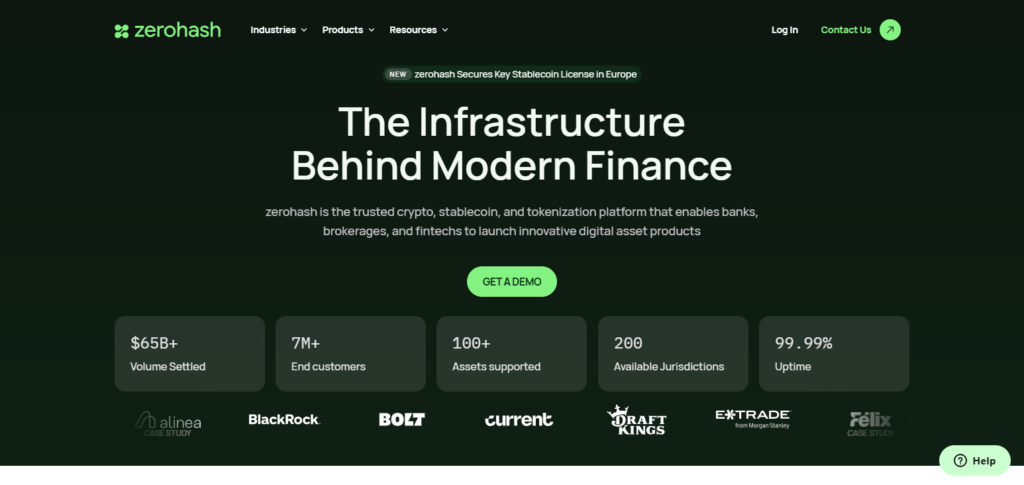
Zero Hash has become very popular with fintech companies, payment solution companies, and financial services applications due to the secure approach, licensing support, operational efficiency, and simplicity of integrating crypto services.
Zero Hash Features
| Feature | Description |
|---|---|
| Embedded Crypto Trading | Allows platforms to offer crypto trading directly. |
| Regulatory Infrastructure | Handles licensing and compliance requirements for businesses. |
| Liquidity Management | Provides access to crypto liquidity providers and markets. |
| Settlement APIs | Enables efficient digital asset transaction settlements. |
| White-Label Solutions | Allows companies to launch branded crypto experiences. |
5. MoonPay
MoonPay’s crypto payment APIs allow companies to implement an easy way of purchasing crypto directly from their applications. With MoonPay’s infrastructure, users have the capability to sell and buy crypto, significantly improving the app’s onboarding and accessibility.

MoonPay allows companies to add crypto checkout, wallet, and payment services and keeps the burden of compliance and fraud issues on MoonPay. This ease of integration has led to significant adoption of MoonPay in the gaming, Web3, and fintech companies that offer global crypto services.
MoonPay Features
| Feature | Description |
|---|---|
| Crypto Payment APIs | Enables simple cryptocurrency purchases inside applications. |
| Fiat On-Ramp Solutions | Converts traditional currencies into digital assets easily. |
| Global Payment Support | Supports multiple payment methods across different regions. |
| Fraud Prevention | Provides security systems for safer crypto transactions. |
| User Verification | Includes identity verification tools for compliant onboarding. |
6. Ramp Network
Ramp Network’s developer tools and APIs significantly ease the process of integrating payment services for straight crypto purchases. Ramp Network’s services are fully embedded in applications, ensuring compliance and removing the need for extensive internal payment services.

Ramp Network is very popular among gaming, Web3, and DApps because of the transparency and ease of crypto services. It also significantly improves the crypto services onboarding time. These features help DApps offer a better overall user experience.
Ramp Network Features
| Feature | Description |
|---|---|
| Fiat-to-Crypto Conversion | Allows users to purchase crypto using traditional payments. |
| Fast User Onboarding | Simplifies account creation and verification processes. |
| Multi-Blockchain Support | Works with various blockchain networks and assets. |
| Payment Integration | Provides seamless checkout experiences for Web3 platforms. |
| Developer APIs | Offers flexible APIs for quick application integration. |
7. Circle
Circle provides embedded crypto APIs based on stablecoin payments, digital wallets, and crypto payment services. Circle’s infrastructure combines flexible programmable money with stablecoins, like USDC.
Companies build payment solutions, treasury services, and global settlement solutions based on reliable blockchain connections.
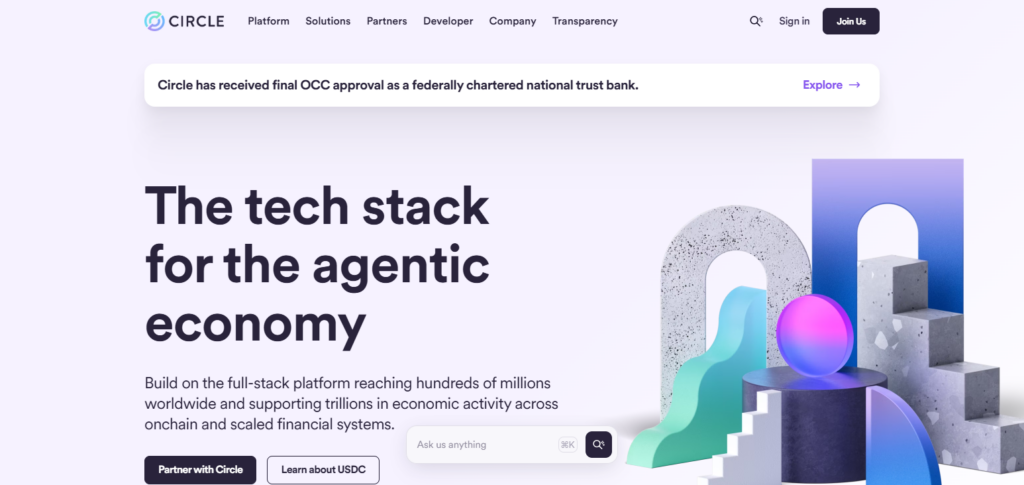
Circle’s APIs are for fintech and companies that desire rapid and transparent cross-border payments and a Flexible, Frictionless digital currency system, all while maintaining the necessary compliance and security.
Circle Features
| Feature | Description |
|---|---|
| Stablecoin APIs | Enables businesses to integrate USDC payment solutions. |
| Digital Wallet Services | Provides programmable wallet infrastructure for applications. |
| Global Payments | Supports faster international blockchain-based transactions. |
| Treasury Management | Helps businesses manage digital currency operations efficiently. |
| Blockchain Infrastructure | Provides secure connectivity with blockchain networks. |
8. Alchemy
Alchemy provides a set of blockchain infrastructures and APIs that offer the tools necessary to develop scalable Web3 and crypto-based infrastructures. Their tools serve the entire development process, digitization, and customer wallet services for multiple blockchains.
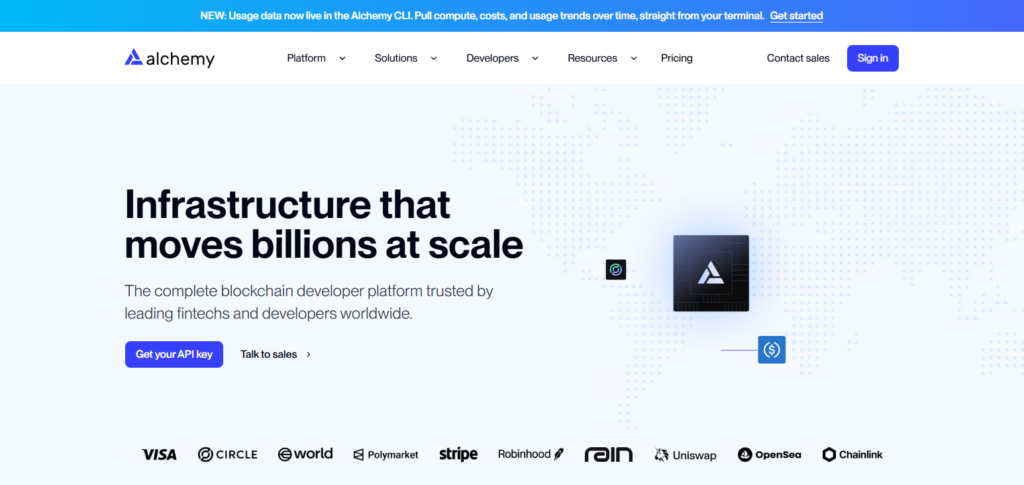
For the development of decentralized apps, platforms for NFTs, games, and blockchain infrastructures, Alchemy eliminates the complex backend systems of blockchain infrastructures.
Alchemy’s advanced development tools and performant networks help to push the boundaries of Web3 and scalable applications.
Alchemy Features
| Feature | Description |
|---|---|
| Blockchain APIs | Provides reliable blockchain data and network access. |
| Developer Infrastructure | Helps build scalable Web3 applications efficiently. |
| Node Management | Offers powerful blockchain node hosting solutions. |
| NFT Support | Enables development of NFT-based applications and platforms. |
| Multi-Chain Development | Supports multiple blockchain ecosystems for developers. |
9. Transak
Transak offers embedded crypto APIs that ease the purchasing and verifying of cryptocurrencies for business. Their infrastructure help apps integrate fiat crypto payment and wallet services, as well as identity verification, with little development effort.
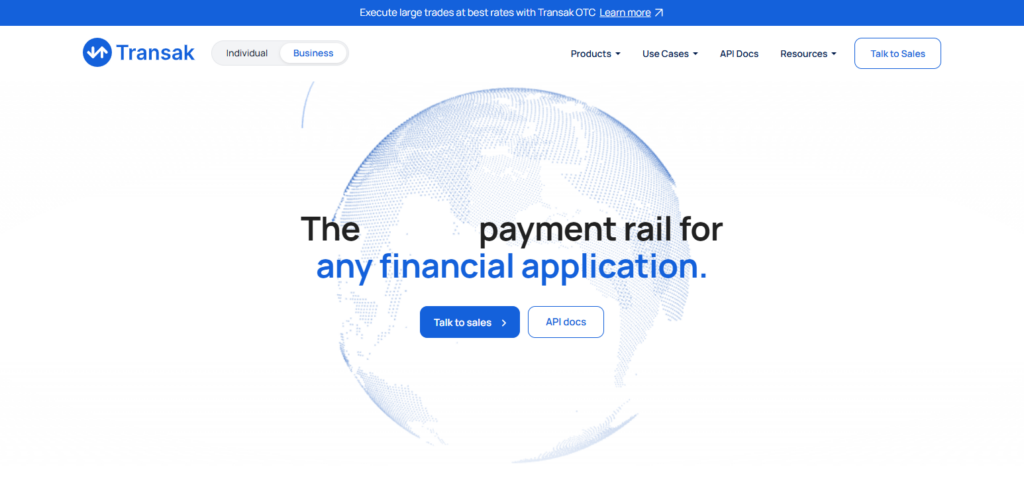
Transak is applicable to many payment methods and blockchains, and serves Web3, gaming, and decentralized ecosystems. The platform focuses on making user onboarding easier, while providing compliance and global crypto payment solutions.
Transak Features
| Feature | Description |
|---|---|
| Crypto Payment Gateway | Enables easy crypto purchases through applications. |
| Identity Verification | Provides KYC solutions for compliant user onboarding. |
| Multi-Chain Support | Supports various blockchain networks and digital assets. |
| Payment Methods | Offers cards, bank transfers, and local payment options. |
| Developer Integration | Provides simple APIs for Web3 applications. |
10. Wyre
Wyre provides embedded infrastructure for crypto payments systems. This allows businesses to build wallets and transfer and transact in digital assets directly on their platforms. Through coding application programming interfaces (APIs, a set of functions and procedures for integrating digital services)

Wyre enables developers to reduce the level of coding complexity and create payment systems. Automated transactions, links to blockchains, and global payment connections are supported by Wyre. The company’s infrastructure allows businesses to easily manage their payments and enhance the crypto services they offer to their users.
Wyre Features
| Feature | Description |
|---|---|
| Crypto Payment APIs | Enables businesses to add digital payments easily. |
| Wallet Integration | Supports secure cryptocurrency wallet functionality. |
| Global Transactions | Allows international crypto transfers and payments. |
| Blockchain Support | Provides connectivity with multiple blockchain networks. |
| Automated Transfers | Simplifies recurring and programmable crypto transactions. |
How to Choose the Best Embedded Crypto API Provider?
- Identify Business Goals: Identify crypto functions, customer segments, and methods for embedded integrations that align with your needs and goals.
- Look Into Safety & Regulations: Focus on the encrypted wallet and security of embedded functions, KYC or AML supported functions, and embedded solutions oriented around regulation.
- Investigate Blockchain Compatibility: Check if crypto APIs support the blockchains and currencies (and Tokens) you need today and if they have capabilities for projected future needs.
- Assess Embedded Functions: Focus on APIs that offer clear documentation (and supporting libraries) and embedded features that are easy for developers to integrate.
- Understand Costs, API Usage, and Growth: Review balance of subscription costs, transaction fees, and operational scalability of APIs.
- Assess Reliability & API Support: Focus on APIs with an established reputation and proven track record of reliability and responsive support.
