

In this article, I will evaluate the Optimal Clinical Trial Data Management Platforms for Biotech Startups.
Selecting the appropriate platform enhances data precision, guarantees compliance with regulatory frameworks, and expedites the clinical research process.
Here, I will analyze influential options for biotech startups to handle their trials, quicken study timelines, and enable them to develop from small-scale efforts to larger clinical trials.
Key Poinst & Best Clinical Trial Data Management Platforms for Biotech Startups
| Platform | Explanation |
|---|---|
| Medidata Rave | A cloud-based platform streamlines clinical trial data management processes efficiently |
| Oracle Siebel CTMS | Comprehensive system managing clinical trials, sites, and patient tracking effectively |
| Veeva Vault Clinical | Unified platform enabling secure clinical document and trial management workflow |
| Oracle Clinical One | Integrated solution supporting clinical data capture and analysis workflows seamlessly |
| OpenClinica | Open source platform for electronic data capture and trial management |
| REDCap | Secure web application for building and managing online surveys efficiently |
| Medrio | Cloud based EDC platform simplifying clinical trial data collection processes |
| Castor EDC | User friendly platform enabling fast electronic data capture in trials |
| IBM Clinical Development | Robust clinical platform supporting end to end study management processes |
| Clario (ERT) | Advanced clinical technology platform providing endpoint data capture solutions globally |
10 Best Clinical Trial Data Management Platforms for Biotech Startups
1. Medidata Rave
Medidata Rave is renowned as one of the best clinical trial data management systems for biotech startups who wish to scale their operations with efficient tools.
Medidata Rave streamlines the Electronic Data Capture (EDC) process, data validation, and study management in the cloud.
Advanced automation reduces manual error and helps complete trials faster. These features plus the ability to run Decentralized and Hybrid Clinical Trials helps Medidata Rave stand apart.
These features help companies manage patient data and studies in numerous locations. Medidata Rave’s compliance framework helps companies around the world meet their local regulations.
Medidata Rave Features
- Full-service electronic data capture (EDC) with real-time validation checks.
- Multiple trial model support (decentralized, hybrid, traditional).
- Automated workflows help mitigate data entry and operation errors.
- Regulatory capture support with the FDA and international requirements.
Medidata Rave Pros & Cons
| Pros | Cons |
|---|---|
| Industry-leading EDC and clinical data management capabilities | Premium pricing may challenge smaller biotech startups |
| Supports decentralized and hybrid clinical trials effectively | Initial setup can be complex for new users |
| Strong regulatory compliance and audit readiness features | Advanced customization may require specialized expertise |
| Powerful automation reduces manual data entry errors | Training requirements can be significant |
2. Oracle Siebel CTMS
Oracle Siebel CTMS is a Clinical Trial Management System that assists biotech startups in the management of their clinical studies from the planning phase through to completion.
Oracle Siebel CTMS is designed to help manage study sites, patient enrollment, studies, investigators, and the requisite operational activities.
Oracle Siebel CTMS has a centralized dashboard that provides an overview of study activities, and as such, facilitates the management of studies via tasks such as communication, monitoring, and the judicious allocation of resources.
Particularly, because of the enterprise architecture and the quality of reports that Oracle Siebel CTMS generates, it is an excellent tool for biotech startups that are scaling up.
Oracle Siebel CTMS Features
- Extensive clinical trial and site management capabilities.
- Real-time patient enrollment and study progress tracking.
- Centralized operational visibility and reporting dashboard.
- Effective management of investigators, resources, and budget.
Oracle Siebel CTMS Pros & Cons
| Pros | Cons |
|---|---|
| Comprehensive clinical trial management functionality | Higher implementation and maintenance costs |
| Excellent site, investigator, and patient tracking tools | Interface may feel outdated compared to newer platforms |
| Robust reporting and analytics capabilities | Steeper learning curve for startup teams |
| Scales well for complex global studies | Requires dedicated administrative resources |
3. Veeva Vault Clinical
The VT Clinical platform combines the cloud with clinical operations, TRC, and TM. Veeva Vault Clinical combines TRC and TM with clinical operations in a single cloud-based system which facilitates the integration of clinical teams, sponsors, and site staff.
Start up biotech companies find the streamlined document management and built in compliance and audit readiness features of VT Clinical to be efficient for study execution and administration.
VT Clinical is an appealing option for companies looking to improve operational efficiency because it offers a high degree of collaboration through its expanding suite of artificial intelligence features.
Veeva Vault Clinical Features
- Integrated clinical operations and document management systems.
- Automated quality and regulatory compliance controls.
- AI automation enhances workflow and collaboration.
- Cloud-based system extends study team access and participation.
Veeva Vault Clinical Pros & Cons
| Pros | Cons |
|---|---|
| Unified platform for clinical operations and documents | Subscription costs can be substantial |
| Cloud-based system enables seamless collaboration | Advanced features may exceed startup requirements |
| Strong compliance and quality management tools | Configuration may require expert support |
| AI-driven automation improves operational efficiency | Vendor dependency within Veeva ecosystem |
4. Oracle Clinical One
Oracle Clinical One provides a single consolidated clinical development system for data capture and clinical trial supply and randomization, an integrated clinical research system with built-in trial management, and analytics.
For setup biotech companies, this consolidated system eliminates the need for multiple disjointed systems.
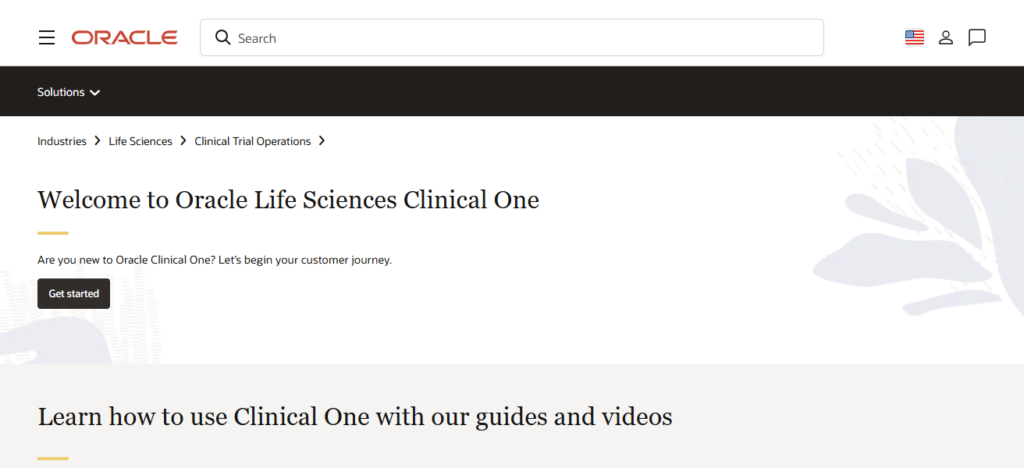
The platform offers support for adaptive studies and rapid protocol revisions. Enhanced user interfaces and embedded real-time data and analytics support built-in trial management to maintain oversight of the clinical study and compliance, reducing training for study staff.
Oracle Clinical One Features
- Integrated EDC, randomization, and trial supply systems.
- Flexible support for adaptive trial designs and protocol changes.
- Real-time analytics for enhanced decision making.
- Intuitive design reduces deployment and training time.
Oracle Clinical One Pros & Cons
| Pros | Cons |
|---|---|
| Integrated EDC, RTSM, and analytics platform | Premium pricing for smaller organizations |
| Supports adaptive trial designs efficiently | Customization options may require technical assistance |
| Real-time data visibility enhances decision-making | Implementation can be time-consuming |
| Reduces need for multiple disconnected systems | Some features require additional Oracle modules |
5. OpenClinica
OpenClinica’s excellent price and level of customization have earned it a positive reputation among flexible clinical data management systems.
OpenClinica provides electronic data capture, study design and participant management features, all of which accommodate small and large research enterprises.
OpenClinica’s affordability compared to competitors makes it an attractive option for biotech startups.
OpenClinica’s support for decentralized research efforts and remote data capture is a benefit as remote clinical data collection is a growing trend.
Organizations can also take advantage of OpenClinica’s flexible architecture to customize workflows for each research study.
OpenClinica’s support for flexible research and customizable workflows helps its users maintain compliance with regulations and preserves data integrity.
OpenClinica Features
- Dynamic electronic data capture for multiple clinical studies.
- Flexible customizations and integrations with open architecture.
- Supports remote patient data collection and decentralized trials.
- Budget-friendly solution for research and start-up companies.
OpenClinica Pros & Cons
| Pros | Cons |
|---|---|
| Cost-effective option for biotech startups | Limited enterprise support compared to premium vendors |
| Highly customizable and flexible architecture | Some advanced features require additional configuration |
| Supports remote and decentralized clinical studies | User interface may appear less modern |
| Strong data capture and study management capabilities | Technical expertise may be needed for customization |
6. REDCap
Because of its ease of use and dependability, REDCap’s popularity continues to rise among biotech startups and academic research organizations.
REDCap is a web-based platform that relies on the user to create custom databases, electronic case report forms, and participant surveys with little technical skill.
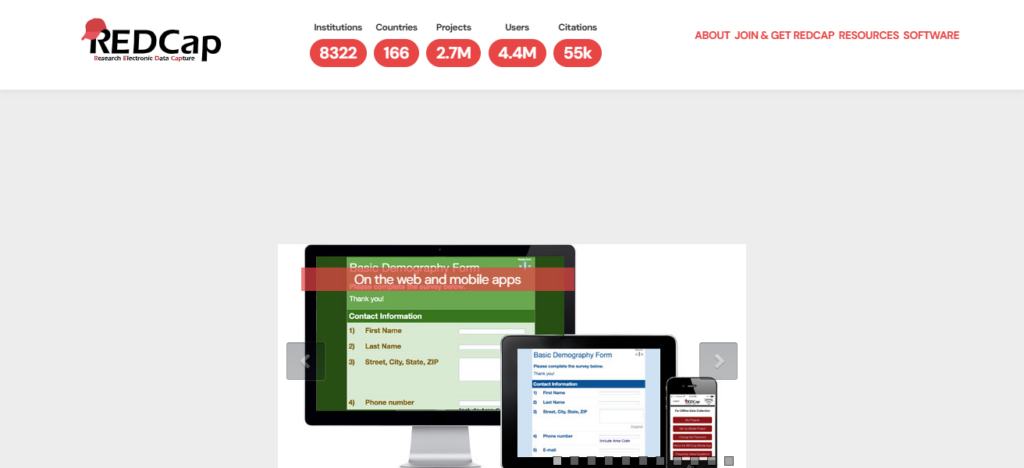
Its rapidly deployable and flexible design, coupled with its secure infrastructure that supports key regulatory compliance and standards, makes
REDCap a great choice for pilot studies, observational research, and clinical studies. Its wide, enthusiastic user community is a great support and resource during preliminary research and makes REDCap an excellent choice for startup research teams.
REDCap Features
- Electronic case report forms and databases with easy assembly.
- Secure platform with strong data protection.
- Supports a variety of frameworks and clinical trial designs.
- A large community of users offers support and resources.
REDCap Pros & Cons
| Pros | Cons |
|---|---|
| Free or low-cost solution for many organizations | Not designed specifically as a full CTMS platform |
| Easy to create databases and electronic forms | Limited advanced trial management capabilities |
| Strong security and compliance framework | Basic reporting compared to enterprise solutions |
| Large global user community for support | Complex studies may require external integrations |
7. Medrio
Medrio is designed as a cloud-native EDC, allowing users to easily manage clinical study data. Medrio’s intonations and features support users to manage studies with minimal restraints and readily available tech support.
Because of this, it enhances the users’ data input speed and accuracy and ultimately streamlines the data collection process. Medrio is a great option for startups because it is highly compliant, risk-based, and flexible.
Medrio Features
- An EDC solution designed for quicker study launches via tools built on Medrio’s cloud-native platform.
- An interface designed to improve adoption and data capture accuracy.
- Designed for remote trials and risk-based monitoring.
- Fast design and deployment minimizes both startup and operational costs.
Medrio Pros & Cons
| Pros | Cons |
|---|---|
| Fast implementation and study startup timelines | Fewer enterprise-level features than larger competitors |
| User-friendly interface reduces training requirements | Advanced customization options are somewhat limited |
| Excellent support for remote monitoring | May not suit highly complex multinational trials |
| Cloud-native architecture ensures easy accessibility | Reporting depth can vary by study needs |
8. Castor EDC
Castor EDC is also user-friendly. This platform also has a unique, highly intuitive system that allows users to easily create Electronic Case Report Forms (eCRFs), manage participants, and track study progress.
Like Medrio, Castor supports decentralized clinical trials (DCT) with Remote Patient Participation (RPP) and with real-time, direct data collection from participants.
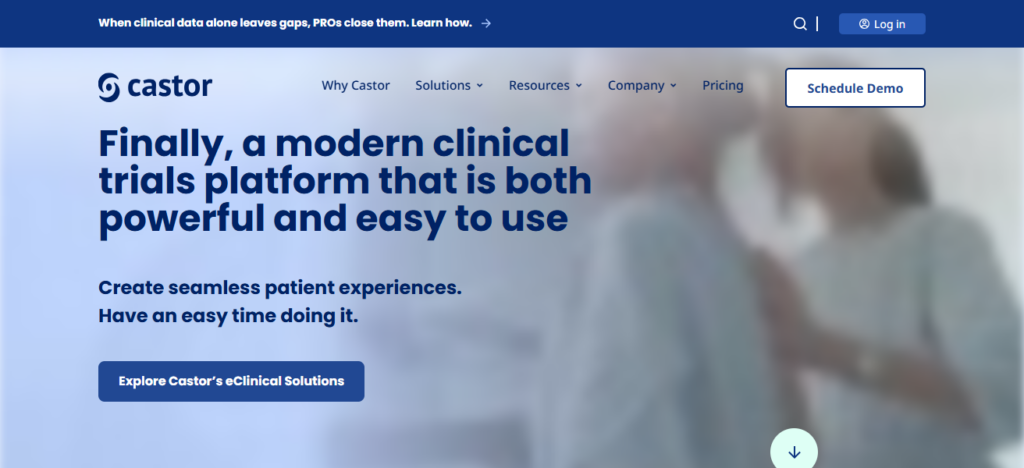
Built-in automation also helps improve data quality and eliminates potential errors throughout the study. Castor is a good option for biotech companies on a budget as it is easily scalable and adaptable.
Castor EDC Features
- An easy-to-use EDC with little need for technical know-how.
- Enables the real-time monitoring of trial participants.
- Built-in automation enhances both the quality and consistency of data.
- A solution that scales for growing biotech companies.
Castor EDC Pros & Cons
| Pros | Cons |
|---|---|
| Intuitive interface simplifies study management | Advanced enterprise functionality may be limited |
| Affordable pricing for emerging biotech companies | Smaller ecosystem than major competitors |
| Supports decentralized clinical trial models | Some integrations may require additional setup |
| Quick deployment and study creation process | Limited advanced analytics compared to premium platforms |
9. IBM Clinical Development
IBM Clinical Development has a lot to offer for the management of the entire clinical trial process.
This is a fully integrated support system that combines electronic data capture with patient management, monitoring, reporting, and more, all housed on the secure, cloud-based IBM infrastructure.
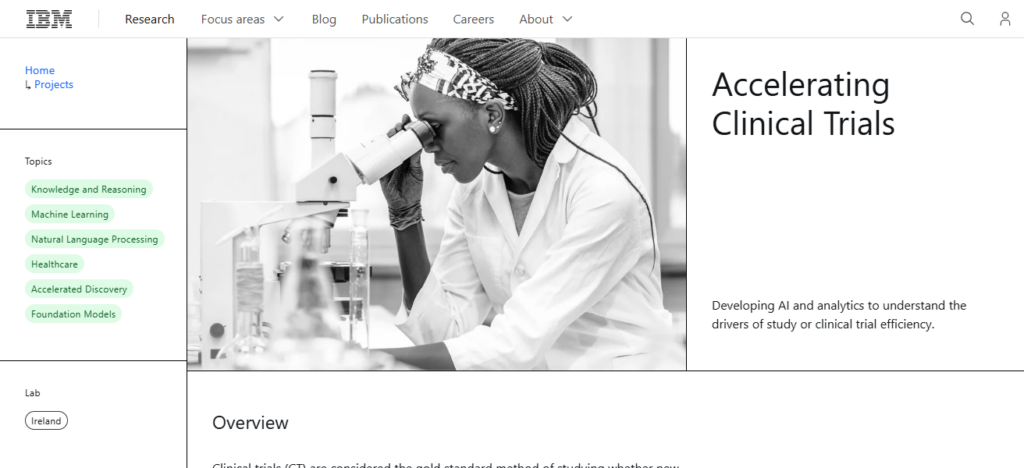
The analytics tools built into this product help early-stage biotech firms discover new data, identify trends, and assess potential risks during the research phase of the process.
This platform also has the capability of supporting and enhancing collaborations on a global scale.
With IBM Clinical Development’s focus on data security and compliance, organizations using this product can conduct research of the highest quality and standards.
IBM Clinical Development Features
- Full-service clinical trial management within a single solution.
- Sophisticated analytics to detect risk and performance issues.
- A secure cloud to support research anywhere in the world.
- Sophisticated analytics to detect risk and performance issues.
IBM Clinical Development Pros & Cons
| Pros | Cons |
|---|---|
| Comprehensive end-to-end clinical trial management | Cost may be high for early-stage startups |
| Advanced analytics and risk identification tools | Implementation can require significant planning |
| Strong data security and compliance standards | User interface may require training |
| Facilitates global collaboration across study teams | Less flexibility than some modern cloud-native platforms |
10. Clario (formerly ERT)
Clario specializes in endpoint data collection and clinical trial technology, particularly in support of complex studies.
Clario’s platform provides high-tech solutions for electronic clinical outcome assessments, (e)clinical imaging, and the monitoring of cardiac safety, along with the collection of a variety of digital biomarkers.

For biotech startups focused on more specialized research studies, Clario’s infrastructure is advantageous for the precise collection of patient data.
Clario’s global infrastructure sustains multiple studies across a variety of geographies while fulfilling all of the necessary regulatory requisites of the regions.
In a world with continually advancing digital health technologies, Clario’s products and services remain a smart choice for the collection and analysis of critical clinical data.
Clario (ERT) Features
- Endpoint data collection EDC built for complex clinical trials.
- eCOA, imaging, cardiac safety, and biomarker data collection supported.
- Designed for the management of complex, multinational clinical studies.
- Innovative digital health tools to improve data accuracy and trustworthiness.
Clario (ERT) Pros & Cons
| Pros | Cons |
|---|---|
| Industry leader in endpoint and patient data collection | Specialized focus may not suit every study type |
| Advanced eCOA, imaging, and cardiac monitoring solutions | Premium services can increase project costs |
| Global infrastructure supports multinational trials | Integration with external systems may require effort |
| High-quality data capture for complex studies | More specialized than general clinical management platforms |
Selection Criteria for the Best 10 Clinical Trial Data Management Platforms for Biotech Startups
- Ease of Use – Preference was given to platforms with intuitive designs which required little training.
- Clinical Data Management – We looked at EDC, validation of data, monitoring, and reporting.
- Regulatory Compliance – We chose solutions that align with the FDA and GCP, and are HIPAA compliant. We also looked at 21 CFR Part 11.
- Scalability – We evaluated how easily platforms could support the growing needs of the company, ranging from small to large scale.
- Cost-Effectiveness – We evaluated which platforms had higher value for the cost and were more affordable.
- Cloud-Based – We preferred platforms that are supported by secure cloud services.
- Support for Decentralized Trials – We assessed support for remote patient data collection and participation.
- Integration Capability – We preferred platforms that have multiple integration options across CTMS, ePRO, RTSM, and other research support systems.
- Automation and Analytics – We preferred platforms that provided seamless automation of workflows and analytics with real-time reporting.
- Support and Industry Standing – These criteria favored solutions with proven reliability, a solid client base, and a positive reputation in the market.
Conclusion
In summation, selecting optimal tools for clinical trial data management presents an opportunity for biotech startups to boost efficiency and compliance while decreasing time constraints.
The platforms referenced above bring forth the tools and features of analytics, data capture, as well as support for decentralized trials, and the use of automated systems.
Within selected platforms that adapt to the limitations of budget, the features required for specific studies, and plans for future growth, clinical trial research is certain to be a success.
FAQ
What is a clinical trial data management platform?
A clinical trial data management platform helps organizations collect, manage, validate, and analyze clinical research data efficiently.
Why do biotech startups need a clinical trial data management platform?
These platforms improve data accuracy, streamline operations, ensure compliance, and accelerate clinical trial timelines.
Which platform is best for small biotech startups?
OpenClinica, REDCap, and Medrio are popular choices due to their affordability and ease of implementation.
What is Electronic Data Capture (EDC)?
EDC is a digital system used to collect and manage clinical trial data instead of paper-based records.
Are these platforms compliant with regulatory requirements?
Most leading platforms support FDA, HIPAA, GCP, and 21 CFR Part 11 compliance standards.
