


This article will examine Crypto Projects Rewarding Users for Shared Edge-AI Computations. Decentralized networks revolutionize artificial intelligence by enabling users to earn rewards through shared computing resources.
These projects integrate blockchain incentives, GPU sharing, and AI model training systems to optimize income opportunities while providing cutting-edge, adaptable edge-AI infrastructure systems worldwide.
What are edge-AI crypto Projects?
Edge-AI crypto projects merge AI computing and blockchain reward systems. Users offer processing power, GPU, and machine learning resources to distributed systems.
Network participants are rewarded in crypto. This aids in the training, inference, rendering, and cloud computing of AI. This model lessens the dependence on centralized systems.
This also optimizes the use of resources, reduces infrastructure costs, improves earning potential, and grows the decentralized AI ecosystem across the world.
Key Poinst & Crypto Projects Rewarding Users for Shared Edge-AI Computations
| Crypto Project | Explanation |
|---|---|
| Bittensor (TAO) | Rewards contributors providing decentralized AI models and computational intelligence. |
| Render Network (RNDR) | Pays users for sharing GPU power for AI rendering tasks. |
| Akash Network (AKT) | Incentivizes unused cloud computing resources for decentralized AI workloads. |
| Gensyn | Rewards participants for contributing to machine learning computation across distributed networks. |
| io.net (IO) | Compensates users supplying GPU resources for AI training operations. |
| Aethir (ATH) | Distributes rewards for decentralized GPU cloud computing contributions globally. |
| Nosana (NOS) | Rewards idle GPU owners supporting AI inference and testing. |
| NeuralAI | Incentivizes edge-device computations powering decentralized artificial intelligence networks. |
| Hyperbolic | Pays contributors sharing compute resources for AI model development. |
| Node AI (GPU) | Rewards users providing distributed GPU power for AI applications. |
10 Crypto Projects Rewarding Users for Shared Edge-AI Computations
1. Bittensor (TAO)
Bittensor is revolutionizing decentralized AI by creating incentive mechanisms that compensate participants for submitting noteworthy ML models and cognitive services.
Developers, researchers, and node operators are rewarded with TAO tokens based on the AI outputs they provide.
Bittensor is distinct by allowing the creation of an open marketplace for intelligence as a substitute to centralized monopolization, especially as the thirst for AI continues to grow in the ensuing years, especially in 2026.
It has one of the most powerful incentive mechanisms for blockchain AI Model improvement and is among the most fascinating projects working on the integration of AI with blockchain.
Bittensor (TAO) – Pros & Cons
| Pros | Cons |
|---|---|
| Decentralized AI marketplace with strong innovation potential | Complex ecosystem for beginners |
| Rewards valuable AI model contributions | High token price volatility |
| Encourages continuous machine-learning improvements | Technical participation requirements |
| Growing adoption in AI and blockchain sectors | Competition from emerging AI networks |
2. Render Network (RNDR)
Render Network is a decentralized system for distributing and completing rendering and AI computation tasks, and it leverages the monetization of idle GPUs.
Though it was primarily focused on rendering, the rapid demand for GPU-powered AI workloads has gradually expanded the purpose of the system.
Participants earn RNDR tokens, and companies are afforded low-cost access to distributed computing.
Its rapid adoption by AI developers, artists, and digital creators has shown the importance of the system for the decentralized computing network and edge-AI.
Render Network (RNDR) – Pros & Cons
| Pros | Cons |
| Monetizes unused GPU resources efficiently | Dependent on GPU demand trends |
| Supports AI, rendering, and creative industries | Network congestion may affect performance |
| Established reputation in decentralized computing | Earnings fluctuate with market conditions |
| Expanding ecosystem and enterprise interest | Requires suitable hardware for participation |
3. Akash Network (AKT)
Akash Network is a decentralized layer for cloud computing that enables participants to rent out computing resources and earn AKT.
It provides a low-cost solution for AI Startups, ML Developers, and Blockchain application projects.
The recent growth of the Akash ecosystem has sparked interest in decentralized computing and has positioned Akash well in Web 3.0.
The self-sustaining solution lowers Augmented Cloud costs and balances the demand of organizations for compute power.
Akash Network (AKT) – Pros & Cons
| Pros | Cons |
| Lower-cost alternative to traditional cloud services | Adoption still smaller than major cloud providers |
| Rewards unused computing resource providers | Service availability varies by region |
| Strong Web3 and AI infrastructure support | Technical setup may challenge newcomers |
| Decentralized and censorship-resistant platform | Token price fluctuations impact profitability |
4. Gensyn
Gensyn is creating a decentralized ML network that aims to make distributed training workloads easier to use by including people all around the world.
Gensyn hopes to eliminate the reliance on the costly centralized data centers. By incorporating users as a part of the network and rewarding them, Gensyn is making AI development more accessible.
By reducing the infrastructure costs for researchers and corporate startups, Gensyn is helping to meet the rapidly increasing demand for AI training.
Gensyn is offering new verification methods and a distributed architecture, making it one of the most promising projects in the decentralized AI economy.
Gensyn – Pros & Cons
| Pros | Cons |
| Democratizes access to AI training infrastructure | Project still developing ecosystem maturity |
| Reduces reliance on centralized data centers | Long-term adoption remains uncertain |
| Innovative workload verification mechanisms | Requires technical knowledge to participate |
| Supports distributed machine-learning research | Competitive decentralized AI market |
5. io.net (IO)
io.net is an innovative product in an AI-enabling decentralized computing network using blockchain technology.
This innovation allows users to donate idle GPUs and receive IO token rewards. Businesses gain access to on-demand and scalable computing.
In a marketplace that is rapidly expanding and in demand for AI services, io.net is introducing solutions for the AI infrastructure gap by combining distributed and underutilized computation to perform training and inference for AI.
io.net (IO) – Pros & Cons
| Pros | Cons |
| Addresses AI GPU shortage effectively | Revenue depends on compute demand |
| Enables GPU owners to generate passive income | Newer project with evolving infrastructure |
| Built specifically for AI applications | Market competition remains intense |
| Rapidly growing decentralized compute network | Token volatility may affect rewards |
6. Aethir (ATH)
Aethir is a platform that allows users to offer their computing resources in exchange for ATH rewards.
AI development, along with services in cloud gaming, is supported by a global network of high-performance computing.
Alternatives to centralized cloud providers are being sought by many organizations. Aethir offers a solution that is both scalable and economical.
The rapid growth of their partnerships and interest in their services demonstrates a clear market demand for decentralized compute services. Aethir is a strong player in the development of blockchain-based AI services.
Aethir (ATH) – Pros & Cons
| Pros | Cons |
| Strong focus on decentralized GPU cloud services | Relatively new compared to major providers |
| Supports gaming, AI, and enterprise computing | Adoption growth still ongoing |
| Global infrastructure improves scalability | Reward levels may vary significantly |
| Attractive opportunities for GPU contributors | Dependence on ecosystem expansion |
7. Nosana (NOS)
Nosana aims to allow GPU hardware owners to make money by contributing to AI inference, testing, and development work.
Users earn NOS tokens, and developers are able to use computing services at a lower cost. Nosana is striving to develop the infrastructure necessary for the viable use of AI while relying on the technology of centralized service providers the least.
The use of market-based resource allocation in Nosana helps give real value to hardware resource providers and businesses in the AI marketplace.
Nosana simplifies access to the tools necessary to participate in the market, and because of that, its placement in the AI market is very appropriate.
Nosana (NOS) – Pros & Cons
| Pros | Cons |
| Helps monetize idle GPU hardware efficiently | Smaller ecosystem than leading competitors |
| Focuses on AI inference and testing workloads | Limited awareness among mainstream investors |
| Affordable compute access for developers | Hardware requirements may restrict participation |
| Encourages decentralized AI infrastructure growth | Token price can be highly volatile |
8. NeuralAI
NeuralAI integrates decentralized AI with blockchain by incentivizing edge devices to participate in computation.
Users are rewarded for contributing processing power through connected devices to help sustain the network. This model provides greater flexibility and ease of access to a more extensive AI infrastructure.
As edge computing proliferates to support the real-time demands of AI, NeuralAI’s model provides an engaging way for users to make money on their hardware in the decentralized AI space, and it shows promise as edge computing continues to grow.
NeuralAI – Pros & Cons
| Pros | Cons |
| Utilizes edge devices for AI computations | Early-stage adoption challenges |
| Expands decentralized AI accessibility | Limited ecosystem compared with larger projects |
| Creates earning opportunities for device owners | Long-term scalability remains unproven |
| Supports emerging edge-computing trends | Market awareness still developing |
9. Hyperbolic
Hyperbolic builds a decentralized marketplace for computing power for AI development, and it allows users to share their computing resources and earn rewards.
This helps researchers and businesses access computing power while reducing the need to rely on centralized providers.
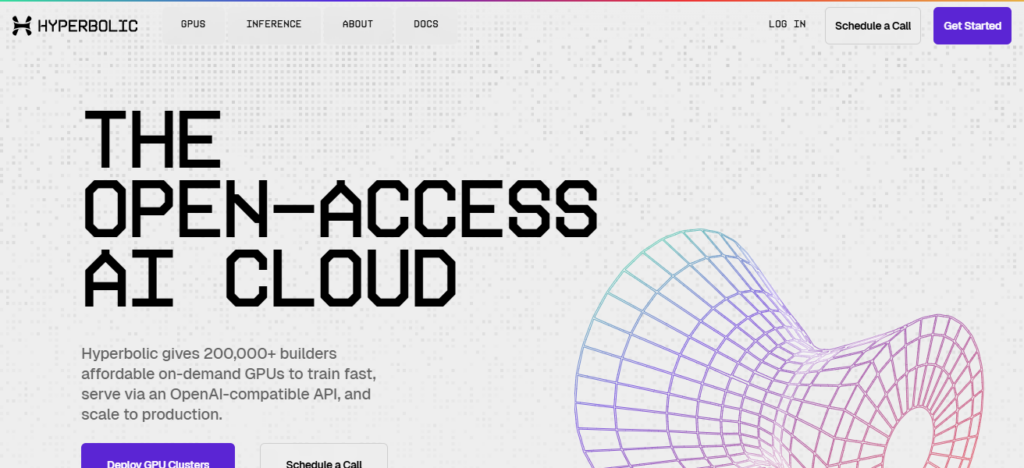
Hyperbolic’s marketplace-based model improves resource efficiency and broadens participation within AI development.
While the demand for AI services has outgrown the supply, Hyperbolic’s model provides a viable alternative for participants. Hyperbolic has drawn the interest of both the AI and blockchain communities.
Hyperbolic – Pros & Cons
| Pros | Cons |
| Affordable decentralized computing marketplace | Faces competition from established networks |
| Supports AI developers and researchers | Ecosystem growth still in progress |
| Improves resource utilization efficiency | User adoption remains relatively early |
| Encourages broader participation in AI innovation | Reward consistency may vary |
10. Node AI (GPU)
Node AI is building a decentralized GPU-renting system. Users can all contribute their own computer equipment and get rewarded.
Node AI can be used for the training of machine learning, running AI inference, or just for general computational heavy-lifting.
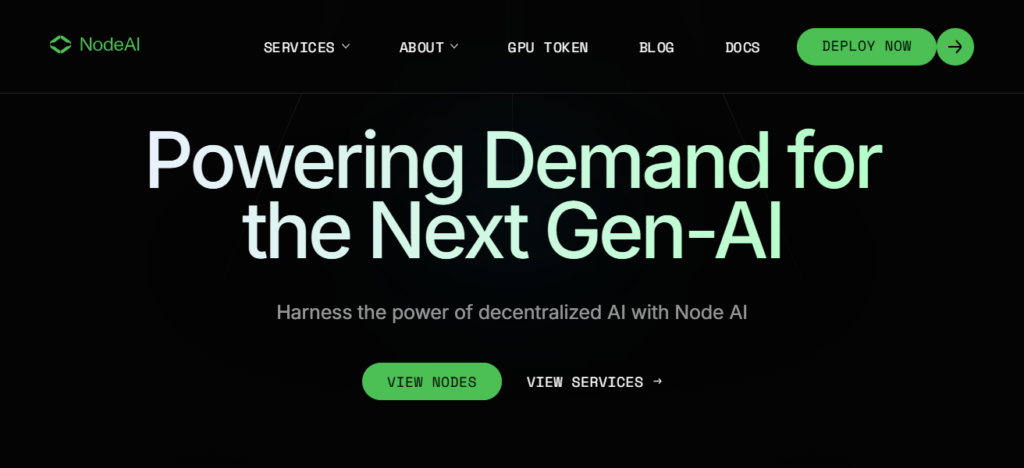
Node AI connects hardware owners to developers in need of computing power. Due to the rapid interest in AI infrastructure, the need for decentralized offerings has also grown.
Node AI is benefiting from the increased visibility and offers users incentives to participate while helping to grow AI technologies.
Node AI (GPU) – Pros & Cons
| Pros | Cons |
| Enables GPU owners to earn rewards easily | Requires dedicated hardware resources |
| Supports diverse AI computational workloads | Profitability depends on network demand |
| Promotes decentralized infrastructure expansion | Smaller market presence than major competitors |
| Efficient utilization of unused GPU capacity | Token and revenue volatility risks |
How We Chose The Crypto Projects Rewarding Users for Shared Edge-AI Computations
- Reward Mechanism – Evaluated how effectively users earn crypto rewards.
- AI Integration – Assessed real-world artificial intelligence use cases.
- Edge Computing Support – Considered distributed and decentralized computing capabilities.
- Network Growth – Reviewed ecosystem expansion and community adoption.
- Infrastructure Quality – Analyzed the reliability and scalability of computing resources.
- Innovation Level – Measured unique technological advancements and features.
- Token Utility – Examined practical use cases for native tokens.
- Developer Activity – Considered ongoing development and platform improvements.
- Market Relevance – Evaluated the importance within the AI and blockchain industries.
- Future Potential – Assessed long-term growth prospects and sustainability.
Conclusion
In conclusion, Crypto Projects Rewarding Users for Shared Edge-AI Computations are disrupting the AI and decentralized infrastructure space.
By allowing users the ability to share GPUs and computational power, new channels of revenue are opened, and the user base can rely on decentralized structures.
With the demand for AI continuously growing, the likelihood of rapid development for these projects and similar concepts is high.
The projects stimulate innovation and improve efficiency while encouraging wider participation across the digital global economy.
FAQ
How do users earn rewards?
Users share GPU, CPU, or computing resources and earn tokens.
Which project is most popular?
Bittensor and Render Network are among the most recognized projects.
Do I need expensive hardware?
Not always; requirements vary depending on the project’s network
What rewards do contributors receive?
Most platforms pay native cryptocurrency tokens for computational contributions.
Why is decentralized AI important?
It reduces dependence on centralized providers and improves accessibility.
