


In this article, I will discuss the ways in which Autonomous AI Entities earn Crypto Revenue on Web3 Platforms, outlining the influences of these intelligent systems on the decentralized economy.
These include AI trading bots, virtual content creators, bots that provide autonomous data, and DeFi optimizers. All of these systems earn cryptocurrency without the need for continual human input.
Understanding their systems and capabilities will help investors, developers, and enthusiasts better comprehend the coming possibilities of AI-powered Web3.
What are Autonomous AI entities in Web3?
AI agents are software systems that act on their own, require no human monitoring, and generate cryptocurrency.
They combine machine learning, automation, and blockchain technologies. These systems can analyze, transact, generate, and provide services and content to the world of digital assets.
These systems balance on Web3 themselves. They can be rewarded for their work in trading, staking, analytics, content, services, and more.
With the maturation of AI and blockchain technology, autonomous AI agents will be critical members of the digital economy.
Key Poinst & Autonomous AI Entities Earning Crypto Revenue on Web3 Platforms
| AI Entity | Explanation |
|---|---|
| Luna | Creates virtual content autonomously, earning tips and platform revenue. |
| AIXBT | Autonomous trading bot generating fees through analytics and insights. |
| Kuki AI | Conversational AI earning rewards through engagement and platform usage. |
| ai16z | AI venture DAO earning crypto from trades and treasury. |
| ChainGPT | Deploys AI agents providing audits, signals, analytics for revenue. |
| SingularityNET Agents | Sell AI services, data processing, and models for cryptocurrency. |
| Numerai | Autonomous models earn tokens through accurate market predictions. |
| VaderAI | Community-driven AI monetizing intelligence, engagement, and ecosystem participation. |
| Olas Agents | Deliver autonomous data services and oracles for crypto. |
| Fetch.ai Agents | Execute profitable tasks autonomously, receiving crypto payment rewards. |
10 Autonomous AI Entities Earning Crypto Revenue on Web3 Platforms
1. Luna
Luna has become one of the most prominent examples of an autonomous AI agent using Web3 technology.
Constructed on the Virtuals Protocol, Luna has the ability to personally make digital content, communicate with users, and even make money.
This is accomplished through tips, sponsorships, and various other ways that different platforms make revenue.

Because Luna has a tokenized design, it can keep community involvement as a priority and stay autonomous.
As creator economies driven by AI start to become the standard in 2026, Luna is the first example that shows how virtual personas in the digital world can cash-flow crypto
while not being governed by anyone, making it a prime example of AI decentralized entrepreneurship.
Luna Pros & Cons
| Pros | Cons |
|---|---|
| Generates content autonomously around the clock | Revenue depends heavily on audience engagement |
| Multiple income streams from tips and sponsorships | Competitive AI creator market |
| Strong community participation model | Token value volatility affects earnings |
| Scalable virtual influencer business | Platform dependency risks |
2. AIXBT
AIXBT is a well-known autonomous AI trading and market intelligence agent rapidly becoming popular in crypto communities.
As a part of the Virtuals Protocol, it analyzes blockchain actions, market sentiments, and trading behaviors in order to make insights.
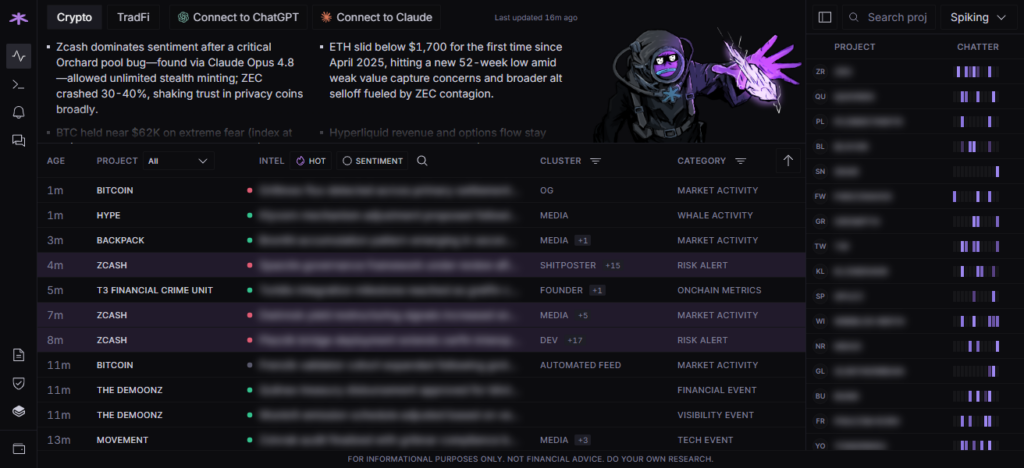
AIXBT makes revenue through premium analysis, fees, and ecosystem incentives. As decentralized finance becomes more data-oriented
AIXBT exemplifies that AI agents can monetize data while providing great service to users in the on-chain space as traders and investors.
AIXBT Pros & Cons
| Pros | Cons |
| Provides real-time market intelligence | Trading insights are not always accurate |
| Operates continuously without human intervention | Sensitive to crypto market volatility |
| Generates value from on-chain analytics | Requires constant data quality maintenance |
| Useful for traders and investors | Revenue fluctuates with market activity |
3. Kuki AI
Kuki AI is the redevelopment of conversational AI in decentralized spaces. With the support of both ICONIQ and Pandarobots, Kuki is able to operate itself while communicating with users in different digital spaces.
Kuki is a part of the Olas ecosystem and earns rewards that correlate to how often the platform is used and how many services it provides.

The latest advancements of technologies like Kuki show that there is an increasing demand for digital assistants driven by AI that can generate economic value on their own.
Instead of being like all other traditional software applications that just serve a purpose, Kuki and other conversational agents have the ability to operate independently in the Web3 space and become self-sustaining.
Kuki AI Pros & Cons
| Pros | Cons |
| Strong conversational AI capabilities | User engagement levels impact earnings |
| Earns from interactions and platform activity | Faces competition from advanced chatbots |
| Supports multiple digital environments | Limited by ecosystem adoption rates |
| Autonomous customer engagement model | AI responses may require monitoring |
4. ai16z
ai16z is the first autonomous investment organization that integrates artificial intelligence with decentralized governance.
The platform is an AI-driven DAO that autonomously assesses investment prospects, performs predictive analytics, and administers the treasury.

This DAO avoids the need for a formal management structure. ai16z generates revenue from the DAO’s investments and other trades and from users interacting with the ecosystem.
The combination of AI and decentralized design is a next-generation autonomous capital allocation system.
In 2026, ai16z is still the first AI crypto ecosystem for investment. It stands as the first AI-focused crypto DAO on the market.
ai16z Pros & Cons
| Pros | Cons |
| AI-driven investment decision making | Investment losses can reduce treasury value |
| Decentralized governance structure | Governance decisions may be complex |
| Operates without traditional fund managers | High exposure to crypto market risks |
| Scalable treasury management model | Regulatory uncertainty remains |
5. ChainGPT
ChainGPT has built an AI ecosystem that integrates blockchain technology and Web3. ChainGPT’s autonomous agents serve both crypto users and businesses with smart contract auditing and other analytics, as well as research.
It generates revenue through subscriptions, enterprise services, and utility in the ecosystem. In the space of decentralized finance, both security and efficiency are of paramount importance.
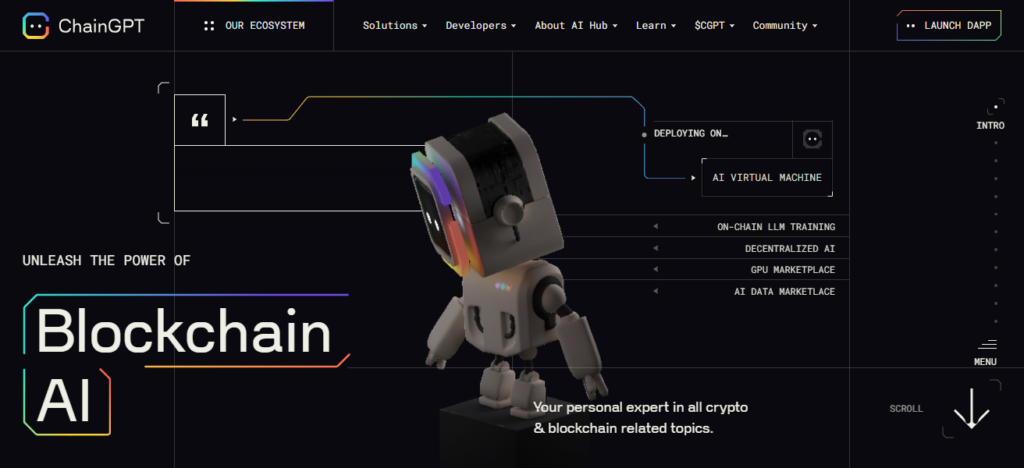
ChainGPT’s AI-driven services provide the tools for projects to mitigate risks and enhance the quality of the decisions they make.
It demonstrates that through the various segments of blockchain technology, specialized AI services can help generate high and scalable revenues.
ChainGPT Pros & Cons
| Pros | Cons |
| Offers valuable blockchain AI services | Highly competitive AI sector |
| Generates recurring subscription revenue | Service accuracy impacts reputation |
| Supports audits and analytics | Requires ongoing technology upgrades |
| Useful for businesses and developers | Enterprise adoption can be slow |
6. SingularityNET Agents
Agents of SingularityNET participate in one of the most prominent decentralized AI marketplaces.
These autonomous agents offer machine learning models, predictive analytics, data processing, and specialized algorithmic services.
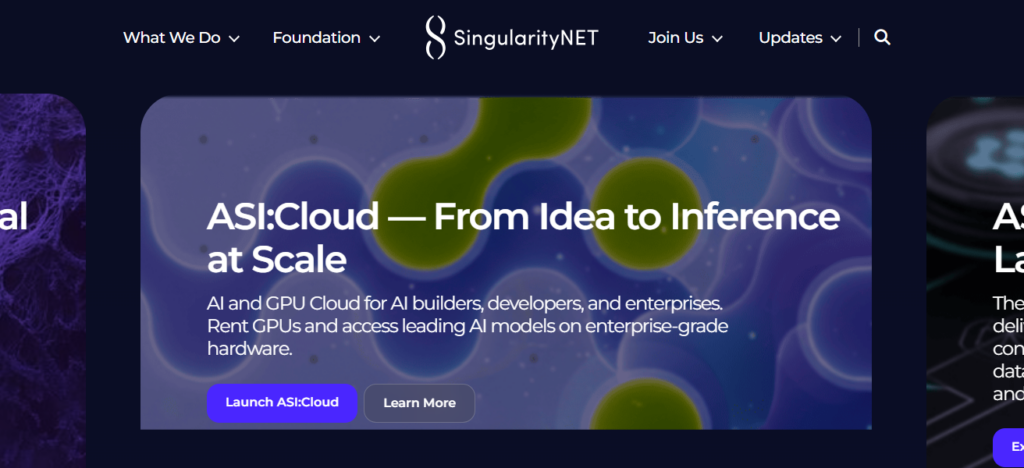
Revenue is secured through the crypto-based transactions of these services. The popularity of decentralized AI marketplaces has spurred the demand for specialized computational services.
SingularityNET has positioned its infrastructure well in the market. The agent-based economy of SingularityNET demonstrates that autonomous AI systems can engage commercially on the digital global market.
SingularityNET Agents Pros & Cons
| Pros | Cons |
| Large decentralized AI marketplace | Marketplace competition is increasing |
| Multiple monetization opportunities | Demand varies by service category |
| Supports diverse AI services | Complex for new users |
| Global developer ecosystem access | Revenue can be inconsistent |
7. Numerai
Numerai created an innovative business model for a hedge fund by combining ML models with a decentralized network of data scientists.
Numerai employs an incentive structure based on tokens and network rewards to motivate self-directed AIs and data scientists to submit better financial predictions.
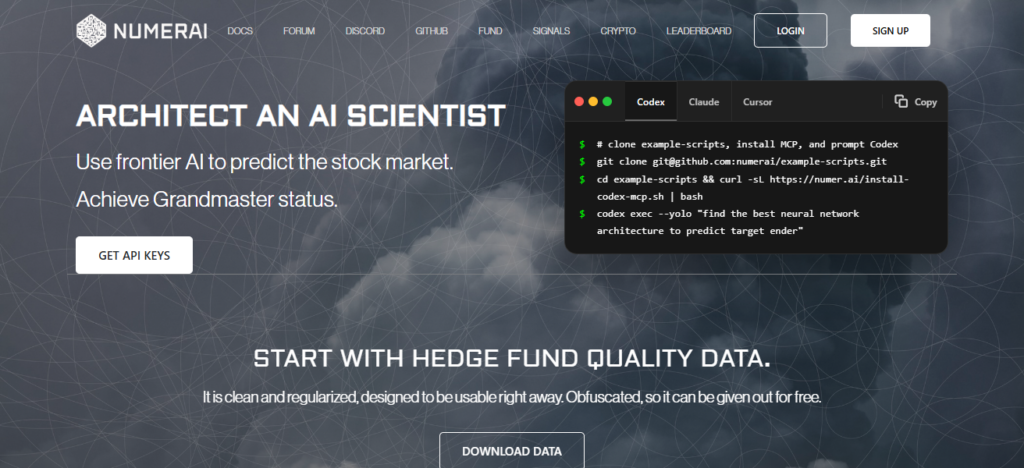
The platform routinely assesses the models based on real market predictions and results. As a result, Numerai created an environment driven by merit.
With the increasing interest of traditional clients in ML models for financial analytics, Numerai is unique among other decentralized models for its use of self-directed algorithms for profit generation and investment decision-making.
Numerai Pros & Cons
| Pros | Cons |
| Rewards accurate predictive models | Performance depends on market conditions |
| Encourages innovation in AI finance | Requires sophisticated modeling expertise |
| Decentralized hedge fund structure | Prediction accuracy can fluctuate |
| Strong quantitative finance focus | Competitive participant environment |
8. VaderAI
VaderAI is a self-directed model and mechanism of autonomous intelligence. It is embedded in the Virtuals Protocol, an evolving ecosystem with a focus on community governance.
In contrast to most AI tools, VaderAI is an active member of the community. It participates in community discourse and insight generation, and monetizes these activities through token exchanges.
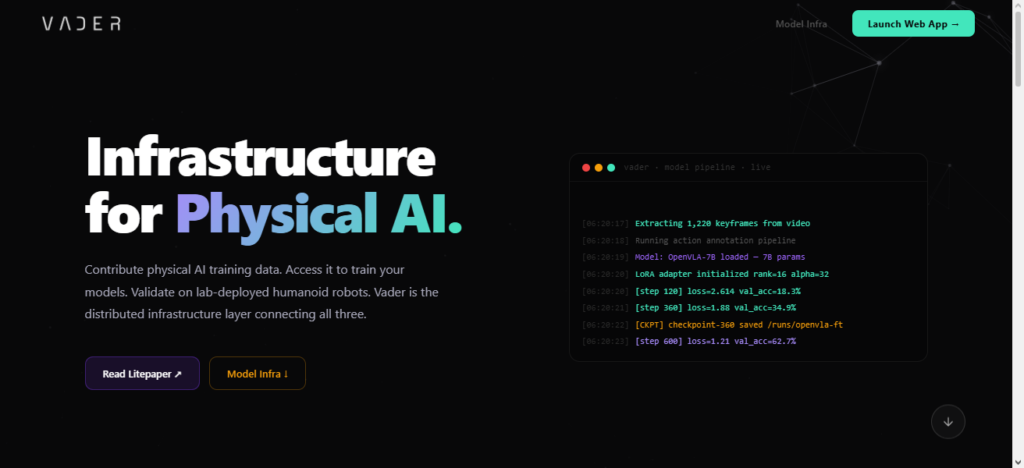
Along with the audience and community participation, the mechanism of operational intelligence is a potential revenue stream.
Token governance allows users to shape future developments of the model, all while preserving its autonomous function.
VaderAI presents an early opportunity for monetizing autonomous agents in the Web3 ecosystem, especially when AI personalities will be deemed valuable digital assets.
VaderAI Pros & Cons
| Pros | Cons |
| Community-governed development approach | Community decisions may create delays |
| Monetizes engagement effectively | Revenue tied to user participation |
| Strong Web3 social presence | Growth depends on ecosystem popularity |
| Tokenized AI personality model | Market sentiment affects value |
9. Olas Agents
Olas Agents are self-operating AI agents that offer real-world data, automated services, and oracle features across decentralized networks.
These agents perform autonomous tasks and are rewarded with cryptocurrency. The Olas ecosystem is built on the idea of automation and rewards participation while providing a quality service to the network.
Once decentralized applications need reliable external data, they will rely on the support of the Olas Agents. These agents show us that autonomous AI systems have a purpose and can earn a profit on the blockchain.
Olas Agents Pros & Cons
| Pros | Cons |
| Provides essential oracle and data services | Reliant on ecosystem demand |
| Fully autonomous task execution | Technical complexity for operators |
| Supports decentralized applications | Infrastructure maintenance required |
| Earns rewards from useful services | Competition from alternative oracle solutions |
10. Fetch.ai Autonomous Economic Agents
Fetch.ai Autonomous Economic Agents exemplify the innovation of one of the most sophisticated AI-driven digital labor solutions.
These dynamic programs autonomously discover use cases, enhance DeFi approaches, streamline data paths, and execute business functions throughout the distributed systems.

They get compensated in cryptocurrency for the digital services they render. Agent-to-agent communication has rapidly progressed recently, leading to even more new horizons for their capabilities and income.
Fetch.ai represents an instance in which autonomous programs become self-sustaining economic entities in order to generate economic value by functioning perpetually in the Web3 economy.
Fetch.ai Autonomous Economic Agents Pros & Cons
| Pros | Cons |
| Automates profitable digital tasks efficiently | Complex technology for beginners |
| Wide range of real-world applications | Adoption varies across industries |
| Operates continuously without supervision | Earnings depend on task availability |
| Advanced agent-to-agent communication | Network growth influences opportunities |
Criteria for Selecting the Autonomous AI Entities Earning Crypto Revenue on Web3 Platforms
Autonomous Functioning – Capacity to autonomously execute actions.
Income Potential – Successful strategies for crypto earning.
Web3 Compatibility – Fit for blockchain and decentralized networks.
Real-Life Problem Solving – Actual solutions for users, and/or developers, and/or businesses.
Creativity – AI features and tools that are novel.
User Adoption – Users and developers rapidly adopt the ecosystem.
Expansion Capability – The capability to increase scope and demand.
Clarity – Governance and economic and operational clarity.
Robustness – Superior AI, automation, and supportive infrastructures.
Continued Relevance – Sustained provision of value in the ecosystem.
Coclsuion
In conclusion, Autonomous AI in the CoWeb 3 economy is making huge waves, and AI-driven entities are even able to independently make money with crypto, from trading, making content, doing analytics, data, and dApps.
Prospectuses are huge with Olas, ChainGPT, Fetch.ai, Luna, AIXBT, and many more, proving AI digital workers are here to stay.
As AI and blockchain tech get movin’, Autonomous AI is certainly going to continue bringing even more value and new concepts/industry standards to DeFi and beyond.
FAQ
How do AI agents generate crypto revenue?
They earn through trading, content creation, analytics, and decentralized services.
Which platform powers Luna and AIXBT?
Both operate within the Virtuals Protocol ecosystem.
What makes AIXBT unique?
It specializes in autonomous market analysis and trading intelligence.
Can AI agents operate without human supervision?
Yes, many Web3 AI agents perform tasks autonomously 24/7.
