


This article will cover the purchasing process of fractional U.S. T-Bills with stablecoins. It explains how modern technology allows investors to earn safe, government-backed yields with new access points through the use of the blockchain.
Thanks to the flexible digital finance ecosystem, stablecoin holders can gain safe liquidity and the predictable returns of U.S. Treasury bills’ security by blending the two through the use of Treasury tokenization platforms.
What Are Fractional U.S. T-Bills?
Fractional U.S. T-Bills allow you to buy a T-Bill for a portion of the $100 minimum T-Bill price. Because the U.S. government’s T-Bills are backed by the US government, they are very safe investments and are relatively safe compared to other T-Bills.
Small investors can get risk-free returns without needing to spend a lot of money. Fractional T-Bills are purchased via specialized platforms, some of which allow you to use stablecoins to buy T-Bills. Investors only receive interest payments when T-Bills mature. Fractional T-Bills allow for both diversification and liquidity to smaller investment portfolios.
Why Use Stablecoins to Buy T-Bills
Instant Transactions – With stablecoins, you can make transfers instantly, unlike many banks where you have to wait.
Lower Costs – Banks generally have higher fees than the crypto networks.
Anytime Purchases – You can purchase T-Bills at any time, even outside of normal trading hours.
No Volatile Risk – Stablecoins are backed by cryptocurrencies, so you won’t face the volatility that comes with other coins.
Convenient Use – Crypto-friendly sites that allow you to buy fractional T-Bills are a great way to use stablecoins.
Inclusive Participation – There is no need for a bank account in the U.S. to purchase T-Bills with stablecoins.
Combination of Assets – You can combine digital assets and government securities with stablecoins to purchase T-Bills.
Key Point & Top 10 Platforms to Buy Fractional U.S. T-Bills with Stablecoins
- Ondo Finance – Offers tokenized fractional U.S. T-Bills with stablecoin deposits and on-chain liquidity.
- Matrixport – Provides STBT tokens backed by short-term Treasury bills for stablecoin investors.
- Maple Finance – Enables earning Treasury-linked yields through on-chain cash management pools.
- Backed Finance – Tokenizes real-world assets, including potential Treasury-linked products, with full regulatory compliance.
- Superstate – Bridges T-Bill yields to blockchain via tokenized vaults for qualified investors.
- OpenEden – Provides smart-contract-controlled T-Bill vaults with stablecoin access and 24/7 liquidity.
- Swarm Markets – Offers compliant on-chain trading of fractional Treasury ETFs and tokenized government debt.
- Hashnote – Issues stablecoins like USYC backed by U.S. Treasuries, providing on-chain yield exposure.
- Securitize Markets – Regulated platform for tokenized securities, including fractional Treasury holdings.
- WisdomTree Prime – Enables institutional-grade access to tokenized Treasury money-market funds with stablecoins.
Top 10 Platforms to Buy Fractional U.S. T-Bills with Stablecoins
1. Ondo Finance
Ondo Finance is a prominent tokenization service that provides access to on-chain U.S. Treasury bills to fixed-income investors, offering stablecoin users the opportunity to invest in yields-generating products such as USDY and OUSG.

These tokens allow fractional ownership of short-term U.S. Treasuries or money market funds, providing 24/7 mint-and-redeeming via major stablecoins (e.g., USDC or PYUSD) and enabling liquidity and programmable settlement on Ethereum and Solana. Ondo has quickly emerged as a leader in the tokenized RWA space, attracting both DeFi and traditional finance (TradFi) investors.
Ondo Finance Features
- U.S. Treasury bills are available via blockchain tokenization.
- USDC and PYUSD are stablecoins accepted as deposits.
- Fractional T-Bill ownership available.
- Redemption on-chain and liquidity as well as 24/7.
- Contracts audited fully with custodians who are regulated.
Ondo Finance
| Benefits | Drawbacks |
|---|---|
| Tokenized access to fractional T-Bills for small investors | Mainly retail-focused; may not suit large institutional investors |
| 24/7 liquidity with on-chain redemption | Platform fees reduce net yield slightly |
| Stablecoin support (USDC, PYUSD) | Smart contract risk, though audited |
| Transparent reporting and regulated custodians | Limited geographic availability for some users |
| Combines DeFi flexibility with Treasury safety | Yield slightly below traditional bank or Treasury brokers |
2. Matrixport
Matrixport’s spin-off Matrixdock creates the STBT Short-Term Treasury Bill Token offering, an on-chain short-dated T-bills and reverse repo assets, and offers an innovative mechanism to provide 1:1 back and rebase yield.
STBT is designed for stablecoin investors, and especially critical for on-chain government debt. All tokens have real T-bills posted by regulated custodians, and the offering is designed for maximum compliance and reporting. This creates high-quality exposure to sovereign debt via blockchain and backed auditing, while access is restricted to non-direct retail participation by regulatory investors.
Matrixport Features
- STBT tokens backed by short-term Treasuries are available.
- Simple on-chain entrance via stablecoin investments supports.
- Compliance with regulation of custody for underlying assets.
- Transparent yields tied to Treasury rates.
- For investors, security and reporting are institutional-grade.
Matrixport
| Benefits | Drawbacks |
|---|---|
| STBT tokens backed 1:1 by Treasuries | Some products restricted to accredited investors |
| Regulatory-compliant custody | Minimum investment may be higher than retail platforms |
| Transparent yield tied to Treasury rates | Limited secondary market liquidity for certain tokens |
| Easy stablecoin deposits and withdrawals | Fees may apply on minting/redeeming tokens |
| Institutional-grade security and reporting | Newer platform; less proven track record |
3. Maple Finance
Maple Finance enables exposure to yields on U.S. Treasury bills through its Cash Management Pool, an on-chain liquidity pool in which stablecoin holders lend capital and receive returns associated with the yields of short-term Treasuries after the deduction of management fees.
Maple’s pool is all about institutions, DAOs, and high-net-worth actors. It simplifies access to government debt and removes the need for complex off-chain brokerage setups. Investors get almost bank-like yields and the transparency of blockchain while their assets are held in regulated custody, and interest starts accruing immediately. This product combines cash management the old-fashioned way with yield capture in DeFi.
Maple Finance Features
- Pools for cash management on-chain associated with Treasury yields.
- Stablecoins deposits interest accruing instantly.
- Participation by DAO and institutional is allowed.
- Yields and fees reporting is clear.
- Fixed income traditional exposure meets DeFi efficiencies.
Maple Finance
| Benefits | Drawbacks |
|---|---|
| Cash management pools tied to Treasury yields | Mainly targets institutional and DAO investors |
| Immediate interest accrual | Slightly complex onboarding for new crypto users |
| Transparent yield and fee reporting | Less suitable for small retail investors |
| Bridges DeFi and traditional finance | Smart contract risk still exists |
| Supports multiple stablecoins | Liquidity can vary depending on pool size |
4. Backed Finance
Backed Finance concentrates on the real-world financial assets that can be captured on the blockchain, especially stocks and equities. But her infrastructure and compliant framework also have the potential to capture fractional exposure to fixed-income and T-bill-linked products.
Backed issues ERC-20 tokens that are fully backed according to 1:1 with the underlying assets, which are held by regulated custodians and governed by Swiss DLT laws, ensuring compliance and tradability. While Backed’s current products focus on tokenized equities, her regulatory groundwork and DeFi interoperability make her a main player in the first-order tokenized real-world assets that will include government-backed instruments.
Backed Finance Features
- Blockchain tokenization of real-world assets.
- Compliance with regulation fully with custodians licensed.
- For tradability, representation by tokens of ERC-20.
- Ready-infrastructure for Treasury-linked products.
- Qualified and institutional investors are accessible.
Backed Finance
| Benefits | Drawbacks |
|---|---|
| Full regulatory compliance | Focused on institutional investors |
| Tokenizes real-world assets, future-ready | Limited T-Bill offerings currently |
| ERC-20 tokens tradable on blockchain | Less retail-focused; onboarding can be complex |
| Secure custody with licensed partners | Fees for trading or redemption may apply |
| Potential for fractional Treasury exposure | New platform, fewer historical performance data |
5. Superstate
Superstate (sometimes associated with Solana’s RWA ecosystem) develops tokenized products, including short-duration Treasury income strategies, such as their USTB vault that combines traditional T-bill yields and blockchain efficiencies. These products are often structured as permissioned funds, with continuously priced underlying Treasury exposures that are settled on-chain, targeting a market of professionals and qualified investors.
Superstate’s model combines traditional asset management and digital tokens, facilitating access to risk-free rates while allowing blockchain transferability. However, these products do have participation and minimum investment restrictions.
Superstate Features
- Treasury-linked yields via tokenized vaults.
- Principal and interest settlement on-chain.
- For professional investors, a fund structure is permitted.
- DeFi and traditional asset management combined.
- Pricing of assets and audits of transparent reporting.
Superstate
| Benefits | Drawbacks |
|---|---|
| Tokenized vaults for Treasury yields | Only qualified investors can participate |
| Transparent pricing and audits | Higher minimum investment required |
| On-chain settlement of interest and principal | Not fully retail-friendly |
| Bridges traditional finance with DeFi | Smart contract risk |
| Professional-grade fund structure | Limited public documentation |
6. OpenEden
OpenEden has a dedicated TBILL Vault that allows holders of stablecoin to invest in tokenized U.S. Treasury bills through a vault governed by a smart contract and backed 1:1 by short-term Treasury bills and dollar reserves held by regulated custodians, including BNY.
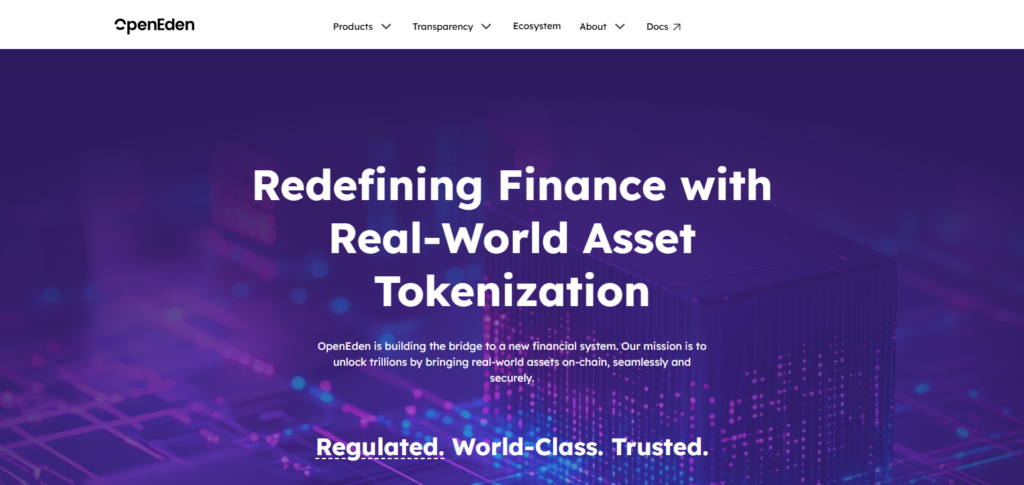
OpenEden’s model prioritizes institutional custody and distinct asset segmentation. Investors in crypto assets can receive risk-free returns at rates usually reserved for larger players in the financial system. The awarded tokens are also subject to rigorous audits.
OpenEden Features
- T-Bill vaults via smart contracts.
- Treasury backing 1:1 with stablecoins deposits.
- On-chain and liquidity 24/7.
- Custodians regulated hold assets.
- Compliance and audit reporting transparent.
OpenEden
| Benefits | Drawbacks |
|---|---|
| Smart-contract T-Bill vaults | Minimum investment may be high for small investors |
| Stablecoin deposits with 1:1 Treasury backing | Regulatory eligibility may vary by region |
| 24/7 liquidity and on-chain redemption | Platform still growing, less history |
| Transparent reporting and audits | Limited variety of Treasury maturities |
| Secure custody with regulated partners | Fees slightly reduce net yield |
7. Swarm Markets
Swarm Markets is a compliant platform to trade on-chain and off-chain real-world assets (RWA) that includes tokenized U.S. Treasury ETFs and related equities. Utilizing regulated pathways and decentralized over-the-counter (dOTC) protocols, Swarm allows qualified global investors to trade KYC/AML compliant, blockchain settled fractionalized tokens linked to Treasuries and ETFs.
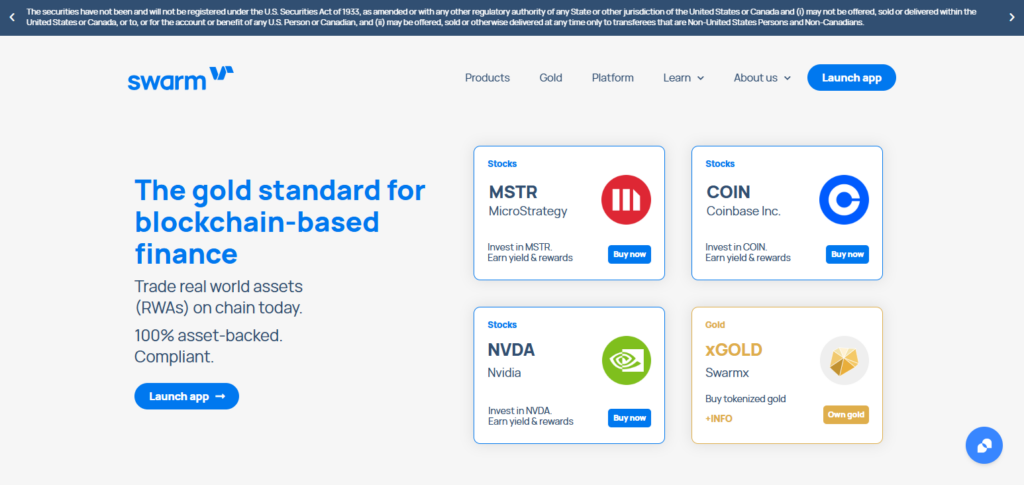
This model demonstrates a developing ecosystem where institutional capital and accredited investors can seamlessly trade and maintain real-world tokenized assets, such as T-bill funds, paired with the composability of decentralized finance (DeFi) and cross-border accessibility.
Swarm Markets Features
- Compliant Treasury ETF tokenization platform.
- Government debt fractional ownership on chain.
- Global investors KYC/AML verified.
- Trading on secondary markets for liquidity.
- Liquidity via DeFi protocol integrations.
Swarm Markets
| Benefits | Drawbacks |
|---|---|
| Compliant platform for tokenized Treasury ETFs | Mainly targets qualified and institutional investors |
| Fractional ownership on-chain | Smaller retail audience |
| Secondary market trading for liquidity | Smart contract risks remain |
| Integration with DeFi protocols | Fee structure may vary by product |
| KYC/AML verified global access | Newer platform with limited adoption |
8. Hashnote
Hashnote is active in the RWA tokenization space with offerings such as USYC, a stablecoin or wrapper that is backed by U.S. Treasuries and cash equivalents. USYC also offers holders on-chain liquidity and yield by representing a fractional interest in short-term government debt, thus seamlessly merging yield-generating assets with the blockchain.
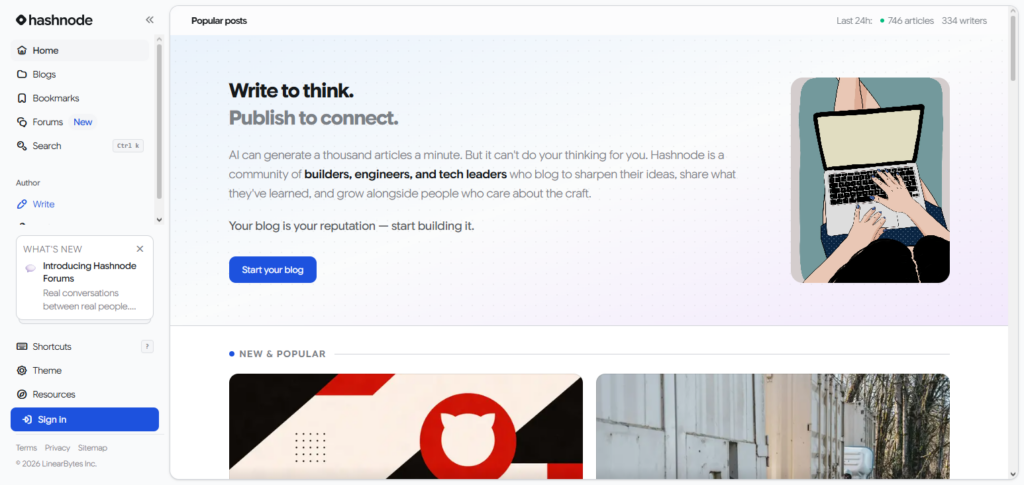
Though the specifics of the token and the regulatory environment are subject to varying degrees of accessibility, Hashnote offers a solution as a stablecoin that embeds T-bill yields in its reserves, and offers users a place to escape from traditional non-yielding stablecoin balances.
Hashnote Features
- Issues Treasury-backed stablecoins like USYC.
- Fractional short-term government debt exposure.
- Digital, yield-bearing assets on-chain.
- Reporting and custody compliance.
- Wallet integration for simple access and transfers.
Hashnote
| Benefits | Drawbacks |
|---|---|
| Stablecoins like USYC backed by Treasuries | Limited range of products currently |
| On-chain yield exposure | Mostly for experienced crypto investors |
| Regulatory-compliant custody | Liquidity may be lower than Ondo or OpenEden |
| Easy wallet integration | Smart contract and platform risk |
| Fractional Treasury exposure for small holders | Less established in market |
9. Securitize Markets
Securitize Markets is a regulated platform for the issuance and trading of digital securities that includes the largest offerings of tokenized U.S. Treasury funds, such as BlackRock’s BUIDL, which are also the largest tokenized U.S. Treasury funds.
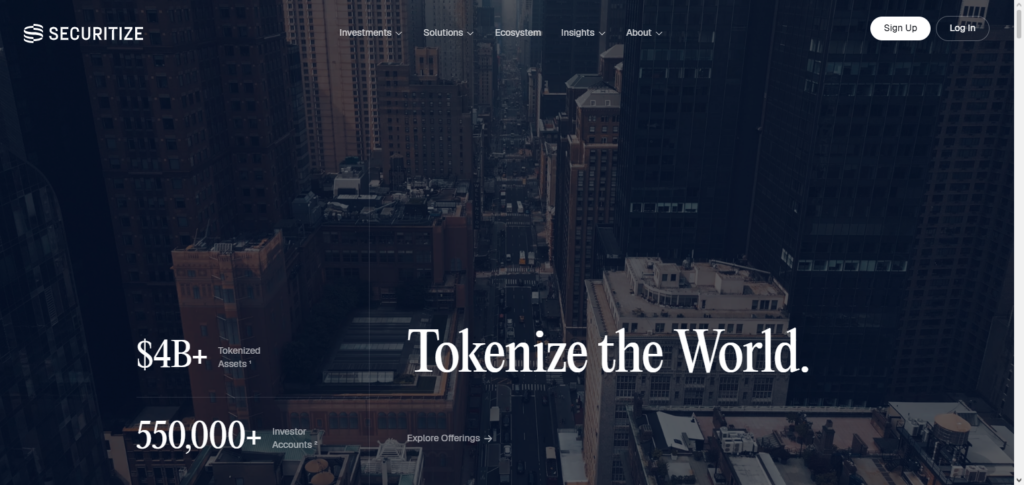
Securitize uses institutional backing and SEC and FINRA compliant structures to allow global investors to own and trade blockchain versions of U.S. government debt and similar assets. It is a digital transfer agent and regulated marketplace, which provides fractional fixed-income exposure custodial, governance, and secondary trading services and transfers via stablecoin or regulated fiat.
Securitize Markets Features
- Tokenized securities regulated trading and issuance.
- Fractional U.S. Treasury holdings.
- Investor protection compliance via SEC and FINRA.
- Digital custody and transfer secure infrastructure.
- Trading on the secondary markets for liquidity and flexibility.
Securitize Markets
| Benefits | Drawbacks |
|---|---|
| Regulated platform for tokenized securities | Mostly institutional, not retail-focused |
| Fractional U.S. Treasury holdings | Higher minimum investments |
| SEC and FINRA compliant | Less flexible than DeFi-native platforms |
| Secure custody and governance | Limited secondary trading for small users |
| Transparent reporting and audits | Onboarding requires verification process |
10. WisdomTree Prime
WisdomTree digital assets, WisdomTree Connect™, and tokenized money market funds give both institutions and retail investors blockchain access to ultra-short, Treasury-linked yields. Because of new SEC exemptive relief, 24/7 trading and instantaneous settlement are possible with USDC. Thus, WisdomTree Prime’s tokenized products (including the Treasury Money Market Digital Fund) are superior to traditional cash funds.
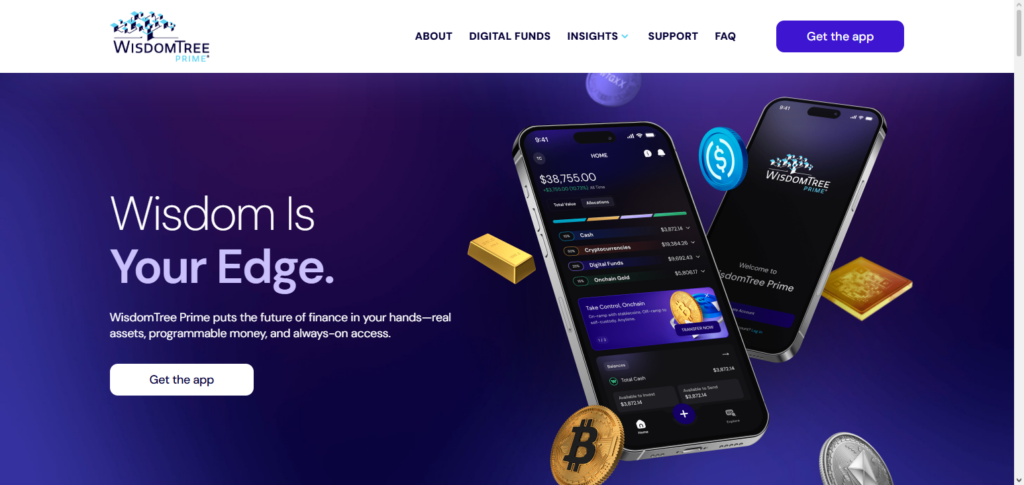
These products, which are for stablecoin holders to attain government-related yields safely and compliantly, provide stablecoin access to yield-bearing instruments, along with compliance to regulatory safeguards.
WisdomTree Prime Features
- Tokenized money market funds of Treasuries.
- Instant settlement via USDC or other stablecoins.
- Compliance and risk management of institutional grade.
- Transparent yield and fee reporting.
- Liquidity and access via blockchain 24/7.
WisdomTree Prime
| Benefits | Drawbacks |
|---|---|
| Tokenized Treasury money-market funds | Primarily institutional access |
| Instant stablecoin settlement | Minimum investment may be high |
| Transparent yield and fees | Less flexible for retail users |
| 24/7 on-chain liquidity | Limited variety of Treasury-linked products |
| Institutional-grade risk management | Newer digital initiative; adoption still growing |
Criteria for Choosing a Platform
Regulatory Compliance: Adheres to KYC/AML and other legal protocols.
Custody & Asset Backing: Offers regulated custodial 1:1 asset backing.
Liquidity & Redemption: On-chain redemptions and secondary trading are straightforward.
Yield Transparency & Fees: Interest calculation is transparent, and fees are low.
Accessibility & Minimum Investment: Retail/institutional investor access with low minimum requirements.
Security & Smart Contract Audits: Strong cybersecurity and audits are done frequently.
Reputation & Track Record: Credibility and track record are proven and good.
Risks and Considerations
Regulatory Risk
Changes to the regulations for the platforms can impact the ease of use or legality of continued use of the T-Bills.
Custody Risk
If an asset is lost because the platform or a custodian mismanaged it.
Smart Contract Risk
Funding could be compromised in the event there are bugs or exploits in the DeFi protocols.
Liquidity Risk
If the secondary market is insufficient, it could hinder the ability to redeem or result in a loss of value due to the ability to sell.
Stablecoin Risk
If the peg is unstable, or there is a decoupling, it could negatively impact the ability to use stablecoins.
Platform Solvency Risk
The insolvency or bankruptcy of a platform could result in the inability to access stablecoins.
Market and Interest Rate Risk
Changing interest rates can impact the return and yield.
Fraud and Operational Risk
The possibility for mismanagement and a lack of transparency can lead to fraud.
Conclusion
Combining the safety of government debt with the flexibility of blockchain technology is made possible with the use of fractional U.S. Treasury bills and stablecoins. Committed investors can earn predictable returns and maintain coupled liquidity and cash flow via on-chain settlements.
Of course, the use of a stable and compliant platform is necessary, but investors must also be mindful of regulations, custody, smart contract security, and reputation risk. In the ever-evolving digital economy, stablecoin holders are able to access a low-risk, yield-generating government-backed asset.
FAQ
What are fractional U.S. T-Bills?
Fractional U.S. Treasury bills are small-denomination portions of government short-term debt, allowing investors to purchase less than the standard $1,000 minimum. They offer the same security and yield as full T-Bills but make it easier for retail and crypto investors to access U.S. government debt.
How can I buy fractional T-Bills with stablecoins?
You can purchase fractional T-Bills on tokenization platforms that convert U.S. Treasury exposure into blockchain-based tokens. Platforms like Ondo Finance, Matrixport, and WisdomTree Prime allow deposits in stablecoins like USDC, USDT, or PYUSD to gain fractional exposure and earn interest.
Are these investments safe?
While U.S. T-Bills are virtually risk-free, risks exist on the platform side, including custody, smart contract vulnerabilities, and regulatory changes. Choosing regulated, audited platforms with strong reputation reduces these risks significantly.
What yields can I expect?
Yields depend on prevailing T-Bill rates and the platform’s fees. Most platforms provide transparent reporting of interest accruals, often distributed directly to stablecoin wallets. Rates typically mirror short-term Treasury yields, minus any platform fees.
Can I redeem my investment anytime?
Many platforms, like OpenEden and Swarm Markets, offer 24/7 liquidity and on-chain redemption. However, liquidity may vary by platform and market conditions, so always check redemption terms before investing.