


The focus of this article will be the Best Crypto Infrastructure Companies accelerating blockchain adoption into 2026. These companies offer various services such as web3 APIs, crypto custody, tools to help develop web3,
Payment infrastructure systems, services to help tokenize, and digital asset services for institutions. We will discuss the features and the benefits of these companies. We will also discuss how these companies help build a safe and scalable crypto ecosystem.
Key Points & Best Crypto Infrastructure Companies In 2026
| Crypto Infrastructure Company | Explanation |
|---|---|
| Coinbase | Provides institutional crypto services, custody, trading APIs, and blockchain infrastructure solutions globally. |
| Fireblocks | Delivers secure custody, MPC technology, and institutional digital asset transfer infrastructure. |
| Alchemy | Offers powerful blockchain APIs, node infrastructure, and Web3 development tools worldwide. |
| Chainlink | Connects smart contracts with real-world data through decentralized oracle infrastructure networks. |
| Circle | Provides stablecoin infrastructure, payment solutions, and programmable digital currency services. |
| Consensys | Builds Ethereum tools, wallets, developer platforms, and blockchain infrastructure products. |
| Paxos | Offers regulated crypto infrastructure, tokenization services, and stablecoin technology solutions. |
| Blockdaemon | Provides institutional blockchain nodes, staking, and network management infrastructure services. |
| Ripple | Enables global blockchain payments, settlement networks, and enterprise crypto solutions. |
| QuickNode | Supplies reliable blockchain APIs, nodes, and Web3 developer infrastructure services. |
10 Best Crypto Infrastructure Companies In 2026
1. Coinbase
In 2026, Coinbase is no longer simply a crypto exchange, but a digital asset infrastructure provider. Thanks to incorporation of blockchain financial solutions, institutional ecosystems are able to provide secure custody, advanced trading APIs, and supportive staking.

Coinbase Prime is tailored for institutions handling large-scale crypto operations. With an emphasis on compliance, Coinbase’s developer platforms aid firms in the digital asset space, while also allowing expanded access to tokenized finance, stablecoins, and global payment solutions in Web3.
Coinbase – Features
- High-level security and compliance for institutional crypto custody.
- Advanced trading APIs for firms, developers, and institutions.
- Large-scale digital asset management operations supported by Coinbase Prime.
- Staking, tokenization, and Web3 financial infrastructure are offered.
- Supports enterprise stablecoin payments and blockchain.
2. Fireblocks
Fireblocks, being a secure asset management provider, is at the forefront of institutional crypto infrastructure. With its Multi-Party Computation (MPC) technology, institutions, banks, and funds can store and transfer digital assets safely
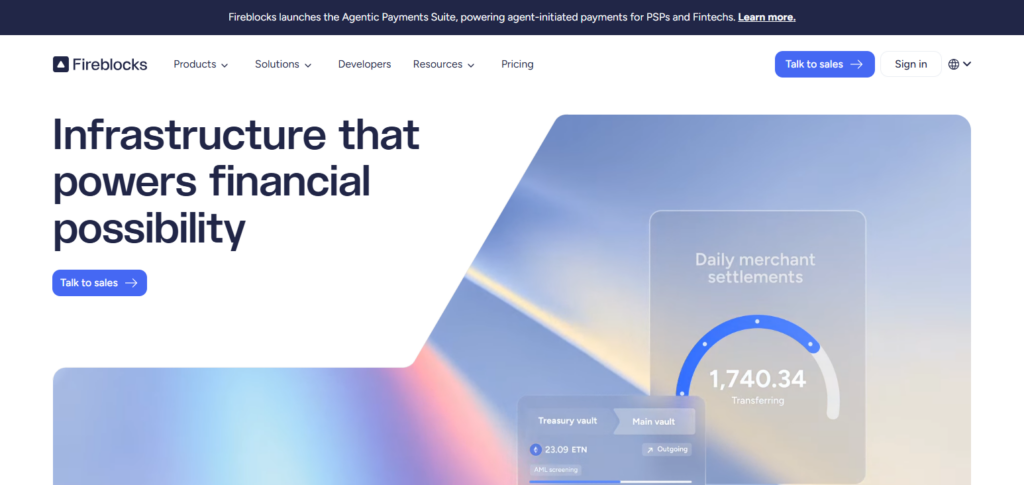
All while avoiding traditional private keys. Fireblocks continues its focus on tokenization, settlement, and Web3 infrastructure in 2026.
The secure workflows the platform provides for crypto custody, payment, trading, and digital asset operations and issuance are touted by thousands of organizations.
Fireblocks – Features
- Digital asset custody management with security via MPC.
- Institutional wallet and transfer security offered.
- Tokenization, settlement, and issuance of digital assets are supported.
- Secure transfer of digital assets via multiple blockchains is offered.
- Compliance of banks, funds, and enterprises is supported.
3. Alchemy
Providing the backbone to a plethora of Web3 applications, Alchemy is critical blockchain infrastructure. With accessible developer tools including blockchain APIs, node services, and other platforms for scalable Web3 development, Alchemy is in the business of accelerating the performance of decentralized applications in 2026.
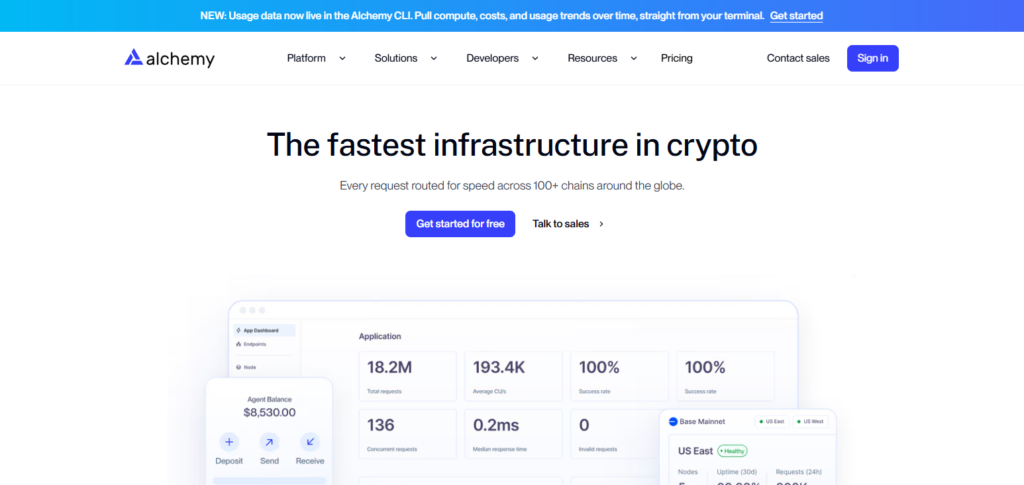
With added infrastructure and account abstraction, tools for blockchain development are harnessing the power of AI. Alchemy also helps enterprises and startups tackle the major backend networks that serve as the backbone for Wallets, DeFi, NFTs, and other blockchain services/apps.
Alchemy – Features
- Scalable blockchain/blockchain APIs for Web3.
- Node infrastructure for Web3 across multiple blockchains.
- Supports dApps, wallets, and DeFi.
- Blockchain data and analytics with monitoring and evaluation are offered.
- Account abstraction with smart contracts is provided.
4. Chainlink
Chainlink provides critical services that connect blockchains to the physical world. Chainlink’s oracles allow contracts to pull data securely from price feeds, financial data, or events. By 2026, Chainlink has further developed its services to include tokenized real world assets
Cross-Chain Interoperability Protocol, and the growing acceptance of institutional blockchains. Chainlink’s infrastructure helps provide the services needed for Banks, Businesses, and DeFi Protocols to build safe and trustless automated systems.
Chainlink – Features
- Decentralized oracles for blockchains.
- Automated smart contracts and secure information sources are supported.
- Advanced interoperability for cross-chain communications is featured.
- Tokenized Financial and Real World Assets infrastructure is supported.
- Data and infrastructure for DeFi are offered.
5. Circle
Circle provides the infrastructure to use stablecoins for real-time payments and the future of the internet’s financial systems. The USDC ecosystem affords businesses and fintech the ability to build borderless payments on blockchain technology.
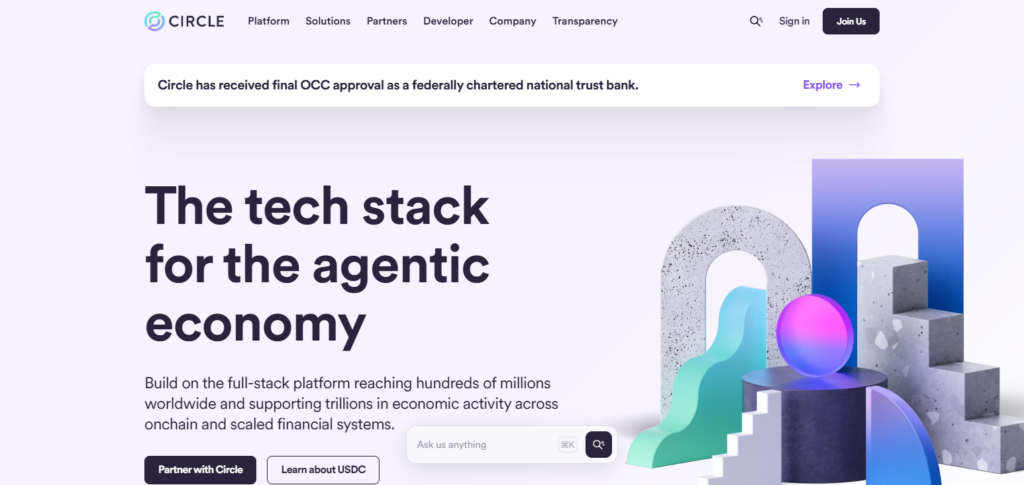
Circle’s main objectives for 2026 are to continue the adoption of programmable currency, cross border payments, and digital cash for enterprises.
The services and infrastructure that Circle provides companies the ability to use stablecoin transactions, custody, and blockchain settlement within financial systems.
Circle – Features
- Provides infrastructure for global payments utilizing the USDC stablecoin.
- Provides liquidity on demand for programmable money.
- Provides digital payment and financial service APIs.
- Provides tools for liquidity and treasury management.
- Supports international transactions with quicker settlement times.
6. Consensys
Consensys is a dominant company building the infrastructure for blockchains on Ethereum. With the development of MetaMask and additional building blocks for web3, Consensys has made a significant impact on the adoption of web3 globally.
In 2026, the company will focus on building security for the enterprise and wallets on the Ethereum framework. The Consensys ecosystem provides users the ability to interact with decentralized apps and the additional tools that allow developers to build on DeFi, NFTs, and smart contracts.
ConsenSys – Features
- Provides tools for developers and businesses to build on Ethereum.
- Provides access to the secure Web3 via MetaMask wallet technology.
- Supports smart contracts, DeFi, and dApps.
- Provides enterprise solutions and development tools for the blockchain.
- Helps innovate Ethereum infrastructure to be more scalable.
7. Paxos
Paxos provides direct access to regulated blockchain technology for businesses who want to engage with the digital asset market. From stablecoins, custody, and tokenization to settlement solutions, Paxos has compliant frameworks.
In 2026, Paxos helps more financial institutions with tokenized assets and blockchain-based payment systems. Its infrastructures support businesses in the launch of digital asset products in the market while meeting the regulatory, security, and operational standards for large-scale engagement.
Paxos – Features
- Provides regulated blockchain infrastructure on the rails of finance.
- Provides tokenization of digital assets and issuance of stablecoins.
- Provides secure crypto custody and settlement.
- Provides regulated payment infrastructure on the rails of blockchain.
- Supports enterprises to create regulated digital asset offerings.
8. Blockdaemon
Blockdaemon provides institutional blockchain infrastructures with solutions for node management, staking, and network connectivity. More financial institutions, exchanges, and enterprises can access blockchain networks as a result of Blockdaemon’s simplifying node management.
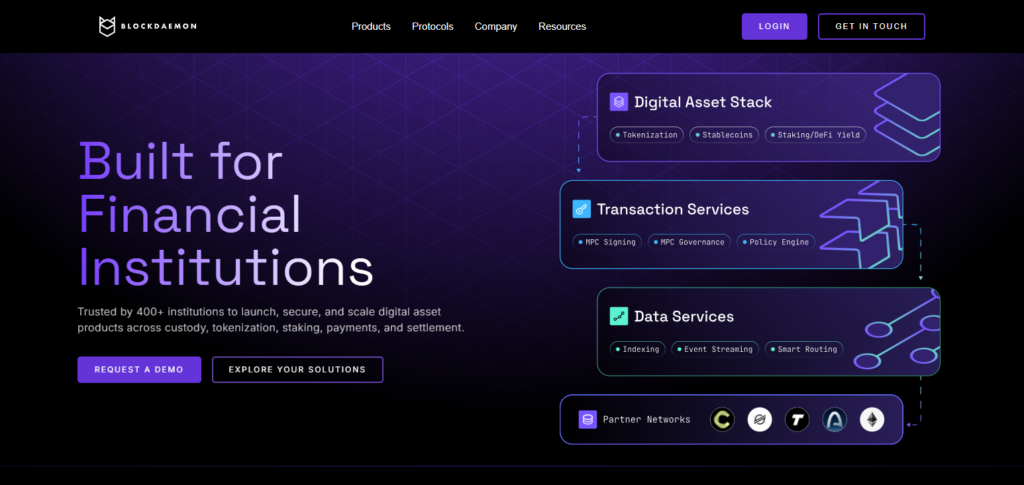
In 2026, Blockdaemon improves further the infrastructures for proof-of-stake networks, Web3, and institutional digital assets. Through scalable nodes, monitoring, and enterprise infrastructure, Blockdaemon engages organizations in blockchain ecosystems.
Blockdaemon – Features
- Provides institutional grade blockchain nodes and cross network infrastructure.
- Supports staking services across multiple PoS blockchains.
- Provides enterprise monitoring and management of blockchain services.
- Supports secure participation of decentralized networks.
- Provides financial enterprises and businesses a simpler way to operate on blockchai
9. Ripple
Ripple provides blockchain infrastructures focused on global financial networks, settlements, and enterprise digital assets. Ripple Payments, for example, provides enterprises with a fast and efficient system to transact value across borders.
In 2026, Ripple continues developing solutions for institutions in tokenized assets, cross-border payment, and digital currencies. Ripple’s infrastructures facilitate the fusion of finance and blockchain to advance the speed, transparency, and efficiency of enterprise and banking operations.
Ripple – Features
- Provides a blockchain based global infrastructure for payments.
- Provides faster country to country settlements with Ripple Payments.
- Provides enterprise solutions for blockchain settlement and liquidity.
- Provides infrastructure for digital currencies and tokenized assets.
- Provides a bridge for payment settlement between traditional finance and blockchain.
10. QuickNode
With QuickNode, you can access scalable blockchain infrastructure with reliable node offerings, Web3 developer tools, and APIs. As its highly developer friendly, decentralized application (dApp) builders are able to develop faster and more efficiently.
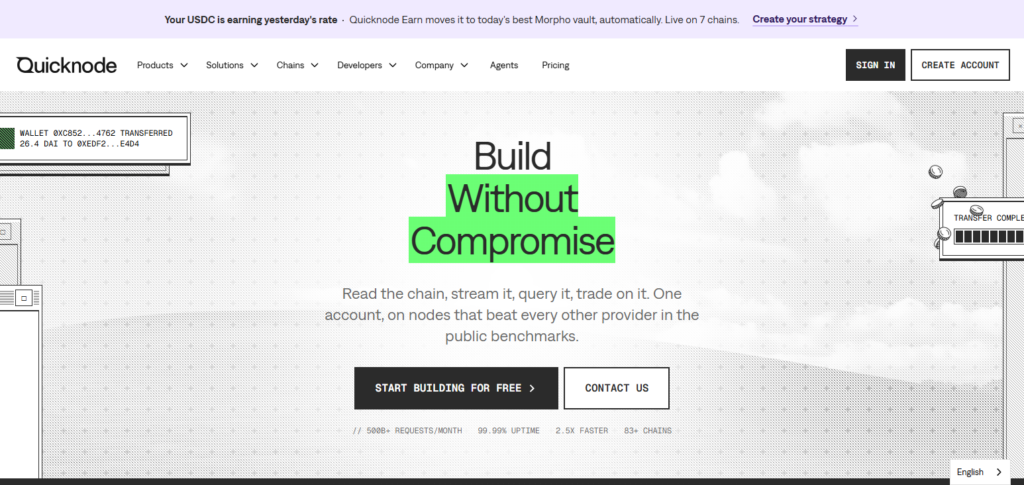
As Web3 infrastructures and data solutions continue to develop, so will QuickNode’s offerings, including analytics and developer-focused solutions.
Advanced analytics, data infrastructures, and solutions will see enterprises, startup companies, and blockchain teams build decentralized applications (dApps) across the gaming and NFT spaces faster and more easily with QuickNode.
QuickNode – Features
- Provides fast blockchain nodes with developer focused APIs.
- Supports numerous blockchains for Web3.
- Provides flexible infrastructure for DeFi, NFT, and Gaming.
- Provides developer and enterprise focused infrastructure for blockchains.
- Provides reliable network connectivity for Web3 and simplifies the development.
Conclusion
In Conclusion Best Crypto Infrastructure Companies In the next phase of blockchain innovation, the best crypto infrastructure companies secure the business, developer, and finance-focused sections of blockchain with their scalable and reliable solutions.
The companies listed are building the fundamental components of Web3, digital payment systems, and tokenized assets. Inferring trends from earlier years, we predict the companies listed will be the most essential infrastructure companies for reliable and efficient blockchain ecosystems in 2026.
FAQ
Which Are The Best Crypto Infrastructure Companies In 2026?
Some of the best crypto infrastructure companies in 2026 include Coinbase, Fireblocks, Alchemy, Chainlink, Circle, Consensys, Paxos, Blockdaemon, Ripple, and QuickNode. These companies provide advanced solutions for custody, payments, blockchain development, tokenization, and Web3 applications.
What Services Do Crypto Infrastructure Companies Provide?
Crypto infrastructure companies provide services such as blockchain APIs, node hosting, digital asset custody, wallet infrastructure, stablecoin payments, smart contract tools, staking solutions, tokenization platforms, and institutional trading infrastructure.
Is Coinbase A Crypto Infrastructure Company?
Yes, Coinbase is a major crypto infrastructure company offering institutional custody, trading APIs, staking solutions, Coinbase Prime services, and blockchain payment tools. It helps enterprises securely manage and integrate digital assets into financial applications.
Why Is Fireblocks Popular Among Institutions?
Fireblocks is popular among institutions because it provides secure MPC-based custody technology, digital asset transfer solutions, and compliance-focused infrastructure. Banks, investment firms, and enterprises use Fireblocks for secure crypto operations and asset management.
