


In this article, I discuss the best multi currency business accounts for companies that frequently make international payments and that offer the most affordable outward remittance.
The right account can lessen the costs associated with foreign currency, lessen the transfer costs and create an easier way for global transactions to occur for your needs.
Whether you have a startup, an e-commerce account or a global company, these accounts provide you with a way to solve the problem of multiple currencies and cross-border payments.
Key Poinst & Best Multi-Currency Business Accounts with Low Outward Remittance Fees
| Multi-Currency Business Account | Explanation |
|---|---|
| Wise Business | Low fees, local accounts, fast international payments across countries. |
| Revolut Business | Competitive exchange rates, multi-currency balances, affordable global transfers. |
| Airwallex | Reduces transfer costs with local payment rails worldwide. |
| Payoneer Business | Cost-effective cross-border payments for freelancers and global businesses. |
| Statrys | Supports multiple currencies with transparent, low remittance charges. |
| Currenxie | Global accounts and cheaper international transfers for businesses. |
| HSBC Global Wallet | Hold currencies and send payments internationally with lower fees. |
| OFX Business | No transfer fees and competitive exchange rates globally. |
| WorldFirst | Simplifies international payments with low-cost outward remittance services. |
| Aspire Business Account | Multi-currency support with affordable international business payment solutions. |
10 Best Multi-Currency Business Accounts with Low Outward Remittance Fees
1. Wise Business
Wise Business is among the best multi-currency business accounts for dealing with international payments.
Wise makes it easy to hold and convert a multitude of currencies from the one dashboard. Along with this, Wise provides account details for several major markets (US, UK, EU, Australia).
Wise has great features for businesses, like providing exchange rates that reflect the mid market rate and fast settlement times.
Wise also integrates well with accounting software and is easy to use. These traits attract a variety of businesses from startups to freelancers, exporters, and businesses that are growing and going global.
Wise Business Pros & Cons
Pros
- Fair mid-market exchange rates and no hidden markups.
- Local accounts in many key markets around the world.
- Dozens of currencies supported for one business account.
- International transfers are fast with accounting software.
Cons
- Limited banking and lending services.
- Additional fees may be incurred on certain transfers.
- Cash deposits are not usually possible.
- Business registration not possible in every country.
2. Revolut Business
Revolut Business has built a great platform for global businesses on the most modern banking infrastructure.
Revolut accounts allow businesses to hold, exchange, and transfer numerous currencies, along with very favorable foreign exchange rates.
Revolut makes dealing with payments easy, but has great features for managing cashflow too, like expense management and automated financial controls.
This platform is great for digital and remote businesses that juggle a lot of global transactions.
Revolut Business Pros & Cons
Pros
- Multiple currencies and international business payments are easy.
- Corporate cards with enhanced features for expense management.
- Foreign transactions are fairly priced.
- Deals and automation for finance and reporting are excellent.
Cons
- Premium features usually need higher subscription tiers.
- Benefits for exchange rates may have caps for the month.
- Support quality is inconsistent regionally.
- Availability is based on the business location.
3. Airwallex
Airwallex is great for businesses that want to save on international payments. Airwallex has built great payment rails for local banks in a variety of countries that let businesses bypass a lot of traditional banking fees.
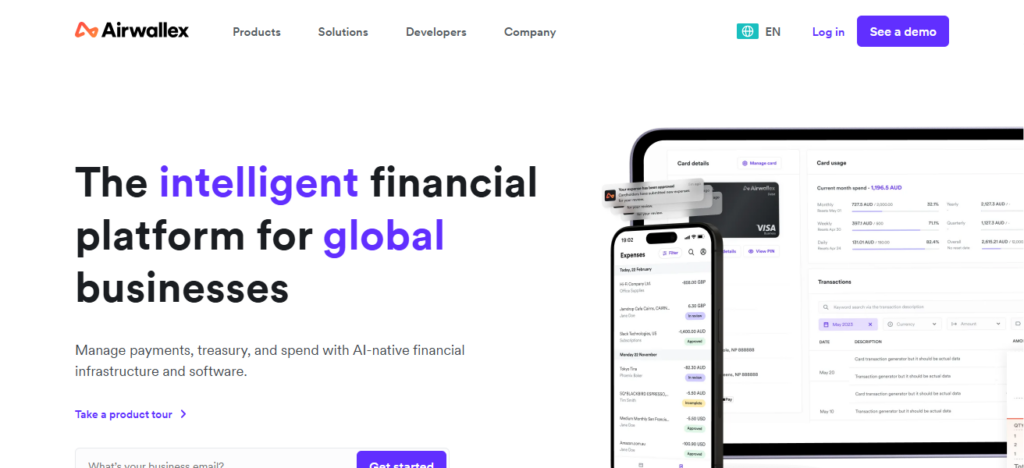
This makes Airwallex a great platform that supports a lot of the treasury management businesses in e-commerce and global tech.
Airwallex Pros & Cons
Pros
- Uses local payment systems to save on transfer costs.
- Great tool for e-commerce and expanding internationally.
- Accounts can hold multiple currencies and large collections.
- Excellent API for business with many growing use cases.
Cons
- Many features may need a technical setup to use.
- Limited if you need a physical location for your business.
- Availability is country and region-based.
- Verification may take a long time.
4. Payoneer Business
Payoneer Business is a payment system adapted to the needs of the modern freelancer and online seller.
This system is very popular among exporters and those who sell their goods and services on online marketplaces and are looking for a way to receive payment from their overseas clients.
Payoneer solves the problem of receiving funds and making payments in many currencies and countries by offering local receiving accounts and global payment solutions at competitive rates.
The seamless integration with most, if not all, of the online marketplaces and freelancing platforms makes it a preferred system for digital business people.
The unique combination of an e-commerce intensive workforce and the lack of effective online payment solutions, makes Payoneer’s cross-border payment solution a perfect match.
Payoneer Business Pros & Cons
Pros
- Excellent choice for freelancers with many marketplace integrations.
- Local accounts in the major currencies.
- Good support for cross-border payments.
- Great for e-commerce integrations.
Cons
- Can incur currency conversion fees.
- Account reviews can slow down transactions.
- Limited traditional banking functions.
- Additional charges on some withdrawal methods.
5. Statrys
Statrys provides a business banking option that is multi-currency payment account with transparency and simplicity among its primary features.
Focusing on ease of use for the small and medium sized enterprise, it helps businesses manage their global payments without the hassle of complex banking payments or hidden fees.
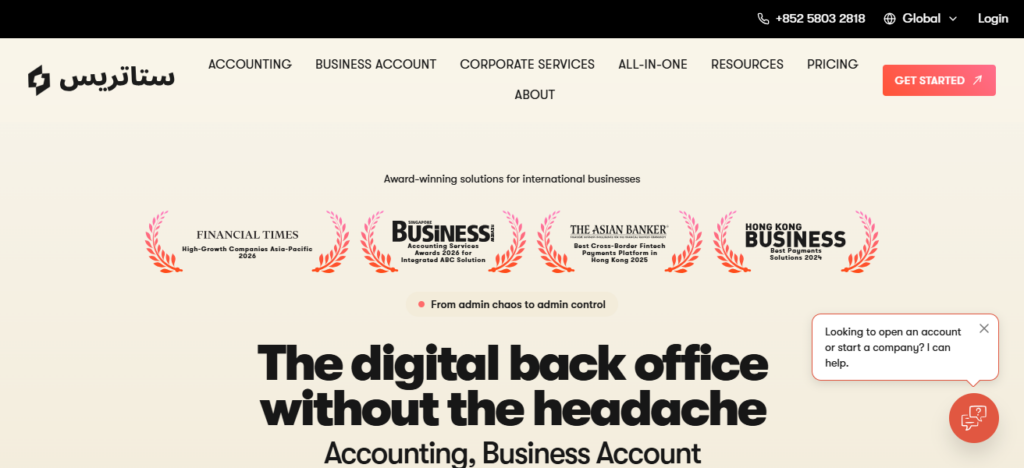
Statrys is an ideal use case for companies in the international marketplace that demand payment services with straightforward pricing and an easy to use interface for the management of cross-border payment operations.
Statrys Pros & Cons
Pros
- Straightforward pricing and fee structure.
- Simple platform for processing international business payments.
- Designed for SMEs that conduct global trade.
- Multi-currency and cross-border transfer capabilities.
Cons
- Smaller international reach than the majority of fintechs.
- Limited financial offerings.
- Limited access to physical banking.
- Some services are only available in specific regions.
6. Currenxie
Currenxie helps businesses operate with multi-currency accounts with a focus on cross-border payment solutions that offer low-cost and predictable payment options.
Businesses are able to receive, hold, and send funds with less payment friction, all within a multi-currency framework that provides predictable exchange rates and low-cost remittances.
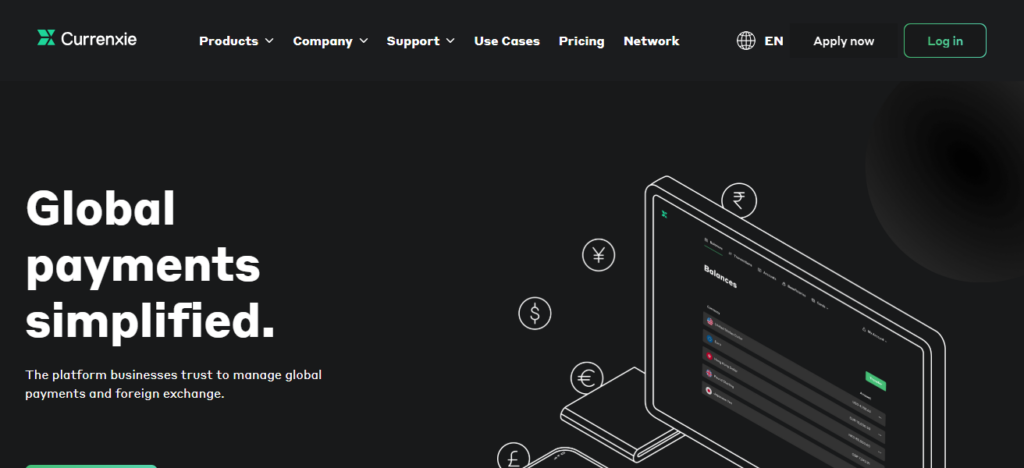
Reducing the operational complexity of global commerce and cross-border trade is the main focus of Currenxie.
For businesses with a high-demand for a digital commerce payment infrastructure that facilitates rapid payment execution with minimal exposure to cross-border currency volatility, Currenxie is an ideal use case.
Currenxie Pros & Cons
Pros
- Good exchange rates for international businesses.
- Payments and collections across borders made easy.
- Effective multi-currency account management.
- Foreign exchange conversion fee savings.
Cons
- Less known than larger companies.
- Depends on jurisdiction for services.
- Limited offerings compared to full-featured banks.
- Less integrations compared to competitors.
7. HSBC Global Wallet
HSBC Global Wallet is convenient for companies making regular payments to international vendors, partners, and divisions.
The system allows businesses to maintain and transact in several currencies using their existing HSBC accounts.
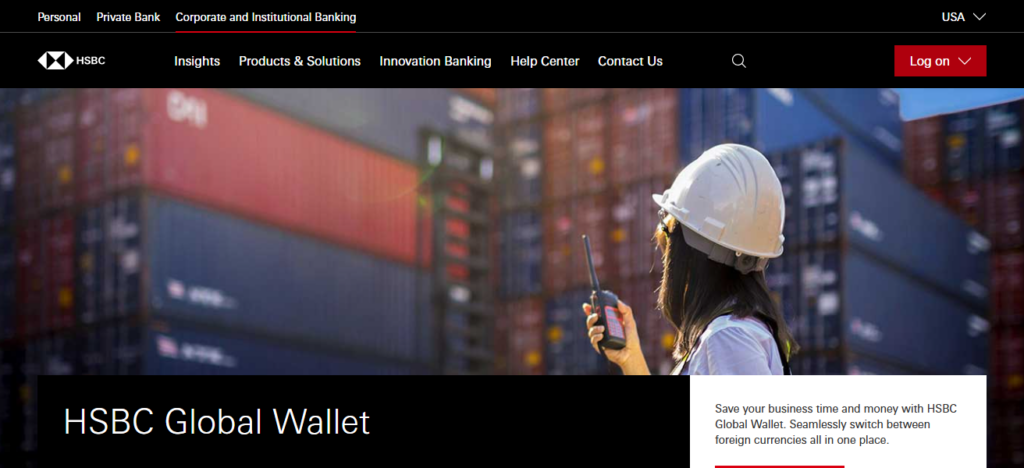
By avoiding constant currency conversions, businesses can manage foreign exchange costs and payment efficiencies.
Because Global Wallet is part of HSBC’s global financial network, multinational businesses can access a secure, reliable, and flexible solution to their needs for international payment systems.
HSBC Global Wallet Pros & Cons
Pros
- International reach with the backing of HSBC.
- Convenient for customers with HSBC business accounts.
- Supports multi-currency transactions.
- Security and compliance are solid.
Cons
- Requires a HSBC business account to access many features.
- Generally more expensive than many fintech accounts.
- Lengthy onboarding process.
- Less flexible than some purely digital offerings.
8. OFX Business
OFX Business is primarily concerned with international payments and foreign exchange. Unlike businesses in the traditional payment space, OFX does not charge fees for many types of transfers, resulting in a savings on repeated payments.
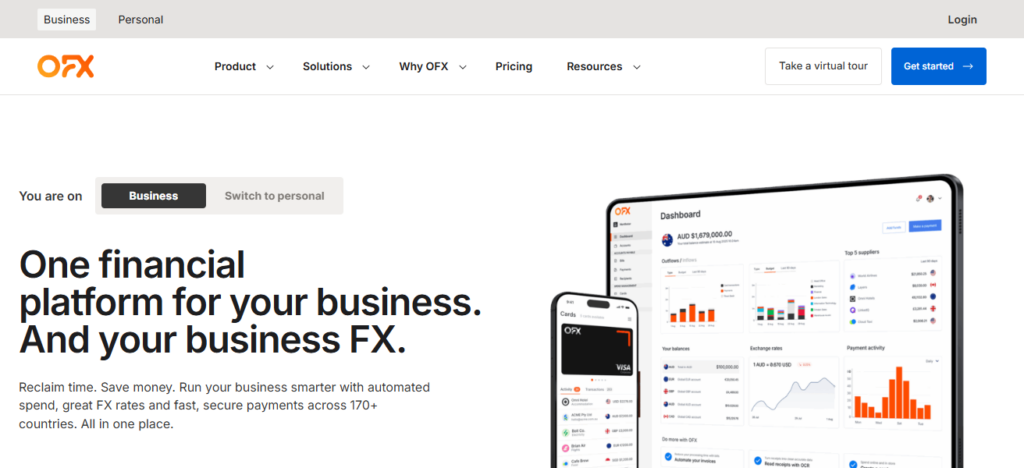
The system facilitates payment to a broad range of countries and incorporates features to assist the user in managing currency risk.
Because of the competitive exchange rates, many businesses involved in the international trade and procurement process use OFX Business.
OFX Business Pros & Cons
Pros
- Many cross-border transfers are fee-free.
- Good exchange rates for business FX.
- Personalized support with dedicated FX specialists.
- Helpful currency risk management tools offered.
Cons
- Lacks extensive business banking functions.
- Some countries experience slow transfers.
- No integrated expense management.
- Weak support for corporate spending cards.
9. WorldFirst
WorldFirst offers multi-currency payment solutions that fit the needs of companies engaged in international trade, especially online businesses selling globally.
The system allows businesses to collect payments in major currencies, manage balances, and make international transfers. For businesses selling in international marketplaces,
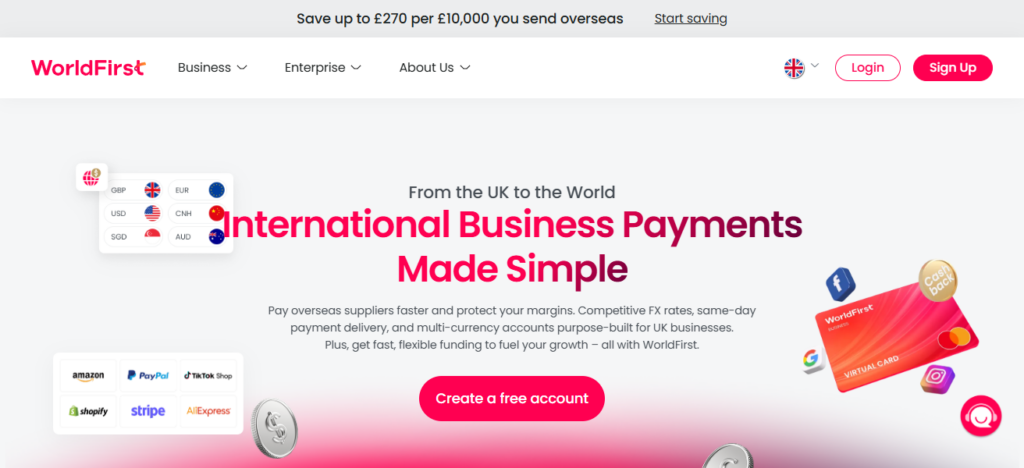
WorldFirst simplifies the settlement process and reduces the cost for payments. WorldFirst has an appealing design for businesses seeking improved bottom lines on international transactions.
WorldFirst Pros & Cons
Pros
- Some of the best tools for sellers on international marketplaces.
- Multiple currency accounts with global payment options.
- Good rates for international transfers.
- Eases issues of international business.
Cons
- Some services absent in some countries.
- Limited business banking services.
- PMH for some functions.
- Lengthy verification processes.
10. Aspire Business Account
The Aspire Business Account is another digital financial service that caters to international businesses and startups.
Features like multi-currency accounts, international transfers, expense management, and corporate cards can all be found in their service.
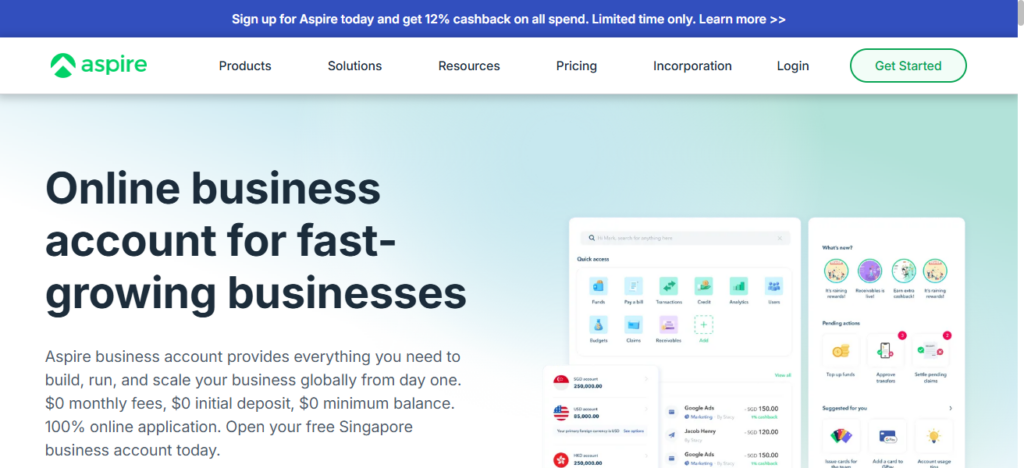
Companies can improve payment efficiencies and save on transfer costs, thanks to their clear pricing mechanisms.
Aspire’s digitally focused services align well with the needs of modern, international businesses and entrepreneurs that value the automation, real-time data, and payment flexibility that facilitate business growth in varied markets.
Aspire Business Account Pros & Cons
Pros
- Expense management, card, and payment tools all in one.
- Tailored for modern businesses and startups.
- Automated and instantaneous financial monitoring.
- Price-centric for international payments.
Cons
- Availability in select markets.
- Fewer global banking options than Tier 1 banks.
- Some premium features on paid tiers.
- Not good for businesses requiring branch banking.
Conclusion
In conclusion, the ideal multi-currency business account can make international payments easier and minimize outward remittance costs.
Options like Wise Business, Revolut Business, Airwallex, and Payoneer are solid choices that provide multi-currency support, great global exchange rates, and a great global payment product.
Business size, where the business will transact and with what frequency, will also determine which product will suit the business best.
By analyzing costs, characteristics, and what currencies the providers will support, business will save on cross-border payment costs and enhance cash flow.
FAQ
What is a multi-currency business account?
A multi-currency business account allows companies to hold, receive, send, and exchange multiple currencies from a single account.
Why are outward remittance fees important?
Lower remittance fees help businesses reduce international payment costs and improve overall profitability.
Which account is best for low-cost international transfers?
Wise Business is widely recognized for transparent pricing and competitive exchange rates.
Are multi-currency accounts suitable for small businesses?
Yes, they are ideal for startups, SMEs, freelancers, and exporters handling global transactions.
Can I hold multiple currencies without converting them?
Yes, most providers allow businesses to store funds in different currencies until needed.
