


In a read, I will share the Tax Write-Offs Every Freelancer Should Know. Top Freelancers Deductions, but due to a lack of knowledge, some freelancers miss key deductions like (home office, internet, software, and travel), which can greatly reduce how much tax they actually have to pay.
Insights into these write-offs help hone financial strategies, boost savings, and develop an awareness of how to deal with the 2026 tax rules updates on freelance earnings.
Key Poinsy & Tax Write-Offs Every Freelancer Should Know About
Home Office Deduction: If you use a dedicated space in your home only for work, you can claim a portion of rent, electricity, internet, and maintenance costs. It must be used regularly and exclusively for business.
Internet and Phone Bills: A percentage of your internet and mobile bills can be written off if you use them for client communication, research, or business management.
Laptop, Computer, and Equipment: Any devices used for work—laptops, monitors, tablets, cameras—can be deducted either fully (if under threshold) or depreciated over time.
Software and Online Tools: Subscriptions like design tools, writing software, project management apps, or AI tools used for work are deductible expenses.
Office Supplies: Pens, notebooks, printer ink, paper, and other day-to-day supplies used for business can be claimed.
Marketing and Advertising Costs for running ads, social media promotions, website marketing, or freelance platform fees fall under deductible business expenses.
Professional Development Courses, certifications, workshops, and training that improve your freelance skills are usually tax-deductible.
Travel Expenses If you travel for client meetings or business work, transport, hotel stays, and even meals during business trips can be written off.
Health Insurance (Self-Employed Plans): Freelancers often can deduct health insurance premiums if they pay them personally and meet tax requirements.
Professional Services: Fees paid to accountants, tax consultants, legal advisors, or business consultants can be claimed as business expenses.
Retirement Contributions: Contributions to retirement savings plans designed for self-employed individuals may qualify for tax benefits.
Business Insurance Insurance for equipment, liability coverage, or freelance business protection is usually deductible.
12 Tax Write-Offs Every Freelancer Should Know About
1. Home Office Deduction
Home Office Deduction One of the most precious tax write-offs that every freelancer has. Dedicated workspace for business = deductions on rent, utilities & maintenance.

The latest guidance for 2026 confirms that freelancers deduct either A flat rate of particular home expenses, or a part based on workspace size. When properly documented and used consistently for work purposes, this greatly lowers taxable income.
| Feature | Explanation |
|---|---|
| Dedicated Space | Must be used exclusively for freelance work |
| Expense Coverage | Rent, electricity, internet, maintenance included |
| Calculation Method | Fixed-rate or percentage-based system |
| Tax Benefit | Reduces total taxable freelance income |
| Compliance Need | Rent, electricity, internet, and maintenance included |
2. Internet and Phone Bills
Another deduction that flies under the radar is business-related internet and phone (mobile) bills. Freelancers can write off the part they use for business. New tax estimates reveal that 60% – 80% of usage is deductible, based on work dependency.

And if you use your phone for clients, calls, WhatsApp & project management, that % becomes tax deductible. Keeping usage logs allows you to back up your claims and prepares you for compliance during audits, while lowering annual earnings from freelancing.
| Feature | Explanation |
|---|---|
| Usage Split | 60%–80% usage is often claimed |
| Common Deduction | 60%–80% usage often claimed |
| Includes | Mobile calls, data, WhatsApp, emails |
| Tracking Method | Only the business-use percentage is deductible |
| Tax Advantage | Lowers recurring monthly business costs |
3. Laptop, Computer, and Equipment
Full or partial deduction of your laptop, desktop, monitor, camera, and other hardware you used for any freelance work. To make matters worse for the average investor, tax rules enacted in 2019 now allow expensing or depreciation based on a permissible amount and use.
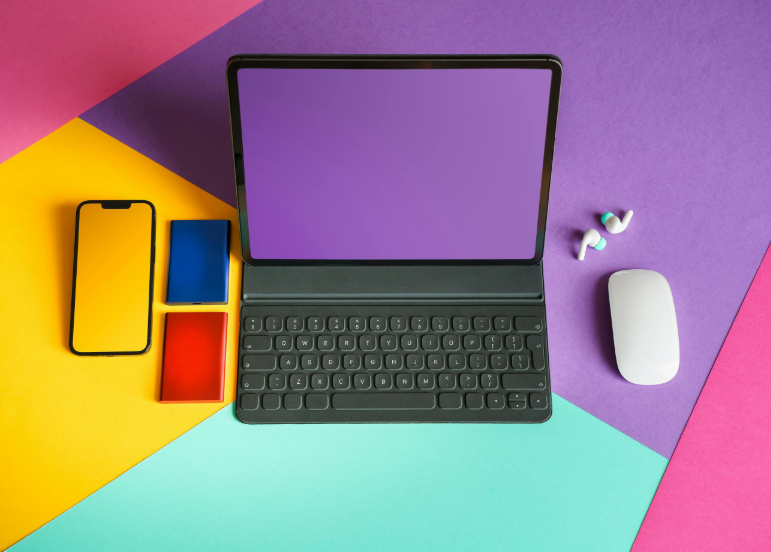
If primarily for business use, many freelancers can deduct 100% of the cost. Even accessories such as keyboards, microphones, and storage devices can be counted as basic digital freelance tools.
| Feature | Explanation |
|---|---|
| Eligible Items | Laptop, PC, monitor, camera, accessories |
| Deduction Type | Full or depreciation-based claim |
| Business Use | Must be primarily for freelance work |
| One-time Benefit | High upfront tax reduction possible |
| Asset Value | Improves productivity and income generation |
4. Software and Online Tools
You can deduct all subscriptions for apps, such as Adobe, Canva, ChatGPT, Notion, accounting tools, and cloud storage in full. Current freelancer information from 2026 reveals that software can cost between ₹10,000 and ₹60,000+ yearly for the busiest freelancers.

As these tools aid directly in generating income, tax authorities consider them as necessary operational expenses. An accurate tracking system makes sure that you never skip a monthly or annual subscription debit.
| Feature | Explanation |
|---|---|
| Tools Covered | Canva, Adobe, Notion, AI tools, etc. |
| Expense Type | Monthly or yearly subscription deduction |
| Business Use | Directly linked to client work |
| Cost Range | ₹10,000–₹60,000+ annually (2026 trend) |
| Record Keeping | Subscription receipts required |
5. Office Supplies
Office supplies are pens, notebooks, printer ink, paper, folders, and even simple furniture that is used for your office. Items that may seem insignificant, but over the course of a year, really do add up and can mean an additional deduction.

And again, tax guides from the end of 2023 confirm that if you use them for business, they are 100% deductible. Freelancers who keep track of their papers consistently come just about as far as minimizing their taxable earnings by making straightforward purchases needed to accomplish the task for assistance daily.
| Feature | Explanation |
|---|---|
| Items Included | Pens, paper, printer ink, files |
| Furniture | Basic desk items also eligible |
| Deduction Level | Usually 100% business expense |
| Expense Nature | Small but frequent purchases |
| Financial Impact | Adds up to yearly tax savings |
6. Marketing and Advertising
Any expenses incurred to market your freelance services are tax-deductible, including social media ads, Google Ads, website marketing promos and portfolio building. Things even including logos and business cards, when it comes to branding.

Freelancer Data Do: Marketing for 10% – 25% of Business Spend. In fact, all of these costs are fully tax-deductible because they lead to client acquisition (a major reason the IRS allows them to be fully deducted).
| Feature | Explanation |
|---|---|
| Ad Types | Google Ads, social media ads, promotions |
| Branding Costs | Logos, websites, business cards included |
| Expense Share | 10%–25% of freelance income spending |
| Purpose | Generates client leads and visibility |
| Deduction Rule | Fully allowed business expense |
7. Professional Development
Donate to courses, certifications, workshops, webinars, and capability training platforms if the business earns them in full. 2026: Freelancers invest more in AI tools, design skills, coding courses, and writing training.

Costs are noted as “business improvement expenses” but personal education. Having proof of enrollment and payment not only ensures eligibility but also keeps freelancers competitive in ever-changing global digital markets.
| Feature | Explanation |
|---|---|
| Learning Types | Courses, certifications, webinars |
| Skill Focus | AI, design, coding, writing improvements |
| Expense Category | Business growth investment |
| 2026 Trend | High demand for AI skill training |
| Proof Needed | Enrollment and payment records |
8. Travel Expenses
Travel for meetings with Clients, Business conferences, or project-related work. These have a deductible portion covering transport, accommodation, and meals.

Unlike back in the day, modern tax rules demand swathes of documentation pertaining to proposed work, like the purpose of travel and client details.
It can help freelancers who have to travel a lot for work now reduce their taxable income to a large extent through these deductions. Even local transportation, such as taxis or rideshares to meetings, if properly documented and tied directly into business activity, qualifies.
| Feature | Explanation |
|---|---|
| Covered Travel | Client meetings, conferences, projects |
| Includes | Transport, hotel, meals |
| Documentation | Travel purpose and receipts required |
| Local Travel | Taxi, cab, rideshare included |
| Tax Benefit | Reduces the business travel cost burden |
9. Health Insurance (Self-Employed Plans)
Freelancers use the self-employed provisions of the tax code, so they can often fully deduct insurance premiums paid for themselves and sometimes dependents. This is one of the more popular tax-saving categories in many countries.

Well, new guidance from recent days confirms it lowers taxable income right off the top and makes healthcare cheaper for independent workers. In other words, the required reporting of premium payments is not confined solely to records of premiums paid,
but rather to what employer contracts guarantee that they will be paid and permitted deduction only insofar as the individual policies are not covered by another employer or benefit plan.
| Feature | Explanation |
|---|---|
| Eligibility | Freelancers paying personal premiums |
| Coverage | Individual and sometimes family plans |
| Tax Effect | Direct deduction from taxable income |
| Financial Benefit | Reduces healthcare burden |
| Requirement | Must not be employer-covered |
10. Professional Services
Costs of payment to accountants, tax consultants, lawyers, or business advisors are 100% deductible. Beyond that, these services are essential for freelancers doing tax filing, compliance, contracts, and financial planning.

New Tax Intelligence reveals professional services rank high among missed deductions. These services are essential for operating the business as well as compliance with labour laws, making them non-deductible operational expenditure that reduces the total taxable income of your freelance activity.
| Feature | Explanation |
|---|---|
| Services Covered | Accountants, lawyers, tax experts |
| Purpose | Legal, tax, and financial support |
| Deduction Type | 100% business expense |
| Importance | Ensures compliance and accuracy |
| Usage Trend | Highly used but often missed deduction |
11. Retirement Contributions
However, the self-employed can still participate in a retirement savings plan for freelancers and deduct their contributions. Some of the more recent tax frameworks have touted these as extremely valuable, long-term tax-savings vehicles, and allow for sizable reductions to your taxable income. Certifications can help to provide income in retirement and reduce taxes now.

However, many freelancers are not maximizing this benefit — and that’s unfortunate because it can have a very strong impact on overall financial planning as well as tax efficiency.
| Feature | Explanation |
|---|---|
| Plan Type | Self-employed retirement schemes |
| Benefit | Long-term savings + tax reduction |
| Deduction Mode | Reduces taxable income directly |
| Financial Strategy | Builds future financial security |
| Usage Trend | Underused but highly beneficial |
12. Business Insurance
Deductible business expense —e.g., liability, equipment coverage, and professional indemnity insurance. It shields freelancers against financial disasters, including lawsuits, equipment accidents, and project failures.

A new trend emerging amongst freelancers is that insurance use is growing, with many adopting it as their operations grow. As it directly protects income-generating activities, this cost is, in most cases, fully deductible as a business expense.
| Feature | Explanation |
|---|---|
| Coverage | Liability, equipment, professional risks |
| Protection | Covers lawsuits and financial losses |
| Deduction Type | Fully business-related expense |
| Importance | Risk management for freelancers |
| 2026 Trend | Increasing adoption among freelancers |
Cocnsuion
In this way, you can see how Tax Write-Offs Every Freelancer Should Know About can help you lower your taxable income and the financial efficiency.
Home office and internet charges, software, travel, and expert services: all of those are essential deductions that allow us to save money, legally. If ensured proper tracking and documentation, freelancers will comply with laws while maximizing profits and staying organized– thus laying a solid financial foundation for 2026 and beyond.
FAQ
What are tax write-offs for freelancers?
Tax write-offs are business expenses freelancers can deduct from their income to reduce taxable profit. These include costs like home office, internet, software, travel, and professional services that are directly related to earning income.
Can freelancers claim home office deductions?
Yes, if you use a dedicated space exclusively for work, you can claim a portion of rent, utilities, and maintenance as a home office deduction based on usage or square footage.
Are internet and phone bills fully deductible?
No, only the business-use portion is deductible. Freelancers typically claim a percentage (like 60%–80%) depending on how much they use it for work.
Can I write off my laptop or computer?
Yes, laptops, desktops, monitors, and other equipment used for freelancing can be fully or partially deducted depending on usage and cost rules.
