


This article will discuss AI Audit tools That Are Transforming The Way Companies Process Financial Reviews and helping to sculpt the Modern Auditing approach. Those Tools use AI to automate complicated tasks, allowing you to detect financial risks and improve accuracy.
This helps mitigate manual workload while improving efficiency and enabling businesses to perform quicker, smarter, and more reliable financial reviews.
Key Points & 10 AI Audit Tools That Are Changing How Companies Handle Financial Reviews
| AI Audit Tool | Explanation (15 Words) |
|---|---|
| DataSnipper | Automates document extraction, testing, and audit workflows inside Excel, improving efficiency and traceability significantly. |
| MindBridge AI | Uses machine learning to analyze transactions, detect anomalies, and provide continuous financial risk oversight. |
| Oversight | Monitors transactions for fraud, errors, and compliance issues using AI-driven financial analytics and insights. |
| AppZen | Automates expense auditing by analyzing receipts, invoices, and spend data for compliance and fraud detection. |
| Trullion | Automates audit testing, data extraction, and financial validation while maintaining traceability and compliance accuracy. |
| Stampli | Streamlines invoice processing and approval workflows with AI, improving audit trails and financial visibility. |
| BlackLine | Enhances financial close processes with automation, ensuring accuracy, compliance, and real-time audit readiness always. |
| Datarails | Integrates Excel with AI-powered analytics to improve reporting accuracy, audit processes, and financial planning. |
| Vic.ai | Uses AI to automate invoice processing, detect anomalies, and enhance audit accuracy with minimal human intervention. |
| MuleHunter.AI | Detects money laundering risks using AI by analyzing financial transactions and identifying suspicious activity patterns. |
10 AI Audit Tools That Are Changing How Companies Handle Financial Reviews
1. DataSnipper
DataSnipper is in the business of revolutionizing auditing (to automate mundane and manual tasks on Excel, where most auditors work). It allows users to extract, validate, and corroborate information from supporting documents more easily with much less human exertion and miscalculation.
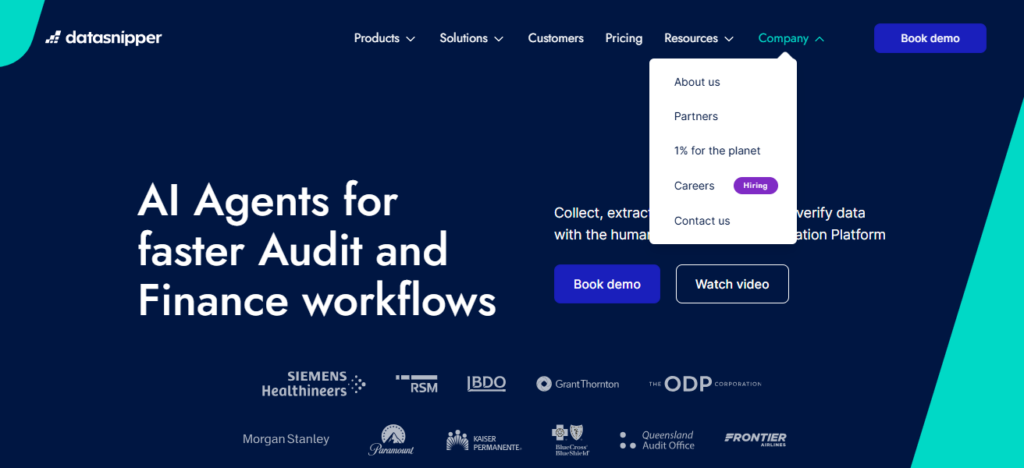
By using built-in audit trail features, it is possible to keep records for compliance, visibility, and productivity. DataSnipper speeds up audit workflows and improves consistency to help organizations get through financial reviews sooner without sacrificing accuracy or reliability.
| Pros | Cons |
|---|---|
| Seamlessly integrates with Excel, making adoption easy for auditors and finance professionals | Limited functionality outside Excel environment and workflows |
| Automates repetitive audit tasks, saving time and reducing manual effort significantly | May require training for advanced features |
| Improves audit documentation and traceability with built-in audit trail features | Not ideal for large-scale enterprise analytics |
| Enhances accuracy by minimizing human errors during data extraction and validation | Dependency on Excel can limit flexibility |
2. MindBridge AI
Instead of only analyzing small samples, MindBridge AI allows users to analyze entire financial datasets using a combination of advanced machine learning and data analytics.
This enables auditors to perform anomaly detection, identify unusual patterns, and assess potential fraud risks more efficiently. Stay finances group’s most effective risk digital human-powered behavioral analytics platform to empower your finance teams with greater push of high-risk
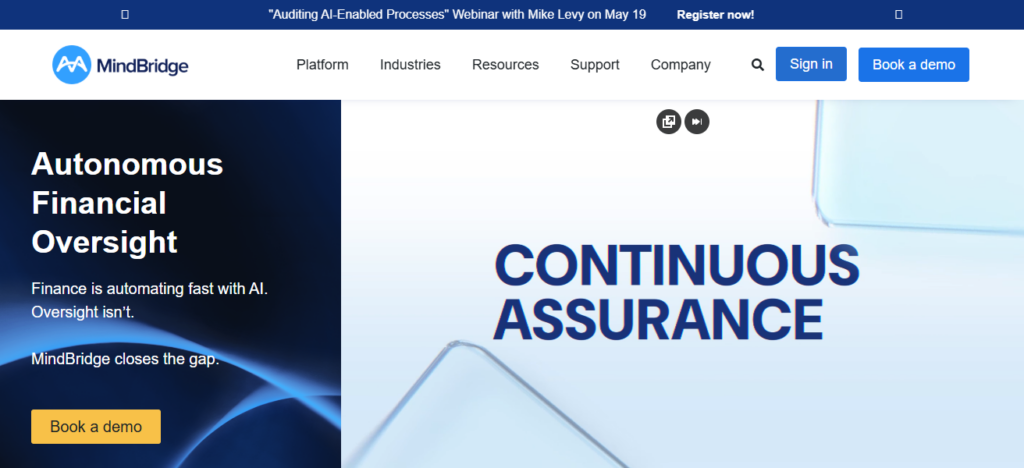
Transactions, creating opportunity score and visual insights. Complete strategic control over their financial processes is important so that they can focus on driving profit and removing risk.
| Pros | Cons |
|---|---|
| Analyzes entire datasets instead of samples, improving audit accuracy and risk detection | Can be expensive for small businesses |
| Provides AI-driven risk scoring and anomaly detection insights | Requires quality data input for optimal results |
| Supports continuous auditing and real-time financial monitoring | Learning curve for non-technical users |
| Offers strong visualization tools for better decision-making and reporting | Integration setup may take time |
3. Oversight
Oversight provides continuous financial tracking using AI to identify fraud, errors and policy violations across transactions. Meaning it processes massive amounts of financial data in real time, alerting auditors and finance teams with insights that they can act on.
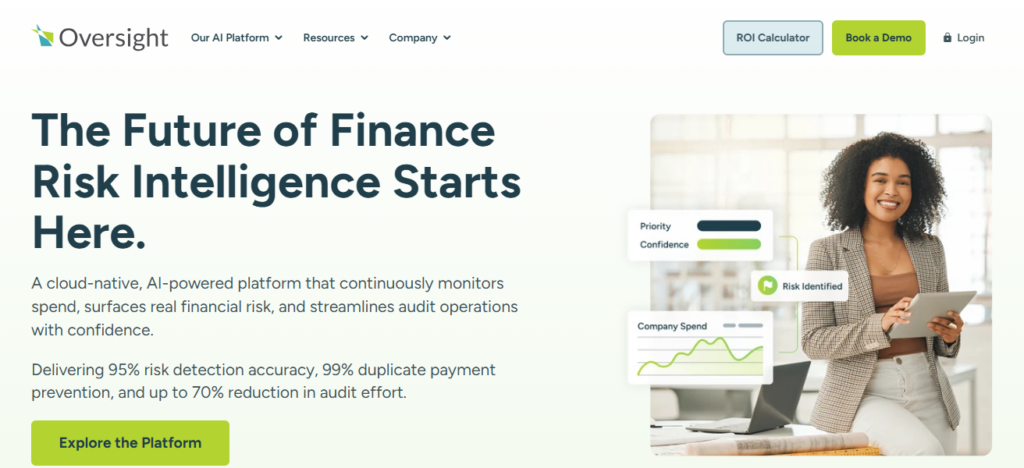
This allows for a more proactive rather than reactive approach, leading to less reliance on periodic audits and better compliance. With its ability to automate the processes of oversight, organizations can quickly detect issues, which allows them to improve accountability and have tighter financial controls while lowering operational risks.
| Pros | Cons |
|---|---|
| Enables real-time transaction monitoring for fraud and compliance issues | May generate false positives requiring manual review |
| Reduces reliance on periodic audits with continuous oversight capabilities | Implementation complexity in large organizations |
| Provides actionable alerts and insights for quick issue resolution | Customization options can be limited |
| Strengthens internal controls and financial governance effectively | Requires consistent data flow for best performance |
4. AppZen
AppZen uses artificial intelligence to thoroughly audit expense reports by reviewing a company’s receipts, invoices and expense data against company policies. It can instantly flag suspicious or not compliant transactions, assisting organizations in preventing fraud and overspending.
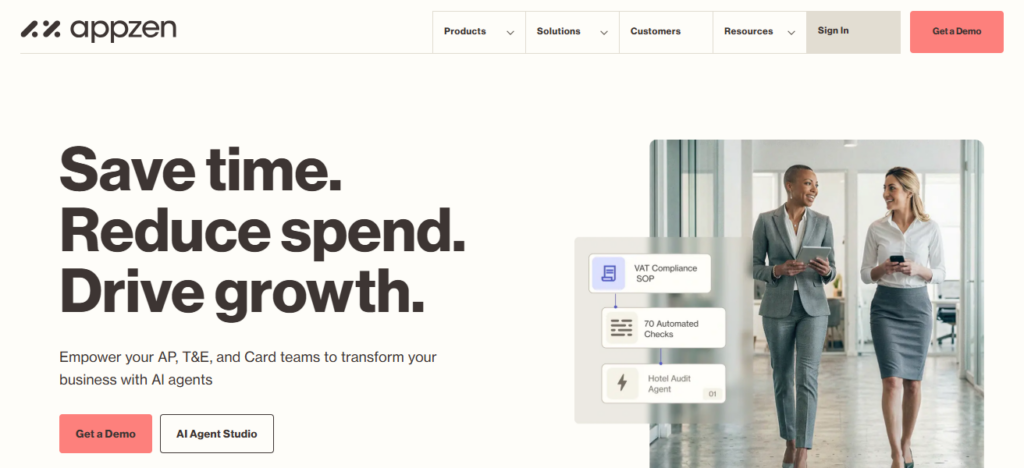
The platform integrates with the top financial systems used in businesses today, making workflows simpler and decreasing manual reviews. It enables finance teams to work on strategic tasks while meeting exacting compliance standards & transparency in financial operations, by optimising accuracy and speed.
| Pros | Cons |
|---|---|
| Automates expense auditing and policy compliance checks efficiently | Subscription costs can be high for smaller firms |
| Detects fraud and non-compliant transactions instantly using AI | May need integration with multiple systems |
| Integrates with major ERP and expense management platforms easily | Occasional inaccuracies in receipt scanning |
| Reduces manual workload for finance and audit teams significantly | Custom rule setup may take time |
5. Trullion
Trullion automates the extraction and validation of data from financial documents to simplify fundamental accounting and audit processes. While it remains compliant with accounting standards, it provides audit trails for transparency.
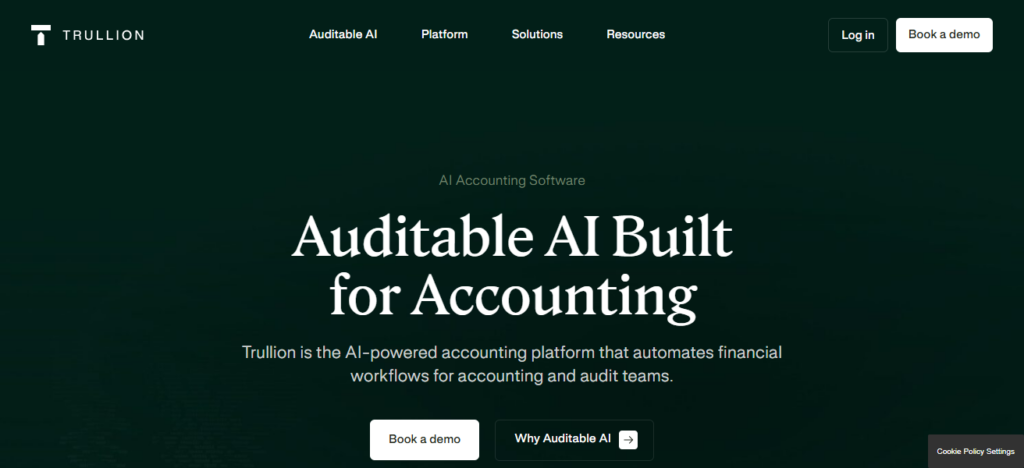
The auditors can validate financial statements more efficiently based on real-time data insights. Trullion reduces manual intervention and errors for increased accuracy and faster financial reporting, thereby enabling organizations to handle audits with more confidence so they can meet regulatory requirements.
| Pros | Cons |
|---|---|
| Automates complex accounting and audit workflows effectively | Limited awareness compared to larger competitors |
| Ensures compliance with accounting standards and regulations | Requires initial setup and configuration effort |
| Provides clear audit trails and real-time financial insights | May not support all legacy systems |
| Reduces manual errors in financial data processing significantly | Pricing may not suit small businesses |
6. Stampli
Article continues after sponsor message. Stampli automates the entire accounts payable process and workflow through its automated processing and approval cycle.
With capabilities that capture invoice data, match invoices to purchase orders, and enforce company policies with rules that govern when if payment is authorized. This strengthens audit preparedness with structured documentation and comprehensive audit trails.
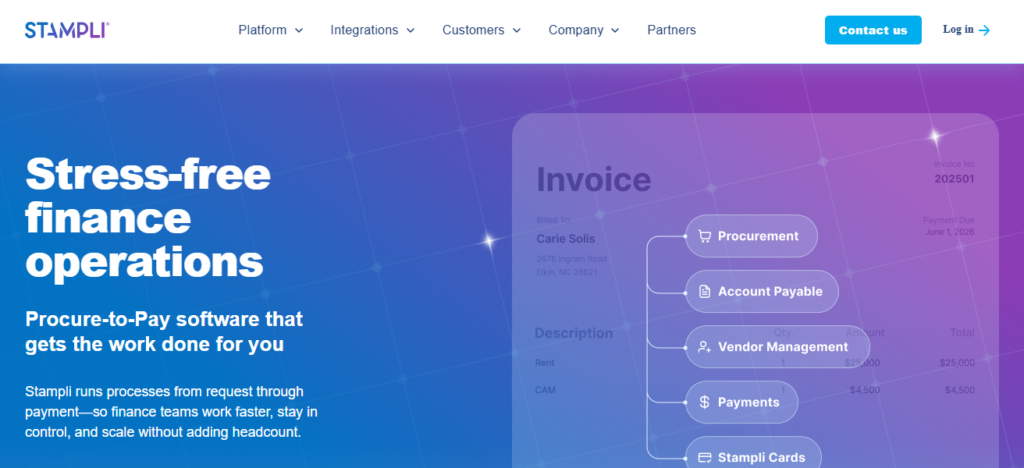
Stampli reduces manual work and bottlenecks that cause delays in audits while providing clear visibility to finance leaders, allowing them to issue more thorough audits with less burden, while creating greater partnership between teams and tighter internal controls.
| Pros | Cons |
|---|---|
| Streamlines invoice processing and approval workflows efficiently | Focuses mainly on accounts payable processes |
| Enhances collaboration between finance teams and approvers | Integration limitations with some ERP systems |
| Improves audit readiness with detailed audit trails and documentation | May require training for full utilization |
| Reduces processing time and manual errors significantly | Advanced features may increase costs |
7. BlackLine
BlackLine is centered around automating financial close processes to keep records accurate and ready for an audit at all times. This eliminates the risk of errors by standardizing reconciliations, journal entries, and even compliance tasks.
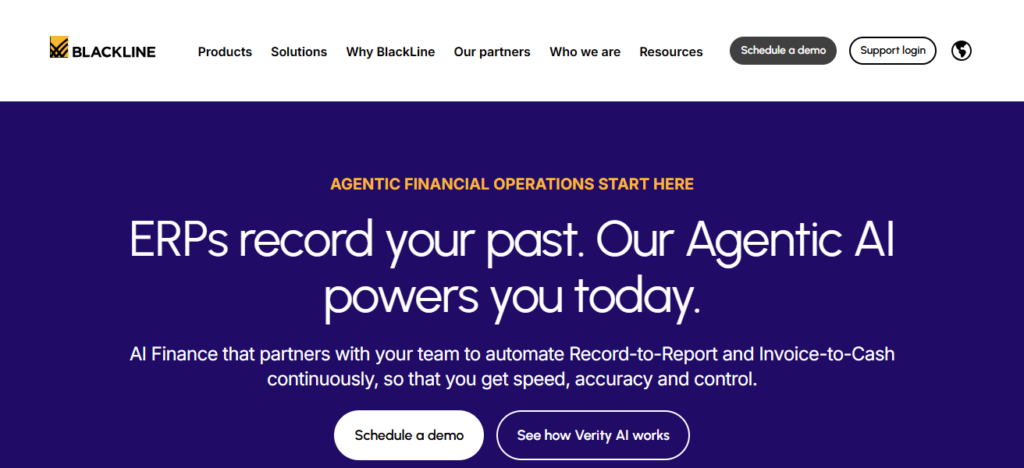
Real-time visibility in financial data helps organizations ensure that they are reporting accurately to relevant regulators and meeting deadlines comfortably. BlackLine`s automation features enable finance teams to transition away from time-consuming manual processes and focus on strategic analysis, resulting in speedy audits with greater accuracy.
| Pros | Cons |
|---|---|
| Automates financial close and reconciliation processes effectively | High implementation and subscription costs |
| Ensures compliance and audit readiness with standardized workflows | Can be complex for new users |
| Provides real-time visibility into financial data and reporting | Requires integration with existing systems |
| Reduces errors and improves efficiency in financial operations | Customization may require technical expertise |
8. Datarails
Datarails is changing financial planning and audit with the integration of Excel paired with advanced AI-driven analytics. With this, odds are that data consolidation, reporting, and validation occur automatically, maintaining consistency throughout financial records.
In addition, auditors benefit from increased accuracy and workflows that are more efficient because of streamlined data accessibility. Through optimising manual data management and minimising errors
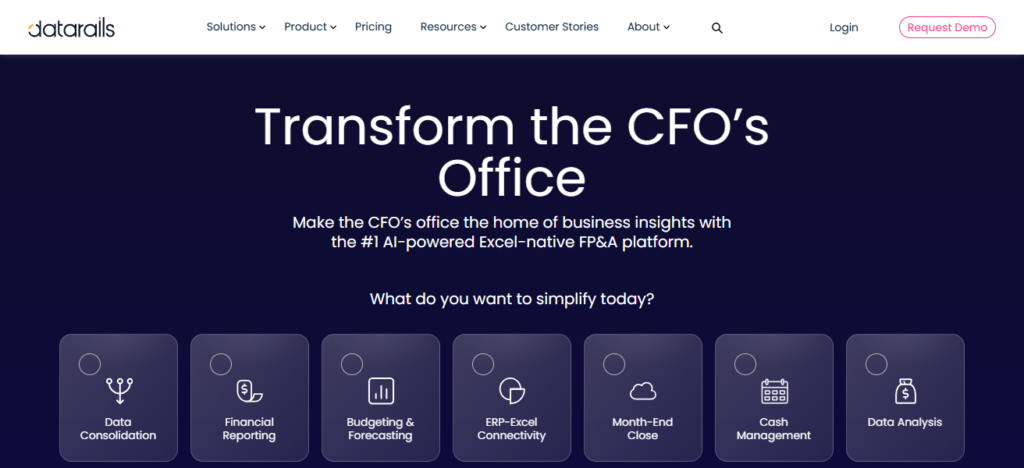
Datarails enables companies to perform more efficient financial reviews while obtaining better insights into performance, which positively impacts the overall decision-making process.
| Pros | Cons |
|---|---|
| Integrates Excel with advanced AI analytics for better reporting | Heavy reliance on Excel infrastructure |
| Automates financial data consolidation and reporting processes | Limited capabilities outside FP&A scope |
| Improves accuracy and reduces manual data handling errors | Setup may require technical expertise |
| Provides actionable insights for financial planning and audits | Not ideal for non-Excel users |
9. Vic.ai
Vic. ai is a tool for automating accounting tasks, which focuses primarily on invoice processing and anomaly detection. Since it learns from past data, it only gets better over time with less manual entry. This leads to quicker audits and the avoidance of errors in financial records.
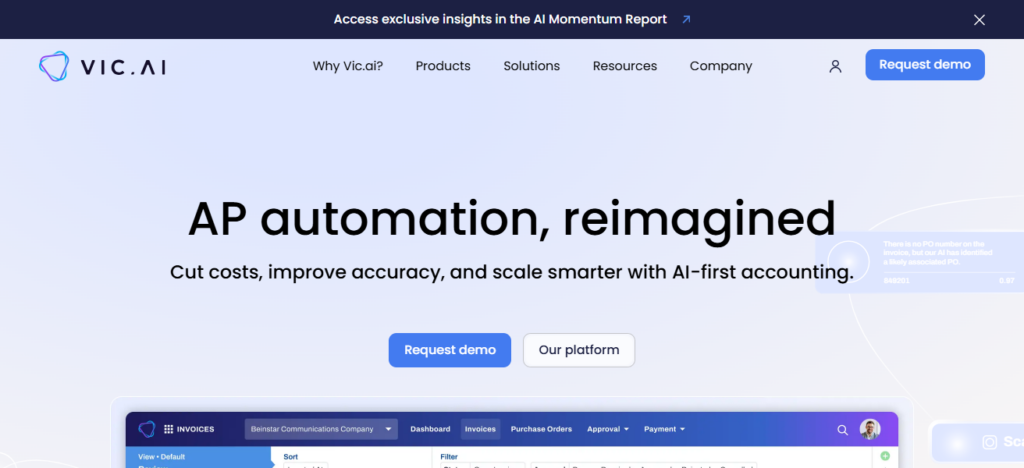
Vic. provides intelligence and automation in support of operators at all levels, helping to you use your data for something better. AI also helps auditors stay in the loop with strong audit controls while finance teams focus on higher-value activities, thus improving overall efficiency.
| Pros | Cons |
|---|---|
| Automates invoice processing and accounting workflows efficiently | Primarily focused on accounts payable automation |
| Learns from historical data to improve accuracy over time | Requires large datasets for best performance |
| Reduces manual intervention and operational costs significantly | Integration setup may take time |
| Detects anomalies and improves audit accuracy effectively | Limited functionality outside core accounting tasks |
10. MuleHunter.AI
MuleHunter AI algorithms leverage and specialize in detecting money laundering or financial fraud activities. The approach analyzes transaction patterns to identify suspicious behaviors that traditional systems may miss, enhancing organizations’ compliance with anti-money laundering regulations and decreasing the risk of financial crime.

Using MuleHunter to automate complex detection utilizing your data until October 2023. AI-trained models enable faster investigation and are more accurate, making them a modern complementary tool for financial review systems.
| Pros | Cons |
|---|---|
| Detects money laundering and fraud using advanced AI algorithms | Specialized use case limits broader adoption |
| Identifies suspicious transaction patterns effectively and quickly | Requires access to large transaction datasets |
| Enhances compliance with AML regulations and standards | May need regulatory customization |
| Reduces manual investigation efforts significantly | Implementation complexity in large financial systems |
Cocnlsuion
Bottom Line It is the AI Audit Tools That Are Changing How Companies Work with Financial Reviews. They reduce human errors and costs while increasing accuracy, speed, and compliance.
This, together with automation and analytics, helps organizations develop deeper insights into their financial matters, detect risks earlier and create more transparent, efficient, and reliable systems for financial reviews — everything that leads to better decision making.
FAQ
What are AI audit tools and how do they work?
AI audit tools use machine learning and automation to analyze financial data, detect anomalies, and improve audit accuracy.
Why are companies adopting AI audit tools rapidly today?
Companies adopt AI tools to reduce manual work, improve compliance, and enhance accuracy in financial reviews.
How do AI audit tools improve financial accuracy?
They analyze large datasets, detect errors instantly, and minimize human mistakes during financial auditing processes.
Are AI audit tools suitable for small businesses?
Yes, many AI tools offer scalable solutions that help small businesses streamline audits and reduce operational costs.
