


Here are the top AI Tools for Legal Document Drafting & Automation that could change the legal industry in 2026. These AI-driven tools assist lawyers and legal teams to produce, review, and managing contracts accurately, quickly, and efficiently. They eliminate manual work and enhance overall attorney productivity, from drafting agreements to automating workflows.
Key Points & Best AI Tools for Legal Document Drafting and Automation In 2026
| AI Tool | Explanation (12 words) |
|---|---|
| Spellbook (Rally) | Automates contract drafting and redlining directly inside Microsoft Word efficiently |
| Thomson Reuters CoCounsel | AI assistant for legal research, drafting, document review, and analysis tasks |
| Lexis+ AI | Provides legal research, drafting, and case insights using advanced generative AI |
| Harvey AI | Helps lawyers with contract analysis, legal drafting, and complex research workflows |
| Ironclad | Automates contract lifecycle management from creation to approval and compliance tracking |
| Genie AI | Assists in drafting legal documents with customizable templates and clause libraries |
| Kira Systems | Uses machine learning to extract clauses and key data from contracts |
| Everlaw | Cloud platform for litigation support, document review, and legal discovery automation |
| Clio Duo | AI-powered assistant integrated into Clio for law firm practice management tasks |
| Lexion | Streamlines contract management, approvals, and legal workflow automation for teams |
10 Best AI Tools for Legal Document Drafting and Automation in 2026
1. Spellbook (Rally)
Spellbook (Rally) is an AI writing tool developed exclusively for legal professionals drafting and reviewing contracts in Word. It allows lawyers to draft clauses, write better contract language, and perform instant redlining from within the document editor.
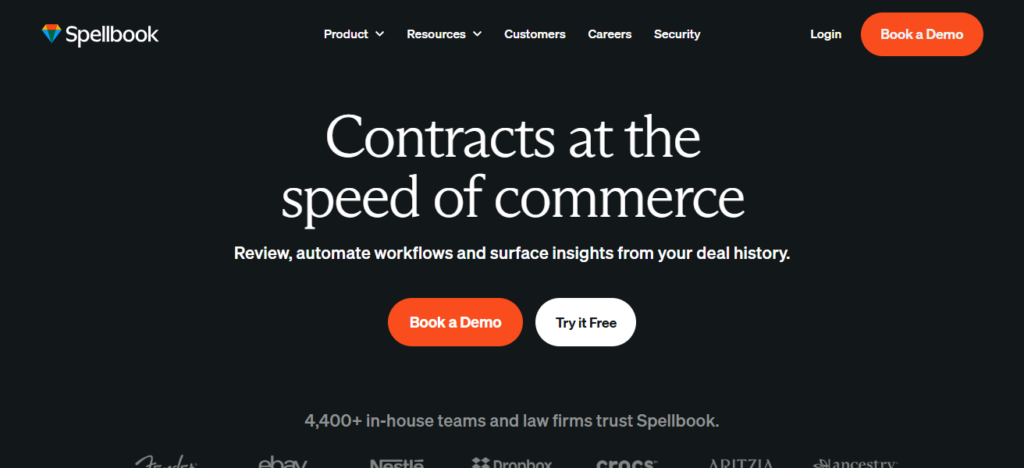
Using large language models as a foundation, it accelerates routine drafting tasks while preserving legal accuracy and consistency. In 2026, Spellbook also suggests existing agreements based on its learning from the data pool, taking into consideration context, jurisdiction, and legal standards, significantly reducing drafting manual efforts.
| Pros | Cons |
|---|---|
| Works directly inside Microsoft Word environment | Limited outside Word-based workflows |
| Speeds up contract drafting and redlining significantly | Requires strong legal review to avoid AI errors |
| Context-aware clause suggestions improve accuracy | May struggle with highly complex jurisdictions |
| Learns from existing legal documents effectively | Premium pricing may not suit small firms |
2. Thomson Reuters CoCounsel
Thomson Reuters CoCounsel is an AI-powered legal assistant that offers support for research, drafting, and document analysis. It assists lawyers in quickly summarising case law, reframing insights from large bundles of legal documents, and composing first drafts of contracts or memos.
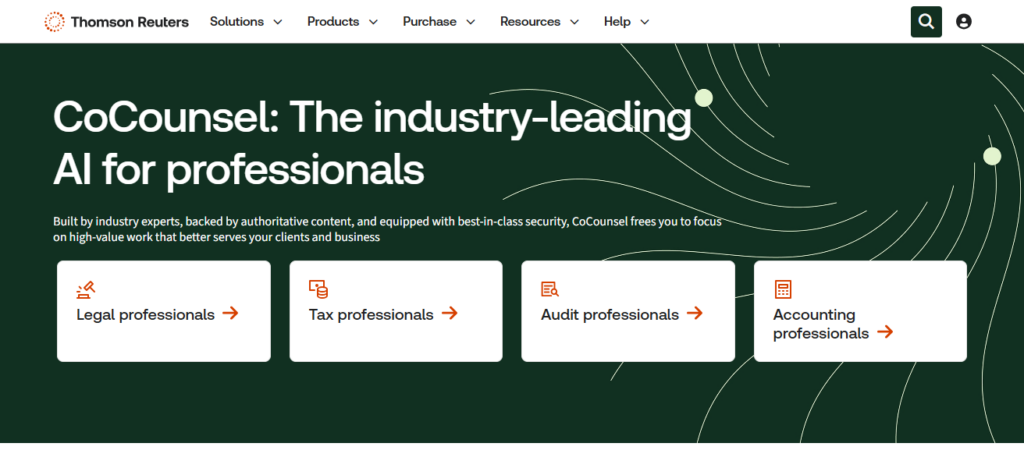
Access to reputable legal databases, it ensures accuracy and reliability. Since CoCounsel automates routine tasks such as deposition summaries and compliance checks, legal professionals can concentrate on strategy and client work instead of paperwork while accelerating productivity and turnover across their legal workflows.
| Pros | Cons |
|---|---|
| Strong integration with trusted legal databases | Can be expensive for independent lawyers |
| Excellent for legal research and summarization | Requires training to use advanced features |
| Automates time-consuming document analysis | Output still needs human verification |
| Improves drafting speed and accuracy | Limited customization compared to open AI tools |
3. Lexis+ AI
Lexis+ AI is a next-gen generative AI–powered legal research and drafting platform with legions of legal databases behind it. The service allows lawyers to pose a natural language question and get accurate legal answers, summaries of cases, and citations.
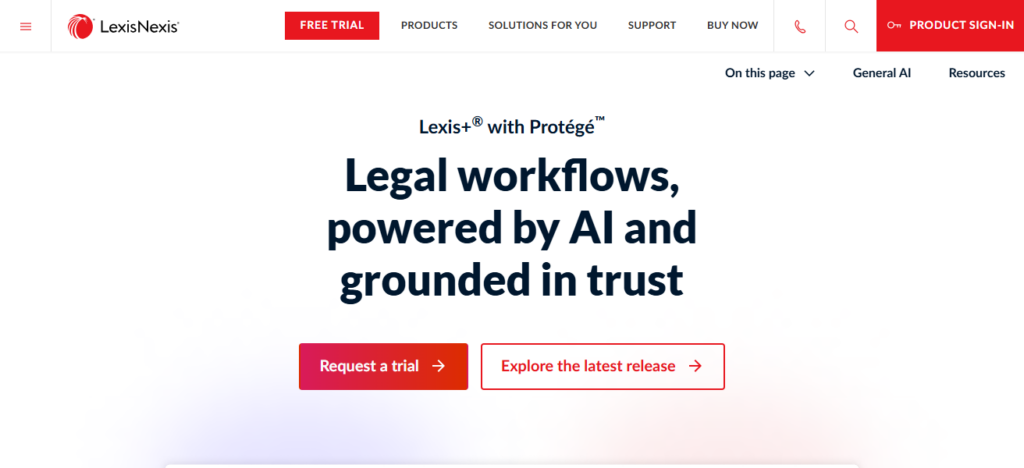
The device additionally helps in drafting prison paperwork like motions, court documents, and briefs. Lexis+ AI achieves faster, better, and more informed outcomes by merging authoritative legal content with AI-driven reasoning. In 2026, it will still be your best-kept secret for smarter legal knowledge management.
| Pros | Cons |
|---|---|
| High-quality legal citations and case references | Subscription cost is relatively high |
| Fast natural language legal research | Dependent on internet/database access |
| Supports drafting of legal documents | May overwhelm beginners with features |
| Reliable for court-ready information | Occasional AI misinterpretation of queries |
4. Harvey AI
Simply put, Harvey AI is an advanced, dedicated legal artificial intelligence platform designed to help lawyers and in-house corporate teams with sophisticated work.
It is useful for contract drafting, legal research, compliance analysis, and litigation support. Armed with large language models built using legal data, Harvey AI comprehends complex legal terminology and produces accurate responses.
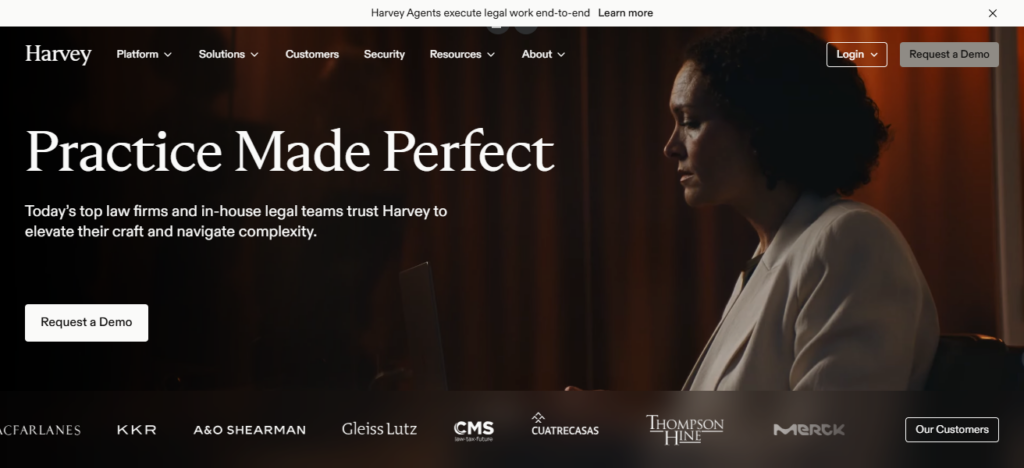
This AI is popular for evaluating contracts, spotting risks, or drafting clear legal papers. Harvey AI, which is valued for helping improve the efficiency of high-level legal reasoning and automating workflow in 2026.
| Pros | Cons |
|---|---|
| Excellent for complex legal reasoning tasks | Not fully accessible to small firms |
| Strong contract review and drafting capabilities | Requires legal expertise for best results |
| Saves time in compliance and litigation work | Still evolving, occasional inaccuracies |
| Custom-built for law firm workflows | Limited general-purpose usability |
5. Ironclad
Ironclad is a contract lifecycle management platform that automates the entire process of drafting, approving, and storing contracts. Centralizing a system allows legal teams to generate standardized contracts, track amendments, and manage approvals.
The AI functions of it look through the contract data to find risks, obligations and compliance factors. You can also integrate Ironclad with your business tools to keep workflows running smoothly across departments.
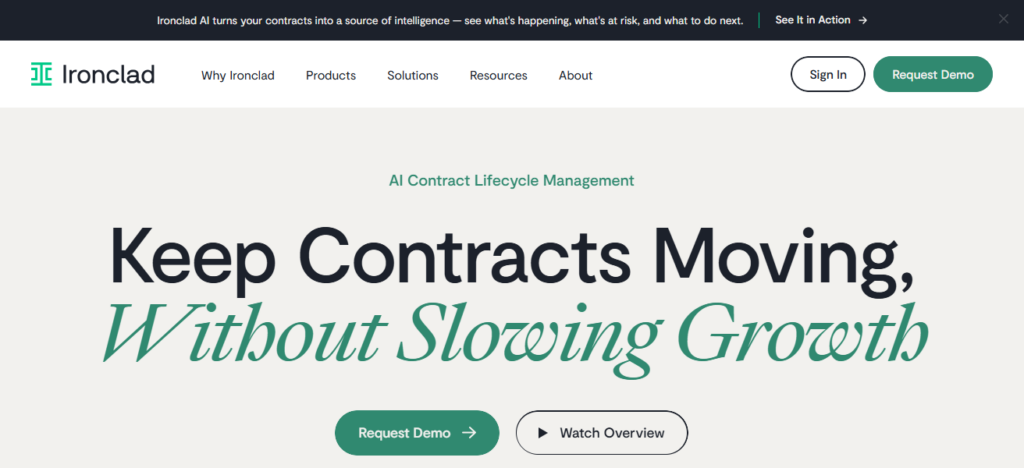
A leading enterprise in the entire industry has already adopted it to cut down on contract bottlenecks by 2026 and secure swift, error-free legal operations.
| Pros | Cons |
|---|---|
| End-to-end contract lifecycle management | Setup process can be complex |
| Strong automation for approvals and workflows | High cost for small businesses |
| Centralized contract storage system | Learning curve for new users |
| Excellent compliance tracking features | Requires integration with existing systems |
6. Genie AI
Genie AI is a legal drafting platform that leverages the power of AI to help you create and edit contracts in seconds with reusable templates. AS A SUBSTITUTE, It provides a library of clauses that have been reviewed for legality that can be adapted to various jurisdictions and use cases.
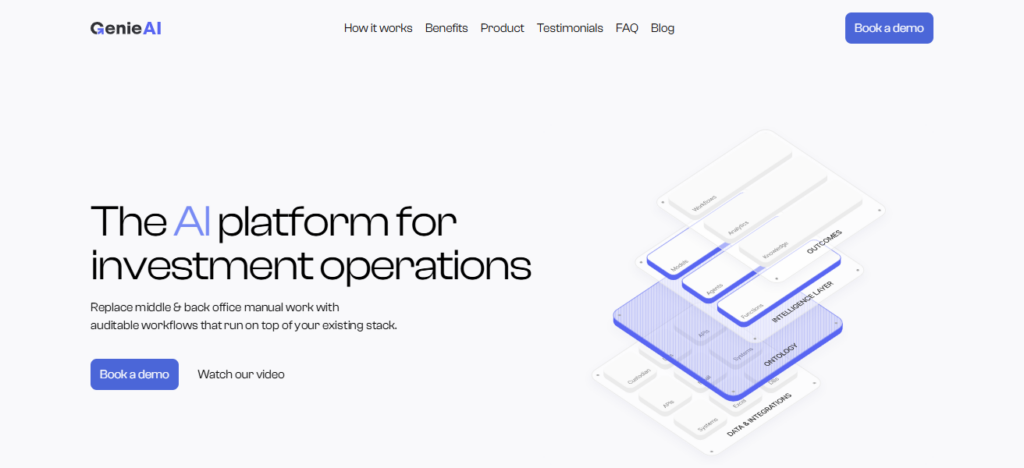
It also helps identify risk and suggests compliance while drafting. If you are a start-up or small legal team working with limited automation resources, Genie AI is particularly ideal. I am your awareness in 2022 for contracts, and simplify contract creation in 2026. A legally reliable, simplified, efficient blockchain output text copies
| Pros | Cons |
|---|---|
| Easy contract creation using templates | Limited advanced legal reasoning |
| Affordable for startups and SMEs | Not ideal for large enterprise needs |
| Built-in clause library for flexibility | Dependent on template quality |
| Risk detection during drafting | Fewer integrations compared to competitors |
7. Kira Systems
Kira Systems: An artificial intelligence (AI) machine-learning solution that identifies and extracts relevant clauses, data points, and obligations from contracts or other legal documents.
It is primarily used in due diligence, in M&A, when organizations need to examine large pools of contracts efficiently. The machine learning model is trained on historical records and learns to find the associations in patterns, types, and legal language structures.

Kira Systems automates the process of reviewing documents, saving hours and reducing human error. A necessity for large-scale legal review and enterprise contract intelligence workflows all the way through 2026.
| Pros | Cons |
|---|---|
| Highly accurate contract data extraction | Not designed for drafting tasks |
| Ideal for due diligence and M&A reviews | Requires training for best performance |
| Reduces manual legal review time | Expensive for smaller firms |
| Continuously improves with machine learning | Limited real-time drafting capabilities |
8. Everlaw
Everlaw is an e-discovery and cloud-based litigation platform that helps legal teams to manage, review, and analyze large volumes of documents. The artificial intelligence capabilities of Everlaw help with evidence organization, identification an introductions with the facts of a case, and improving the discovery analytics process.
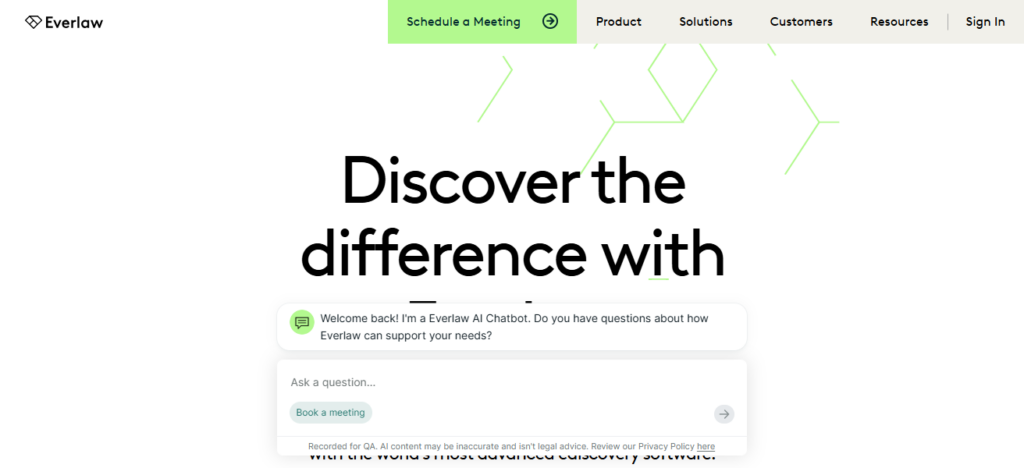
The platform is widely utilized for litigation projects as well as investigations and regulatory compliance. Furthermore, it includes collaboration tools for remote legal teams. Everlaw makes document-heavy casework faster, more accurate, and easier to manage.
| Pros | Cons |
|---|---|
| Powerful e-discovery and litigation support | Not focused on contract drafting |
| Excellent document review automation | Can be complex for new users |
| Strong collaboration tools for legal teams | Requires large data handling capacity |
| Cloud-based accessibility | Subscription cost can be high |
9. Clio Duo
Clio Duo: A Clio AI integrated into the Clio legal practice management system. This application allows law firms to automate administrative tasks, including time tracking, drafting of documents, client communication, and case management. Duo does just that — Clio uses AI to summarize the conversation, recommend next steps and workflows.

This is intended to increase efficiency for independent lawyers and small law firms. The dogs of war for Clio Duo are not only a game-changer operationally in reducing workload, but they also allow lawyers to devote more time and attention to clients and legal strategy — with 2026 being the year that Clio Duo starts getting down to business.
| Pros | Cons |
|---|---|
| Automates legal practice management tasks | Limited advanced legal drafting features |
| Improves client communication efficiency | Works only within Clio ecosystem |
| Helps with time tracking and summaries | Not suitable for deep legal research |
| User-friendly for small law firms | Depends heavily on Clio platform |
10. Lexion
Lexion: An AI-based contract management platform that self-manages and simplifies the drafting, review, and tracking of legal agreements. It utilizes natural language processing to pull out key terms, deadlines, and obligations from contracts.
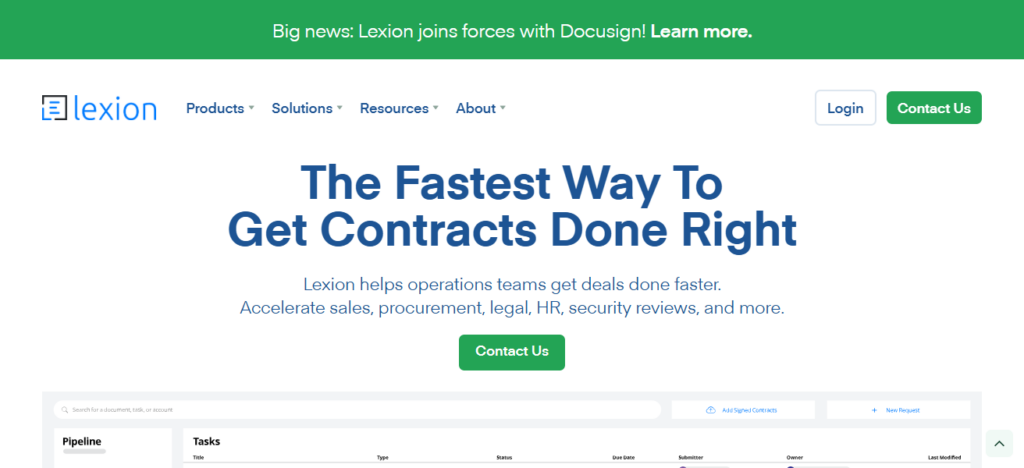
Your contracted files are easily searchable, and the approvals part of your contracts is taken care of by the platform. Lexion will also help teams work together more seamlessly when negotiating contracts.
It becomes widely employed by legal and business teams to minimize manual contract handling, drive transparency, compliance, and workflow efficiency improvements by 2026.
| Pros | Cons |
|---|---|
| Simplifies contract tracking and management | Limited advanced AI reasoning |
| Easy search and document retrieval system | Not ideal for complex legal drafting |
| Automates approvals and workflows | Fewer customization options |
| Improves team collaboration efficiency | Best suited for contract-focused teams |
Conclusion
Last but not least, Best AI Tools for Legal Document Drafting and Automation in 2026. The tools reduce the manual effort required in contract creation, increase accuracy, and automate most repetitive tasks.
They help in productivity enhancement, from research to drafting & compliance. In general, helping legal professionals to get more done faster, smarter, and with even higher efficiency in the modern practice of law.
FAQ
What are AI tools for legal drafting?
AI tools help lawyers create, edit, and manage legal documents faster and more accurately.
Why are AI legal tools important in 2026?
They save time, reduce errors, and improve efficiency in legal workflows.
Which is the best AI tool for contract drafting?
Spellbook (Rally) and Harvey AI are top choices for contract drafting.
Can AI replace lawyers in document drafting?
No, AI supports lawyers but does not replace legal judgment.
