


This article will discuss Top Melio Competitors for B2B Vendor Payments. These platforms help businesses simplify vendor payments, automate accounts payable, manage invoices and control financial workflows.
Learn how BILL, Tipalti, Airwallex, Wise Business, Plooto, Stampli, Ramp, Payoneer, Plastiq, and SAP Concur compare on features, integrations, pricing, business needs, and payment capabilities.
Key Points & Top Melio Competitors for B2B Vendor Payments
| Melio Competitor | Explanation |
|---|---|
| BILL (Bill.com) | Automates accounts payable, receivable, approvals, payments, and financial workflows for businesses. |
| Tipalti | Streamlines global supplier payments, accounts payable, tax compliance, onboarding, and reconciliation processes. |
| Airwallex | Provides global business accounts, international payments, expense management, and multi-currency solutions. |
| Wise Business | Enables businesses to send, receive, and manage international payments at lower costs. |
| Plooto | Simplifies business payments, invoicing, accounts payable, and receivable management for growing companies. |
| Stampli | Uses AI-powered invoice management to streamline approvals, payments, and supplier communications. |
| Ramp | Combines corporate cards, expense management, bill payments, and financial automation tools. |
| Payoneer | Helps businesses send, receive, and manage international payments across global marketplaces. |
| Plastiq | Lets businesses pay vendors using cards, even when cards aren’t directly accepted. |
| SAP Concur | Provides comprehensive solutions for business travel, expenses, invoices, payments, and financial management. |
10 Top Melio Competitors for B2B Vendor Payments
1. BILL (Bill.com)
Automation: BILL automates accounts payable and receivable workflows, including invoice capture, approvals, payment scheduling, and reconciliation. Integrations: It connects with major accounting and ERP platforms, helping businesses synchronize bills, payments, and financial records.
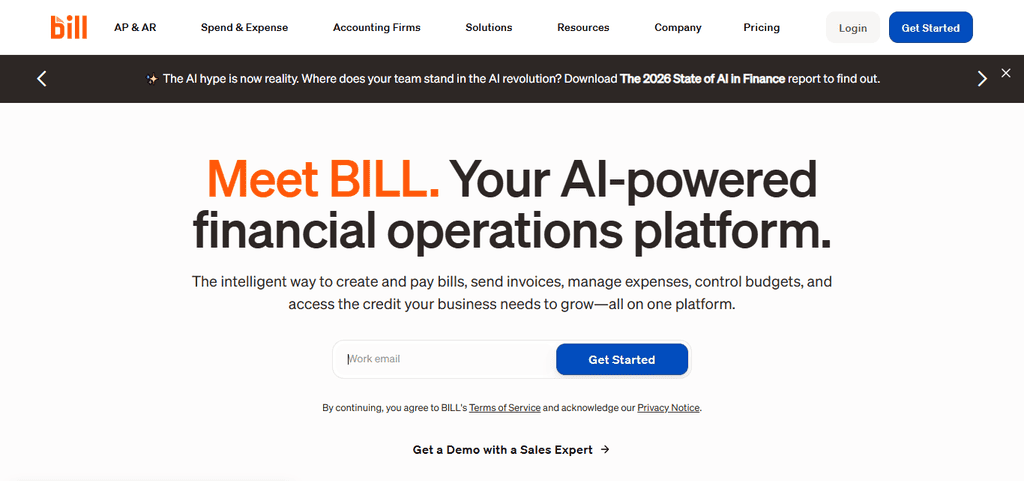
Pricing/fees: Pricing varies by plan and selected features, with payment-related costs depending on the payment method and service used. Best for: BILL is best suited to growing and mid-sized businesses that need structured AP/AR automation and financial workflows.
Main advantage over Melio: Its broader workflow automation and accounting capabilities can make it more suitable for businesses seeking a comprehensive financial operations platform rather than primarily streamlined vendor payments.
BILL (Bill.com) Pros & Cons
| Pros | Cons |
|---|---|
| Strong accounts payable and receivable automation | Can become expensive as features and usage increase |
| Supports invoice approvals and payment scheduling | Pricing structure can be complex for smaller businesses |
| Integrates with major accounting platforms | Some advanced features require higher-tier plans |
| Provides centralized financial workflows | May offer more functionality than simple payment needs require |
2. Tipalti
Automation: Tipalti automates invoice processing, supplier onboarding, payment approvals, tax documentation, and reconciliation. Integrations: It integrates with accounting, ERP, procurement, and other financial systems to maintain synchronized payment data.
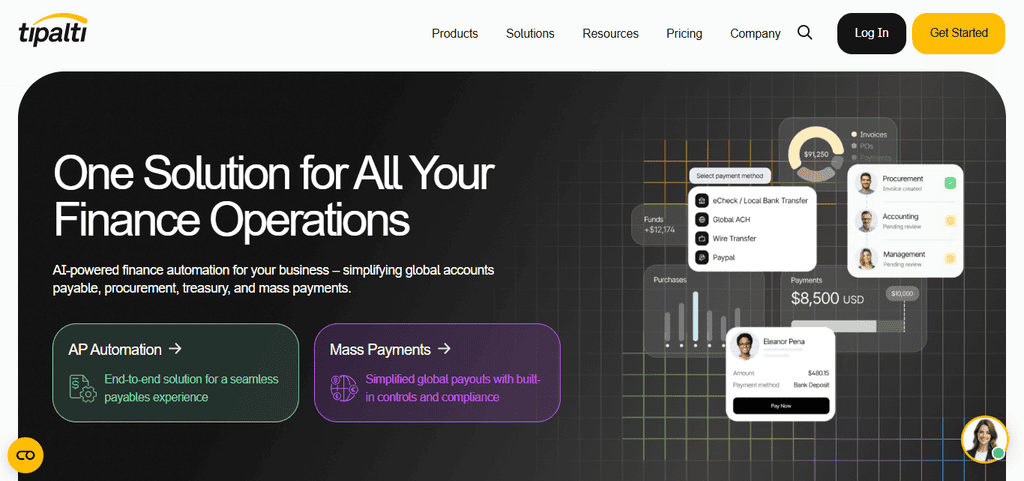
Pricing/fees: Costs depend on the selected package, transaction requirements, payment methods, and business needs, so companies should request a tailored quote. Best for: Tipalti is particularly suitable for larger or rapidly scaling companies managing many suppliers and international payments.
Main advantage over Melio: Its stronger global payment infrastructure, supplier management, tax compliance, and finance automation make it a better fit for complex, high-volume accounts-payable operations.
Tipalti Pros & Cons
| Pros | Cons |
|---|---|
| Strong global supplier payment capabilities | Better suited to larger or growing businesses |
| Automates AP, supplier onboarding, and compliance | Pricing is generally customized |
| Supports multiple payment methods and currencies | Implementation can require more setup |
| Useful for high-volume payment operations | May be excessive for simple vendor payments |
3. Airwallex
Automation: Airwallex supports automated business payments, expense management, transfers, and multi-currency financial workflows. Integrations: It connects with accounting, ecommerce, payroll, ERP, and other business platforms, allowing financial information to move between systems.
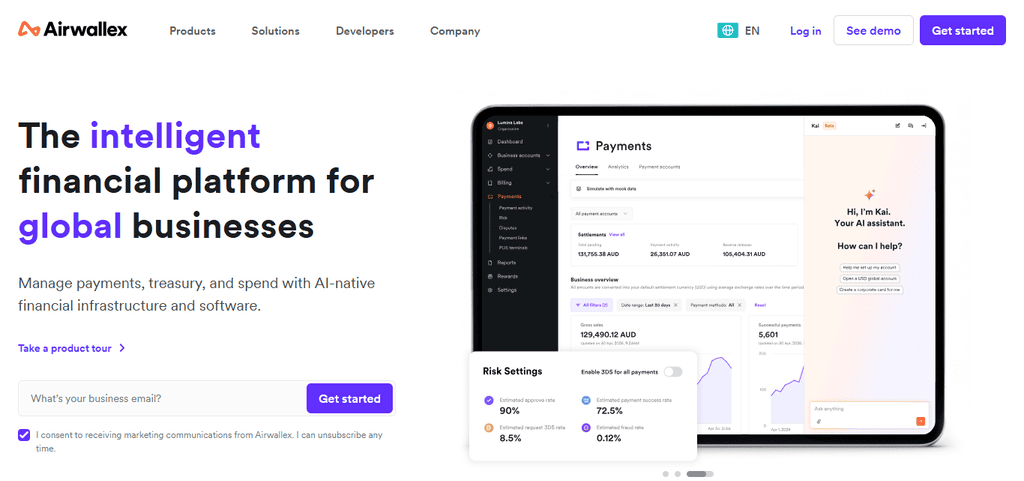
Pricing/fees: Costs vary according to payment type, currency, region, account services, and foreign-exchange requirements. Best for: Airwallex is well suited to businesses operating internationally that need multi-currency accounts and cross-border payment infrastructure.
Main advantage over Melio: Its broader international financial ecosystem and multi-currency capabilities can provide more flexibility for global businesses than a vendor-payment-focused platform.
Airwallex Pros & Cons
| Pros | Cons |
|---|---|
| Excellent international payment capabilities | Pricing varies by region and transaction type |
| Supports multi-currency business accounts | Some features may not be available everywhere |
| Strong foreign-exchange functionality | Can be more complex than basic payment platforms |
| Useful for globally operating businesses | Best value comes from businesses needing international features |
4. Wise Business
Automation: Wise Business supports recurring and international business payments, batch transfers, and streamlined payment workflows. Integrations: Businesses can connect Wise with accounting and financial-management tools, while its business platform supports payment-related automation.
Pricing/fees: Wise generally uses transaction-based pricing, with costs varying by currency, transfer method, and amount; currency conversion also carries a fee. Best for: It is particularly useful for businesses paying international suppliers and managing multiple currencies.
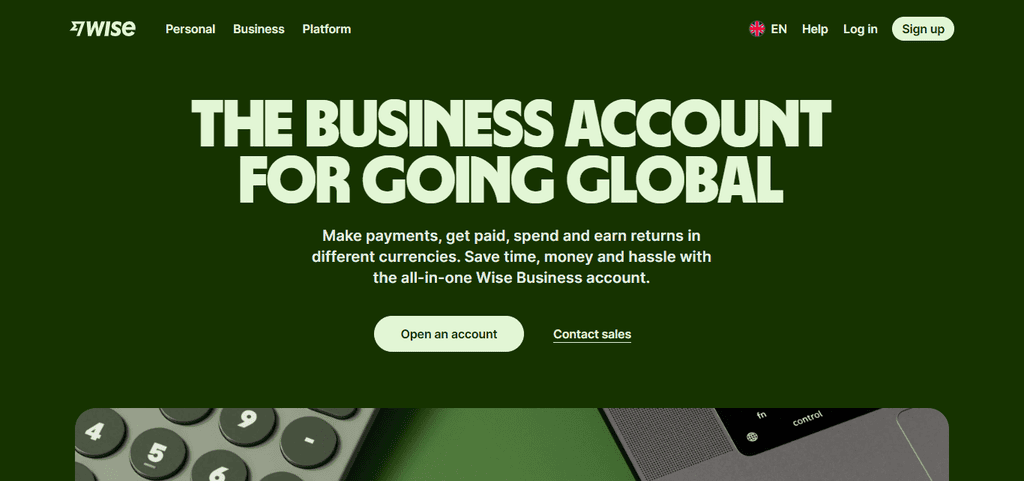
Main advantage over Melio: Wise Business offers a strong international transfer and multi-currency focus, making it potentially more attractive when cross-border payments and transparent exchange rates are primary requirements.
Wise Business Pros & Cons
| Pros | Cons |
|---|---|
| Competitive international transfer costs | Mainly focused on international financial transactions |
| Supports multiple currencies | Fees vary depending on currencies and payment methods |
| Transparent exchange-rate approach | Not as comprehensive for full AP automation |
| Useful for international supplier payments | May require additional tools for advanced AP workflows |
5. Plooto
Automation: Plooto helps automate accounts payable and receivable processes, including invoice-related workflows, payment scheduling, and recurring transactions. Integrations: It connects with accounting platforms, helping businesses synchronize payment and bookkeeping information.
Pricing/fees: Plooto uses subscription-based plans, while certain payment services may involve additional transaction-related costs depending on the method used. Best for: It is a practical option for small businesses, accounting professionals, and growing companies seeking straightforward payment and receivables automation.
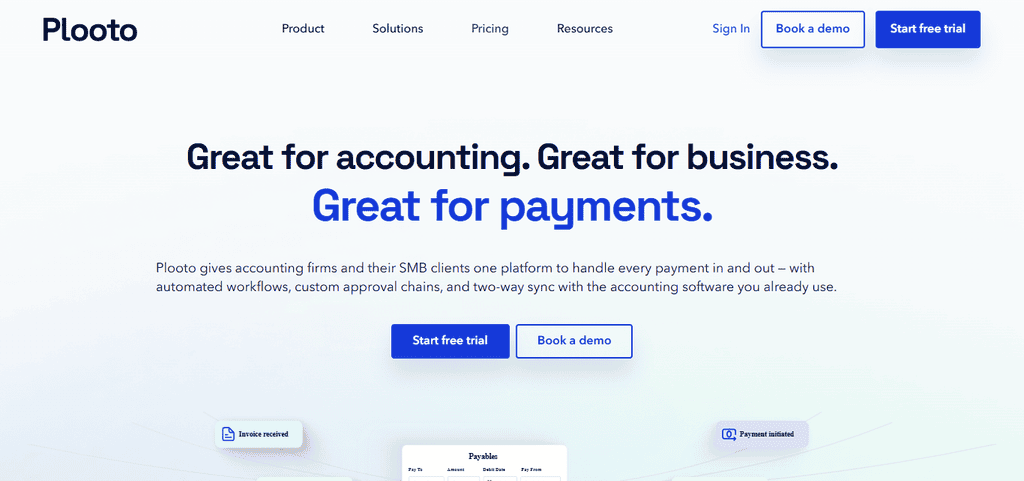
Main advantage over Melio: Plooto provides a broader combination of accounts-payable and accounts-receivable functionality, which can benefit businesses wanting to manage incoming and outgoing payments within one workflow.
Plooto Pros & Cons
| Pros | Cons |
|---|---|
| Supports accounts payable and receivable | Advanced requirements may need additional software |
| Simple payment and invoicing workflows | International capabilities are more limited |
| Integrates with accounting platforms | Pricing depends on plan and payment usage |
| Suitable for small and growing businesses | Less comprehensive than larger enterprise AP platforms |
6. Stampli
Automation: Stampli uses AI and automation to streamline invoice capture, coding, approval routing, payment processes, and vendor communication. Integrations: It integrates with accounting and ERP systems to connect invoice workflows with existing financial infrastructure.
Pricing/fees: Pricing is generally based on business requirements and selected functionality, so organizations typically need a customized quote. Best for: Stampli is designed for businesses with substantial invoice volumes and teams requiring stronger accounts-payable controls.
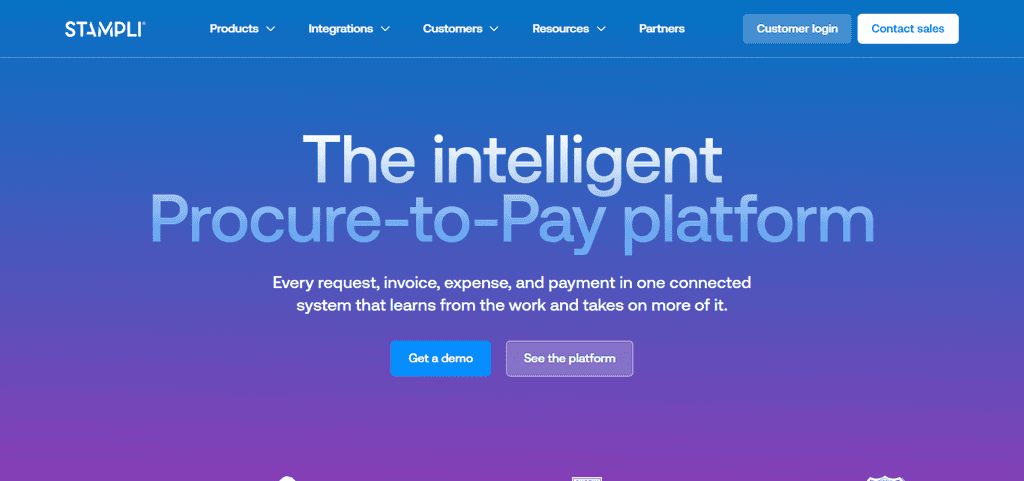
Main advantage over Melio: Its AI-focused invoice management and sophisticated approval workflows can provide deeper AP automation for organizations where invoice processing and internal controls are more important than simple vendor-payment functionality.
Stampli Pros & Cons
| Pros | Cons |
|---|---|
| Strong AI-powered invoice management | Pricing is typically customized |
| Automates invoice approval workflows | May require implementation and onboarding |
| Improves vendor communication and invoice visibility | More focused on AP than general financial management |
| Strong accounting and ERP integrations | Could be excessive for simple vendor payments |
7. Ramp
Automation: Ramp automates bill payments, expense management, approvals, spending controls, and financial workflows. Integrations: It integrates with accounting, ERP, HR, and other business systems to synchronize expenses, bills, and financial data.
Pricing/fees: Ramp offers different pricing structures depending on its products, plan, business requirements, and selected features; some core services may have no platform fee while premium capabilities can cost extra.
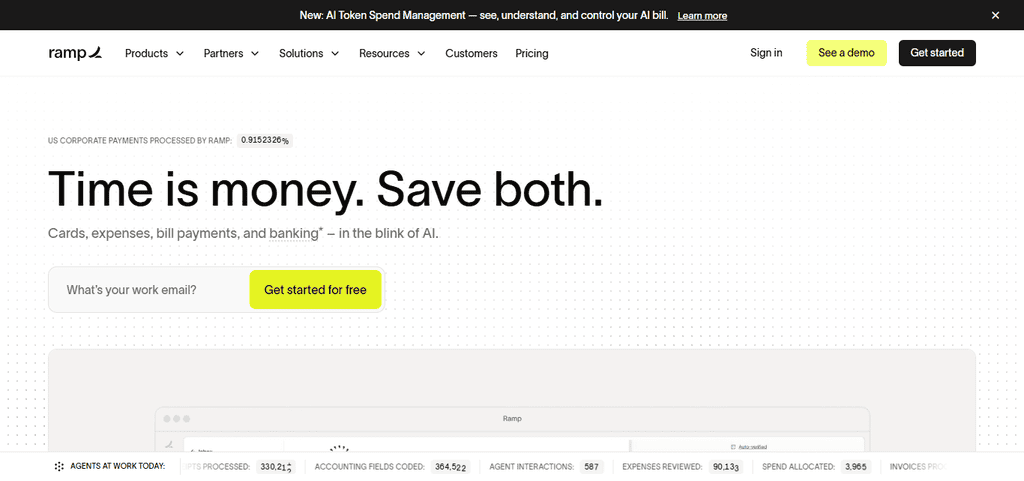
Best for: Ramp is best for businesses seeking broader spend-management infrastructure alongside vendor payments. Main advantage over Melio: Its combination of corporate cards, expense management, bill payments, and automated spending controls gives businesses a more comprehensive financial-management ecosystem.
Ramp Pros & Cons
| Pros | Cons |
|---|---|
| Combines bill payments with expense management | Full value depends on broader Ramp adoption |
| Strong spending controls and automation | Some advanced capabilities require paid plans |
| Supports corporate cards and financial workflows | May be more complex than dedicated payment tools |
| Useful for comprehensive spend management | Best suited to businesses needing multiple financial tools |
8. Payoneer
Automation: Payoneer streamlines international business payments, receiving funds, supplier transfers, and cross-border transactions through its digital platform. Integrations: It supports integrations and payment connections for businesses operating across marketplaces, platforms, and international commerce channels.
Pricing/fees: Fees vary by payment method, currency, transaction type, withdrawal method, and country, so businesses should check applicable rates before transferring funds. Best for: Payoneer is especially useful for companies, freelancers, marketplaces, and sellers handling international transactions.
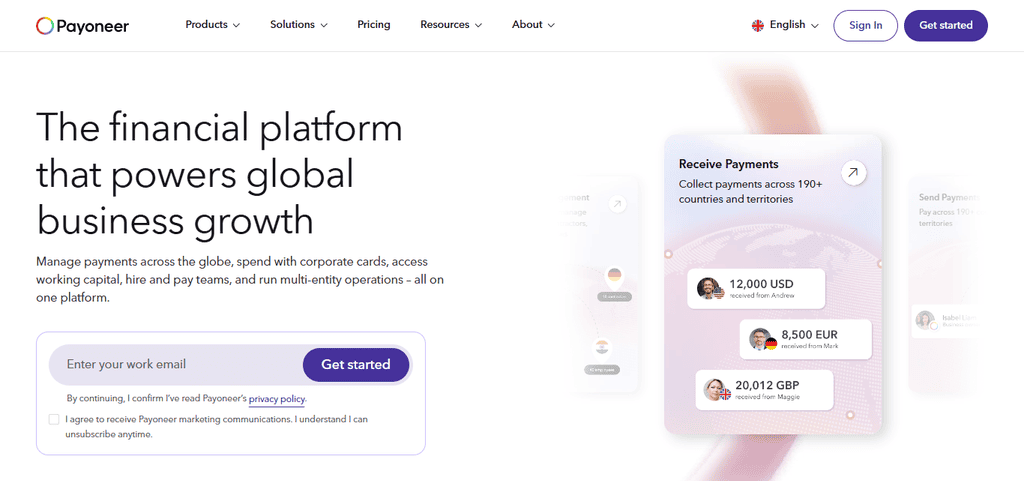
Main advantage over Melio: Its international payment network and cross-border capabilities can be more suitable for globally distributed businesses that regularly receive and send funds across different countries and currencies.
Payoneer Pros & Cons
| Pros | Cons |
|---|---|
| Strong international payment network | Fees vary by transaction and payment method |
| Supports cross-border business transactions | Exchange and withdrawal costs can vary |
| Useful for global suppliers and marketplaces | Not primarily a complete AP automation platform |
| Supports multiple currencies and receiving options | Some services depend on country availability |
9. Plastiq
Automation: Plastiq enables businesses to schedule vendor payments and use cards for payments even when suppliers do not directly accept card payments. Integrations: Its platform supports business payment workflows and can connect with financial processes used for expense and payment management.
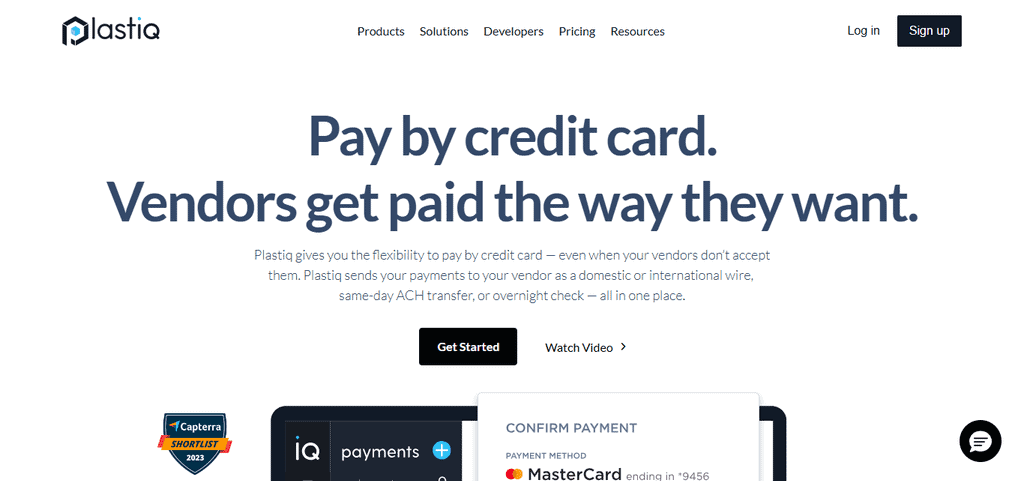
Pricing/fees: Plastiq charges fees based on the payment method and transaction, so businesses should evaluate the total cost before using cards for vendor payments. Best for: It is useful for businesses wanting payment flexibility, card-based cash-flow management, or rewards opportunities.
Main advantage over Melio: Plastiq’s ability to facilitate card-funded vendor payments can provide additional flexibility when suppliers prefer checks, ACH, or other payment methods.
Plastiq Pros & Cons
| Pros | Cons |
|---|---|
| Allows businesses to pay vendors using cards | Transaction fees can increase payment costs |
| Useful when suppliers do not accept cards directly | Card-funded payments may not suit every business |
| Can help manage short-term cash flow | Fees should be compared against payment rewards |
| Provides flexible vendor payment options | Less comprehensive for full AP automation |
10. SAP Concur
Automation: SAP Concur automates invoice management, expense reporting, approvals, compliance workflows, and broader financial processes. Integrations: It integrates extensively with ERP, accounting, travel, expense, procurement, and enterprise financial systems. Pricing/fees: Pricing depends on company size, products, implementation requirements, integrations, and selected services, with enterprise customers typically receiving customized pricing.
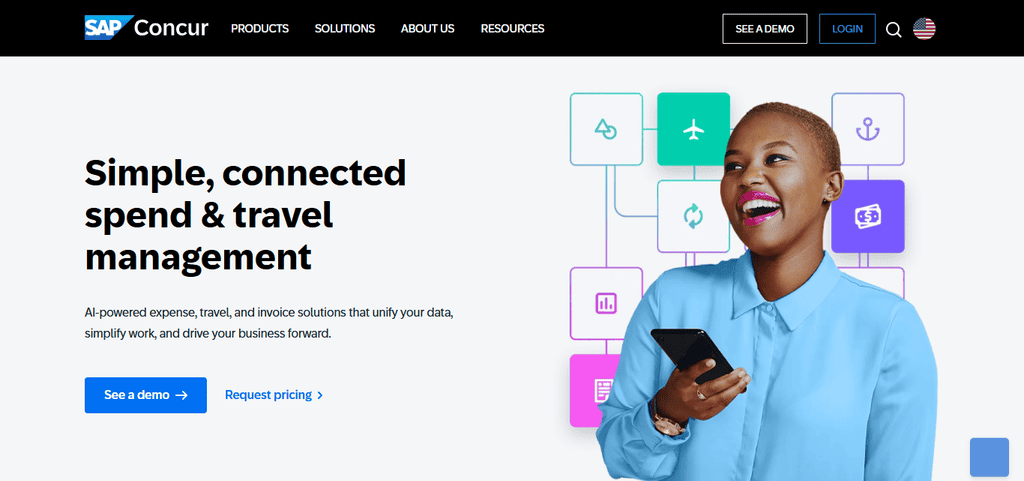
Best for: SAP Concur is primarily suited to medium-sized and large organizations with complex finance, travel, expense, and procurement requirements. Main advantage over Melio: Its extensive enterprise ecosystem and deeper integration across expenses, travel, invoices, and financial management make it more comprehensive for complex organizations than a simpler vendor-payment solution.
SAP Concur Pros & Cons
| Pros | Cons |
|---|---|
| Comprehensive invoice and expense management | Primarily designed for larger organizations |
| Strong ERP and accounting integrations | Implementation can be complex |
| Automates approvals and financial workflows | Pricing is often customized |
| Supports broader travel and expense management | May be excessive for simple vendor payments |
Conclusion
To summarize, Choosing between the Top Melio Competitors for B2B Vendor Payments comes down to your business size, payment needs, automation requirements, integrations, and international operations.
BILL and Stampli are best for AP automation, and Tipalti is geared toward global payment management. For international transfers, Airwallex and Wise Business are strong, while Ramp provides more comprehensive spend management. Compare pricing, features, payment methods, and scalability before choosing the right platform.
FAQ
What are the top Melio competitors for B2B vendor payments?
BILL, Tipalti, Airwallex, Wise Business, Plooto, and Ramp are leading alternatives.
Which Melio competitor is best for international payments?
Airwallex, Wise Business, and Payoneer offer strong international payment and multi-currency capabilities.
Which Melio alternative is best for AP automation?
BILL, Tipalti, and Stampli provide powerful accounts-payable automation and invoice management.
Which competitor is best for small businesses?
Plooto and Wise Business are practical options for smaller businesses managing payments.
