

Japan Opens Doors is the start of Japan’s institutional crypto adoption and it shows Japan’s progressive stance towards the FIEA (the Framework for Virtual Asset Service Providers). Japan has made it so banks, funds, and global institutional investors have more clarity.
By Japan taking this approach, jurisdictionally, Japan has now made itself Asia’s gateway for digital finance. It has made itself more transparent and innovative, and adds more compliance for a new era of crypto flows.
What is Japan Opens Doors?
“Japan Opens Doors” is the nickname for Japan’s groundbreaking move to allow institutions to access the crypto market. “Japan Opens Doors” reflects Japan’s progressive approach to crypto regulations, and prescribes regulators having a proactive approach to provide avenues for banks, funds, and corporations to invest in digital assets.

Japan’s forward-looking approach to open markets has initiated Asia’s brought about Asia’s institutional crypto markets, further allowing Japan to be a leader in compliance, innovation, and global investments.
The approach puts an emphasis on transparency and investor protection, making Japan a prime destination for market mass adoption. Beyond regional digital finance, this approach will be the first of its kind for other Asian economies to follow, signaling a major change to the continent’s financial future.
Why Japan Is Becoming an Institutional Crypto Hub
Regulatory Clarity
Clearly defining crypto assets in the Payment Services Act and the Financial Instruments and Exchange Act in Japan builds confidence and improves regulatory framework.
Investor Protection
There are strict licensing and cold storage insurance mandates for investor protection.
Institutional Infrastructure
More centralized trading relocation of major exchanges and market makers to Japan makes Tokyo a primary hub for liquidity globally.
Web3 Strategy
Japan’s Financial Services Agency (FSA) has introduced regulatory frameworks for stablecoins and DeFi, as well as a custodial framework.
Consumer Protection
The Mt. Gox and Coincheck hacks prompted Japan to develop one of the most extensive compliance regimes for cryptocurrency. Licensed exchanges must store client funds in cold wallets with systems to prevent the risk of insolvency of the exchange.
Global Liquidity Flows
Japan now links trading across Europe, the U.S., and Asia with OKX moving its trading engine from Hong Kong to Tokyo. Latency sensitive firms are now re-optimizing around Japan.
Japan’s Crypto Regulatory Framework in 2026
FIEA Amendment Act
In July of 2026, Japan’s Financial Services Agency (FSA) passed the FIEA and PSA Amendment Act. The Act reorganizes the regulation of crypto within the FIEA, treating crypto similarly to securities.
Crypto Regulatory Framework Transfer
The crypto-related provisions of PSA were moved to the FIEA, thus incorporating them in an existing securities-related framework. As a result, businesses involving the trading of cryptos come under the purview of the financial instruments business and will require tougher licensing and compliance.
Disclosure & Transparency
Exchanges and custodians will be required to implement disclosure practices similar to what is mandated of listed companies. This will include the disclosure of risks, reserves, andOperational Safeguards to ensure transparency for institutional investors.
Market Misconduct Rules
The regime for market misconduct in the FIEA will coverInsider trading and other unfair trading practices and market-manipulation activities in the crypto asset market.
Investor Protection
A new regime for enhanced enforcement will establish higher penalties against operators who conduct business without valid licenses, and require them to maintain their crypto assets in cold storage.
Act Implementation
Though the Act was passed in July 2026, many of the Act’s provisions will take effect in 2027, with other enforcement provisions (like penalties) having effect within 20 days of the Act’s passage.
Institutional Investors Enter the Japanese Crypto Market
Institutional investors are taking advantage of Japan’s recent progress on crypto regulations as clarity comes with the 2026 regulatory reforms. Crypto will now be regulated by the Financial Instruments and Exchange Act.
Within that framework, crypto will be treated as a security so standards for disclosure, custody, and the protection of investors will have to be met. Uncertainty around regulations has scared international banks, pension funds, and asset holders from entering the Japanese crypto market, but now, with the reforms, clarity around regulations has attracted them.
Japan’s liquidity hub status has facilitated high frequency trading corridors across Europe, the U.S., and Asia as a result of Japan’s status as a liquidity hub.
Japan is a mix of compliance, transparency and the needed infrastructure to attract institutional investing. Mainstream finance will likely be integrated with digital assets to some degree as a result of Japan’s efforts.
Stablecoins and Japan’s Digital Finance Strategy
| Aspect | Stablecoins | Japan’s Digital Finance Strategy |
|---|---|---|
| Regulation | Issuers must comply with reserve audits, licensing, and AML/KYC standards | Framework shifted under FIEA, aligning crypto with securities law |
| Use Cases | Cross‑border payments, remittances, and trade settlements | Integration into mainstream banking and fintech ecosystems |
| Investor Protection | Mandatory cold storage and segregation of client funds | Enhanced disclosure rules and penalties for misconduct |
| Institutional Adoption | Banks like MUFG issue regulated stablecoins | Pension funds and asset managers gain confidence in digital assets |
| Global Positioning | Stablecoins bridge fiat and crypto for international flows | Tokyo positioned as Asia’s liquidity hub for digital finance |
| Innovation | Stablecoins enable programmable payments and DeFi carve‑outs | Japan promotes Web3 adoption with custody and tokenization standards |
How Japan Could Influence Crypto Adoption Across Asia
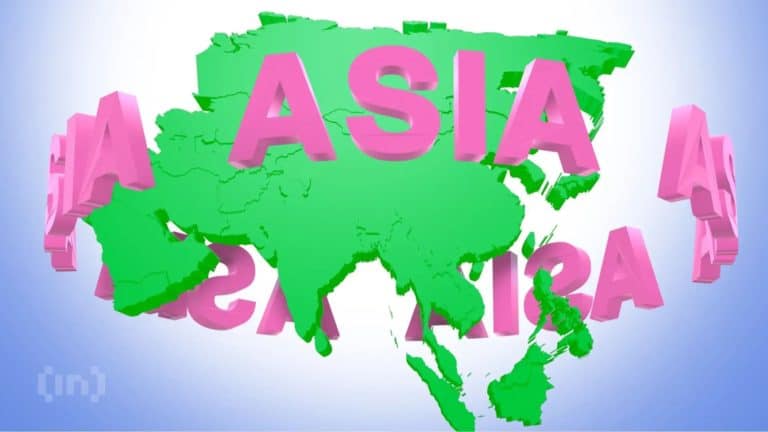
Japan could drive crypto adoption in Asia by making clear regulations. This would give banks, asset managers, brokerages, and corporations the confidence to operate in the crypto market. If Japanese firms are able to successfully operate with regulations in the crypto market, it is likely that other Asian markets would adopt such regulations in order to capture institutional investments.
Japan’s huge financial market and corporations could drive cross border blockchain networks and increase the compliance standards and institutional investment in the market. The impact could extend beyond Bitcoin and Ethereum and include tokenized securities and digital payments. All of these could come to form a significant part of the future financial systems in the Asia region.
What Could Slow Japan’s Institutional Crypto Boom?
Regulatory certainty will help Japan’s institutional crypto market in 2026, though some challenges remain. There are complications around tax treatment and compliance, and financial institutions may be risk-averse about adding services for digital assets due to cybersecurity and custody risks.
Market volatility coupled with regulatory uncertainty will also keep institutional investors from allocating a major part of their portfolio to crypto. Some digital assets have limited liquidity along with risks of fraud and competition from crypto friendly jurisdictions like Singapore and Hong Kong.
Japan would have to wait and see how quickly the regulations, the underlying crypto markets, and investor confidence develops in order to gauge how quickly institutions adopt crypto.
Bitcoin and Ethereum: Core Institutional Crypto Assets
| Aspect | Bitcoin | Ethereum |
|---|---|---|
| Primary Role | Digital gold, hedge against inflation | Programmable blockchain powering DeFi & Web3 |
| Regulatory Status | Treated as a commodity under most jurisdictions | Often scrutinized as a potential security due to staking |
| Institutional Products | ETFs, futures, custody solutions | Staking services, tokenized assets, DeFi platforms |
| Risk Profile | Lower technological risk, high energy concerns | Higher innovation risk, regulatory uncertainty |
| Yield Potential | No native yield, relies on price appreciation | Offers staking rewards and DeFi yield opportunities |
| Adoption Drivers | Scarcity (21M cap), inflation hedge | Utility, programmability, smart contracts |
| Liquidity Hubs | Anchored in global ETF markets | Dominant in decentralized exchanges and staking pools |
Tokenization: Japan’s Next Institutional Crypto Opportunity

Japan has implemented reforms in 2026 that allow financial securities to be represented by digital tokens. This clarity encourages banks, pension funds, and asset managers to consider tokenizing traditional securities such as bonds, real estate, and shares.
Tokenizing ownership of securities will allow financial institutions to optimize settlements and improve reporting, and it will also allow them to take advantage of global capital markets.
Tokyo has garnered interest as a promising location for international financial flows due to the Japanese government’s progressive provision of programmable finance and custody and its investment in Web3.
Integration of stablecoins links the tokenized financial assets to cash. Institutional financial markets are likely to continue to adopt digital finance as a result of this bridge.
Japan’s Role in Asia’s Institutional Crypto Expansion
Japan is Asia’s most essential crypto institutional market archetype as a trail blazer in crypto regulation and a key liquidity provider.
Japan puts crypto assets under the Financial Instruments and Exchange Act. This provides a securities-based framework that appeals to international banks, funds, and asset managers who are otherwise left uncertain by the changing regulations in Singapore and Hong Kong who have adopted more of a wait and see position. Japan’s stablecoin initiatives and custody and tokenization frameworks elaborate its approach to web 3 while balancing compliance and innovation.
Ultimately, Tokyo is the leading auctioneer of cross border liquidity bringing together Europe, the U.S. and Asia. Post FX failures protection of consumers is found in its innovative approach to regulation. As institutions look for secure alternatives to crypto assets, Japan has become Asia’s leading gateway for its institutional crypto era.
Biggest Challenges Facing Japan’s Institutional Crypto Market
| Challenge | Details | Impact |
|---|---|---|
| High Compliance Costs | Strict licensing, custody, and insurance requirements under FIEA | Raises barriers for new entrants, limits smaller firms |
| Regulatory Conservatism | Clear but rigid frameworks may slow innovation compared to flexible hubs | Risk of losing competitive edge to Singapore or Dubai |
| Global Competition | Other hubs aggressively attract firms with tax incentives and lighter rules | Japan must balance stability with competitiveness |
| Liquidity Fragmentation | Trading corridors shifting between Tokyo, Singapore, and Hong Kong | Potential inefficiencies in cross‑border capital flows |
| Technology Risks | Cybersecurity threats, smart contract vulnerabilities, and DeFi risks | Could undermine institutional trust despite strong regulation |
| Market Volatility | Bitcoin, Ethereum, and stablecoins remain exposed to global shocks | Institutions face portfolio risk despite compliance safeguards |
Key Institutional Crypto Trends to Watch in Japan
Tokenization
The use of FIEA to tokenize bonds, real estate, and equities for faster settlement andinclusive market access.
Stablecoins
Stable coins issued by banks such as MUFG are the backbone of cross border payments and trade finance.
ETF Broadening
Bitcoin and Ethereum ETFs are becoming popular for portfolio diversification by pension funds and asset managers.
Custody Evolving
Increased confidence among investors is becoming a steady state.
Liquidity Hub Positioning
Tokyo is anchoring global trading corridors and is becoming the preferred choice for high frequency firms over Hong Kong and Singapore.
Web3 Developing
Japan’s digital finance strategy is in line with DeFi, Programmable Payments and Blockchain based ID systems.
Regulatory Frameworks
Although Japan is building attractive frameworks for institutions to operate, strict regulations may mean that Japan lags behind more innovative hubs such as Dubai.
Japan vs. Asia: Institutional Crypto Readiness Scorecard
| Factor | Japan | Singapore | Hong Kong | Dubai |
|---|---|---|---|---|
| Regulatory Clarity | PSA/FIEA framework, strict but transparent | MAS evolving, clear but flexible | HKMA reopened, still stabilizing | DFSA progressive, sandbox‑friendly |
| Custody Standards | Mandatory cold storage + insurance | Institutional custody emerging | Less stringent | Strong custody frameworks |
| Liquidity Hub Role | Tokyo anchors global corridors | Regional hub for Asia | Rebuilding after exchange exits | Growing hub for MENA flows |
| Institutional Adoption | Banks, pension funds, ETFs active | MAS‑licensed firms expanding | Limited after 2021 crackdowns | Aggressive push for institutional capital |
| Innovation Flexibility | Conservative, slower on DeFi carve‑outs | Balanced innovation with compliance | More open but less mature | Highly flexible, fast‑moving |
| Global Competitiveness | Strong compliance, higher costs | Competitive, tax‑friendly | Catching up | Attractive incentives, rapid growt |
Conclusion
Japan has emerged as the The first mover in institutional cryptocurrency regulation across Asia. Balancing clear regulations and innovative structures, Japan has placed elements of oversight under its FIEA (Framework for the Improvement of Structure of Economic Administration) Act to create a securities-like regime which addresses the primary market-based concerns of overseas investors. As a hub of liquidity, Tokyo connects Europe, the U.S., and Asia as a channel for flows of institutional funds.
While Japan’s compliance costs and challenges to the oversight of its capital markets remain, the country has laid a foundation of clear investor protection and a regulated institutional crypto framework which other countries in the region will struggle to match. Not only does Japan open its markets to institutional crypto, but it is innovating regulatory frameworks and building a foundation of digital finance across the region.
FAQ
What is Japan’s current crypto regulatory framework?
In 2026, oversight shifted from the Payment Services Act (PSA) to the Financial Instruments and Exchange Act (FIEA), treating crypto assets like securities with stricter rules.
Why are institutional investors entering Japan’s crypto market?
Clear regulation, strong custody standards, and Tokyo’s role as a liquidity hub make Japan a safe entry point for banks, funds, and asset managers.
How do stablecoins fit into Japan’s digital finance strategy?
Regulated stablecoins issued by banks support cross‑border payments, trade finance, and programmable financial services.
What role does tokenization play in Japan’s crypto future?
Tokenization of bonds, real estate, and equities enables faster settlement, transparency, and global liquidity access for institutions.
What are the biggest challenges Japan faces?
High compliance costs, regulatory conservatism, global competition, and market volatility remain key hurdles for sustained growth.