

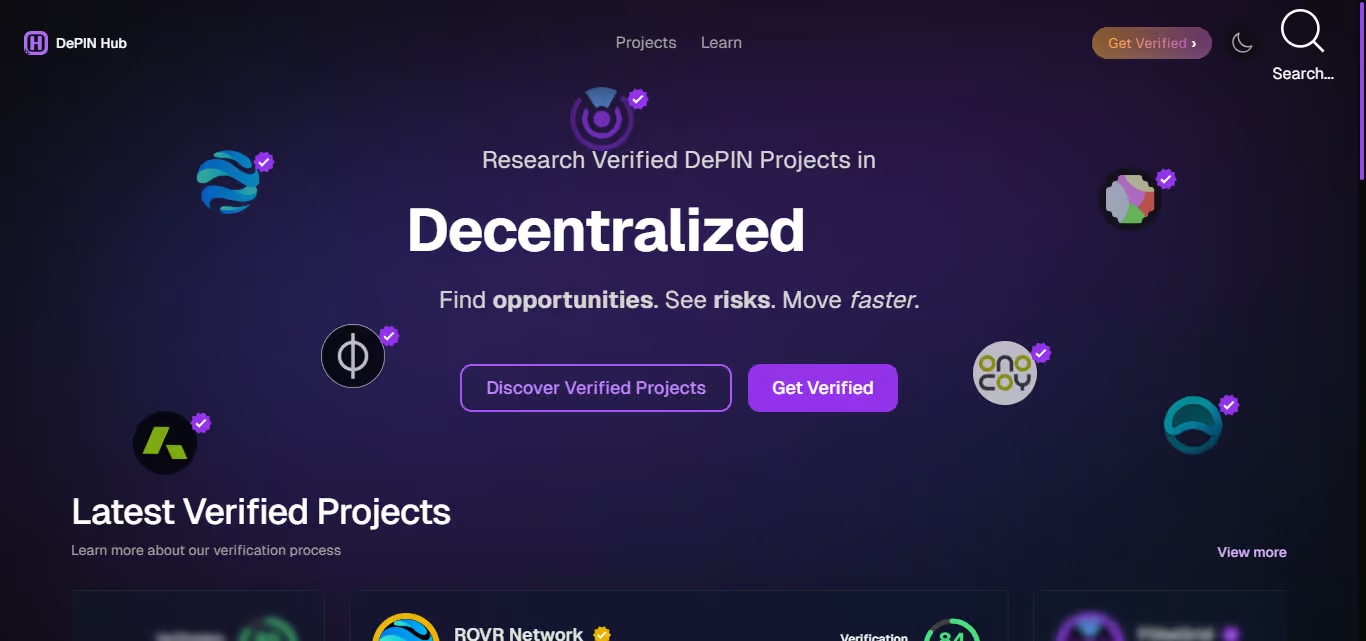
This article will cover the best DePIN Passive Income Apps Like Grass alternatives. I will include all apps that allow users to share their bandwidth, processing power, location data, vehicle data, and environmental data.
I will explain each app and the type of data it requires. I will discuss how and when rewards are given. For each app, I will discuss what will have the greatest effect on a user’s earnings. I will discuss potential real world uses of each app. I will address each app’s most serious problems.
Key Points & Best DePIN Passive Income Apps Like Grass
- DAWN — Shares bandwidth through decentralized infrastructure while earning rewards from network participation.
- Gradient Network — Provides distributed computing resources and rewards users contributing idle device capacity.
- Nodepay — Rewards users for sharing unused internet bandwidth and supporting decentralized data networks.
- BlockMesh — Lets users contribute bandwidth and computing resources while receiving network-based rewards.
- Rivalz Network — Uses decentralized nodes for AI data infrastructure, rewarding contributors for useful resources.
- Nexus — Enables users to contribute computing power toward decentralized infrastructure and potential network rewards.
- Hivemapper — Rewards drivers for collecting real-world mapping data through compatible dashcam devices.
- DIMO — Allows vehicle owners to share connected-car data and participate in decentralized automotive networks.
- Nodle — Uses smartphones and connected devices to provide decentralized wireless infrastructure and earn rewards.
- Silencio — Rewards users for collecting environmental noise data through smartphones and contributing to networks.
10 Best DePIN Passive Income Apps Like Grass
1. DAWN
DAWN is building a decentralized network and leading edge infrastructure that allows anyone to freely and securely access global internet resources. What users contribute: Users share their extra network resources. How rewards work: Participating in the network allows users to earn rewards based on an active reward model.

Requirements: Users must have connectivity and an account as well as the proper software. Earning rewards is based on factors such as location and how the network is used. What the product does: DAWN provides a decentralized network and rewards users for their participation. What the product does not do: Rewards are subject to change.
DAWN — Pros & Cons
| Pros | Cons |
|---|---|
| Decentralized connectivity infrastructure with validator participation. | Rewards depend on active network participation and current incentive rules. |
| Validator Extension can run in the background. | Higher-level infrastructure participation may require additional hardware. |
| Uses Proof of Bandwidth to validate network activity. | Hardware-based opportunities can involve upfront costs. |
2. Gradient Network
Gradient Network builds a decentralized, peer-to-peer network and computer resources infrastructure. What users provide: Users are able to run network nodes to provide computational resources and connectivity.
How it works: Prior Sentry Node programs rewarded participants for node uptime, referrals and other achievements. Active rewards: Participation in Gradient is reliant on the product or node offerings.

Future rewards: Depends on active incentive programs. Uses: Allows users to compute resources over its decentralized network. Limitations: Currently, no rewards are active for Sentry Nodes.
Gradient Network — Pros & Cons
| Pros | Cons |
|---|---|
| Lightweight Sentry Nodes were designed for minimal resource usage. | Current Sentry Node rewards are concluded and not active. |
| Previous model rewarded uptime and successful connectivity checks. | Historical reward figures should not be treated as current earnings. |
| Dashboard provided node and reward tracking. | Unsupported IPs or locations could prevent rewards. |
3. Nodepay
Nodepay founded a decentralized network focused on data, rewards, and market intelligence. The network is built upon user contributions. What users do: respond to and create signals, provide and complete prompts, participate in campaigns.
How rewards work: Contributions are scored. Scores can be redeemed for Nodecoin after they are confirmed and processed through a reward cycle. Requirements: Users must create an account. Earning and rewarding: User contribution and engagement determine rewards.
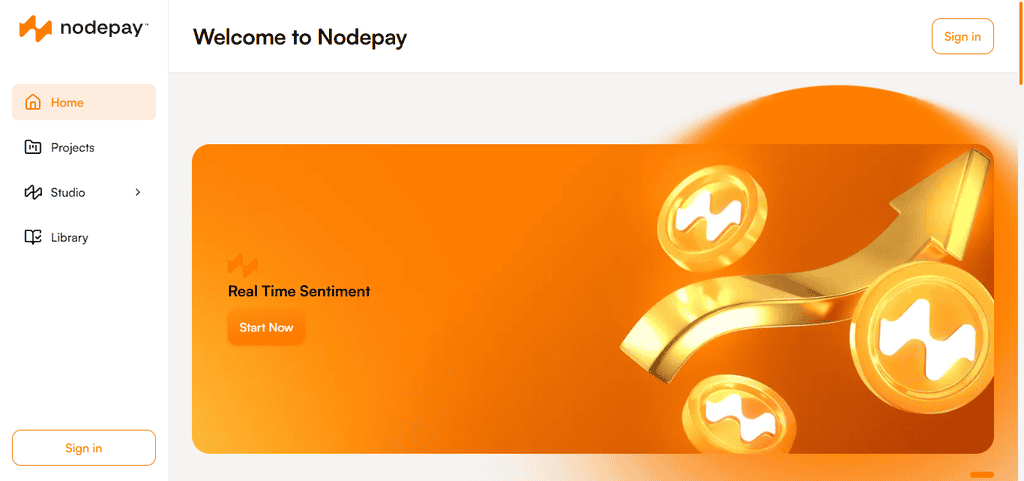
The data generated is indicative of market and competitive intelligence and industry sentiment. Limitations: The rewards are considered market intelligence and competitive differentiators; however, users should be aware that these rewards are contributions and do not guarantee or replace passive income.
Nodepay — Pros & Cons
| Pros | Cons |
|---|---|
| Offers rewards for meaningful user contributions and signals. | Rewards are contribution-based rather than guaranteed passive income. |
| Multiple participation methods include signals, campaigns, and Pulse. | Verification and fraud checks can affect reward eligibility. |
| Provides a real-time intelligence ecosystem for contributors. | Some earning opportunities require active participation rather than simply staying online. |
4. BlockMesh
BlockMesh intends to create a data network that collects meaningful data which can then be utilized in artificial intelligence and analytics.
BlockMesh has a decentralized framework and participants provide data through the network and browser-based participatory models.

The network uses an incentive structure to reward users for network engagement and data contribution. Users are required to install a browser extension to engage with the network. The more data contributed and the longer the data is contributed for, the greater the potential reward.
Data collected through the network can help develop AI and assist with predicting market and social trends as well as sentiment. The amount of reward received depends on the current condition of the project as well as engagement and participation.
BlockMesh — Pros & Cons
| Pros | Cons |
|---|---|
| Lets users monetize unused internet resources. | Reward amounts depend on contribution and the project’s token allocation model. |
| Contributions are tracked through points. | Internet-resource sharing may not suit users with limited bandwidth. |
| States that verified partners use contributed resources for specific tasks. | Users should review current privacy and partner-use policies before participating. |
5. Rivalz Network
Rivalz Network provides decentralized AI infrastructure. Users can provide: rClients or zNodes to process and/or validate data and provide infrastructure to the network. Users are rewarded: with RIZ for providing their nodes to meet the DePIN.
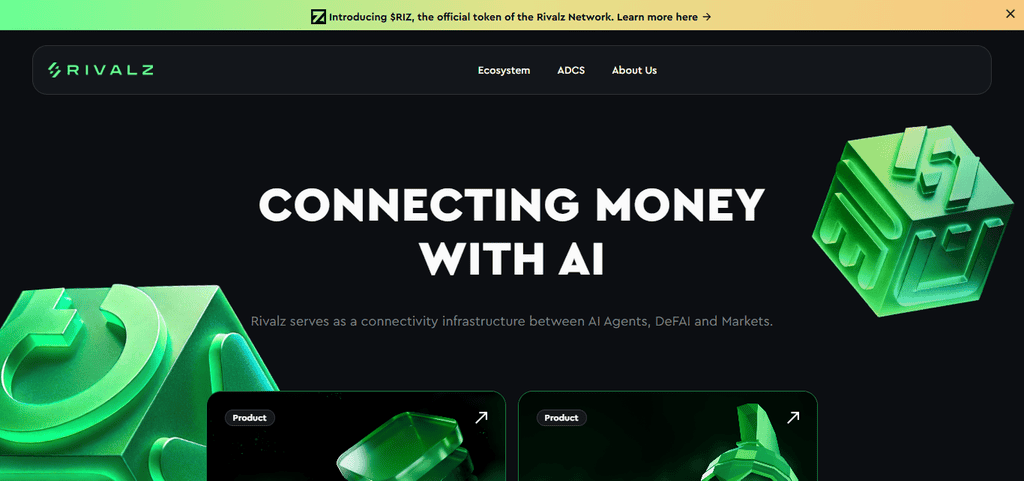
The main constraint: will depend on the type of node selected, available hardware and the skills of the user. Important: Operation and validation of the node and participation in the network can impact earnings.
Use case: Provides decentralized AI and data processing. The main constraint: User may have to incur upfront costs and technical skills to run the node.
Rivalz Network — Pros & Cons
| Pros | Cons |
|---|---|
| Focuses on decentralized infrastructure for AI-related applications. | Node participation can require technical setup and maintenance. |
| Provides opportunities to contribute infrastructure resources. | Hardware requirements can vary by node type. |
| Connects decentralized infrastructure with AI data use cases. | Rewards depend on network activity and applicable incentive programs. |
6. Nexus
Nexus’s goal is to provide a way for users to join a computational workforce and get compensated for it. What they give: Users provide processing units in the form of hardware or software.
Compensation: Users are rewarded for computational work and engagement with the network. What it costs: Users must have processing units, as well as software and hardware, and access to the Internet.
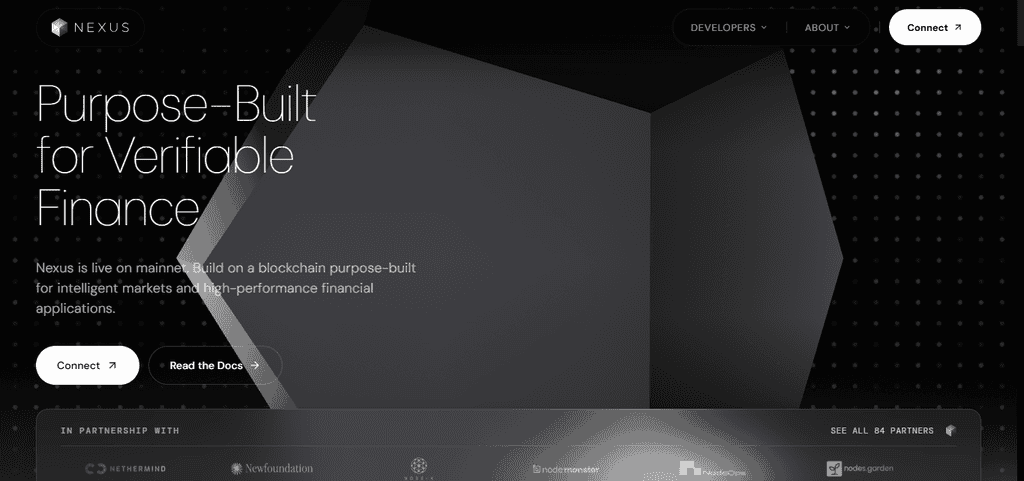
What affects earnings: Earnings are determined by many factors including the processing units, rules of the network, workload, and hardware.
Where it is used: It can be used for processing units for Web3 and AI in an efficient and scalable manner. Limitations: The amount of processing units that can be rewarded is dependent on the current demand and network incentives.
Nexus — Pros & Cons
| Pros | Cons |
|---|---|
| Provides an approach centered on distributed computing resources. | Computing participation can consume device resources and electricity. |
| Can make otherwise idle computing capacity useful. | Earnings depend on available workloads and active incentives. |
| Suitable for users interested in decentralized compute infrastructure. | Hardware capability can affect participation opportunities and potential rewards. |
7. Hivemapper
Hivemapper provides a decentralized street-level mapping system. What it takes to participate: Users must collect and upload street images using the mapping system.
What is rewarded: Users are given HONEY for collecting data based on coverage, timeliness, and quality. What determines rewards: factors such as the time since the data was collected and the geographic area covered by the data.

Where the data is used: The data can be used to create and improve maps and applications that rely on location and/or geography. Limitations: Earning potential is dependent on the location of the user and the cost of the equipment used by the user.
Hivemapper — Pros & Cons
| Pros | Cons |
|---|---|
| Converts real-world driving into decentralized mapping data. | Requires compatible mapping hardware for participation. |
| Useful for building frequently updated mapping datasets. | Hardware acquisition creates an upfront participation cost. |
| Driving activity can contribute while users complete normal journeys. | Potential rewards depend heavily on location, coverage, and data quality. |
8. DIMO
DIMO is building infrastructure to make connected vehicle data easily accessible and useful. What users do: Vehicle owners can provide data about their vehicles by adding integrations or hardware to their vehicles. How it works: Participants may be able to use DIMO’s ecosystem and data services.
How it works: Users must be able to connect their vehicle to the ecosystem. What affects earnings: Driver participation, connectivity, and data contribution.
Service description: Vehicle data can be used to create services in diagnostics, insurance, and other mobility services. What’s missing: Due to the many different types of vehicles, not all can be integrated.
DIMO — Pros & Cons
| Pros | Cons |
|---|---|
| Lets connected vehicles contribute data to a decentralized ecosystem. | Vehicle compatibility varies across supported integrations. |
| Creates utility from vehicle telemetry and connected-car data. | Hardware or compatible connectivity solutions may be required. |
| Can support automotive, mobility, and vehicle-data applications. | Earnings depend on current ecosystem incentives and participation rules. |
9. Nodle
Nodle uses Bluetooth and smartphones to create a decentralized network. What users contribute: Users’ smartphones create a network by discovering Bluetooth devices in their environment.
Rewards: Users are rewarded in NODL for creating and utilizing this network. Contributing factors to the reward are: how widespread the Nodle app is, and if and how widespread Bluetooth is in a given area. It also considers where users are in the world.
Requirements: Having the Nodle app and Bluetooth on your smartphone is required. So is allowing the app to to use your smartphone’s location services. You also need to be connected to the Internet.
Rewards: Are determined by how covered a given area is, how accessible the network is, and how in-demand the network is. It can be used to track physical assets. Limitations: As more people use the network, reward levels may go down.
Nodle — Pros & Cons
| Pros | Cons |
|---|---|
| Uses smartphones and Bluetooth connectivity for decentralized network coverage. | Continuous participation can affect smartphone battery usage. |
| Allows compatible mobile devices to contribute network resources. | Reward levels can vary with network demand and location. |
| Mobile-based participation lowers the barrier compared with dedicated hardware nodes. | Smartphone, Bluetooth, location, and connectivity requirements may apply. |
10. Silencio
Silencio aims to develop a decentralized platform to quantify environmental variables, with a focus on measuring sound levels.
The contributors’ worth: Users gather authentic noises measurements and other types of environmental sounds and data. The platform provides in app rewards and supports crypto rewards. The user has control over measurement permissions.
The more measurements the user makes and data is contributed the more rewards the user earns. Noise pollution data and other measurements can help evaluate pollution and make data driven decisions. There are limitations to the project, for example reward value fluctuate and can be changed.
Silencio — Pros & Cons
| Pros | Cons |
|---|---|
| Turns environmental noise measurements into decentralized data contributions. | Requires users to provide measurement access through a compatible device. |
| Uses smartphones to collect real-world environmental information. | Earnings depend on verified data and current reward rules. |
| Data can support urban and environmental analytics applications. | Frequent measurements may require ongoing user activity rather than fully passive participation. |
Conclusion
Conclusion DePIN has multiple passive income apps like Grass. All of these apps find different ways to monetize bandwidth, computing power, maps, driving, and other forms of personal data. DAWN, NodePay, BlockMesh, and Rivalz have different participation models and reward structures.
Prior to endorsing any of these projects, determine the requirements of the technology you will need to employ, assess the reward structures and models to determine utility of the project, and consider the trade-offs of project participation. Based upon your assessment, decide if project endorsing is in your best interests.
FAQ
What are DePIN passive income apps like Grass?
They reward users for contributing bandwidth, data, devices, or computing resources.
How do DePIN apps generate rewards for users?
Users receive points, tokens, or rewards for verified network contributions.
Which resources can users contribute through DePIN apps?
Common resources include bandwidth, computing power, mapping data, and vehicle information.
Can DePIN apps generate completely passive income?
Earnings vary and usually depend on active participation, uptime, and demand.
