


This article is going to review a few of the many Fractured Real Estate Investing Platforms. These platforms offer an opportunity for the average person to invest in real estate.
Each will be examined based on their minimum investment amount, the properties offered, regulations, potential earnings, costs and fees, liquidity, pros and cons, and other elements to consider before investing.
Ultimately the goal of this article is to give the average investor the tools to make informed decisions when considering alternate investments in Real Estate.
Key Points & Fractional Real Estate Investing Platforms
- Stake: Dubai-Saudi focused app enabling AED 500 investments in regulated rental properties.
- SmartCrowd: MENA’s first regulated crowdfunding platform offering income-generating properties with low investment minimums.
- PRYPCO Blocks: Dubai platform backed by property groups, offering fractional rental property investments.
- Deed: DIFC-licensed, DFSA-regulated platform enabling Dubai property investments starting from AED 500.
- Baytukum: Platform offering fractional ownership of curated, income-producing Dubai properties from AED 1,000.
- Arrived: U.S. platform offering shares in rental and vacation homes from $100.
- Fundrise: Popular U.S. platform offering beginner-friendly real estate investments starting from approximately $10.
- Groundfloor: U.S. platform providing short-term, high-yield real estate debt investments without investor fees.
- RealT: Blockchain-based platform offering fractional U.S. rental property ownership with stablecoin payouts.
- Yieldstreet: Alternative investment platform providing access to residential, commercial real estate, and other assets.
10 Fractional Real Estate Investing Platforms
1. Stake
The Dubai and Saudi Arabia arm of Stake is a platform for digital real estate investing. An individual can begin investing with Stake at approximately AED 500. With this investment, it is possible to receive rental value and capital appreciation.
Stake manages all aspects of the relevant properties. Stake has an operative license for the Dubai market under DIFC/DFSA.

For its activities in Saudi Arabia, Stake is bound by the laws of that jurisdiction. Since 2019, Stake has been operating in both markets and has made the process of fractional real estate investing more accessible to smaller investors.
Pros & Cons Stake
| Pros | Cons |
|---|---|
| Low entry point of around AED 500 | Investment returns are not guaranteed |
| Focuses on Dubai and Saudi real estate opportunities | Property selection may be limited at times |
| Provides access to rental-property investments | Real estate investments are relatively illiquid |
| Regulated investment structure | Market and property-specific risks remain |
| Useful for investors seeking fractional exposure | Fees can affect overall returns |
2. SmartCrowd
SmartCrowd is a UAE real estate crowdfunding platform that makes it possible for several investors to co-own a rental property in Dubai. Each investor puts in a lower amount than the total cost of a property and has the opportunity to gain returns from rental income and capital appreciation.
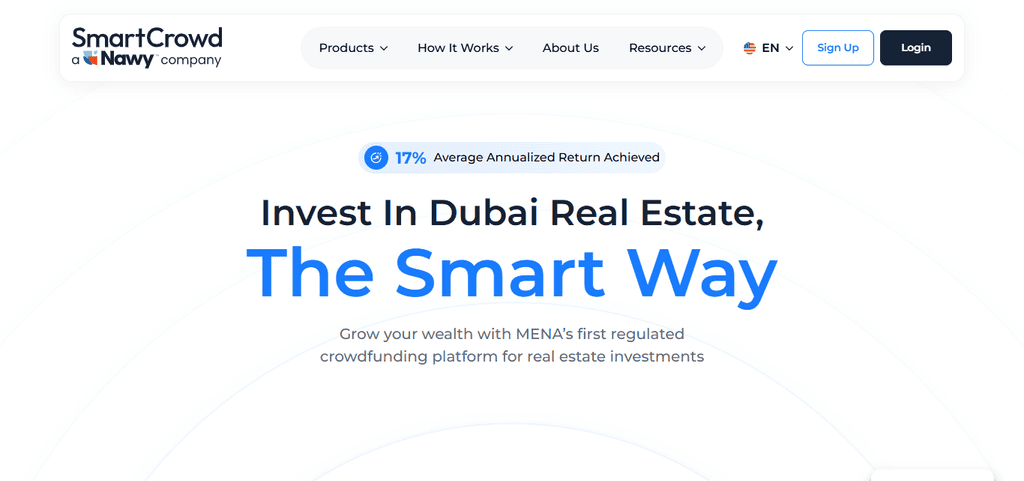
For investors, real estate crowdfunding platforms manage the operational burden and the selection of a property for investment.
With SmartCrowd, investors gain the opportunity to passively invest in Dubai real estate. SmartCrowd was the first to offer a regulated real estate crowdfunding platform in MENA, and was founded in 2018.
Pros & Cons SmartCrowd
| Pros | Cons |
|---|---|
| Regulated crowdfunding model in the UAE | Investments are not easily withdrawn on demand |
| Low minimum investment requirement | Property values can fluctuate |
| Access to income-generating properties | Rental income may vary |
| Diversifies exposure across real estate assets | Platform and management fees may reduce returns |
| Designed for smaller investors | Limited control over individual property management |
3. PRYPCO Blocks
PRYPCO Blocks is a Dubai based fractional real estate investment firm that lets investors buy “Blocks” in a selected rental property.
This lets individuals make an investment in a rental property in Dubai, a market previously open only to investors who could make a sizable capital investment to purchase an apartment or a villa.
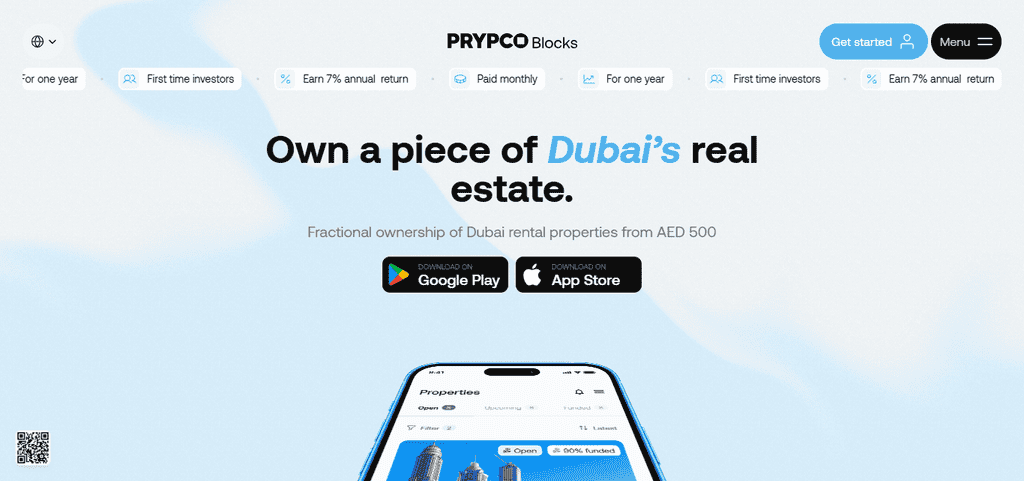
PRYPCO Blocks manages the rental property and the Block investors enjoy the potential for rental income and capital appreciation. PRYPCO Blocks uses an app based structure with low investment requirements.
Their Dubai based focus makes their investment opportunity relevant for investors with an interest in the UAE Residential Rental Market.
Pros & Cons PRYPCO Blocks
| Pros | Cons |
|---|---|
| Enables fractional exposure to Dubai properties | Focus is primarily on the Dubai market |
| Lower capital requirement than buying property directly | Investors do not own an entire property independently |
| Backing from established property-sector participants | Returns depend on property performance |
| Convenient digital investment process | Secondary-market liquidity may be limited |
| Suitable for portfolio diversification | Property-related expenses can affect net income |
4. Deed
Deed offers fractional investment opportunities in DIFC based Dubai real estate. Rather than purchasing an entire property, investors can participate in the investment opportunity for approximately AED 500.
Deed manages investment opportunities through a specialized legal entity and provides the investor with an informational portal to access all property documentation and operating data to manage their investment and track the performance of their portfolio.
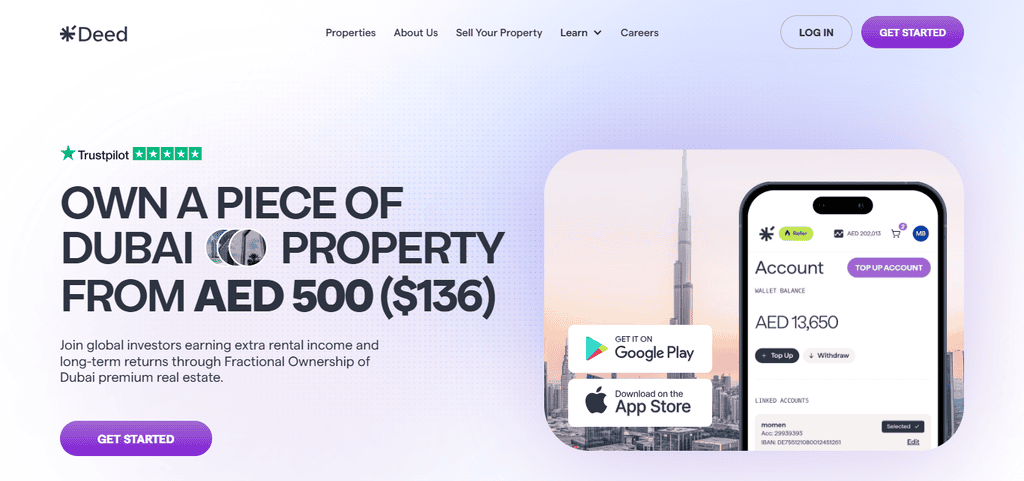
The DFSA regulates Deed and they operate within a DFSA authorized DIFC environment. Deed designed their business model to offer an opportunity for smaller investors to participate in the growing Dubai market while providing a regulated real estate investment opportunity.
Pros & Cons Deed
| Pros | Cons |
|---|---|
| DIFC-based regulated structure | Investors remain exposed to Dubai property-market conditions |
| Entry point starting around AED 500 | Fractional investments may have limited liquidity |
| Makes Dubai property more accessible | Returns depend on rental and asset performance |
| Digital-first investment experience | Platform charges may reduce net returns |
| Suitable for investors seeking fractional ownership | Investors have limited direct control over the property |
5. Baytukum
Baytukum offers Dubai property investors the opportunity to own a fraction of income-generating Dubai properties. Users can get started with as low as AED 1,000 to access professionally selected real estate.
Capital users stand to earn rental income and potential capital gains, while all operations and upkeep of the asset are on the professional management. Baytukum operates within a regulated and licensed DIFC framework.
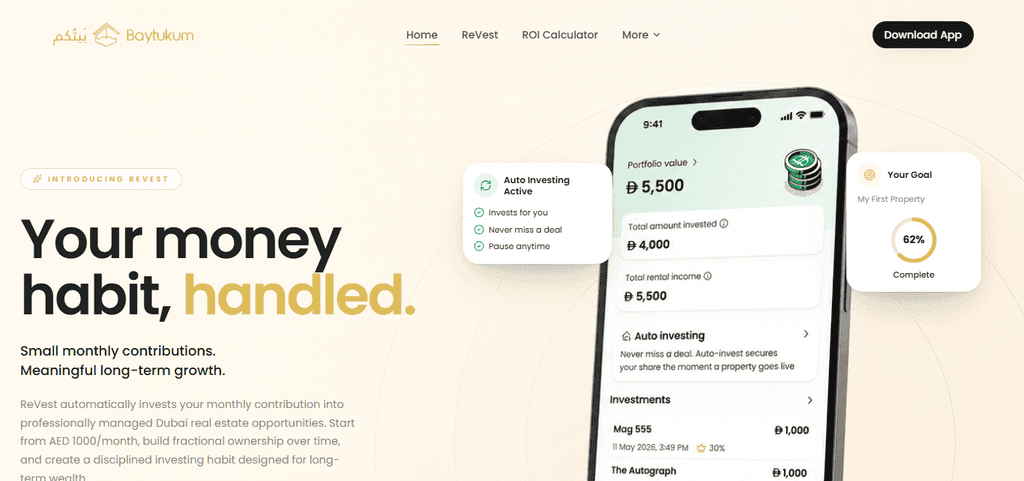
Baytukum Investment Entities form the basis of property offerings and are the investment vehicles for its operations. Though there is no confirmed date published, Baytukum launched before most of the facilities in the digital fractional-property investment ecosystem of Dubai.
Pros & Cons Baytukum
| Pros | Cons |
|---|---|
| Curated income-producing Dubai properties | Investment opportunities may not always be available |
| Entry point from around AED 1,000 | Dubai property exposure creates geographic concentration |
| Provides fractional ownership access | Selling an investment may take time |
| Can generate rental-based income | Rental vacancies can affect distributions |
| Lower barrier than purchasing property outright | Property performance varies between assets |
6. Arrived
Arrived, an investor-focused U.S. based platform, helps users invest in fractional interests of either a residential rental property or a vacation home. Investors are able to avoid the burden and hassle of purchasing and personally managing a property, while retaining the right to rental distributions and potential property appreciation.
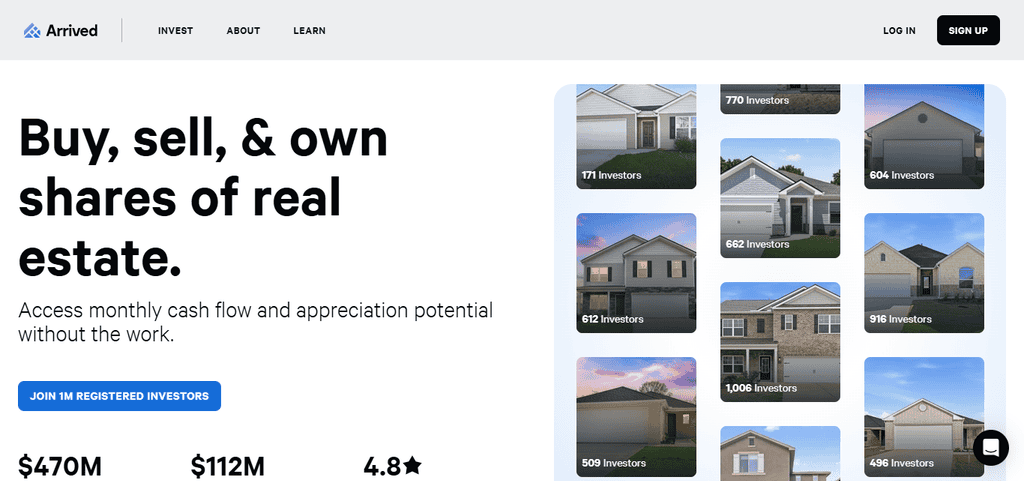
The company manages the purchase, maintenance and rental property management young its operations, catered to users seeking passive real estate holding.
In the year 2021, the company launched Arrived, and began offering its first rental properties to investors. Arrived’s $100 investment minimum per share afforded many the opportunity to invest in U.S. rental real estate.
Pros & Cons Arrived
| Pros | Cons |
|---|---|
| Low starting investment of around $100 | Primarily focused on U.S. properties |
| Offers rental and vacation-home opportunities | Investors have limited property-level control |
| Allows diversification across multiple properties | Property returns can vary significantly |
| Accessible to smaller investors | Real estate investments are not highly liquid |
| Online investment process is straightforward | Taxes and other costs may affect investor returns |
7. Fundrise
Fundrise is a private U.S. real estate investment platform. Individual investors can access real estate and private market investments through Fundrise. Instead of buying properties, Fundrise syndicates capital into real estate portfolios and investments vehicles that include residential and commercial real estate.
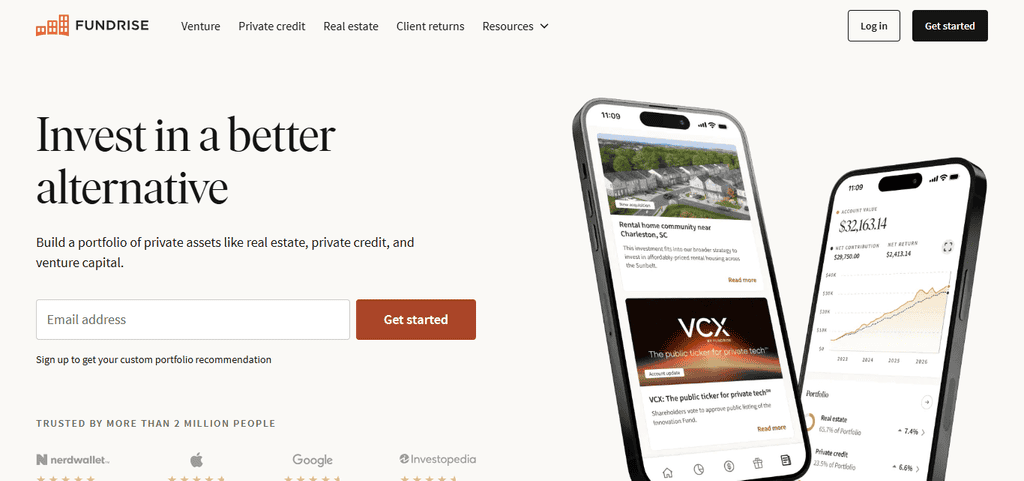
Fundrise is attractive to beginning investors, as it has the lowest minimums in the market. Fundrise launched in 2012 making it a pioneer of online real estate investing.
Investors should note that Fundrise’s offerings are illiquid compared to publicly traded securities, as Fundrise investments are designed to be held for the long term.
Pros & Cons Fundrise
| Pros | Cons |
|---|---|
| Low minimum investment for eligible investors | Availability and terms depend on investor eligibility |
| Beginner-friendly real estate investing approach | Withdrawals may be subject to restrictions |
| Offers diversified real estate exposure | Returns are subject to market conditions |
| Provides access to professionally managed portfolios | Investors generally do not select individual properties |
| Digital platform simplifies portfolio management | Fees can affect long-term performance |
8. Groundfloor
Groundfloor structures its investment vehicles differently from most other real estate investment platforms. Rather than purchasing a fraction of a rental property, Groundfloor investors’ capital is deployed as loans to property developers or borrowers.
Investors can earn interest on the loans upon repayment. Groundfloor’s investing vehicles are structured around short investment windows and it also has offerings that do not have typical asset management fee charges.
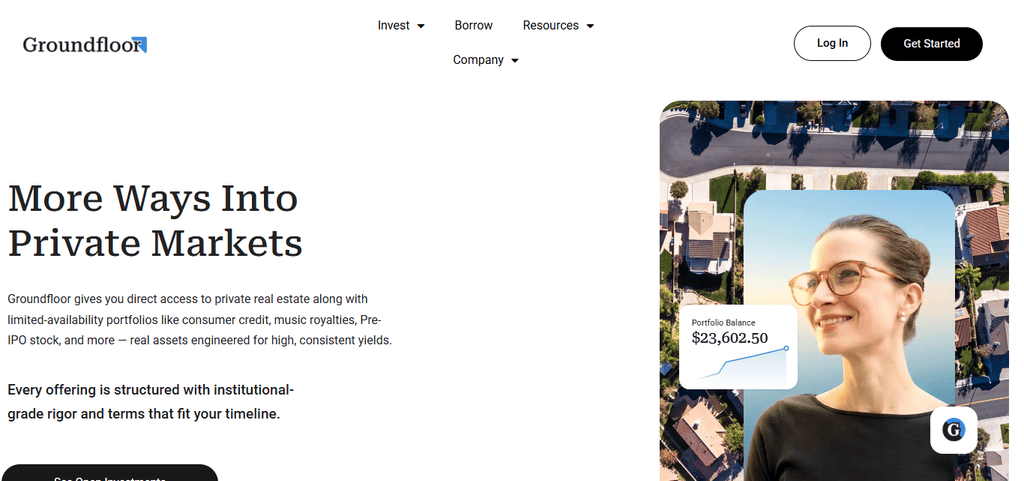
Groundfloor’s Regulation A+ investment program began operating in 2015 after receiving SEC qualification. Investors should analyze these investment vehicles and determine borrower, project, collateral, default, and repayment risks because they are debt investments.
Pros & Cons Groundfloor
| Pros | Cons |
|---|---|
| Focuses on short-term real estate debt investments | Borrower default can result in losses |
| No investor transaction fees on its core model | Returns are not guaranteed |
| Potential for relatively short investment periods | Higher-yield opportunities can involve higher risk |
| Allows investors to spread money across multiple loans | Loan repayment depends on underlying projects |
| Offers an alternative to direct property ownership | Primarily suited to investors seeking debt exposure |
9. RealT
RealT uses cryptocurrency to enable investors to have small slices of rental properties in the U.S. Using the technology of blockchain, individual service contracts for real estate properties can be represented digitally and sold as fractional ownership.
This technology allows for a much lower capital investment than a traditional purchase of a property. Rental properties that are represented through digital assets or stablecoins can provide rental property distributions.
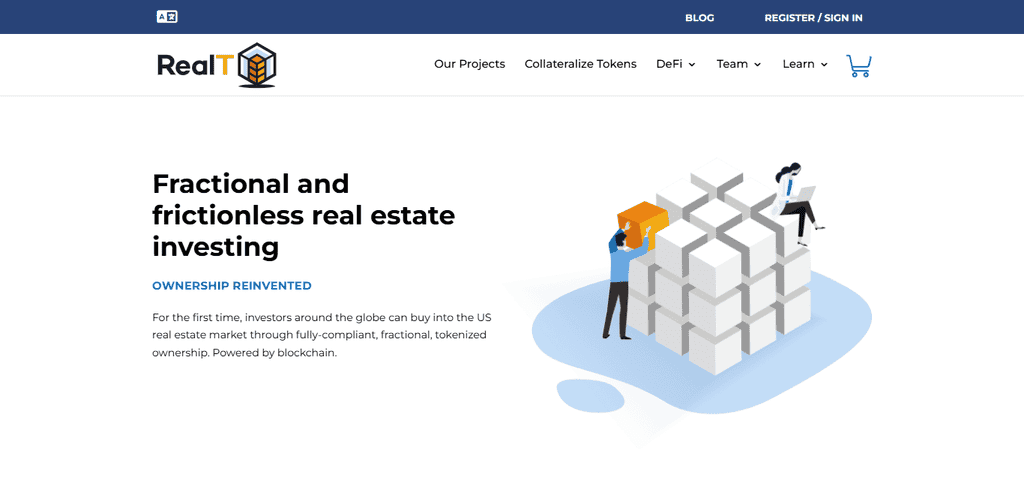
RealT was one of the first to tokenize rental properties and has been in operation since 2019. Investors need to be aware of the risks associated with traditional real estate and add the risks of blockchain, regulation, technology, and liquidity.
Pros & Cons RealT
| Pros | Cons |
|---|---|
| Uses blockchain for fractional property ownership | Cryptocurrency and stablecoin exposure adds complexity |
| Allows smaller investments in U.S. rental properties | Regulatory and platform risks should be considered |
| Rental distributions can be made through digital assets | Property liquidity may be limited |
| Provides blockchain-based ownership records | Crypto transaction costs can vary |
| Enables access to individual rental properties | U.S. property and rental-market risks remain |
10. Yieldstreet
Yieldstreet was formed in 2015 to give individual investors the ability to invest along side of institutional real money and high-net-worth investors in alternative investments.
Yieldstreet offers real-estate related investments, along with investments in other alternative asset classes such as real estate, private credit, art, and legal finance, to name a few.
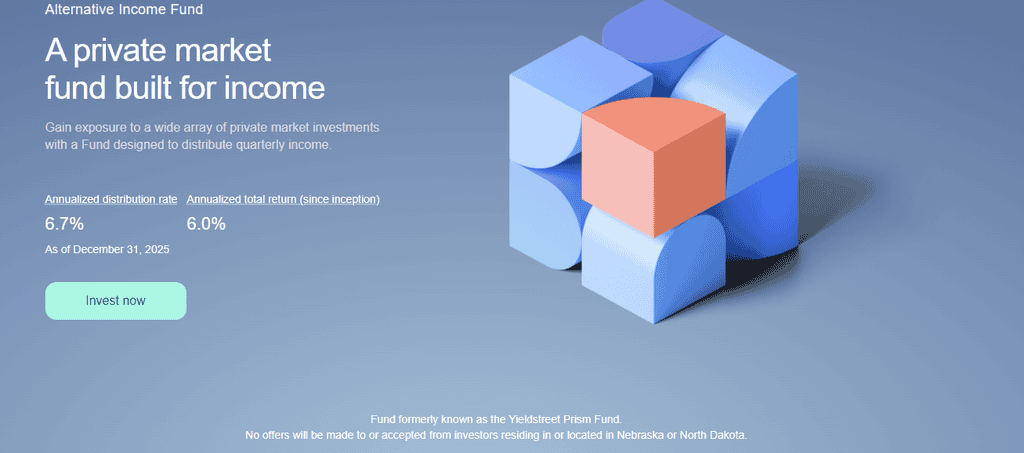
Each investment offered on the Yieldsteet platform will have a unique minimum, return, fee, time commitment, and risk. Yieldstreet was the first of its kind to provide investment access to alternative assets not normally available to individual investors.
Pros & Cons Yieldstreet
| Pros | Cons |
|---|---|
| Offers access to multiple alternative investment categories | Many opportunities may require higher minimum investments |
| Includes residential and commercial real estate options | Investments can have limited liquidity |
| Provides diversification beyond traditional stocks and bonds | Alternative investments can carry substantial risk |
| Professionally structured investment opportunities | Availability varies by offering and investor eligibility |
| Useful for investors seeking broader alternative-asset exposure | Fees and investment-specific costs can reduce returns |
Conclusion
Conclusion Fractional real estate investing allows buyers to purchase interests in real estate assets that previously required the purchase of the entire real estate interest.
Investors can select from a range of properties, including single-family and multi-family residential, as well as commercial and other types of real property.
Each investing platform has its own fees, rules, liquidity, and risks. By analyzing these factors, investors can determine the investing opportunities that are available and choose the ones that are best for them.
FAQ
What are fractional real estate investing platforms?
They let investors buy small ownership shares in real estate properties.
How much money is needed to start investing?
Minimum investments vary, with some platforms starting around $10 or AED 500.
Can fractional real estate investments generate rental income?
Yes, eligible properties may distribute rental income among participating investors.
Are fractional real estate investments regulated?
Some platforms operate under financial regulators, while others have different structures.
