

This article will focus on an evolving sector of decentralized finance called On-Chain Prediction Markets. These markets use blockchain technology and, in particular, smart contracts to let participants create tradable outcome contracts for future events. Smart contracts and decentralized, oracle-based data source technologies take the administrative burden and trust issues out of forecast markets. Blockchain prediction markets incorporate the financial incentives and remove the barrier of access to global forecast markets to redefine the limits of collective intelligence across industries and disciplines.
What Are On-Chain Prediction Markets?
On-chain Prediction Markets enable participants to buy and sell contracts tied to the outcome of future events, like elections or sports, using blockchain technology. Rather than using intermediaries, smart contracts are used for trading, payment, and settlement.

Decentralized oracles bring real world data to the blockchain, resulting in outcomes you can’t change. Prices in these markets are set by all the traders in the market, making them valuable for making predictions.
These markets typically cover binary, scalar and categorical markets. Because they are open and have cryptographic security and can be accessed globally, they provide a way to involve many people so that they can make the best predictions.
Why Prediction Markets Are Becoming Crypto’s Next Big Trend
Here’s a structured table highlighting why prediction markets are emerging as crypto’s next big trend:
| Reason | Details |
|---|---|
| Decentralization | Removes intermediaries, enabling peer‑to‑peer forecasting with smart contracts. |
| Transparency | Blockchain records ensure tamper‑proof outcomes and verifiable event results. |
| Crowd Intelligence | Market prices reflect collective probabilities, aggregating global insights. |
| Financial Incentives | Traders earn rewards for accurate predictions, driving participation. |
| Global Accessibility | Anyone with crypto can join, bypassing geographic and regulatory barriers. |
| Innovation Potential | Expands beyond sports or politics into finance, climate, and enterprise forecasting. |
How On-Chain Prediction Markets Work
On Smart Contracts: Trade execution, payment, and settlement are automated without intermediaries.
Outcome Tokens: Traders purchase tokens representing the possible results of an event (for example, tokens representing “yes” and “no”).
Market Pricing: Prices of tokens are determined by the market and reflect the crowd’s implied probability.
Oracle: A source of real-world verified data that is used to determine the outcome of an event.
Process of Settlement: When an event is completed, payment is released to the holders of the winning tokens.
Different Types of Markets: Binary (yes/no), scalar (numerical ranges), categorical (multiple outcomes), or any other type of market.
Incentive Mechanism: The system is more enticing to users, and more accurate predictions are made.
Key Use Cases of On-Chain Prediction Markets

Prediction of Election Results: Real time estimates on the likelihood of outcomes of election contests or policies.
Sports Prediction: Outcome assets for betting on individual sporting contests or events as well as consequence assets for betting on the performance of sports’ participants.
Prediction of Financial Markets: Forecasts on the prices of assets as well as on rates and crypto market volatility.
Prediction of Climate and Environmental Change: Forecasts on the outcomes of climate change policies or on the levels of climate pollution and on the outcomes of weather events.
Prediction of Business Outcomes: Forecasts for the outcomes of the introduction of new business ventures or products.
Prediction of Global Outcomes: Prediction of the outcomes of global events such as disease outbreaks or technology innovation or geopolitical shifts.
Prediction of Entertainment Outcomes: Forecasts of the outcomes of movie box office competitions or the outcomes of entertainment awards or prediction of the outcomes of entertainment consumption.
On-Chain vs. Traditional Prediction Markets
| Aspect | On‑Chain Markets | Traditional Markets |
|---|---|---|
| Control | Decentralized, governed by smart contracts | Centralized, managed by intermediaries |
| Transparency | Blockchain ledger ensures tamper‑proof records | Limited transparency, prone to manipulation |
| Accessibility | Global participation with crypto wallets | Restricted by geography and regulations |
| Settlement | Automated payouts via smart contracts | Manual settlement by platform operators |
| Costs | Lower fees due to no intermediaries | Higher fees from centralized platforms |
| Data Sources | Decentralized oracles feed verified outcomes | Relies on platform or third‑party data |
| Innovation | Expands into finance, climate, enterprise use cases | Mostly limited to sports, politics, betting |
Role of Stablecoins in Prediction Markets
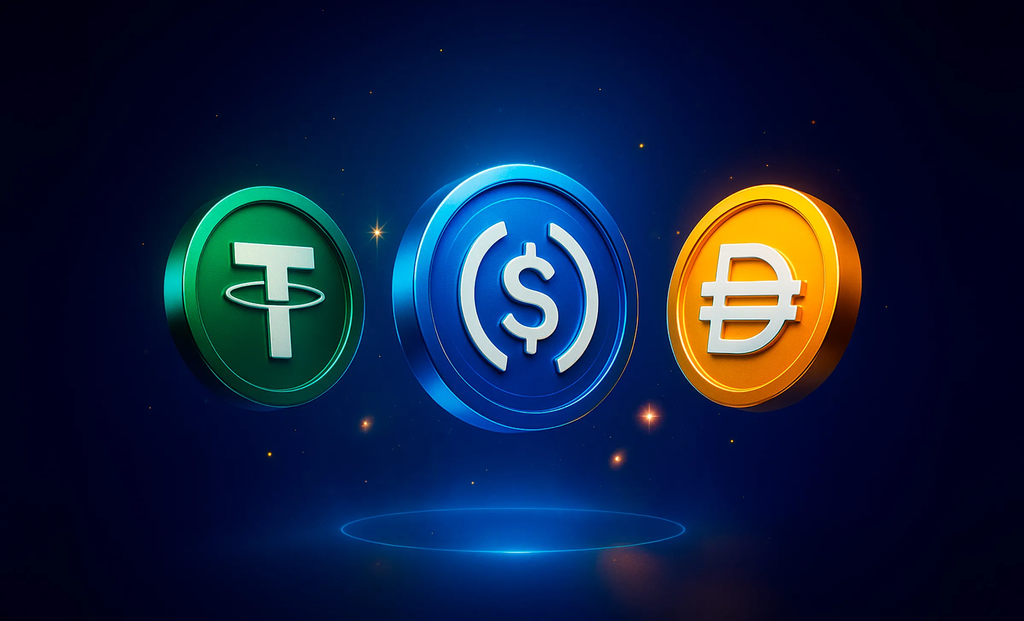
Price Stability
Stablecoins provide price stability compared to other cryptocurrencies which allows for predictable payout.
Automated Settlements
Stablecoins provide an ideal medium for automated settlements for smart contracts.
Deep Liquidity
Stablecoins provide efficient deep liquidity leading to accessibility.
Global Market Participation
Stablecoins allow users to avoid the burden of international currency exchanges.
Trust and Adoption
Stablecoins, being allowed to trade fiat currency for cryptocurrency, facilitate trust and adoption in the crypto world.
Regulatory Focus Potential
Regulated stablecoins have the potential to provide prediction markets with regulatory focus.
Cross Platform Potential
Stablecoins provide potential for predication markets to be integrated across multiple DeFi platforms.
Liquidity: The Biggest Challenge
Currently, most on-chain prediction markets struggle to achieve high market liquidity. This is because not enough traders use these markets. Wide bid-ask spreads and low price accuracy inhibit traders from transacting at fair prices: discouraging market participation and user adoption, especially among institutional investors.
Limited market integration and legal ambiguity are just a few of the many challenges prediction markets face. Though cross-platform integrations and stable coins help, they are not enough; trading liquidity is generally a function of the overall market size and active market participants, and will therefore require a greater market share, incentivized market making, and easier market making across other DeFi protocols.
Overcoming all the bottlenecks to trading liquidity is the real challenge and the real key to the development of these markets.
Oracle Technology and Market Resolution
| Aspect | Oracle Technology | Market Resolution |
|---|---|---|
| Function | Provides verified real‑world data to smart contracts | Determines winning outcome and distributes payouts |
| Mechanism | Uses decentralized oracles to fetch event results | Smart contracts execute settlement automatically |
| Reliability | Ensures tamper‑proof and transparent data feeds | Guarantees fair resolution based on oracle input |
| Examples | Chainlink, UMA, API3 feeding blockchain events | Binary, scalar, and categorical market resolutions |
| Challenges | Oracle manipulation or data delays | Disputes in ambiguous outcomes or oracle errors |
| Impact | Builds trust in decentralized forecasting | Enables accurate payouts and user confidence |
Benefits of On-Chain Prediction Markets
Decentralization: Peer-to-peer forecasting and the elimination of intermediaries with smart contracts.
Transparency: Blockchains are by design tamper-evident, meaning that outcomes and event data are immutable
Global Accessibility: Cryptocurrencies allow anyone in the world to participate in global financial markets as long as they are willing to deal with the challenges posed by geography and local laws.
Financial Incentives: The financial market isdriven by probabilistic forecasts.
Crowd Intelligence: Ultimately, most markets are driven by collective forecasts.
Automation: Transactions, settlements and payments are all handled by smart contracts
Innovation potential: Prediction markets expand the idea of what is forecastable outside of sports and politics into finance, climate and business.
Risks and Challenges

Trader participation – When traders do not participate, price signals become wider, less reliable and market liquidity is affected.
Reliable oracle – Prediction markets become less reliable when data from oracles is either manipulated or delayed.
Regulatory environment – Government’s classification of prediction markets causes either stagnation or regression for prediction markets.
User participation – Most of the population does not have the time to understand the complex structure of prediction markets.
Market manipulation – Since most of the prediction markets have low liquidity, large participants can easily manipulate the markets.
**Tech **- Poor tech implementation of prediction markets can lead to huge financial losses.
Scalability – High transaction fees combined with congested blockchains make using prediction markets less efficient.
Revenue Models for On-Chain Prediction Platforms
Transaction Fees
Trade, settlement, and token transfer execution fees are small fees charged on a prediction market platform.
Market Creation Fees
An individual sees an opportunity to create market liquidity and pays a fee to do so.
Liquidity Provider Rewards
Fees generated on trading activities are shared with liquidity providers.
Token Utility
Governance and utility tokens generate revenue via staking and voting on the platform.
Advertising & Sponsorships
Platforms provide opportunities to partner brands for visibility.
Data Monetization
Insights and data from market activities are sold to firms, hedge funds, and researchers.
Premium Features
Users are offered access to market activities at a fee for enhanced analytics and faster settlement.
Cross-Platform Integrations
Fees are generated through estimated market activity interoperability with DeFi, lending, and stablecoin protocols.
What Investors and Builders Should Watch in 2026
Investors and builders should keep a close eye on the development of prediction markets, the basis of decentralized finance, in 2026. Prediction markets are expected to merge with DeFi protocols by integrating liquidity pools and stablecoins to address current participation issues. Builders need to focus on building oracle technology to minimize challenges in market resolution and disputes.
The development of prediction markets will also depend on how governments decide to classify them as financial tools or gambling options. Investors should also check out the progress of other blockchain scalability solutions, like Layer-2 integrations, which should also make it cheaper and easier to use and therefore more adopted.
Prediction markets should become more enterprise service focused to attract institutional customers, with solutions for corporate forecasting and modeling climate risk; this should be the key trend for prediction markets in 2026.
Future of On-Chain Prediction Markets

DeFi Integration — Prediction markets will combine with DeFi through the use of liquidity pools and stablecoins to help resolve participation concerns.
Scalability — With the use of Layer-2 networks and cross-chain technologies, predictability will increase and transaction costs will decrease.
Enterprise — Prediction markets will be used by businesses to help predict demand for their products, determine the likelihood of project success, and attempt to manage corporate risks.
Regulation — There will finally be legal definitions for what will mean clear regulations for predicting markets and likely their eventual status as legitimate financial activities.
Oracle — More sophisticated Oracle systems will help resolve markets and lead to better trust within market outcomes.
AI —Machine Learning (AI) will help interpret market data to increase its predictive power and accuracy.
Global — The prediction markets will become mainstream collective intelligence tools as more countries adopt and integrate cryptocurrencies.
Conclusion
In conclusion, on-chain prediction markets are perhaps the most groundbreaking innovation in DeFi as they offer users greater transparency and automation and harness the intelligence of the crowd to build more accurate forecasting models.
These markets are still in their infancy and therefore still have many issues including liquidity, oracle reliability, and uncertain regulations. Even in their current state, they have the potential to fundamentally change how we think about tools for decision-making and managing risk.
Prediction markets will continue growing once they become integrated with more DeFi protocols and offer easy liquidity and stable Fantasy Token pairs. Arcane prediction markets’ future will likely encompass a greater number of both participants and use case scenarios as well as greater clarity in regulations.
FAQs
What are on‑chain prediction markets?
They are decentralized platforms where users trade outcome‑based contracts on future events using blockchain and smart contracts.
How do they work?
Traders buy tokens tied to event outcomes, prices reflect probabilities, and smart contracts settle payouts based on oracle‑verified results.
What are the benefits?
Transparency, decentralization, global accessibility, financial incentives, and crowd‑driven forecasting.
What challenges exist?
Liquidity shortages, oracle reliability, regulatory uncertainty, and limited mainstream adoption.
What role do stablecoins play?
They provide price stability, liquidity, and predictable settlements, making markets more efficient.