


This article identifies popular global crypto futures trading platforms with their highly advanced trading tools and security parameters. This article explains how leading crypto trading platforms such as Bybit, Binance
OKX, and more provide traders with fast order execution, low trading fees, and high leverage. This article helps you identify a crypto trading platform with low risk and high rewards.
Key Points & Best Crypto Futures Trading Platforms
| Platform | Explanation |
|---|---|
| Binance | World’s largest exchange offering deep liquidity and multiple futures trading options. |
| Bybit | User-friendly platform with advanced tools and competitive leverage for traders globally. |
| OKX | Provides extensive derivatives products, low fees, and strong security features. |
| KuCoin | Supports numerous cryptocurrencies with futures contracts and beginner-friendly trading interface. |
| Bitget | Popular for copy trading, offering diverse futures products and high liquidity. |
| MEXC | Features zero maker fees and wide cryptocurrency futures trading selections available. |
| Gate.io | Offers hundreds of futures pairs and advanced risk management trading tools. |
| Phemex | Fast execution platform with low fees and professional-grade futures trading features. |
| Kraken | Regulated exchange known for security and reliable cryptocurrency futures services worldwide. |
| Coinbase Advanced | Trusted platform providing regulated crypto derivatives and easy-to-use trading interface. |
10 Best Crypto Futures Trading Platforms
1. Binance
Binance is the largest crypto exchange in the world, based on trading volume. It has the largest customer base and the largest number of futures traders. Including private company data, estimates report Binance has more than triple the number of futures traders as its competitors.
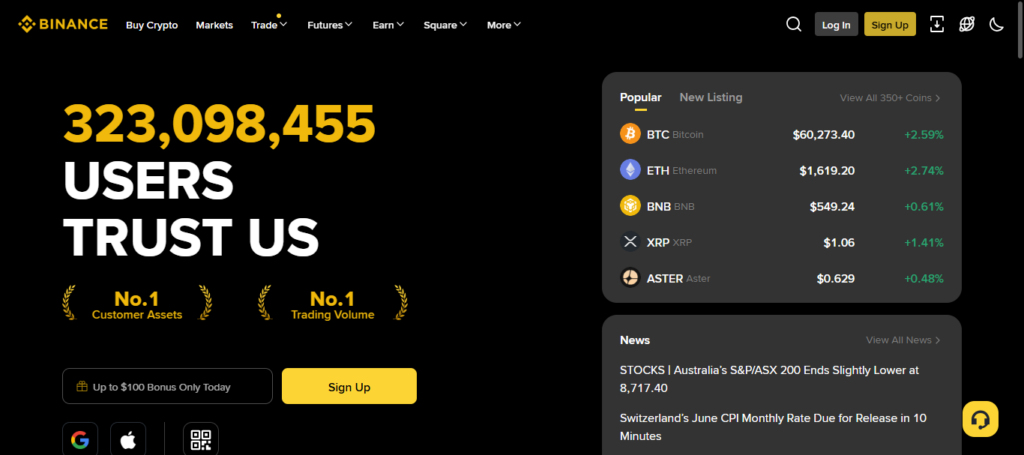
Binance provides deep liquidity and tight spreads due to its vast market share. It offers hundreds of perpetual and quarterly crypto futures contracts. Advanced charting, copy trading, and risk management (stop loss and take profit orders) are included.
Leverage is offered based on the regional and asset based restrictions. Binance’s liquidity and risk management features reduce slippage during volatile market conditions. It provides both a desktop and mobile interface that is designed to engage futures traders of all experience levels.
Pros & Cons Binance
Pros
- Almost no trading slippage caused by high liquidity.
- Advanced trading tools such as charts, bots, and indicators are available.
- A wide variety of futures contracts across top major crypto assets.
- A broad, international user base with an excellent reputation adds stability.
- Low fees.
Cons
- Present trading costs may be too high for smaller trades.
- As a centralized exchange, Binance may be a target for government regulations.
- Inexperienced traders may be liquidated more easily due to high leverage.
- Customer service responsiveness may be a concern.
- Congestion may make trading unfeasible during low volume.
2. Bybit
Bybit has one of the most sensitive and user friendly interfaces among crypto derivatives exchanges. Bybit provides perpetual and delivery futures contracts and speedy execution services for orders on a large selection of cryptocurrencies.
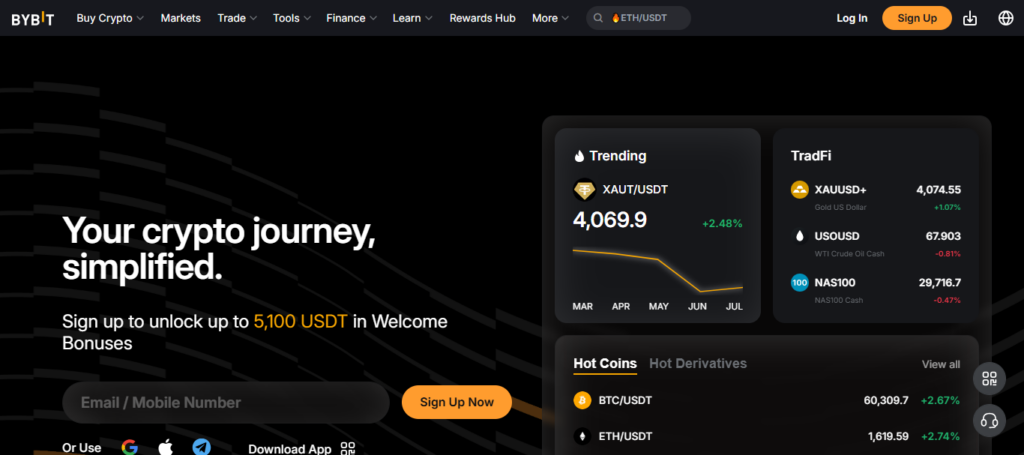
Copy trading is included to aid beginners in futures trading. Bybit’s unified trading account integrates spot, derivatives, and options trading into one account. Bybit has an attractive fee structure that is further enhanced by the integration of TradingView charts.
Bybit is a rapidly emerging competitor in the race among crypto derivatives exchanges. The targeted global crypto Futures trading market has many active traders drawn to Bybit by its prompt promotional campaigns and educational materials.
Pros & Cons Bybit
Pros
- Excellent platform for futures trading with almost instant order execution.
- User-friendly, minimalist design for all experience levels.
- Advanced trading features with seamless integration of TradingView.
- Competitive copy trading features with low fees for all derivatives.
Cons
- Lack of quantity and variety for altcoins.
- Contract liquidity may be a concern for low volume trading, especially in futures.
- Increased risk of liquidation for high leverage trading.
- Of the more popular crypto exchanges, ByBit has some of the most stringent KYC requirements.
3. OKX
OKX is prominent for its derivatives and trading products. This exchange provides traders with futures, options, and expiry contracts, as well as top tier fees, execution speed, and portfolio management.

Trading bots help users implement strategies and manage their trades for them, which helps users that do not want to spend a lot of time trading. OKX’s unified account helps traders manage their margins for different products.
Security is always a concern and OKX does implement a lot of risk controls and protects their users’ assets. OKX helps cater to users that are just starting to trade and users that are more experienced, which is why it is one of the most popular trading platforms for crypto futures.
Pros & Cons OKX
Pros
- Low fees for high volume trading.
- Automated trading is easy with the advanced trading bots available.
- High interest for derivatives trading due to the comprehensive offerings of futures, options, and swaps.
- High level of security and lower risk for margin trading.
- A unified account for all asset management.
Cons
- High volumes, low liquidity trading may pose a risk for futures trading.
- Increased risk for high leverage.
- A complex interface for new traders.
4. KuCoin
KuCoin has an extensive range of crypto futures and is popular for having many of the newer altcoins listed. KuCoin futures markets are easy to navigate for newcomers, with plenty of options for trading bots for automated trading, leverage, and user-friendly interfaces.
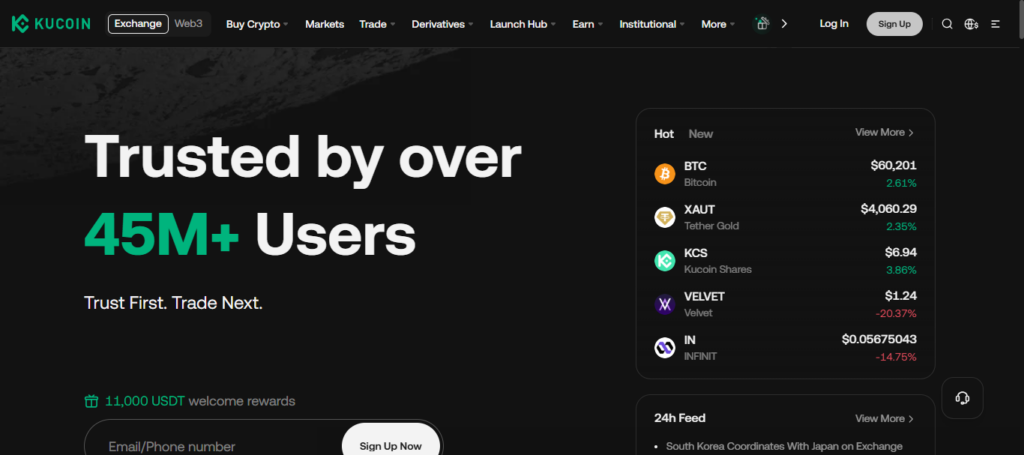
Advanced traders have many options to trade derivatives as well. KuCoin combines a lot of professional trading tools with an easier trading interface.
They provide education, analysis, and supplementary trading bots. Because KuCoin has many altcoin futures that larger exchanges do not have, it is a popular exchange for crypto users that want to trade altcoins that are not as developed.
Pros & Cons KuCoin
Pros
- Many altcoin futures contracts are available.
- Interface is easy to use and navigate.
- Automated trading strategies are available.
- Lower trading fees.
- New and emerging tokens get listed earlier.
Cons
- Some regions of the world have concerns.
- Trading pairs with lower liquidity.
- Past security concerns.
- Customer support can have a delay in high volume times.
- Not all regions have full compliance.
5. Bitget
Bitget is one of the few exchanges to combine futures trading with copy trading at such a large scale. Users can subscribe to copy trades, which makes trading futures less daunting to novices. Bitget has a great selection of perpetual futures with good liquidity and tight spreads.
The exchange keeps adding trading products while trying to add more features to manage risk for the users and for the market. New traders can use the educational tools offered to them and the copy trading to start trading futures while experienced traders can take full advantage of the social trading features.
Pros & Cons Bitget
Pros
- Copy trading is available and good for beginners.
- Many perpetual futures contracts.
- Good for active traders due to fees.
- High liquidity for most trading pairs.
- Easy to use and navigate interface.
Cons
- Features for institutional level trading are lacking.
- Smaller ecosystem compared to Binance or OKX.
- Some regions have access issues.
- Risk of liquidation when trading due to high leverage.
- Over reliance on copy trading reduces the ability to trade independently.
6. MEXC
MEXC is another popular trading platform for futures, because of the variety of futures contracts and the low trading fees. MEXC is usually the first platform to list newly launched projects, allowing traders to get in the market early.
Because of the no maker fee policy for certain products, MEXC has attracted a lot of business from people who trade frequently, because of the savings in trading costs. The platform has a lot of different trading pairs with good liquidity, and the advanced tools to aid trading.
The exchange is very easy to use, and the mobile app further aids in accessibility through trading on the go. There are many different ways to keep trading fun for users, including frequent giveaways and competitions.
Pros & Cons MEXC
Pros
- No maker fees on some futures markets.
- Crypto tokens that are trending get listed early.
- Many futures trading pairs are available.
- High liquidity for most contracts.
- Easy to use interface.
Cons
- Many regions have regulatory concerns.
- Limited features for advanced trading.
- Customer support is inconsistent.
- High token risk increases exposure to volatility.
- Interface lacks a professional level of customization.
7. Gate.io
Industry-leading Gate.io’s thousands of trading features means they have one of the widest selections of cryptocurrency futures anywhere. Advanced features like multi-faceted order types and portfolio management can help experienced traders manage risk.
Gate.io’s derivatives collection provides ample opportunity to trade altcoins beyond Bitcoin and Ethereum. Gate.io offers Copy Trading, quantitative trading features, and trading education to their customers. Innovative features, high liquidity, and consistent offerings have made Gate.io a leader in the crypto futures trading arena.
Pros & Cons Gate.io
Pros
- Many trading futures pairs
- Derivatives trading for altcoins
- Futures trading for professional users
- Copy and quant trading
- More crypto products are added frequently
Cons
- Not easy for beginners
- Smaller altcoins have less liquidity
- User verification is strict
- Layout is overwhelming
- Some countries have restrictions
8. Phemex
Phemex gives its traders fast order execution and a wide range of derivative trading tools in a professional-grade environment. Phemex’s perpetual futures contracts provide traders with a variety of choices to select from and a low fee structure.
Phemex boasts all the critical tools including the ability to perform conditional trades, the use of trading bots, and flexible margin trading. Phemex has a clean user interface, trade efficiency, and a low latency execution trading engine, making it a serious contender in the global crypto futures trading arena.
Pros & Cons Phemex
Pros
- Super fast order fills for futures trading
- Low cost trading for active users
- Great professional trading tools
- Easy layout for beginners
- Great focus on trading tools
Cons
- Limited to a few coins of trading
- Low liquidity due to smaller user base
- Fewer advanced business features
- Lower presence in institutional trading
- Limited areas of availability
9. Kraken
Kraken prioritizes regulation and security in the right ways. This focus leads Kraken to offer crypto futures to traders in more compliance-friendly spaces. Kraken’s derivatives platform offers a wide variety of order types and advanced professional charting and risk management features.
The platform improves its transparency and security to help serve long-term and institutional investors. Because of this, Kraken is trusted, and even when compared to some other platforms, offers a limited number of assets. Kraken’s focus on the crypto derivatives markets brings safety and security, and its established brand is a welcome bonus.
Pros & Cons Kraken
Pros
- Highly secure and focused on regulations
- High trust from institutions
- Good for futures trading
- Advanced risk tools
- Great trust in their business
Cons
- Limited futures offerings
- Limited choices for altcoins
- Higher fees
- Slower feature growth
- Lower appeal for aggressive traders
10. Coinbase Advanced
Coinbase Advanced is a combination of an established and trusted brand with an offering of advanced features for traders with more experience. Coinbase Advanced is safe, and like the other derivatives platforms, offers regulated access to Select crypto derivatives products in some regions.
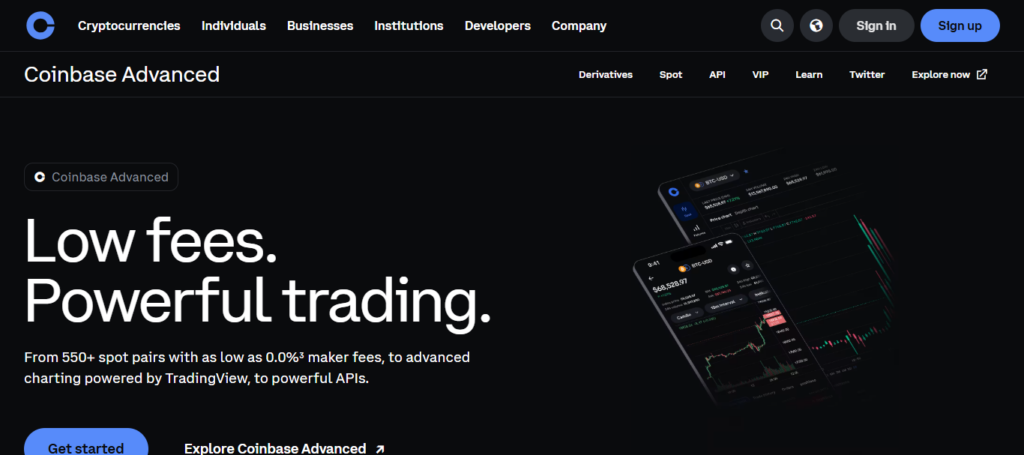
Coinbase Advanced is compliance-friendly and secure, and focuses on the user experience, making the platform preferable to players making the move from traditional markets to crypto trading.
Coinbase Advanced easily integrates with all other areas of the Coinbase platform and promotes advanced trading and portfolio management.
Pros & Cons Coinbase Advanced
Pros
- Highly trusted and regulated exchange globally.
- Easy-to-use advanced trading interface.
- Strong security and compliance standards.
- Seamless integration with Coinbase ecosystem.
- Ideal for institutional and beginner investors.
Cons
- Limited availability of futures products.
- Higher fees than many competitors.
- Restricted derivatives access in regions.
- Fewer advanced trading tools.
- Not suitable for aggressive high-leverage trading.
Criteria for Choose Best Crypto Futures Trading Platforms
- Security & Regulation — Security systems, audits, and the laws to which platforms submit themselves are confirmed.
- Liquidity & Volume — High trading volume platforms reduce slippage, and improve trade execution.
- Fees Structure — Maker, taker, and concealed fees are evaluated to determine the value for cost.
- Trading Features — Leverage, order types, and trade automation are considered.
- User Experience — An easy to navigate interface and high quality mobile app are other factors considered.
- Asset Availability — More futures contracts and altcoins allow for more diversified portfolios.
- Customer Support — Support is needed during trading problems and emergencies, thus timely, available support is a necessity.
- Risk Management Tools — Stop-loss, margin control, and liquidation protection are offered.
- Platform Reputation — User review and trust score, plus the platforms trading history are considered.
- Innovation & Tools — Additional trading resources including copy trading, trade bots, and active trading analytics are favored.
Conclusion
To sum up, the most competitive crypto futures trading platforms securely and conveniently offer low cost, high liquidity, and advanced trading features for all trader types.
Platforms such as Binance, Bybit, OKX, etc. provide strong market access, high leverage, and advanced trading tools.
The right platform is based on your risk appetite and trading goals and experience. Always trade cautiously and keep risk management your first priority.
FAQ
What are crypto futures trading platforms?
Crypto futures trading platforms allow users to trade contracts that speculate on future crypto prices.
Which is the best crypto futures trading platform?
Binance, Bybit, and OKX are widely considered top choices globally.
Are crypto futures trading platforms safe?
Yes, if you choose regulated and well-secured exchanges with strong risk controls.
What is leverage in futures trading?
Leverage lets traders control larger positions using smaller capital, increasing both profit and risk.
