


This article reviews the top Identity and Access Management (IAM) Platforms for Zero-Trust Setups. IAM assists organizations in securing digital identities and managing user access through strict authentication.
Leading IAM systems utilize multi-factor authentication (MFA), Single Sign-on (SSO), and adaptive controls to implement Zero-Trust security. IAM also safeguards cloud environments and lessens the risk of unauthorized access.
Key Points & Best Identity and Access Management (IAM) Platforms for Zero-Trust Setups
| IAM Platform | Explanation |
|---|---|
| Okta Workforce Identity Cloud | Provides centralized identity management, adaptive MFA, lifecycle access governance controls seamlessly scalable |
| Microsoft Entra ID (Azure AD) | Cloud-based identity solution offering SSO, conditional access, and Zero-Trust enforcement integration security |
| Ping Identity | Enterprise identity platform enabling secure access, federation, and authentication management at scale |
| Auth0 (Okta Customer Identity) | Developer-friendly identity platform supporting authentication, authorization, and user management for modern apps |
| OneLogin (One Identity) | Simplified IAM solution providing SSO, MFA, and cloud directory services enterprise ready |
| CyberArk Identity | Privileged access security platform controlling identities, sessions, and credentials in hybrid environments |
| SailPoint Identity Security Cloud | Identity governance platform automating access certifications, compliance, and policy enforcement at scale |
| ForgeRock Identity Platform | Comprehensive identity platform delivering CIAM, workforce IAM, and orchestration for enterprises |
| IBM Security Verify | AI-driven identity solution offering SSO, lifecycle management, and risk-based authentication enterprise security |
| Cisco Duo (Duo Security) | Zero-Trust MFA platform securing access with device trust verification for organizations globally |
10 Best Identity and Access Management (IAM) Platforms for Zero-Trust Setups
1. Okta Workforce Identity Cloud
Okta provides one of the most sophisticated IAM systems that can be incorporated into a modern Zero Trust framework. With its advanced single sign-on, unique adaptive multi-factor authentication, and automation of identity lifecycle, Okta provides centralized identity management.
Within the last few versions, Okta has significantly upgraded its Identity Threat Protection, allowing the detection of the login attempt threat in real time.
It has seamless integrations with thousands of enterprise applications, making it the most useful IAM system for hybrid and multi-cloud frameworks.
The combination of its scalability and policy-based access controls empowers organizations to adopt and implement the most aggressive Zero Trust strategies while maintaining an optimal user experience from any device in any location.
Okta Workforce Identity Cloud
| Pros | Cons |
|---|---|
| Highly scalable for global enterprises | Can become expensive at enterprise scale |
| Strong SSO and adaptive MFA features | Complex configuration for beginners |
| Excellent app integration ecosystem | Some advanced features require premium tiers |
| Real-time threat detection improvements | Dependency on third-party integrations |
| Strong Zero-Trust alignment support | Limited offline identity capabilities |
2. Microsoft Entra ID (Azure AD)
Microsoft Entra ID, formerly known as Azure Active Directory, has deeper integration in the Microsoft environment and is one of the most popular IAM systems for enterprise Zero Trust frameworks.
It provides various features including conditional access, identity protection, and biometric/passkey based passwordless authentication. Recent advancements included the integration of artificial intelligence for assessment of risk and identity governance procedural enhancements.
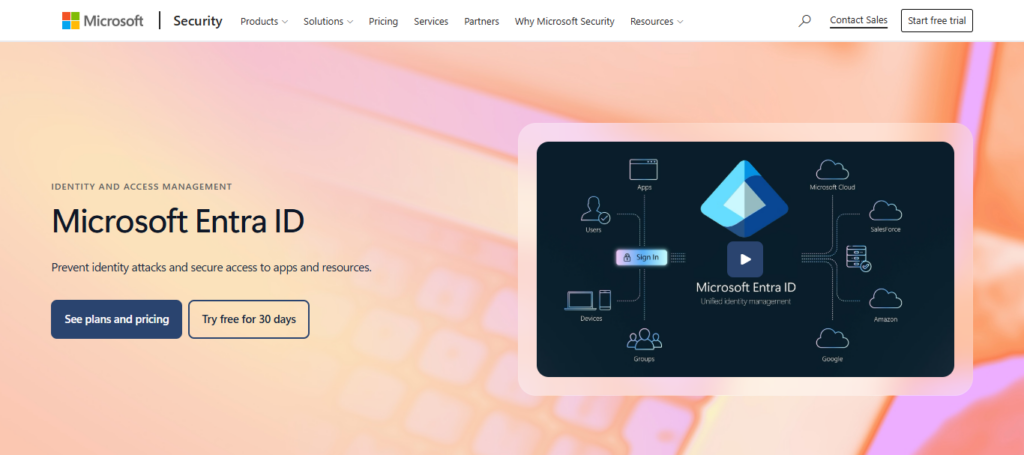
Organizations gain a tactical advantage with its seamless integration in Microsoft 365, Azure services, and most third-party applications. It fortifies a strong security posture through continuous monitoring and dynamic access control, making it one of the principal IAM systems for Zero Trust framework.
Microsoft Entra ID (Azure AD)
| Pros | Cons |
|---|---|
| Deep integration with Microsoft ecosystem | Best value mostly inside Microsoft environment |
| Advanced conditional access policies | Licensing structure can be confusing |
| Strong passwordless authentication support | Complex setup for hybrid environments |
| AI-driven identity risk protection | Requires skilled administrators |
| Highly secure enterprise-grade IAM | Third-party integration can be less flexible |
3. Ping Identity
Ping Identity specializes in secure identity federation and enterprise-grade authentication. They focus on intricate IT environments and support SSO, MFA, and API security and authentication. Ping Identity has made integrations easier on both on-premise and cloud IT systems.
They’ve recently incorporated support for decentralized identity and passwordless authentication. Ping Identity is used and appreciated most by large companies, as they manage a great deal of identity and directory systems.
With a focus on Zero-Trust systems, Ping Identity combines continuous authentication with high assurance identity verification, contextual access, and MFA. These systems help reduce risk for companies with a distributed workforce, using a hybrid infrastructure.
Ping Identity
| Pros | Cons |
|---|---|
| Strong identity federation capabilities | Higher cost for full enterprise suite |
| Excellent hybrid and multi-cloud support | UI not as modern as competitors |
| Flexible authentication orchestration | Implementation complexity is high |
| Strong Zero-Trust continuous authentication | Requires expert configuration |
| Supports decentralized identity trends | Slower onboarding for small teams |
4. Auth0 (Okta Customer Identity)
Auth0 is a developer-first, modern, easy to customize identity management system that combines authentication and authorization. Using Auth0’s secure APIs and customizable authentication flows, customers are able to easily embed social sign on authentication.
Recently, they’ve improved their anomaly detection and bot protection in support of Zero-Trust systems. This has made them an even more popular identity system among SaaS developers.
From a development perspective, it’s easy to integrate MFA, passwordless logins, and even role-based access control. This makes it a great identity management system among customer oriented applications that need high security and high scalability.
Auth0 (Okta Customer Identity)
| Pros | Cons |
|---|---|
| Very developer-friendly platform | Can become costly with scale |
| Fast integration with modern apps | Requires coding expertise |
| Strong support for social login systems | Limited enterprise governance features |
| Highly customizable authentication flows | Dependency on Okta ecosystem |
| Strong API-first architecture | Not ideal for traditional IAM setups |
5. OneLogin (One Identity)
OneLogin provides a straightforward identity access management solution built around secure access via single sign-on (SSO), multi-factor authentication (MFA), and a cloud directory. Its implementation of Zero Trust is based on a continuous assessment of the identity and device requesting access.
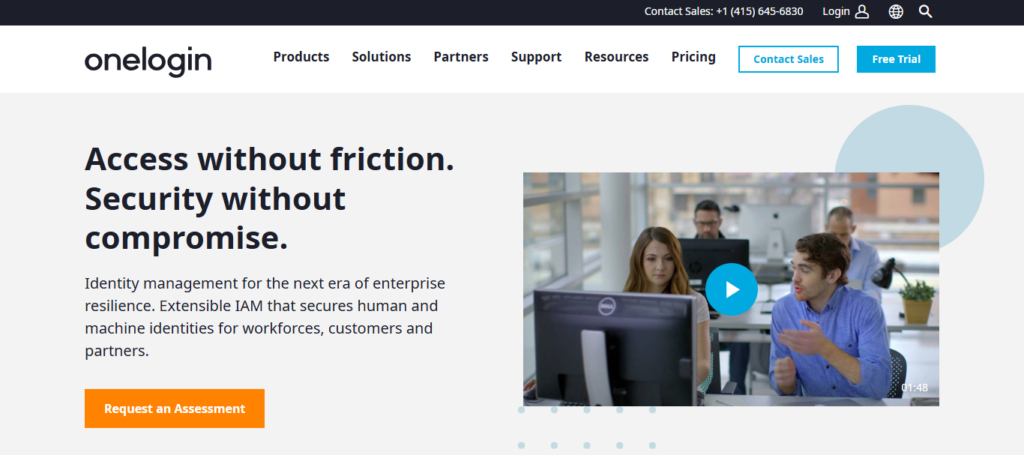
OneLogin’s risk-based authentication and automated user provisioning have been welcomed enhancements. Due to its ease of use and fast time to market, OneLogin is considered to be best-in-class by many mid-market companies. Centralized dashboards display access events, allowing IT teams to simplify the varying security policies between cloud and legacy systems.
OneLogin (One Identity)
| Pros | Cons |
|---|---|
| Simple and fast deployment | Fewer advanced features than competitors |
| Strong SSO and MFA capabilities | Limited deep customization options |
| User-friendly interface | Reporting tools are basic |
| Good cloud directory integration | Less suitable for very large enterprises |
| Affordable for mid-sized companies | Occasional performance limitations |
6. CyberArk Identity
CyberArk Identity’s focus is on Privileged Access Management (PAM), so its value for a Zero Trust Defense is based on the unyielding control of high-risk accounts. CyberArk Identity protects credentials, sessions, and administrative access in the cloud and on the ground.
Some of its more recent improvements have been the implementation of artificial intelligence for session monitoring and behavior analytics, which assist in identifying anomalous activity.
CyberArk lessens the risk of threats to the organization by focusing on the monitoring and verifying of privileged accounts.
Its combined use with endpoint security and identity governance systems access makes CyberArk a recommended choice for organizations with a high concern for the safety and security of their systems and data.
CyberArk Identity
| Pros | Cons |
|---|---|
| Industry leader in privileged access management | Expensive enterprise pricing |
| Strong session monitoring and control | Complex deployment process |
| Excellent insider threat protection | Requires training for full utilization |
| AI-based behavioral analytics | UI can feel complex |
| Strong hybrid infrastructure security | Not ideal for small businesses |
7. SailPoint Identity Security Cloud
SailPoint Identity Security Cloud is a pioneering solution in identity governance, supporting automation of access certification, compliance management, and policy automation. It is a foundational module of Zero-Trust frameworks where users can be provisioned access depending on their needs.
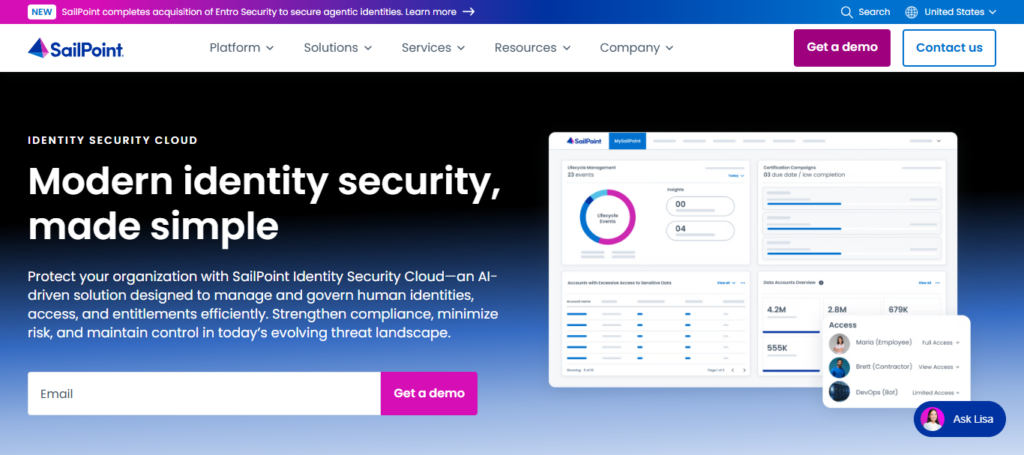
Recently, AI-enhanced identity insights and automation of access reviews have been introduced. SailPoint enables enterprises to retain compliance with regulations and reduce identity sprawl.
Its intelligent governance model facilitates oversight of enterprise systems, and is most beneficial to large enterprises with complex and diverse access requirements.
SailPoint Identity Security Cloud
| Pros | Cons |
|---|---|
| Best-in-class identity governance | High implementation cost |
| Strong compliance and audit automation | Complex onboarding process |
| AI-driven access insights | Requires ongoing management effort |
| Reduces identity sprawl effectively | Slower deployment cycles |
| Excellent policy enforcement | Heavy resource consumption |
8. ForgeRock Identity Platform
A comprehensive identity platform encompassing workforce IAM, CIAM, and identity orchestration, ForgeRock’s offerings include advanced authentication, adaptive access, and API security.
Recent advances in digital experiences include support for decentralized identity and journey orchestration. ForgeRock’s focus on iterative improvement, along with its Zero-Trust orientation
Provides security for scaled environments with a high number of users fostered by continuous authentication and contextual access among varied digital channels. This has led to widespread adoption of ForgeRock in banking, telecom, and government.
ForgeRock Identity Platform
| Pros | Cons |
|---|---|
| Full CIAM + IAM + orchestration platform | Steep learning curve |
| Strong scalability for large enterprises | Expensive licensing model |
| Advanced authentication options | Complex setup and maintenance |
| Strong Zero-Trust support | Requires skilled technical teams |
| Good for banking and telecom sectors | UI could be more intuitive |
9. IBM Security Verify
Designed for enterprise-scale Zero-Trust environments where security and compliance are non-negotiable, IBM Security Verify combines identity and access management with intelligent automation powered by AI and analytics.
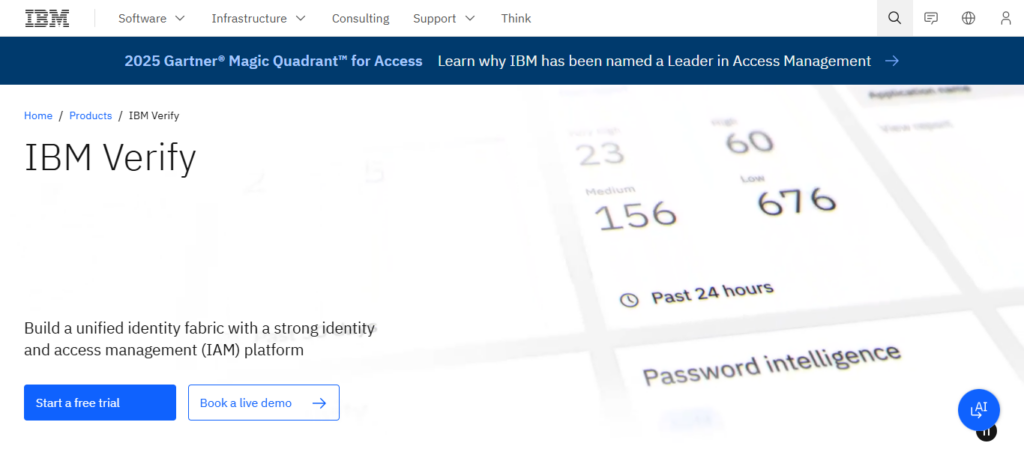
A complete access management package, IBM Security Verify’s recent innovations have advanced identity threat detection through AI, and automated governance of access.
Verification of constantly-evolving access and exposure risks is a key feature of this offering which integrates seamlessly with hybrid cloud environments and offers security and peace of mind for a constant state of potentially malicious users.
IBM Security Verify
| Pros | Cons |
|---|---|
| AI-powered identity security insights | Complex enterprise setup |
| Strong hybrid cloud support | Expensive for small organizations |
| Continuous risk-based authentication | UI not very modern |
| Deep integration with IBM ecosystem | Requires training for administrators |
| Strong compliance capabilities | Slower innovation pace vs startups |
10. Cisco Duo (Duo Security)
Cisco Duo is a leading Zero Trust multi-factor authentication platform. Cisco Duo verifies a user’s identity and whether the device is trustworthy before authorizing access.
Cisco Duo provides users with a combination of ease and push-based authentication coupled with greater security from biometrics and device health checks.
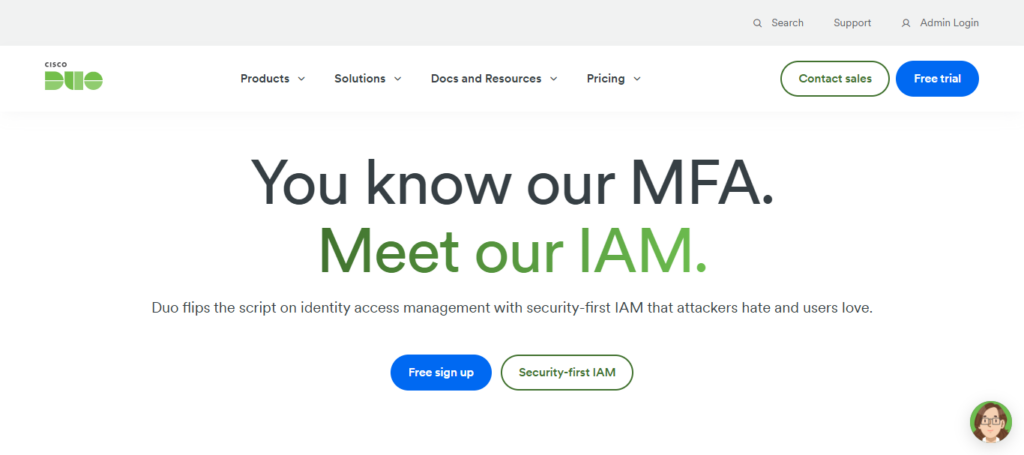
Recent updates have expanded Duo’s password-less authentication and enhanced adaptive access policies. Because of its ease of deployment, strong endpoint verification, and integration with the leading cloud service, Cisco Duo is an essential layer to security.
Cisco Duo (Duo Security)
| Pros | Cons |
|---|---|
| Extremely simple Zero-Trust MFA solution | Limited full IAM capabilities |
| Fast deployment and onboarding | Not a complete identity governance platform |
| Strong device trust verification | Fewer customization options |
| Works across all major cloud apps | Enterprise features can be limited |
| Excellent passwordless authentication support | Dependency on Cisco ecosystem for scaling |
Key Features of Best Identity and Access Management (IAM) Platforms for Zero-Trust Setups
- MFA and Passwordless Authentication Enhances security with biometric, OTP, and passkey authentication.
- SSO for Efficient Login Grants access to various applications with a single credentials set.
- Automated Identity Lifecycle Management Facilitates efficient user provisioning, updating, and de-provisioning across enterprise applications.
- Risk-based, Adaptive Access Control Permits different access levels when associated risk is deemed acceptable.
- Continuous Authentication and Monitoring Validates user identity on an ongoing basis throughout an active session.
Future of IAM in Best Identity and Access Management (IAM) Platforms for Zero-Trust Setups
- Passwordless Authentication Uses biometric identification & secure cryptographic authentication methods to eliminate passwords entirely.
- AI-Based Identity Threat Detection Artificial Intelligence will be able to identify unusual login patterns in real-time.
- Decentralized Identity (DI) Users store their identity data without the risk of central storage.
- Continuous Adaptive Trust Models Security is altered on a case-by case basis depending on the real risk assessment signals.
Conclsuion
Finally, the Best Identity and Access Management (IAM) Platforms for Zero-Trust Setups will strengthen your cybersecurity with constant verification, least-privilege access, and fine-grained authentication IAM Platforms.
Most IAM Platforms focus on protecting data, minimizing identity-related risks, and securing the cloud. IAM Options will greatly differ in the scope of Zero-Trust use, IAM integration, and long-term security.
FAQ
What is an IAM platform in Zero-Trust security?
IAM platforms manage user identities and control access using continuous verification principles.
Why are IAM platforms important for Zero-Trust setups?
They ensure only verified users and devices gain access to systems.
Which is the best IAM platform for enterprises?
Okta, Microsoft Entra ID, and Ping Identity are top enterprise choices.
How does MFA improve IAM security?
MFA adds extra verification steps beyond passwords, reducing unauthorized access risk.
