

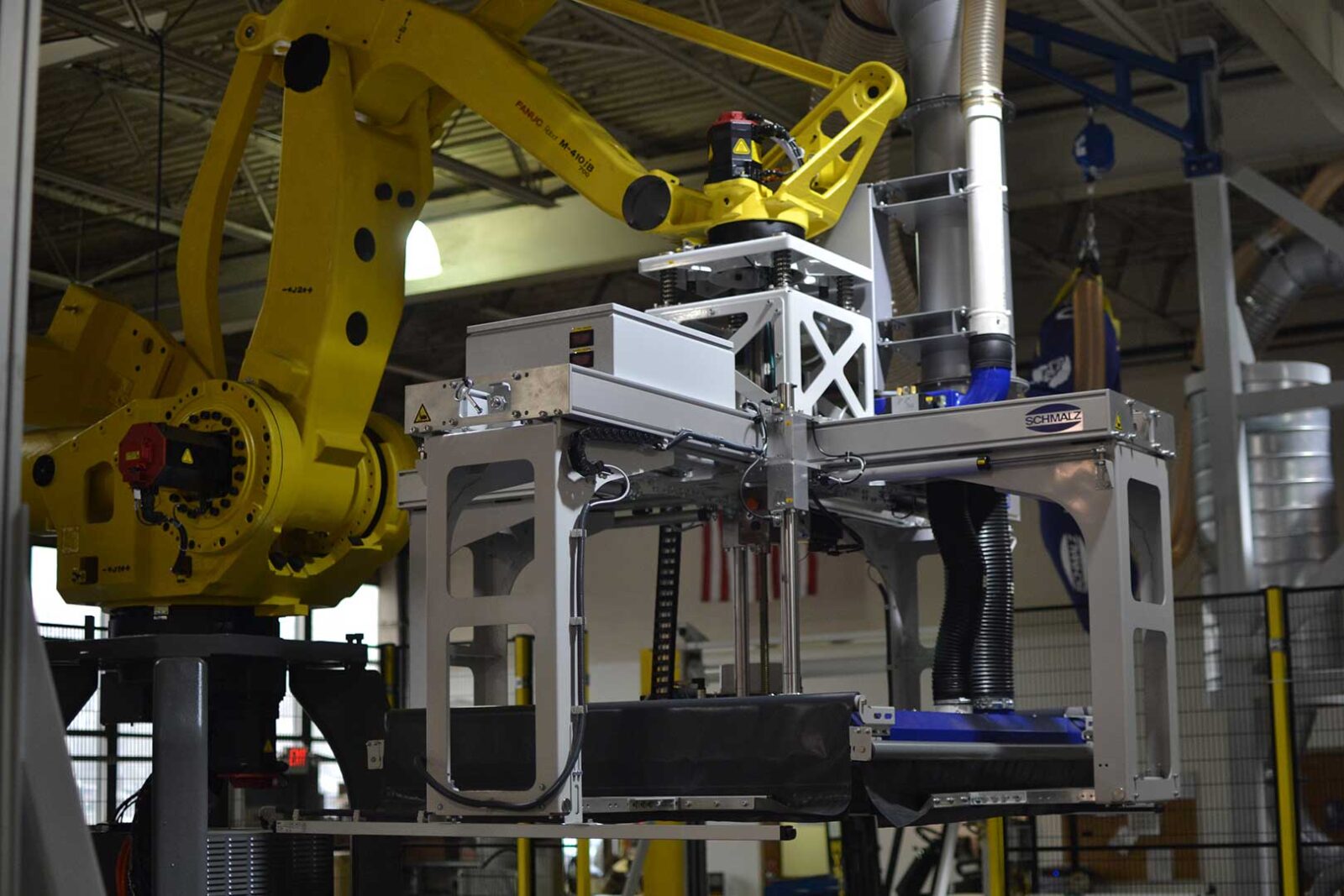
This article explores the Best Automated Warehouse Robotics Providers for Mid-Market E-commerce Hubs. The providers outlined here are changing contemporary logistics and fulfillment.
Their high-tech robotics allow businesses to operate faster and more accurately while reducing the reliance on labor.
The top providers described in this article help automate warehouses and optimize workflows using smart, flexible, and affordable technologies that address the demands of expanding e-commerce.
Advantages of Warehouse Robotics for Medium-Sized E-Commerce
- Quicker fulfillment speeds: Automated picking, packing, and shipping mean faster deliveries.
- Less manual labor required: Automated processes decrease the need for direct human involvement.
- Better inventory accuracy: Fully automated processes mean tracking and changes to stock are more accurate, with fewer errors.
- More efficient use of warehouse space: Robotics provides the most efficient storage layouts and maximizes available warehouse space.
10 Best Providers of Automated Warehouse Robotics for Mid-Market E-Commerce Hubs
1. Locus Robotics
Locus Robotics uses collaborative robotics in AMRs to increase the efficiency of fulfillment processes for e-commerce businesses. Their model requires little to no infrastructural changes, making their services easily implementable to fulfillment centers that are growing and changing rapidly.
Their robots even assist human workers in the fulfillment process, meaning mid-market fulfillment centers can benefit from their services that are quickly scheduled and billed using their subscription model.
For fulfillment centers that need to grow in speed and order accuracy, Locus Robotics’s fleet uses AI to decrease the distance that the robots have to travel to the next pick location.
Locus Robotics Pros & Cons
| Pros | Cons |
|---|---|
| Quick deployment without major warehouse redesign | Requires strong Wi-Fi infrastructure for smooth operation |
| High productivity through human-robot collaboration | Limited heavy-load automation compared to industrial systems |
| Scalable subscription-based model suits mid-market budgets | Performance depends on workforce training and adoption |
| AI-driven route optimization reduces travel time | Less suitable for fully autonomous dark warehouses |
2. Geek+
Geek+ provides AMRs equipped for flexible automation that are especially useful for fulfillment centers that use sorting and/or picking processes. Geek+ is especially useful in densely packed fulfillment centers because of their AI-enabled fleet management system.
For mid-market fulfillment centers, Geek+ can significantly increase sorting and/or picking throughput while decreasing the need for human operators, all without requiring extensive infrastructural changes.
Geek+ Pros & Cons
| Pros | Cons |
|---|---|
| Highly scalable AMR fleet management system | Initial setup can be complex for small teams |
| Strong performance in high-density warehouse operations | Hardware investment can be expensive upfront |
| AI-based coordination improves sorting efficiency | Requires integration with advanced WMS systems |
| Suitable for peak-season demand fluctuations | Maintenance needs specialized technical support |
3. GreyOrange
GreyOrange provides fulfillment centers with the ability to automate the movement and sorting of inventory while also assisting with order fulfillment.
Their robotics systems also use an AI-enabled management system to maximize the efficiency of operations within the fulfillment center.
For mid-market e-commerce fulfillment services, GreyOrange’s modular systems can be used to minimize order fulfillment issues and maximize flexible scaling.
GreyOrange Pros & Cons
| Pros | Cons |
|---|---|
| Advanced AI orchestration via GreyMatter platform | Higher implementation cost compared to basic systems |
| Real-time warehouse optimization and analytics | Complex deployment and configuration process |
| Reduces picking errors significantly | Requires strong IT infrastructure support |
| Supports multi-agent robotic ecosystems | Learning curve for operational teams |
4. AutoStore
AutoStore is an AS/RS that focuses on ultra-dense storage. Rather than using a fixed shelving unit, AutoStore uses robots that travel across a grid and store inventory within bins. These robots can be used to retrieve inventory, reducing the time and effort needed to pick inventory from storage units.
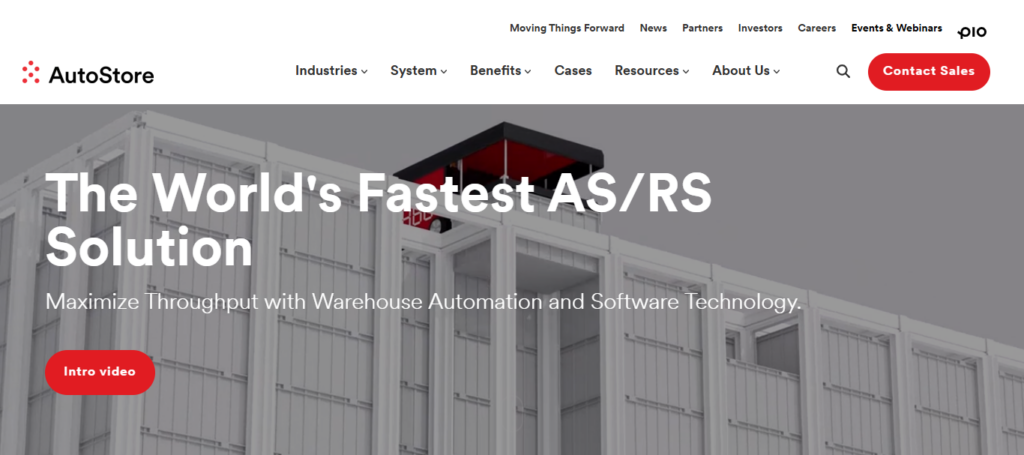
These features make AutoStore ideal for e-commerce companies that have high order volumes and limited storage space. Additionally, AutoStore shrinks warehousing costs and improves pick efficiency.
AutoStore Pros & Cons
| Pros | Cons |
|---|---|
| Extremely space-efficient cube storage system | High upfront installation cost |
| Fast and accurate item retrieval system | Not suitable for very large bulky items |
| Reduces warehouse footprint significantly | Expansion requires structural planning |
| Highly reliable with low operational downtime | Less flexible for mixed workflow changes |
5. Exotec
Exotec uses a vertical storage and retrieval system integrated with mobile robots to optimize pick efficiency. The Skypod system is designed to rapidly complete inventory orders. Skypod is extremely useful to mid-size e-commerce companies due to the ease and rapid nature of its modular adaptability.
Exotec robots are highly flexible due to their 4-D movement capabilities, and vertical/ horizontal mobility, and can easily adapt to fulfill varying demand, such as seasonality. This adaptability is especially seen in the fashion, electronics, and retail logistics industries.
Exotec Pros & Cons
| Pros | Cons |
|---|---|
| Vertical and horizontal robotic movement increases efficiency | Requires customized warehouse infrastructure |
| Modular expansion supports business growth | High dependency on proprietary system design |
| Fast order picking through Skypod system | Initial deployment time can be lengthy |
| Excellent for high-SKU environments | Limited third-party integration flexibility |
6. 6 River Systems
Collaborative robots are designed to streamline order picking by creating a guided workflow for the warehouse picker. The 6 River Systems mobile robot, “Chuck,” follows the warehouse employee and picks orders in real time to minimize the distance covered by the employee and to boost order picking precision.
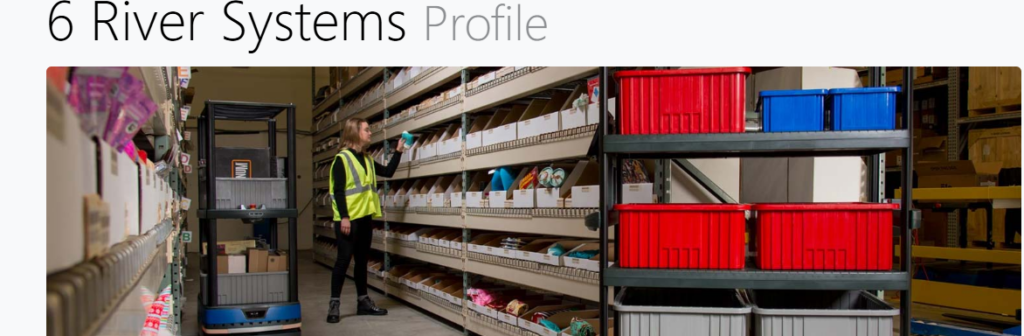
This is especially useful for mid-size e-commerce companies. 6 River Systems creates an easy integration with warehouse management systems and encourages rapid adoption, especially for companies that wish to scale their operations.
6 River Systems Pros & Cons
| Pros | Cons |
|---|---|
| Simple “follow-me” robot system for workers | Less advanced than fully autonomous AMRs |
| Easy integration with existing warehouse setups | Limited scalability for very large hubs |
| Improves picking speed and accuracy | Dependence on human workforce remains high |
| Quick deployment and training | Not ideal for fully automated warehouses |
7. Dematic
Dematic is an automation and robotics systems company that is a subsidiary of KION Group. Dematic has a variety of products which include automation storage systems and robotic picking systems and also range conveyor systems designed specifically for warehouses catering to logistics for both medium and large scale businesses.
Dematic’s systems, especially its robotic systems, help to improve the pace at which a fulfillment center operates.
Dematic helps reduce the bottlenecks within a fulfillment center. Dematic also helps build hybrid systems, combining automation and robotics along with human labor, which is designed to be flexible and scalable.
Dematic Pros & Cons
| Pros | Cons |
|---|---|
| End-to-end warehouse automation solutions | High cost for full-system deployment |
| Strong global support and engineering expertise | Long implementation timelines |
| Integrates robotics, conveyors, and software | Complex system integration requirements |
| Highly scalable for mid to large enterprises | Maintenance can be resource-intensive |
8. Swisslog
Swisslog is also a subsidiary of KUKA Group and is a warehouse automation company that integrates systems such as automated picking systems, shuttles, and AI logistics.
Systems built by Swisslog are used in distribution centers of ecommerce that highly value speed and accuracy in the fulfillment of orders.
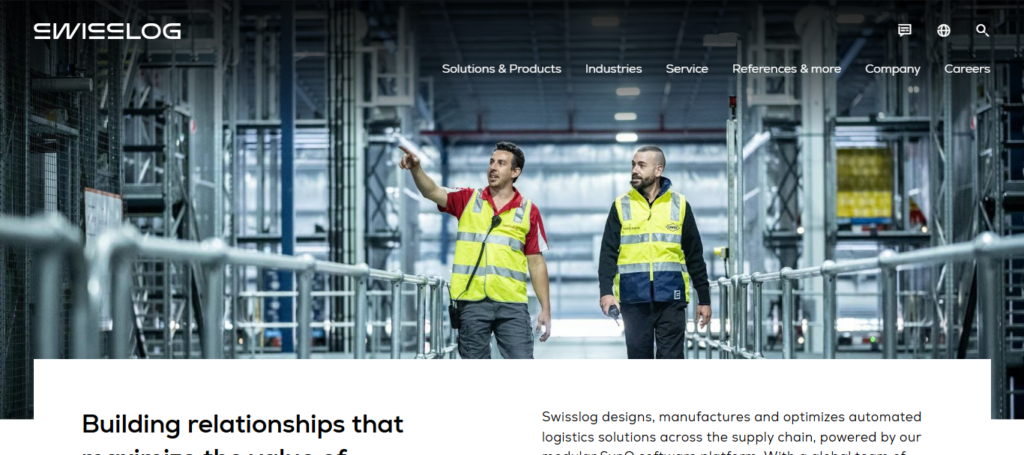
Modular systems offered by Swisslog are designed to be deployed and fully operational in a relatively short time and scaled as the business grows, which appeals especially to mid-market businesses.
Swisslog Pros & Cons
| Pros | Cons |
|---|---|
| Modular automation allows gradual scaling | High upfront investment required |
| Strong AI-driven warehouse optimization | Integration can be technically complex |
| Improves storage density and accuracy | Requires skilled technical workforce |
| Reliable shuttle and robotic systems | Longer ROI period for small warehouses |
9. Knapp AG
Knapp AG is an automation company from Austria that specializes in advanced warehouse robotics and further automation technologies such as shuttles and goods-to-person. Knapp also focuses on intelligent automation systems for intralogistics.
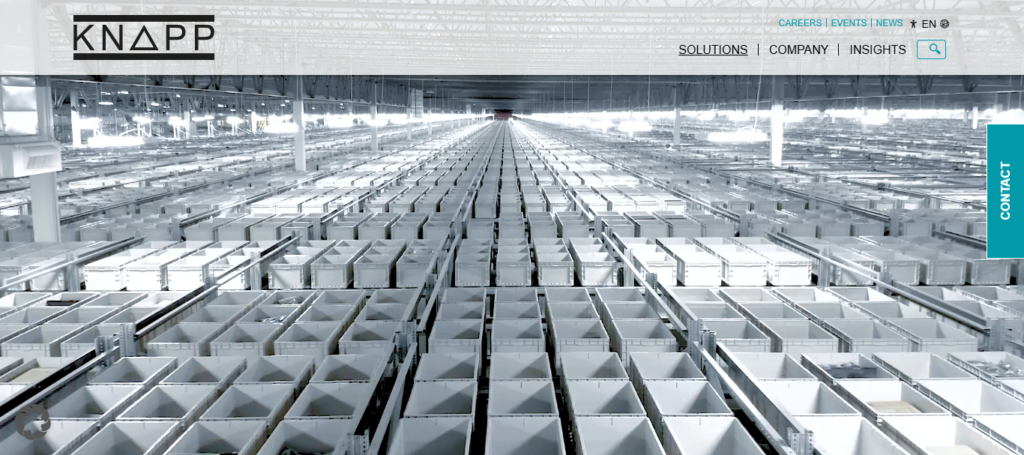
Knapp systems are designed for mid-market hubs for ecommerce and aid in the fulfillment and sorting of orders with flexible systems that can be easily scaled as demand grows. Knapp also serves the logistics of healthcare, retail, and fashion with systems that help provide fulfillment within high accuracy and speed.
Knapp AG Pros & Cons
| Pros | Cons |
|---|---|
| Advanced goods-to-person automation systems | Expensive implementation for mid-market firms |
| Strong performance in retail and fashion logistics | Complex configuration and customization required |
| Flexible and scalable architecture | Requires continuous technical support |
| High accuracy in sorting and fulfillment | Longer deployment cycles |
10. Vecna Robotics
Vecna Robotics makes robots that can automate movement of goods, pallets, and warehouse operations. They also made a special AI system that can manage a fleet of many different types of robots and get them to do exactly what you want when you want.
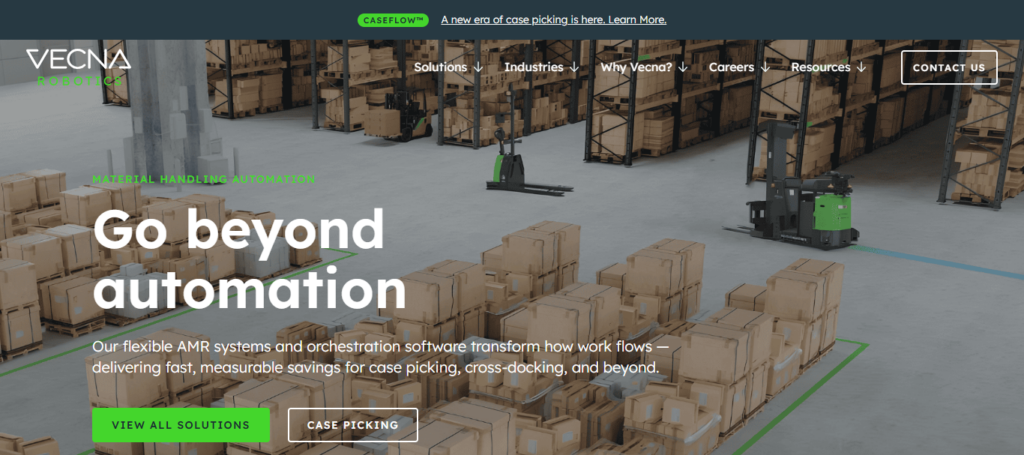
Their robotics management systems are great for mid-market e-commerce and make an excellent return on investment (ROI) in no time.
Their focus is on making things easier for workers and improving the rate and accuracy of work. Their systems are great to use in mixed SKU environments that need a lot of different types of automation that can change or grow.
Vecna Robotics Pros & Cons
| Pros | Cons |
|---|---|
| Strong AI-driven fleet coordination system | Limited global presence compared to competitors |
| Flexible deployment for mixed warehouse tasks | Smaller ecosystem of integrations |
| Fast ROI for mid-market businesses | Less suitable for ultra-large warehouse networks |
| Reduces manual transport workload significantly | Hardware variety is narrower than competitors |
Key Evaluation Criteria for Selecting Robotics Providers
- Robust Systems: Systems must easily expand as market demands on warehouse capacity increase.
- Systems Integration Capability: Robotics solutions need to mesh easily with modular warehouse solutions.
- Rapid Implementation and Positive ROI: Automation investments success is defined by the speed of implementation and the returns of the automation.
- Systems Capability for Fluctuations: Robotics solutions must accommodate order/resource fluctuations without reduced service/performance levels.
- Support Base: A strong vendor support base ensures decreased downtime and the solutions’ continual operational reliability.
Conclusion
In summary, the most advanced Warehouse Management Systems that include support for voice-picking, facilitate the most modern warehouse operations, delivering speed, safety, and accuracy for order fulfillment.
The systems boost productivity with an ergonomic hands-free pick methodology that reduces errors and elevates associate productivity.
Amid the explosive growth of e-commerce, voice-picking systems, and WMS solutions offer the flexibility, sophistication, and affordability
that allow businesses to refine operational workflows, improve inventory management, and achieve and maintain a competitive edge in demanding logistical situations.
FAQ
Which is one of the leading WMS platforms for voice-picking integration?
Manhattan Associates offers advanced WMS solutions with strong voice-directed workflow capabilities. It integrates AI-driven order optimization and supports high-volume e-commerce fulfillment centers requiring real-time inventory accuracy and scalable voice operations.
Does SAP support voice-picking workflows in its WMS?
Yes, SAP provides voice-enabled warehouse operations through its SAP Extended Warehouse Management (EWM) system. It supports integration with voice technology providers, enabling hands-free picking, packing, and inventory control for enterprise-scale logistics hubs.
Can Oracle WMS support voice picking?
Oracle Warehouse Management Cloud supports voice-picking through third-party integrations. It provides AI-driven warehouse orchestration, real-time tracking, and optimized fulfillment processes, making it suitable for global e-commerce and distribution networks.
What makes Blue Yonder WMS suitable for voice workflows?
Blue Yonder offers intelligent warehouse execution systems that integrate with voice-picking technologies. Its predictive AI helps optimize task allocation, ensuring faster picking cycles and improved accuracy in dynamic warehouse environments.
Is Infor WMS a good choice for voice picking?
Infor CloudSuite WMS supports voice-directed workflows through integration with leading voice solutions. It is widely used in retail and e-commerce warehouses due to its flexibility, scalability, and strong real-time inventory visibility.
