


This article will cover the Best Self-Hosted Blockchain Indexers and examine how these tools provide the developer with complete control of blockchain data with privacy and speed of analytics.
It will provide a description of different indexing solutions, their major functionalities, benefits, and use cases. It will explain the safety of tracking private blockchain transactions across decentralized networks.
Key POinst & Best Self-Hosted Blockchain Indexers for Tracking Private Transactions Instantly
| Blockchain Indexer | Explanation |
|---|---|
| The Graph | Decentralized indexing protocol enabling fast blockchain data querying privately. |
| SubQuery | Flexible indexing framework supporting private transaction tracking across blockchains. |
| Goldsky | High-performance indexer delivering instant blockchain data synchronization and insights. |
| Ponder | Developer-friendly indexer offering real-time event tracking and analytics. |
| Envio | Modern blockchain indexer providing rapid indexing with scalable infrastructure. |
| Subsquid | Powerful decentralized indexer designed for efficient private transaction monitoring. |
| Chainbase | Unified blockchain data platform enabling seamless indexing and tracking. |
| Covalent Self-Hosted | Enterprise-grade indexing solution offering detailed blockchain transaction visibility. |
| Blockscout Indexer | Open-source blockchain explorer indexer supporting private network transaction tracking. |
| HyperIndex | Advanced indexing engine delivering instant blockchain event processing capabilities. |
10 Best Self-Hosted Blockchain Indexers for Tracking Private Transactions Instantly
1. THE GRAPH
The Graph is a decentralized blockchain indexing solution ideal for developers who need to maintain transaction privacy.
They can run their own indexers while retaining control over their blockchain data. The recent ecosystem improvements have bolstered
The Graph’s support for additional networks has greatly improved query performance. The Graph is preferred among developers for its ease of use and reduced reliance on centralized solutions. For businesses focused on monitoring blockchains for privacy purposes,
The Graph’s active developer community, its dynamic subgraphs, and scalability make it the right choice.
The Graph
| Pros | Cons |
|---|---|
| Strong decentralized ecosystem | Initial setup can be complex |
| Supports multiple blockchain networks | Requires indexing expertise |
| Fast GraphQL-based queries | Resource-intensive for large deployments |
| Large developer community | Self-hosting needs infrastructure management |
| Flexible subgraph architecture | Learning curve for beginners |
2. SUBQUERY
SubQuery’s flexible self-hosted indexing framework is an excellent solution for organizations that need rapid access to transaction data within blockchains, especially those within less public ecosystems.
SubQuery reduces the headache of developing custom indexing solutions for privacy networks. SubQuery focuses on flexibility and the ability of a team to process a higher volume of transactions.
The recent focus on improvements in speed for indexing, as well as cross-chain convenience, has resulted in new enterprise customers.
SubQuery provides enterprise-level solutions to organizations that want data integrity and reliable blockchain analytics.
SubQuery
| Pros | Cons |
| Excellent cross-chain support | Advanced features require technical knowledge |
| Highly customizable indexing pipelines | Smaller community than The Graph |
| Enterprise-ready architecture | Deployment can be time-consuming |
| Fast indexing performance | Documentation may vary by network |
| Strong data ownership controls | Additional maintenance overhead |
3. GOLDSKY
Goldsky’s indexing framework provides a rapid, reliable, and scalable solution for self-hosting. Goldsky cuts the latency risk for organizations that need to monitor private transactions and want full control over their infrastructure.
Goldsky’s real-time streaming ability further reduces the latency risk for on-chain events. Goldsky has seen a rapid increase in adoption, especially among developers who need precise transaction data on demand for their applications.
Goldsky
| Pros | Cons |
| Extremely fast synchronization | Newer ecosystem compared to competitors |
| Real-time data streaming features | Limited community resources |
| Scalable for large projects | Enterprise features may increase costs |
| Reliable infrastructure performance | Requires skilled administration |
| Optimized indexing efficiency | Fewer tutorials available online |
4. Ponder
Ponder is a modern blockchain indexing solution for developers that combines productivity and real-time data processing.
Ponder’s lightweight architecture offers simple deployment and allows for instant tracking. For teams that manage private transactions, Ponder offers customizable indexing workflows with high-efficiency event processing.
With the most recent Ponder enhancements, the modern blockchain ecosystems and analytics have gained even better optimization and compatibility.
With easy implementation and reliable indexing, Ponder is an ideal solution for blockchain infrastructure.
Ponder
| Pros | Cons |
| Lightweight and easy deployment | Smaller ecosystem maturity |
| Real-time event processing | Fewer integrations than established platforms |
| Developer-friendly framework | Limited enterprise adoption |
| Flexible indexing workflows | Community support still growing |
| Efficient resource utilization | Advanced customization may require coding |
5. Envio
Envio is the modern blockchain indexing solution that offers fast and scalable transaction monitoring systems.
With the ability to self-host, organizations can ensure privacy and retain ownership of all blockchain data.
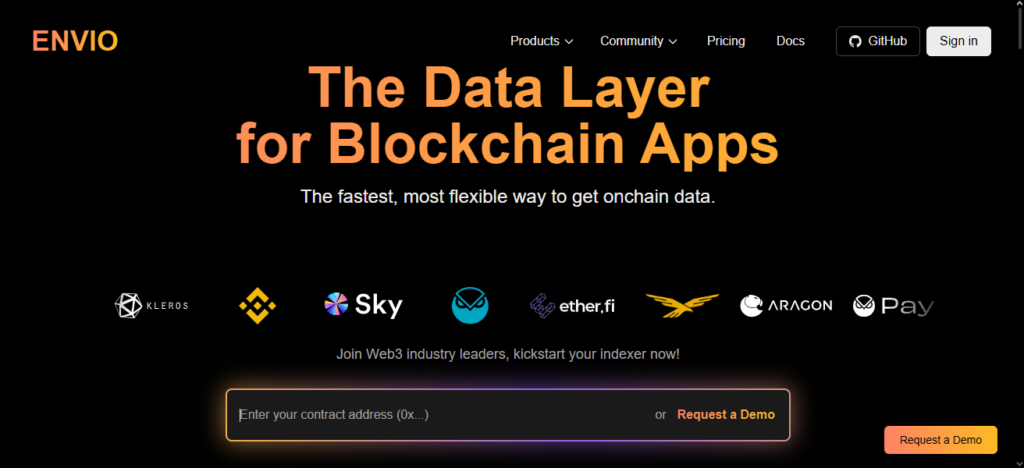
Envio’s resource-efficient indexing methods are coupled with rapid query enhancements. The most recent enhancements of Envio have increased the blockchains supported and improved the developer experience.
With unparalleled performance and ease of use, Envio is the leading modern solution to blockchain indexing.
Envio
| Pros | Cons |
| High-speed indexing engine | Relatively newer platform |
| Reduced infrastructure resource usage | Smaller user community |
| Easy developer onboarding | Fewer third-party integrations |
| Scalable architecture | Documentation still evolving |
| Strong blockchain compatibility | Long-term adoption is still developing |
6. Subsquid
Offering a decentralized indexing framework for advanced blockchain analytics, Subsquid is easy to use.
Subsquid offers self-hosted systems that provide control over the monitoring of transactions and the freedom to eliminate reliance on third-party systems.
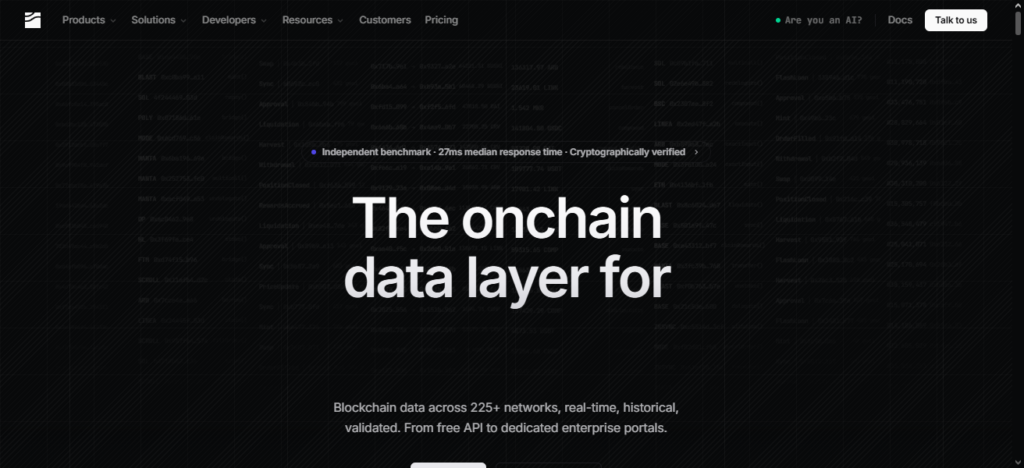
Subsquid’s systems are designed for rapid and precise indexing of large blockchain data sets, and recent Subsquid innovations have improved even further indexing speed, automated data extraction, and blockchain ecosystems support.
Flexible and easy to use, Subsquid is the ideal solution for developers needing advanced analytics on blockchain technologies.
Subsquid
| Pros | Cons |
| Handles massive datasets efficiently | Setup complexity for newcomers |
| Excellent analytics capabilities | Requires technical expertise |
| Decentralized infrastructure benefits | Infrastructure costs may increase |
| High-performance indexing | Smaller ecosystem than The Graph |
| Flexible data extraction tools | Advanced configurations needed |
7. Chainbase
Chainbase merges blockchain data indexing and infrastructure offerings. Focused on developers and enterprises, the self-hosted configuration allows businesses to monitor private transactions while keeping them operationally self-sufficient.
With a multitude of blockchain integrations, Chainbase offers developers tools to easily manage, query, and access Chainbase’s indexed data.
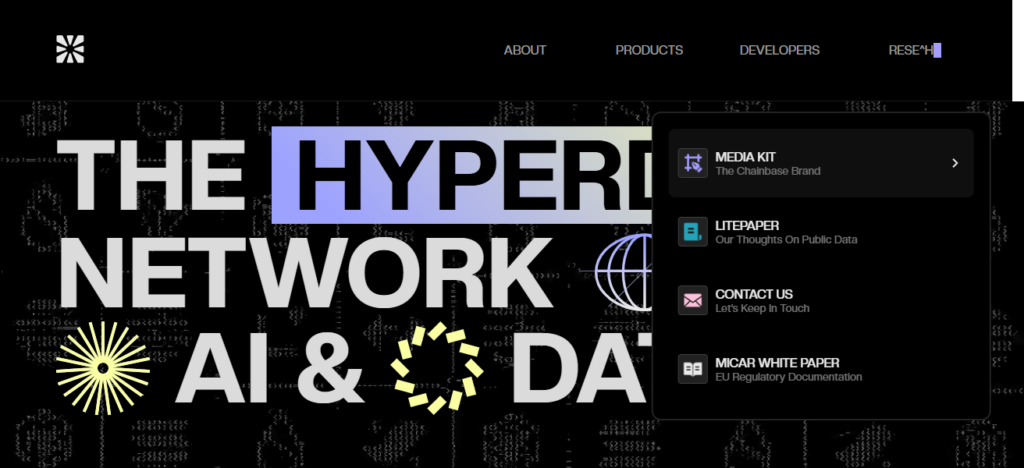
The latest developments from Chainbase have focused on improving interoperability and synchronization speeds across multiple chains.
For many of Chainbase’s customers, including those developers building on multiple chains, the consolidation and simplification of transaction analysis is a key advantage.
Chainbase
| Pros | Cons |
| Unified blockchain data platform | Some features require advanced knowledge |
| Extensive network integrations | Can be complex for small projects |
| Strong interoperability support | Infrastructure requirements may grow |
| Fast synchronization speeds | Learning curve for customization |
| Enterprise-focused capabilities | Limited open-source flexibility |
8. Covalent Self-Hosted
Self-Hosted Covalent is an enterprise-grade, self-hosted, and highly modular blockchain indexing infrastructure.
Designed for the internal hosting and self-monitoring of sensitive transactions, Covalent achieves a balance of privacy, compliance, and control.
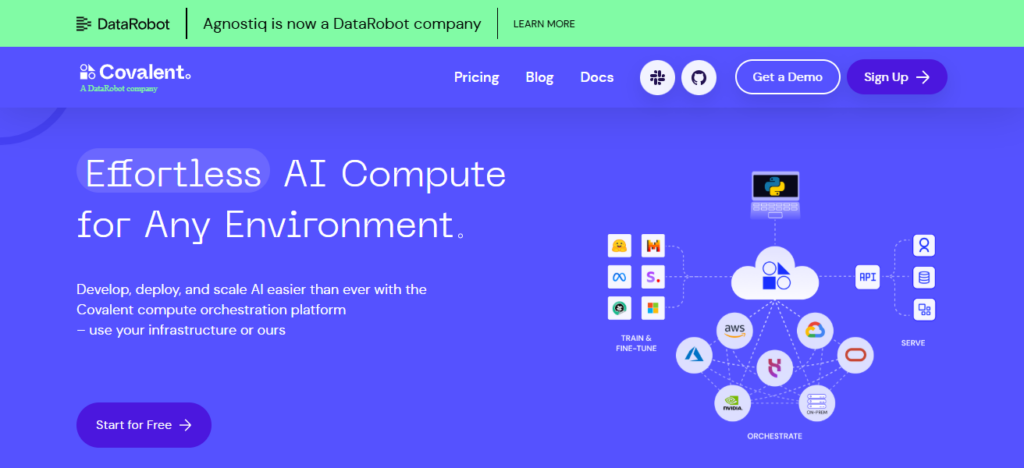
With highly modular infrastructure and an extensive, rapidly expanding indexing coverage of many blockchains, the recent upgrades have focused on improving the speed of the infrastructure and indexing requests.
For many of Covalent’s customers, especially those in the finance industry, the extensive coverage of their modular infrastructure is highly crucial for the reliable tracking of corporate transactions.
Covalent Self-Hosted
| Pros | Cons |
| Enterprise-grade reliability | Higher deployment complexity |
| Comprehensive blockchain data coverage | Significant infrastructure requirements |
| Strong privacy and compliance controls | Maintenance demands experienced teams |
| Detailed transaction insights | Resource-intensive indexing processes |
| Excellent scalability | May be excessive for small projects |
9. Blockscout Indexer
Blockscout Indexer is a well-known open-source indexing utility for blockchains. Self-hosted, it offers enterprises complete control of their transaction and analytics data.
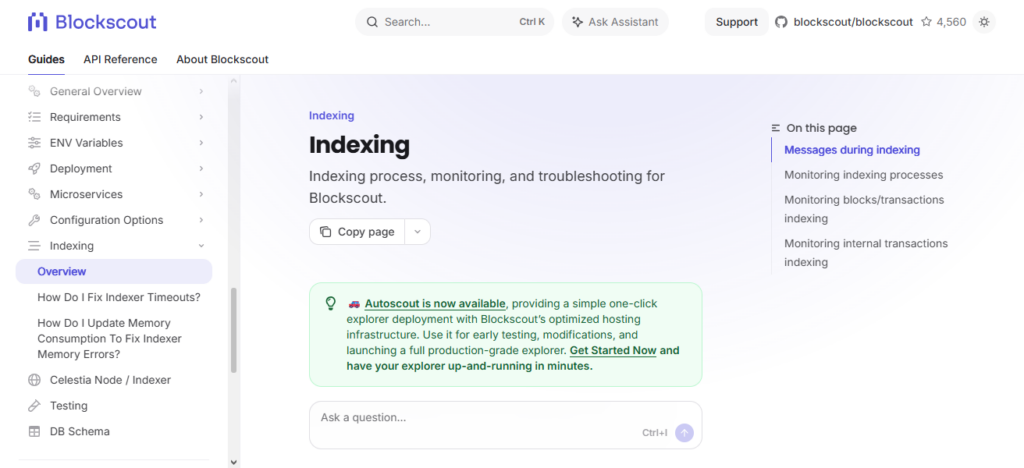
Blockscout integrates easily with other blockchain explorers. Recent advancements in Blockscout have furthered indexing speeds, enhanced user experiences, and expanded interoperability with blockchain infrastructures.
With its transparency and ease of use, Blockscout is a great option for many enterprise blockchains.
Blockscout Indexer
| Pros | Cons |
| Fully open-source solution | User interface customization needed |
| Seamless explorer integration | Performance tuning may be required |
| Strong transparency features | The setup process can be lengthy |
| Active community development | Limited enterprise-specific tools |
| Supports private blockchain networks | Requires ongoing maintenance |
10. HyperIndex
HyperIndex is tailored for projects with the requirement for near real-time processing and visibility of any blockchain event.
It is a self-hosted solution, so organizations do not have to sacrifice data privacy for fast indexing.
Optimizations made recently to HyperIndex offer better scalability when dealing with increasing volumes of data on the blockchain.
Developers are able to better construct responsive applications with the rapid data retrieval and convenient analytics that HyperIndex offers.
HyperIndex features high speed and high reliability, and offers users complete operational control, increasing their value in blockchain ecosystems.
HyperIndex
| Pros | Cons |
| Rapid blockchain event processing | Smaller market presence |
| High-speed data retrieval | Limited community documentation |
| Scalable indexing architecture | Fewer integrations available |
| Strong privacy controls | Requires technical deployment skills |
| Reliable transaction monitoring | Adoption still growing |
Alternatives Best Self-Hosted Blockchain Indexers for Tracking Private Transactions Instantly
1. Ankr
Ankr is a flexible blockchain infrastructure solution focusing on RPC and indexing infrastructure with private transaction tracking.
With support for many chains, developers can deploy self-hosted or hybrid nodes. With their latest updates, speed and reliability with API access are improved.
Because of strong enterprise support, Ankr is often used for blockchain indexing for decentralized applications in distributed environments.
2. Blockdaemon
Blockdaemon is an enterprise infrastructure platform with self-hosted indexing and node alternatives for private transaction tracking.
Blockdaemon infrastructure allows organizations to run dedicated enterprise blockchain nodes on multiple networks with confidence in the platform’s compliance and security.
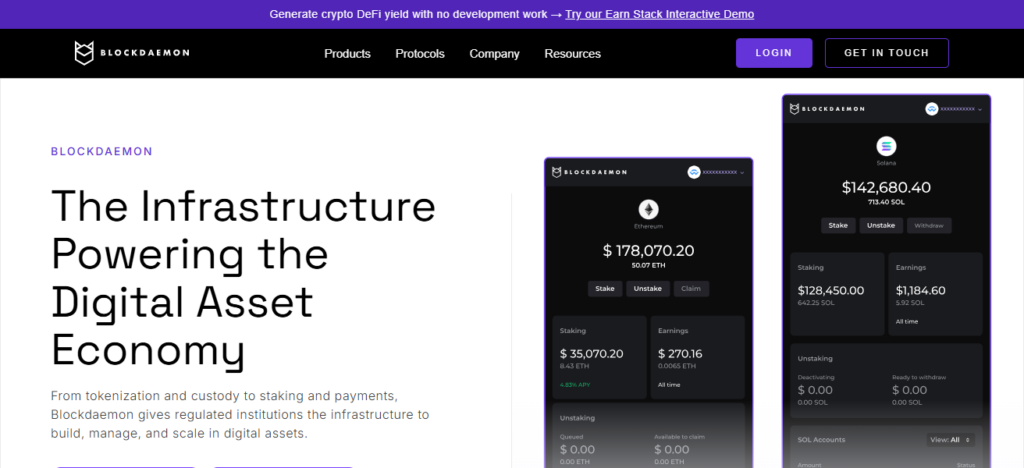
Recent offerings have improved their scalability and monitoring. Because of its solid infrastructure, Blockdaemon is used throughout the enterprise blockchain ecosystem, especially in finance.
3. QuickNode
QuickNode offers flexible blockchain infrastructures with rapid RPC and indexing for private transaction tracking.
With support for flexible blockchains, QuickNode offers developers the ability to build rapid and reliable data pipelines.
Recent updates include improved speed, analytics, and node reliability. QuickNode is used for many Web3 applications with the need for low-latency blockchain data, especially with self-hosted and flexible managed deployments.
4. Alchemy
Alchemy is a user-friendly blockchain engineering platform that lets developers handle private transaction tracking. Alchemy provided powerful indexing, data APIs, and infrastructure tools.
The platform supports Ethereum and several other chains to construct scalable Web3 applications.
Most recent enhancements have aimed at focus, development, and faster data retrieval. Alchemy is extensively used in blockchain development platforms, analytics, and monitoring of Smart contracts.
Alchemy is self-hosted in the Indexing enterprise solution systems, with robust growth of developer ecosystems.
Conclusion
In conclusion, the Best Self-Hosted Blockchain Indexers for Tracking Private Transactions Instantly give developers and companies complete control over their data, greater security, privacy, and faster analytics.
Indexers remove the need for third-party services and increase efficiency. The Graph, SubQuery, and Subsquid have their advantages and disadvantages.
The selection of an indexer will depend on the infrastructure, technical knowledge, and the extent of monitoring transactions.
FAQ
Are self-hosted blockchain indexers better than cloud indexers?
Yes, for privacy and control. However, they require more setup, maintenance, and technical expertise compared to cloud solutions.
Which is the most popular blockchain indexer?
The Graph is widely used due to its decentralized architecture, scalability, and strong developer ecosystem.
Can SubQuery handle private blockchain networks?
Yes, SubQuery supports custom and private networks, making it suitable for enterprise-grade indexing needs.
Is Goldsky suitable for real-time tracking?
Yes, Goldsky is designed for high-speed indexing and real-time blockchain data streaming with low latency.
Do I need coding skills to use these indexers?
Most self-hosted indexers require basic to advanced blockchain development and infrastructure management skills.
