

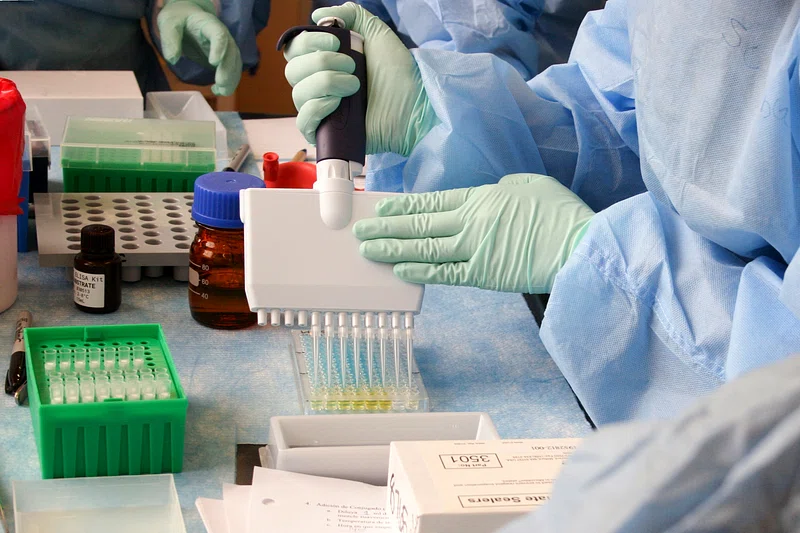
In this article, I examine the Best Laboratory Information Management Systems (LIMS) within Diagnostic Centers. These systems give laboratories the ability to track samples, automate tasks, manage compliance and regulations, and maximize efficiency.
The appropriate selection of a Laboratory Information Management System can have a positive impact on turnaround times, accuracy of data, and patient services.
In the sections that follow, we have identified leading Laboratory Information Management Systems utilized by contemporary diagnostic centers.
Key Poinst & Best Laboratory Information Management Systems (LIMS) for Diagnostic Centers
| LIMS Platform | Explanation |
|---|---|
| LabWare LIMS | Enterprise-grade solution offering automation, compliance, scalability, and integrations. |
| STARLIMS | Provides workflow automation, analytics, reporting, and regulatory compliance. |
| LabVantage | Unified platform supporting diagnostics, data management, and automation. |
| Thermo Fisher SampleManager | Streamlines laboratory operations, sample tracking, and quality management. |
| Clinisys WinPath | Specialized diagnostic laboratory management with advanced patient workflows. |
| Orchard Harvest | Enhances diagnostic efficiency through specimen tracking and reporting. |
| CGM LABDAQ | Affordable LIMS offering billing, reporting, and workflow automation. |
| QBench LIMS | Cloud-based platform simplifying sample management and laboratory collaboration. |
| Benchling | Modern data management solution supporting research and diagnostic laboratories. |
| CloudLIMS | SaaS-based LIMS enabling secure sample tracking and compliance management. |
10 Best Laboratory Information Management Systems (LIMS) for Diagnostic Centers
1. LabWare LIMS
LabWare LIMS remains one of the most popular laboratory information management systems for diagnostic centers processing large sample volumes. This platform offers an ecosystem with sample tracking, workflow automation, quality assurance, and regulatory compliance.
LabWare’s configurable architecture allows laboratories to tailor workflows to their specific testing requirements.
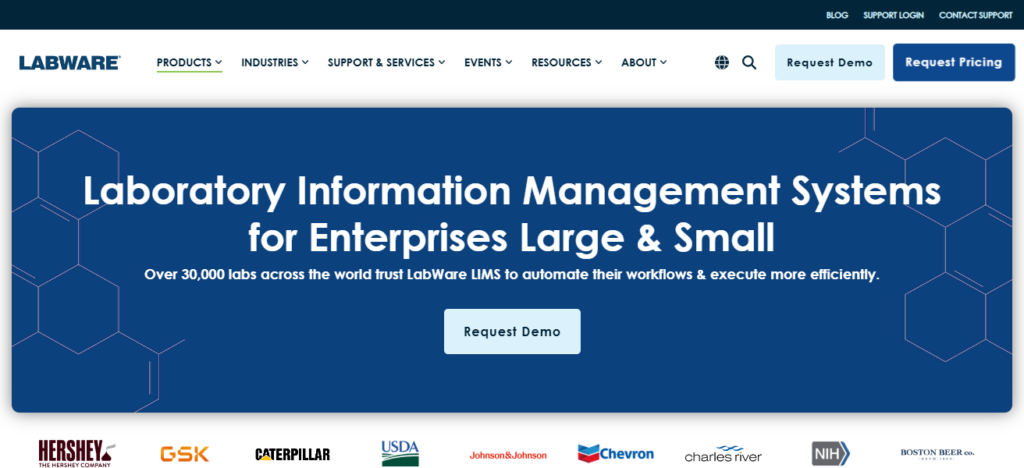
The combination of real-time data, automated report generation, and LabWare’s ability to integrate laboratory instruments, electronic medical records, and enterprise systems, offers a comprehensive solution for expanding and multi-site healthcare laboratories.
LabWare LIMS Pros & Cons
| Pros | Cons |
|---|---|
| Highly customizable workflows for diverse diagnostic testing needs | Implementation can be complex and time-consuming |
| Strong regulatory compliance and audit trail capabilities | Higher initial investment compared to smaller LIMS platforms |
| Excellent integration with instruments and enterprise systems | Requires specialized training for administrators |
| Scales efficiently for multi-site laboratory operations | Customization may increase deployment costs |
2. STARLIMS
STARLIMS is an all-inclusive LIMS system designed for contemporary diagnostic laboratories to enhance operational efficiency and data integrity. The platform provides advanced workflow automation, electronic documentation, analytics dashboards, and regulatory compliance.
Its cloud-enabled framework promotes data centralization and controlled access across different laboratory locations.
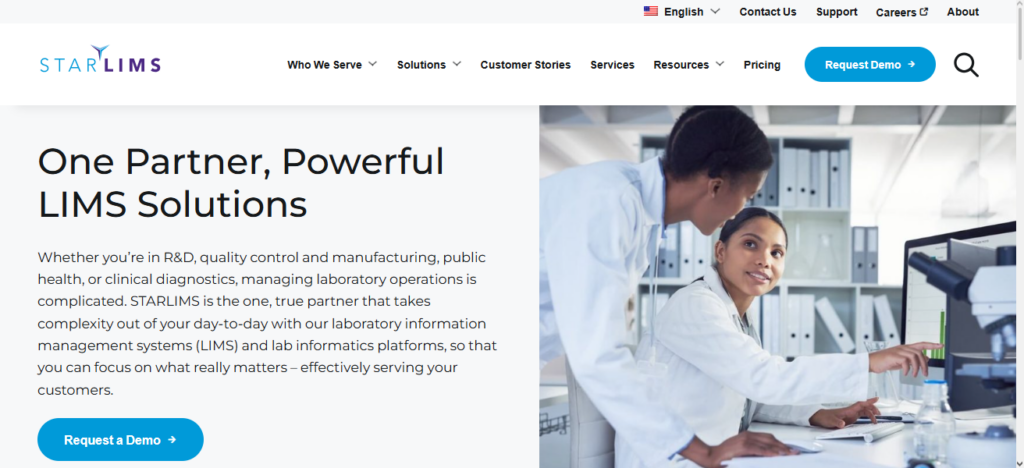
STARLIMS helps diagnostic centers minimize manual errors and process tests faster. The software offers great insight for laboratories seeking to implement scalable, contemporary solutions for their digital transformations.
STARLIMS Pros & Cons
| Pros | Cons |
| Advanced analytics and business intelligence tools | Premium features may increase total ownership costs |
| Cloud-ready architecture supports remote access | Setup may require dedicated IT resources |
| Strong automation reduces manual laboratory tasks | Learning curve for new users |
| Suitable for large and expanding diagnostic networks | Some customizations require vendor assistance |
3. LabVantage
LabVantage integrates all the sub-systems diagnostic centers need to manage the laboratory sample, automate the laboratory, and analyze and report the data while maintaining compliance. This system integrates sample management, laboratory automation, analytics, and business intelligence.
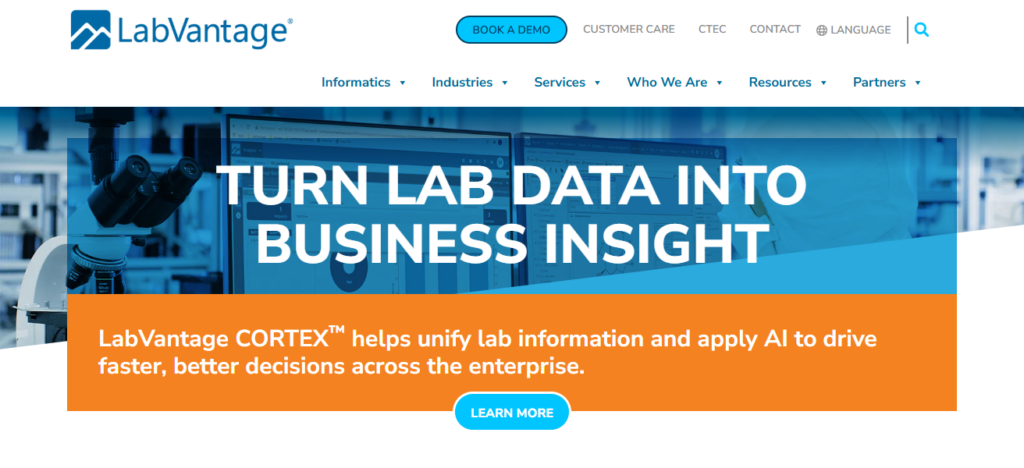
LabVantage is a great solution for diagnostic laboratories that need to optimize the use of their resources. LabVantage helps diagnostic organizations meet compliance and traceability needs, and improves their turnaround time.
LabVantage Pros & Cons
| Pros | Cons |
| Combines LIMS, analytics, and workflow automation | Advanced functionality can be overwhelming initially |
| AI-enabled features improve laboratory efficiency | Higher licensing costs for smaller laboratories |
| Strong reporting and compliance management tools | Deployment may require extensive planning |
| Flexible cloud and on-premise deployment options | Custom integrations can add complexity |
4. Thermo Fisher SampleManager
Thermo Fisher SampleManager is a Laboratory Information Management System (LIMS) that tracks samples and monitors progress on automated workflows, integrated data, and quality control.
Diagnostic centers can rely on SampleManager to help streamline processes, decrease administrative duties and ensure that testing is performed consistently.
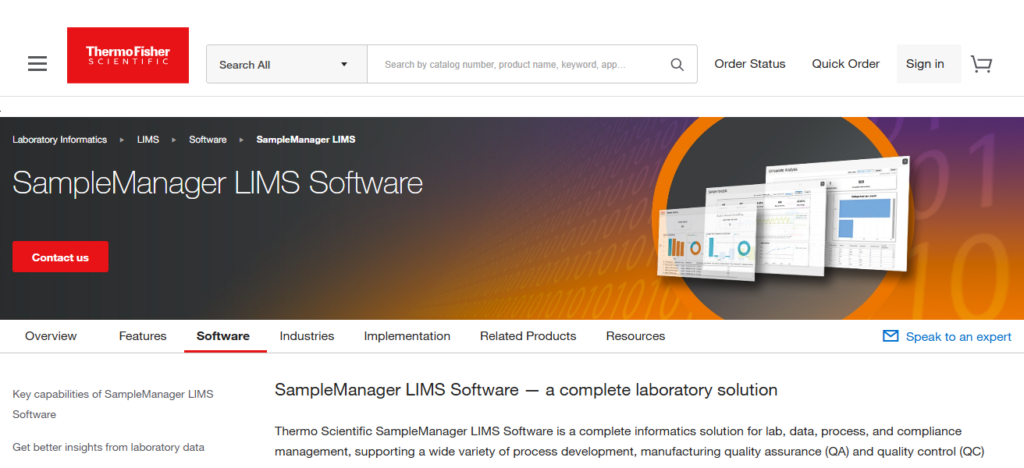
SampleManager can be deployed in a variety of different ways and produced a flexible system for labs of all sizes. Additionally, SampleManager allows labs to analyze data and create custom reports to assist in determining actionable next steps regarding efficiency.
Thermo Fisher SampleManager Pros & Cons
| Pros | Cons |
| Comprehensive sample lifecycle management capabilities | Premium pricing for enterprise-level features |
| Extensive integration with laboratory instruments | Configuration can require expert support |
| Powerful quality control and reporting functions | Training requirements may be significant |
| Flexible deployment options for various laboratories | Smaller labs may not utilize all features |
5. Clinisys WinPath
Designed specifically for the healthcare and diagnostic laboratory markets, WinPath by Clinisys provides additional features to improve patient workflow.
The software includes support for pathology, microbiology, blood and other diagnostic services, and manages test and reporting workflows seamlessly.
WinPath enhances lab-to-customer communication by managing patient information. Diagnostic centers experience greater visibility into workflows, time savings, improved results, and clinical support.
WinPath is the clear choice for healthcare and large diagnostic customers due to its depth of focus on diagnostic services.
Clinisys WinPath Pros & Cons
| Pros | Cons |
| Specifically designed for healthcare diagnostics | Less suitable for non-clinical laboratories |
| Supports multiple pathology and laboratory disciplines | Customization options may be limited |
| Enhances patient-centered workflow management | Implementation can be resource-intensive |
| Improves communication with healthcare providers | Licensing costs can be substantial |
6. Orchard Harvest
Designed to improve the management of specimens and reporting results, Orchard Harvest provides a laboratory information management system focused on workflow efficiency.
Diagnostic centers enable Orchard Harvest to gain time savings due to faster processing of automated, streamlined data. Its interoperability features allow integration with EHR, billing, and laboratory instrumentation.

Orchard Harvest allows labs to implement quality assurance by providing details on audits and compliance. Labs that desire improved functioning of their customer services and workflows choose Orchard Harvest often.
Orchard Harvest Pros & Cons
| Pros | Cons |
| Excellent specimen tracking and reporting capabilities | Fewer advanced analytics features than competitors |
| Strong interoperability with healthcare systems | May require third-party integrations for specialized needs |
| Improves laboratory turnaround times | User interface may feel dated to some users |
| Supports compliance through detailed audit trails | Limited flexibility for highly customized workflows |
7. CGM LABDAQ
CGM LABDAQ is a cost-efficient LIMS option for small and mid-sized diagnostic labs. LABDAQ provides tools for specimen tracking, automated billing, and reporting and aids inventory management and workflow optimization.
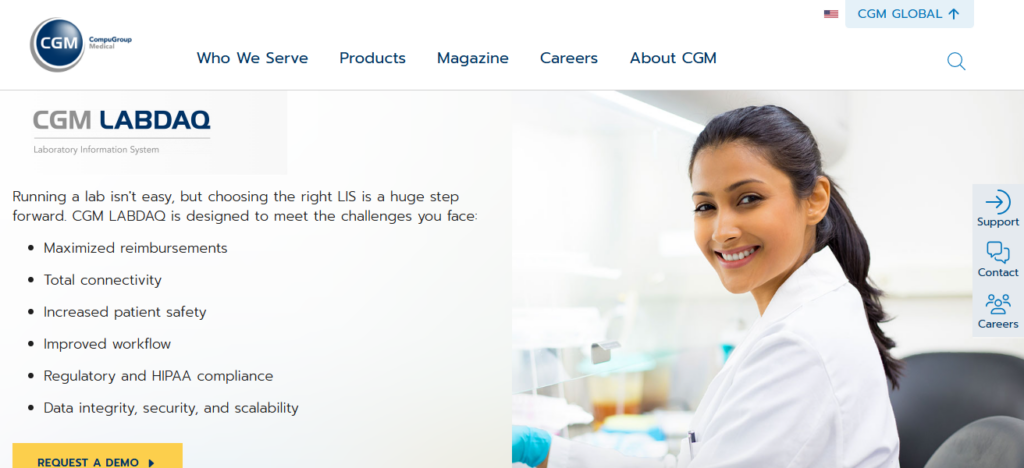
LABDAQ decreases the administrative burden on staff and improves the workflows of diagnostic labs. All of this is accomplished without a major investment on the part of the lab.
LABDAQ simplifies the management of a lab and ensures that data is accurate and easily accessible. LABDAQ has excellent integration capabilities and is designed to appeal to independent diagnostic labs and regional labs.
CGM LABDAQ Pros & Cons
| Pros | Cons |
| Affordable option for small and medium laboratories | Limited enterprise-scale capabilities |
| Includes integrated billing and reporting features | Fewer advanced automation tools available |
| User-friendly interface simplifies daily operations | Scalability may be restricted for rapid growth |
| Minimal infrastructure requirements | Custom reporting options may be limited |
8. QBench LIMS
QBench LIMS is a cloud-based lab management application that is customizable and accessible enough to be used in diagnostic labs from almost any location. The built-in features for collaboration and communication improve the efficiency of lab staff and help them to better coordinate their efforts.
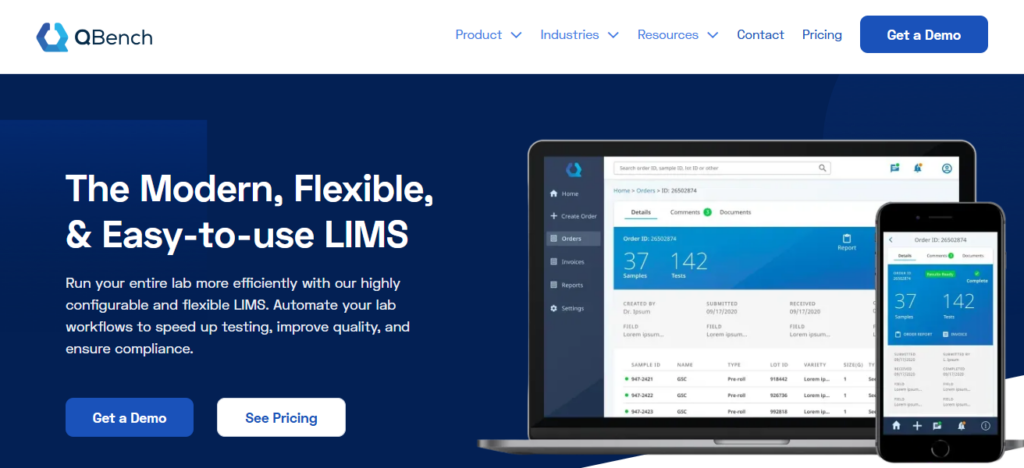
Once tasks are automated and workflows are designed, the need for manual data entry diminishes, and accuracy improves.
QBench also has features that support data management and regulatory compliance. If your lab is ready to embrace digital and remote work, then QBench is a good option.
QBench LIMS Pros & Cons
| Pros | Cons |
| Cloud-based access from any location | Dependent on reliable internet connectivity |
| Modern interface improves user experience | Some advanced features require premium plans |
| Supports team collaboration and remote workflows | Limited offline functionality |
| Quick deployment compared to traditional LIMS solutions | Custom integrations may require additional support |
9. Benchling
Benchling has developed a sophisticated data management platform that supports modern research and diagnostics labs. The platform helps to standardize and modularize workflows and helps labs to improve collaboration through centralized data.
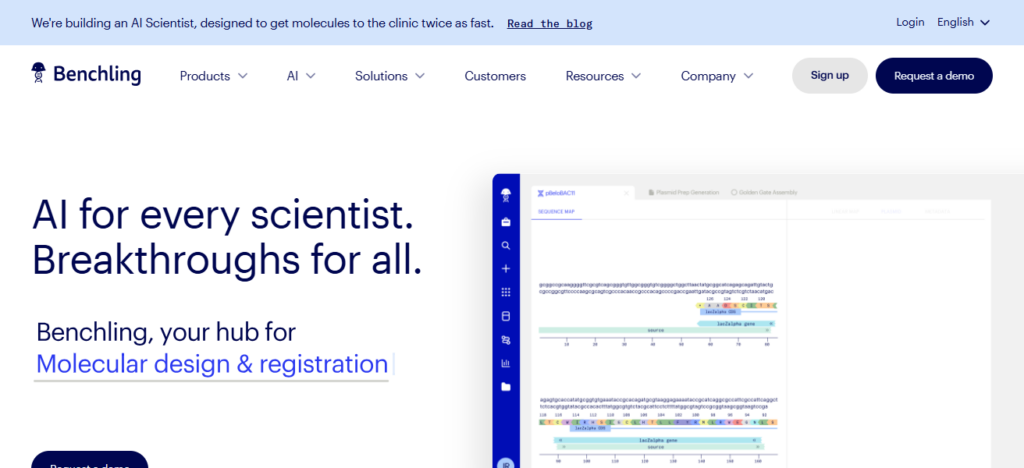
Labs that are focused on data improve even further through the added cloud infrastructure and automation tools. Benchling has modern integration features that help fill the gaps in a modular and flexible lab toolkit. Benchling has the tools to support labs that want to embrace a clearer and more focused operational model that is built to scale.
Benchling Pros & Cons
| Pros | Cons |
| Modern cloud architecture with strong collaboration tools | Primarily known for research-focused environments |
| Excellent data organization and workflow standardization | Can be expensive for smaller diagnostic centers |
| Integrates with multiple laboratory technologies | Advanced configurations may require expertise |
| Scalable platform for growing organizations | Some clinical-specific features may require customization |
10. CloudLIMS
Diagnostic centers that demand a scalable, secure, and easy-to-deploy system will benefit from the design of CloudLIMS. This web-based system leverages sample tracking, inventory management, and automation, in conjunction with support for compliance, audits, and trails.
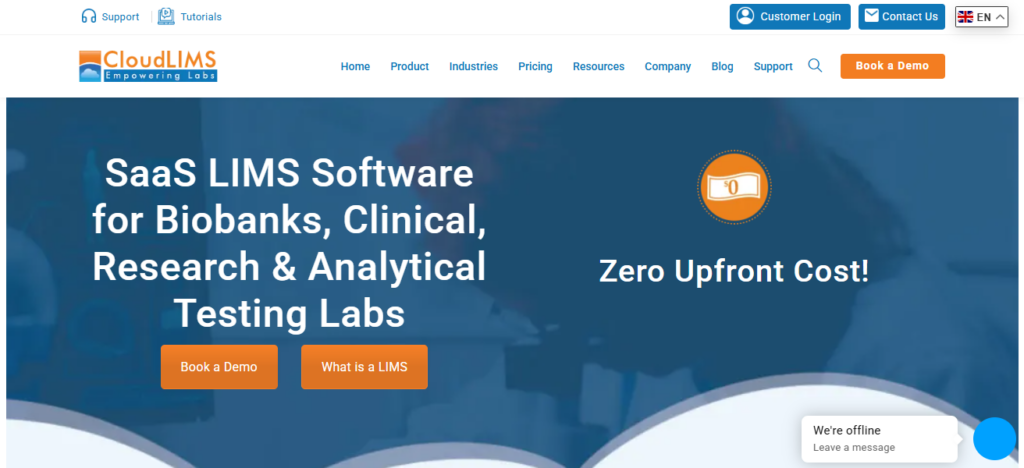
As a SaaS, laboratories can use CloudLIMS with little to no large investment in their IT infrastructure. The contemporary diagnostic organizations will find CloudLIMS appealing due to automated updates, remote access, and advanced security for data.
Laboratories looking to maintain compliance and data integrity will find that CloudLIMS enables them to perform these functions with greater efficiency.
CloudLIMS Pros & Cons
| Pros | Cons |
| SaaS deployment eliminates extensive IT infrastructure | Internet access required for daily operations |
| Automatic updates and maintenance included | Customization options may be more limited |
| Strong compliance, security, and audit trail features | Advanced enterprise integrations may require extra configuration |
| Cost-effective subscription-based pricing model | Less control compared to fully on-premise systems |
Selection of the Top Laboratory Information Management Systems (LIMS) for Diagnostic Centers
- Sample Management Efficiency: Each platform’s ability to track and manage samples.
- Workflow Automation: Automation features to minimize manual work and errors.
- Regulatory Compliance: Support for HIPAA, CLIA, CAP, ISO 15189 and other standards.
- Integration Capabilities: Integration with laboratory instruments, EHRs, and billing.
- Scalability: Support for the growth of diagnostic centers.
- Reporting & Analytics: Dashboards, data visualization, and reporting.
- User Experience: Overall ease of use and design of the UI. Staff training.
- Cloud & Remote Access: Options for cloud deployment and secure remote access.
- Data Security: Security for data, including encryption, access controls, audit trails, and compliance.
- Cost & Overall Value: Analysis of price and support in relation to ROI and the other factors.
Conclsuion
In conclusion, choosing the right Laboratory Information Management System (LIMS) is critical for diagnostic centers focused on enhancing efficiency, accuracy, and compliance. The aforementioned systems provide valuable business solutions that include automated workflows, sample management and status reporting, as well as easy-to-use integration.
The right LIMS, regardless of whether you run a small diagnostic center or a large diagnostic network, creates operational efficiency, minimizes mistakes, and supports sustainable growth for your business in the challenging data-driven healthcare market.
FAQ
What is a Laboratory Information Management System (LIMS)?
A LIMS is software that manages samples, laboratory workflows, data, and reporting.
Why do diagnostic centers need a LIMS?
It improves efficiency, reduces errors, enhances compliance, and automates processes.
Which LIMS is best for large diagnostic laboratories?
LabWare LIMS and STARLIMS are popular choices for large-scale operations.
What is the best cloud-based LIMS solution?
QBench LIMS and CloudLIMS are leading cloud-based laboratory management platforms.
