


In this article, I will discuss the Best Tokenization Platforms for Real-World Assets and explain how they help businesses tokenize real estate, equities, bonds, commodities, and other physical assets securely.
You’ll also learn about their key features, benefits, compliance capabilities, pricing considerations, and how to choose the right platform for your investment or enterprise needs.
Key Points & Best Tokenization Platforms for Real-World Assets (RWAs)
| Platform | Explanation |
|---|---|
| Securitize | Enables compliant asset tokenization, investor management, secondary trading, and regulatory reporting for institutions. |
| Tokeny | Provides compliant digital asset issuance, lifecycle management, investor onboarding, and automated compliance tools. |
| Polymesh | Purpose-built blockchain supporting regulated securities with identity verification, governance, and secure tokenization infrastructure. |
| Ondo Finance | Tokenizes real-world financial assets, offering institutional-grade yield opportunities through blockchain-based investment products. |
| Centrifuge | Connects real-world assets with decentralized finance, unlocking liquidity through tokenized collateralized lending markets. |
| Taurus | Offers secure digital asset custody, tokenization, trading, and compliance solutions for financial institutions. |
| Backed Finance | Issues tokenized securities backed by real-world assets, improving accessibility and investment efficiency globally. |
| OpenEden | Delivers tokenized treasury products with transparent management, institutional security, and blockchain-based settlement capabilities. |
| Brickken | Simplifies asset tokenization using no-code tools, compliance features, and investor management capabilities efficiently. |
| RWA.xyz | Tracks tokenized real-world asset markets, providing analytics, transparency, and ecosystem performance insights globally. |
10 Best Tokenization Platforms for Real-World Assets (RWAs)
1. Securitize
Securitize is recognized as one of the leaders in the market for real world asset (RWA) tokenization.
Serving a global customer base, which includes financial institutions, asset managers and businesses, the platform provides the ability to tokenize private equity, real estate, investment funds and other regulated security token offerings.
Securitize is known in the market for its onboarding and identity verification for investors, management of capitalization tables, and support for secondary market trading.
Securitize is the ideal platform for customers who desire a robust, secure, and regulatory compliant infrastructure with the ability to tokenize real world assets.
| Pros | Cons |
|---|---|
| Strong regulatory compliance for institutional asset tokenization. | Enterprise pricing may be expensive for startups. |
| Supports private equity, real estate, and investment fund tokenization. | Setup process can require extensive compliance documentation. |
| Integrated investor onboarding with automated KYC and AML verification. | Best features target institutional rather than retail users. |
| Offers secondary trading and digital cap table management. | Limited flexibility for highly customized blockchain deployments. |
| Trusted by global financial institutions and enterprise investors. | Regulatory requirements vary across supported jurisdictions. |
2. Tokeny
Tokeny is a leading tokenization platform in Europe, and focuses on compliant issuance of digital securities and real world assets. Built on open blockchains, the platform enables the tokenization of equity, bonds, real estate, and private investment funds, while offering smart contracts that automate compliance.
The platform also provides solutions for KYC and AML onboarding, as well as the management of dividends and ownership.
Tokeny’s infrastructure can be adopted by financial institutions for the regulated issuance of digital assets, while achieving significant administrative and operational efficiencies.
| Pros | Cons |
|---|---|
| Smart contracts automate compliance throughout asset lifecycle. | Primarily focused on regulated European financial markets. |
| Supports equity, bonds, funds, and real estate tokenization. | Advanced features require technical onboarding and training. |
| Simplifies investor onboarding and ownership management. | Smaller ecosystem compared to larger institutional competitors. |
| Open blockchain standards improve interoperability. | Premium enterprise services may increase overall implementation costs. |
| Reduces manual compliance and administrative work. | Less suitable for decentralized DeFi-focused projects. |
3. Polymesh
Polymesh is a blockchain that was specifically built for regulated financial assets and securities. Polymesh streamlines the tokenization process and the compliance of security tokens by embedding identity, governance and compliance on the blockchain itself.
By focusing on the needs of institutional clients, Polymesh navigates the structure of tokenization and defi with ease.
Polymesh’s infrastructure is designed for scalable enterprise deployment and solidifies Polymesh’s position as the industry leading blockchain for compliant digital securities.
| Pros | Cons |
|---|---|
| Purpose-built blockchain for regulated digital securities. | Smaller developer ecosystem than Ethereum-based platforms. |
| Built-in identity verification improves regulatory compliance. | Limited support for general decentralized applications. |
| Secure governance and settlement architecture. | Adoption remains lower than mainstream blockchain networks. |
| Designed specifically for institutional finance. | Specialized infrastructure may require additional learning. |
| Reduces legal and operational compliance risks. | Asset issuers depend on ecosystem growth for liquidity. |
4. Ondo Finance
One of the rapidly advancing RWA platforms is Ondo Finance. Ondo has built new financial products on the blockchain in order to bring new financial solutions on-chain. Ondo tokenizes U.S. Treasury-backed fixed income products in order to give qualified investors access to securitized yield offerings.
Ondo Finance has many competitive advantages due to DeFi. Their transparent management of assets, settlement on-chain, and enhanced liquidity from their high-quality fixed income products, have allowed Ondo to focus on expanding their partnerships and their offerings in order to become the market leader in tokenized finance.
| Pros | Cons |
|---|---|
| Provides access to tokenized U.S. Treasury investments. | Some products are limited to eligible investors. |
| Strong institutional partnerships increase platform credibility. | Product availability depends on regulatory jurisdictions. |
| Transparent blockchain-based settlement process. | Focuses mainly on fixed-income financial products. |
| Combines traditional finance with decentralized finance. | Market performance follows underlying treasury yields. |
| Expanding rapidly within the RWA ecosystem. | Limited asset categories compared to broader tokenization platforms. |
5. Centrifuge
Centrifuge has built the bridge from traditional finance to DeFi by tokenizing real world assets on-chain. Businesses can use tokenized receivables, invoices, real estate, and other real world assets as collateral to lend in DeFi.
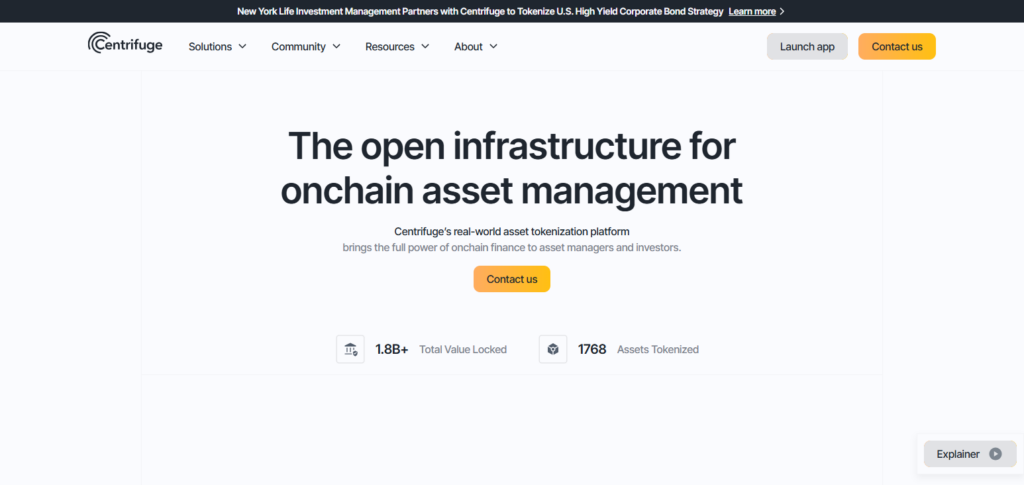
The use of smart contracts decreases friction in the lending business as it eliminates the paperwork and settlement process. Centrifuge has built a system on-chain to give businesses the capital they need while providing DeFi investors with a diversified, asset-backed investment vehicle.
| Pros | Cons |
|---|---|
| Connects businesses with decentralized lending markets. | Requires understanding of DeFi lending mechanisms. |
| Supports invoice and real estate financing. | DeFi market volatility may affect liquidity availability. |
| Improves liquidity for real-world assets. | Institutional adoption remains smaller than traditional finance. |
| Smart contracts automate financing workflows efficiently. | Regulatory frameworks continue evolving across regions. |
| Diversifies DeFi investments beyond cryptocurrencies. | Platform complexity may challenge first-time users. |
6. Taurus
Taurus secures digital assets and offers tokenization of assets on multiple chains while satisfying the strictest security and regulatory requirements. Financial services and banks can launch their own tokenized securities
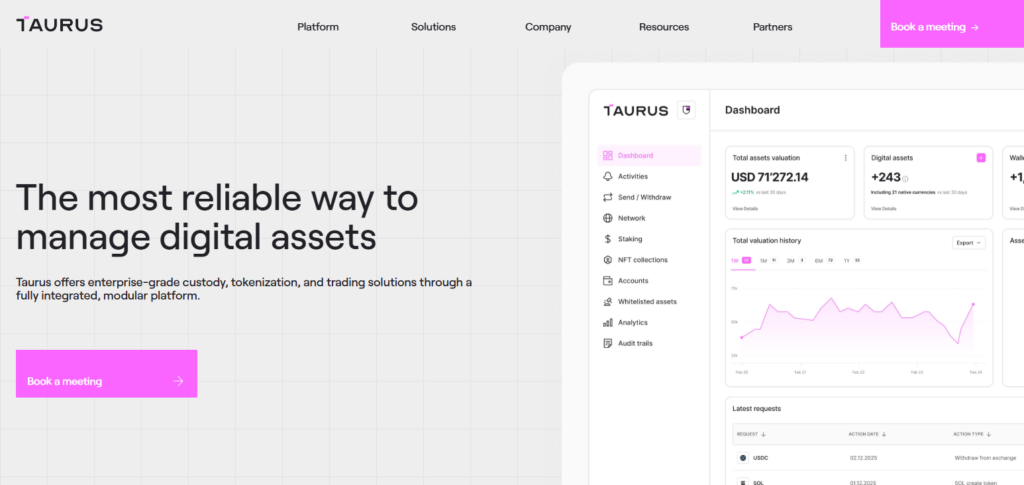
digital asset services, and modernize their investment services on Taurus’ platform. Taurus is the preferred offering in regulated financial markets across the globe due to their focus on enterprise solutions.
| Pros | Cons |
|---|---|
| Enterprise-grade custody and tokenization platform. | Primarily designed for banks and financial institutions. |
| Supports multiple blockchain networks securely. | Enterprise implementation may require significant investment. |
| Comprehensive compliance and governance tools. | Limited accessibility for individual investors. |
| Strong cybersecurity and institutional infrastructure. | Integration projects can take considerable deployment time. |
| Suitable for regulated digital asset management. | Smaller public community than open-source platforms. |
7. Backed Finance
Backed Finance is building tokenized securities on the backbone of real, financially backed assets. This fintech company is building a bridge between traditional finance and blockchain technology by offering the fusion of regulated financial instruments, quick settlement times, and improved accessibility for investors.

Every token that Backed Finance issues is backed by the underlying asset, making their offerings transparent. Backed Finance is continuing to grow its offerings in the world of tokenized finance and is working to close the gap between traditional finance and the world of decentralized finance.
| Pros | Cons |
|---|---|
| Issues asset-backed tokenized securities transparently. | Asset offerings remain relatively limited currently. |
| Bridges traditional investments with blockchain technology. | Availability depends on regional financial regulations. |
| Faster settlement than conventional financial systems. | Institutional focus reduces retail participation opportunities. |
| Improves global investment accessibility. | Secondary market liquidity may vary between assets. |
| Transparent reserve-backed investment structure. | Requires regulatory compliance before investing. |
8. OpenEden
OpenEden is engaged in the tokenization of U.S. Treasury products and other institutional financial assets on blockchain. The platform provides yield-producing investments through the fusion of transparent fund management, secure custody, and the settlement of offers on the blockchain.
OpenEden is tokenizing traditional financial products while providing the accessibility of decentralized technologies. The tokenization of Treasury products in the digital asset world has created a compliant, transparent, and liquid product that is fostering OpenEden’s institutional engagement.
| Pros | Cons |
|---|---|
| Specializes in tokenized U.S. Treasury products. | Limited diversification beyond treasury-backed investments. |
| Transparent asset management and reporting. | Primarily targets institutional and accredited investors. |
| Secure custody and blockchain settlement. | Geographic access depends on local regulations. |
| Generates yield from government-backed assets. | Treasury returns fluctuate with interest rates. |
| Growing institutional adoption strengthens credibility. | Smaller ecosystem than multi-asset tokenization platforms. |
9. Brickken
Brickken provides a simple pathway to the tokenization of real-world assets. By using simple no-code technology, companies, startups, and even asset owners can create tokenized products.
With the use of blockchain technology, the platform incorporates management of stakeholders, compliance, and fundraising in the same continuum as digital ownership.
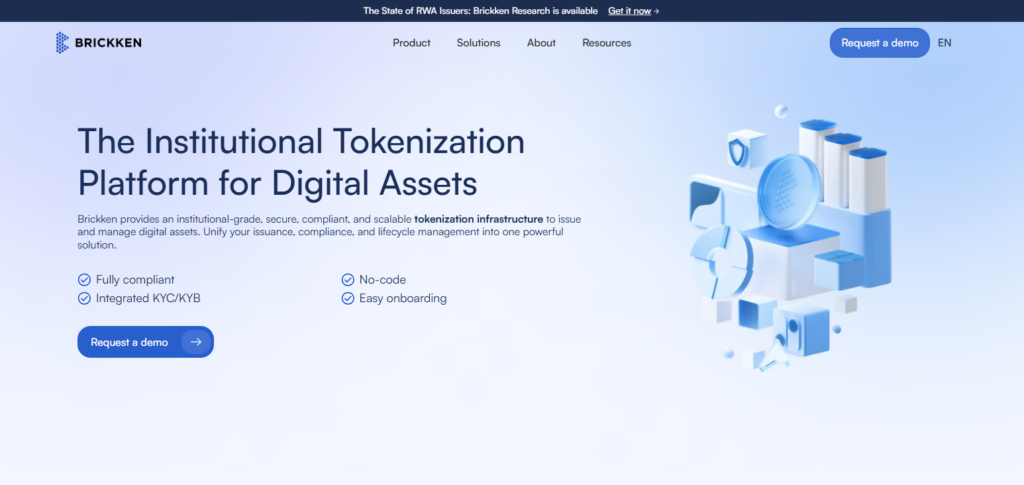
By using Brickken, organizations can launch their digital assets and maintain the compliance and oversight required by regulators at a much lower level of operational complexity and administrative burdens.
| Pros | Cons |
|---|---|
| No-code platform simplifies asset tokenization. | Advanced customization options remain somewhat limited. |
| Suitable for startups and small businesses. | Enterprise-scale deployments may require additional support. |
| Includes investor management and fundraising tools. | Premium features require paid subscription plans. |
| Reduces technical development requirements significantly. | Compliance responsibilities still remain with issuers. |
| Easy-to-use interface for beginners. | Smaller institutional presence than major competitors. |
10. RWA.xyz
RWA.xyz focuses exclusively on the global real-world asset tokenization market. While they do not offer any sort of token themselves
They offer extensive market research, including the value of tokenized assets, which protocols are leading the space, the participation of various institutions, on-chain data, and the growth and development of ecosystems.
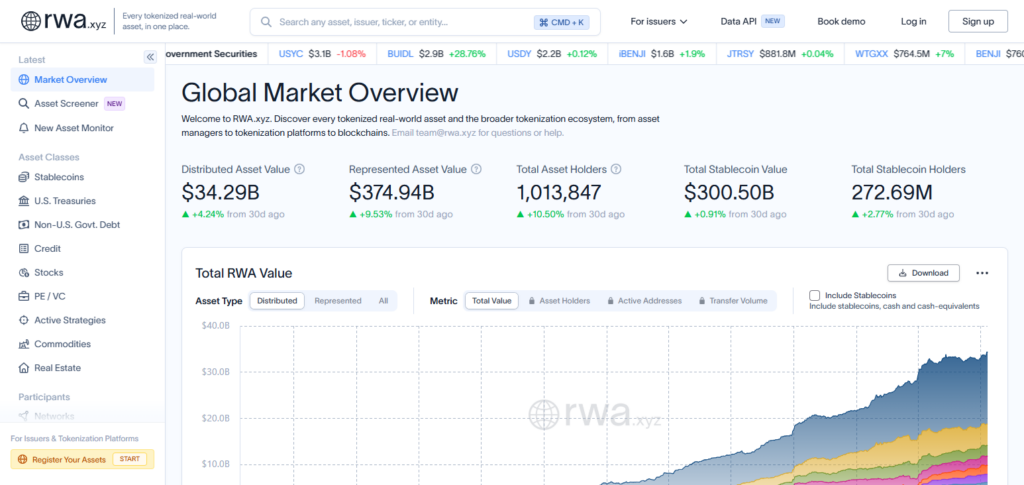
Investors, researchers, and companies have all relied on RWA.xyz’s data to get insights on the market and to discover opportunities within the fast growing RWA space.
Their clear methodology and research makes them an ideal partner for understanding the market of tokenized assets.
| Pros | Cons |
|---|---|
| Comprehensive analytics for the RWA ecosystem. | Does not provide direct asset tokenization services. |
| Tracks protocol growth and market performance. | Data accuracy depends on integrated data sources. |
| Useful for investors and market researchers. | Advanced analytics may require market knowledge. |
| Improves transparency across tokenized asset markets. | Limited functionality beyond analytics and insights. |
| Regularly updates ecosystem statistics and rankings. | Cannot execute investments or custody digital assets. |
Cocnlsuion
Choosing the Best Tokenization Platforms for Real-World Assets depends on your compliance needs, supported asset types, security requirements, and scalability goals.
Platforms like Securitize, Tokeny, Polymesh, and Ondo Finance offer reliable solutions for institutions and businesses entering the RWA market.
By selecting the right platform, organizations can improve liquidity, transparency, operational efficiency, and unlock new global investment opportunities through blockchain technology.
FAQ
Which platform is best for institutional asset tokenization?
Securitize and Taurus are among the best choices for institutions due to strong compliance features.
Which platform is easiest for beginners?
Brickken is beginner-friendly thanks to its no-code interface and simplified asset tokenization process.
Can I tokenize real estate using these platforms?
Yes. Most platforms support real estate tokenization, including Securitize, Tokeny, and Brickken.
Are tokenized real-world assets legal?
Yes, tokenized assets are legal in many jurisdictions when they comply with applicable financial regulations.
