


In this article I will discuss the best Bittensor (TAO) subnets for decentralized AI and describe the technologies, use cases, strengths and practical applications that make them special.
We will review how these special purpose subnets support AI inference, machine learning, robotics, GPU computing, security, storage and financial intelligence and will consider their possible role in building a more open, scalable and decentralized artificial intelligence ecosystem.
Key Points & Top Bittensor (TAO) Subnets for Decentralized AI
- Chutes (SN64): Serverless AI inference platform delivering efficient LLM execution at significantly reduced cloud costs.
- Targon (SN4): Decentralized multimodal AI processing platform built for high-performance inference workloads.
- Templar / Teutonic (SN3): Decentralized machine learning infrastructure supporting intensive computational workloads and model development.
- Score (SN44): Physical AI evaluation platform focused on robotics, spatial intelligence, and performance measurement.
- lium.io (SN51): Decentralized GPU marketplace connecting computing resources with AI and machine-learning workloads.
- Gradients (SN56): Open-source platform supporting collaborative AI training, experimentation, and machine-learning model development.
- Hone (SN5): Large-scale AI training infrastructure focused on developing advanced models and fundamental machine intelligence.
- IOTA (SN9): Distributed neural-network training platform optimizing intelligence through decentralized computational resources and collaboration.
- Vanta (SN8): Quantitative AI platform providing financial forecasting, predictive modeling, and advanced data analysis.
- BitMind (SN34): AI security platform detecting deepfakes, verifying synthetic media, and identifying manipulated content.
- Hippius (SN75): Decentralized cloud storage infrastructure providing persistent, distributed data storage for applications.
- OpenRoboto (SN80): Decentralized robotics platform supporting automation, autonomous systems, and collaborative swarm intelligence.
- SayGM (SN28): Conversational AI infrastructure delivering natural-language generation and intelligent communication endpoints.
- RedTeam (SN61): Adversarial AI security platform conducting vulnerability assessments, model testing, and automated red-teaming.
- Affine (SN120): Cross-subnet utility platform enabling specialized algorithms, integrations, and decentralized computational execution.
15 Top Bittensor (TAO) Subnets for Decentralized AI
1. Chutes (SN64)
Chutes (SN64) is focused on decentralized, serverless AI inference, particularly for large language models and other compute-intensive AI workloads. The architecture is intended to facilitate running models without the need for developers to manage traditional centralized cloud infrastructure.

By distributing inference resources across a decentralized network, Chutes has the potential to increase resource usage and offer flexible access to computing capacity. Its main use cases are LLM applications, AI Agents, text generation and other inference heavy services.
That subnet is especially relevant as the demand for AI inference continues to grow. That said, users should consider availability, performance consistency, the models supported, pricing, and network participation before taking a side-by-side view of it versus centralized cloud providers.
Chutes (SN64) Pros & Cons
| Pros | Cons |
|---|---|
| Efficient serverless architecture can simplify AI inference deployment. | Performance may vary depending on available decentralized infrastructure. |
| Supports large-scale LLM inference workloads with flexible resource allocation. | Complex workloads may require careful resource configuration. |
| Can reduce infrastructure overhead compared with traditional deployment models. | Developers may face a learning curve when adopting the platform. |
2. Targon (SN4)
Targon (SN4) is designed for decentralized AI inference and multi-modal processing with a workload that can include text, images, and other data types. Its emphasis on high-performance inference is applicable to use cases that require rapid AI answers without fully depending on centralized infrastructure.
As artificial intelligence systems evolve from text-only interfaces to more sophisticated models capable of processing multiple data types, the capabilities of multimodality are becoming more and more important. Targon’s decentralized model can broaden access to computational resources and enable specialized AI services

Developers should consider factors like model availability, inference quality, latency, hardware requirements and validator participation when evaluating this subnet to determine if the infrastructure is suitable for their specific AI application needs.
Targon (SN4) Pros & Cons
| Pros | Cons |
|---|---|
| Supports multimodal workloads involving different AI data formats. | Multimodal processing can require substantial computational resources. |
| Designed for high-performance decentralized inference environments. | Results may depend on participating hardware capabilities. |
| Broad AI processing potential supports diverse applications. | Specialized workloads may require additional optimization. |
3. Templar / Teutonic (SN3)
Templar / Teutonic (SN3) focuses on decentralized machine learning infrastructure and compute-heavy AI workloads. This is particularly relevant to developers and researchers who need a lot of processing power in order to develop models, run experiments or perform other resource-intensive computations.

Decentralized machine learning can also help to reduce reliance on a single provider and enable broader access to computing resources by distributing workloads over the infrastructure of participants. The value of the subnet is highly contingent upon the available hardware, workload efficiency, network participation, and the quality of the computational services provided.
The biggest attraction for AI developers is dedicated compute capacity. However, complex distributed environments may require additional technical expertise beyond traditional centralized machine-learning infrastructure.
Templar / Teutonic (SN3)
| Pros | Cons |
|---|---|
| Built for computationally intensive machine-learning workloads. | Heavy workloads can create significant hardware requirements. |
| Decentralized architecture can distribute computational resources effectively. | Infrastructure complexity may challenge smaller participants. |
| Suitable for advanced model development and experimentation. | Resource availability can influence processing consistency. |
4. Scoring (SN44)
Score (SN44) is interested in physical AI, robotics, spatial intelligence and assessment of intelligent systems working in real-world environments. Score moves beyond language model subnets or traditional inference to address AI capabilities that interact with physical spaces and robotic systems.
Evaluation infrastructure can help evaluate how well artificial intelligence systems understand environments, make decisions, and execute tasks. This makes the subnet relevant to robotics developers, researchers in autonomous systems, and organizations exploring embodied intelligence.

It’s a niche focus that creates a unique space in decentralized AI. But physical AI evaluation may also require special datasets, simulations, hardware and testing environments, which complicates development compared to purely software-based AI benchmarking.
Score (SN44) Pros & Cons
| Pros | Cons |
|---|---|
| Focuses on emerging physical AI and robotics applications. | Robotics evaluation requires specialized datasets and environments. |
| Supports assessment of spatial intelligence capabilities. | Physical AI applications can be expensive to develop and test. |
| Creates specialized evaluation infrastructure for intelligent machines. | Benchmark relevance may vary across different robotic systems. |
5. lium.io (SN51)
lium.io (SN51) Decentralized GPU resources and computational infrastructure for machine learning and artificial intelligence workloads. The concept is tackling a major hurdle in modern AI: access to GPUs that are affordable and can scale. Instead of relying entirely on centralized cloud providers, decentralized GPU networks can connect available computing resources to users who need processing power.
This approach can help improve utilization of otherwise idle hardware, and increase access to AI computation. Use cases can range from model inference, training, experimentation, rendering and other GPU intensive tasks.

The effectiveness of the approach depends on availability of GPUs, hardware specs, reliability, geographic distribution, and suitability of the workload. Users must compare these factors carefully before choosing a decentralized compute infrastructure.
lium.io (SN51) Pros & Cons
| Pros | Cons |
|---|---|
| Connects decentralized GPU resources with AI workloads. | GPU availability may fluctuate across the network. |
| Can provide alternative access to distributed computing capacity. | Hardware differences can create inconsistent performance. |
| Supports broader utilization of underused computational resources. | Users may need to evaluate providers carefully for demanding workloads. |
6. Gradients (SN56)
Gradients (SN56) is about open-source AI development, collaborative machine learning and experimentation. Its model could be particularly useful to researchers and developers who want to build or improve machine-learning systems with more accessible and collaborative infrastructure. Open-source involvement fosters experimentation, transparency and contributions from a larger technical community.

The subnet could enable model training, development and testing operations and collaborative AI research. Decentralized structure could also help distribute computational and development responsibilities among participants instead of centralizing it within one organization.
The most important factors are model quality, the amount of computing power you have, the activity of the community supporting the project, documentation, and ecosystem maturity. These factors allow to evaluate its practical usefulness for AI developers.
Gradients (SN56) Pros & Cons
| Pros | Cons |
|---|---|
| Open-source approach encourages collaborative AI development. | Community-driven development can produce varying project maturity. |
| Supports experimentation with machine-learning models and training. | Training large models can remain computationally expensive. |
| Encourages broader participation in AI research and development. | Contributors may need strong technical expertise to participate effectively. |
7. Hone (SN5)
Hone (SN5) is focused on training large scale AI models and building advanced intelligence. Training ever more capable models requires lots of computing power, advanced optimization methods, quality data sets, and stable infrastructure. Hone is niche focused and sits on the training side of the Bittensor ecosystem, rather than inference-only applications.

It can be used to test advanced models, basic AI research and heavy training processes. A decentralized training environment can help share resources between participants, and provide an alternative infrastructure for AI development.
But training at scale is technically challenging, requiring substantial computing power, coordination, data quality, and optimization. Its long-term value is contingent on successful training and engagement within the network.
Hone (SN5) Pros & Cons
| Pros | Cons |
|---|---|
| Focuses on large-scale AI model training capabilities. | Advanced training workloads require considerable computational resources. |
| Supports research into increasingly capable machine intelligence. | Training infrastructure can involve substantial operational complexity. |
| Specialized training focus can attract advanced AI workloads. | Results may depend heavily on model and dataset quality. |
8. IOTA (SN9)
IOTA (SN9) is about distributed neural-network training and intelligence optimization The subnet is an approach where the available computational resources and the machine-learning processes can be distributed, instead of pooling together in a classical centralized infrastructure provider.
Distributed training can potentially expand access to computing capacity, while enabling multiple participants to pool resources toward AI development. It can be used for neural-network experimentation, model optimization and research in computation.

The main technical difficulty is to coordinate efficiently distributed resources, especially if hardware capacities, network conditions and availability of participants are varying. The value of IOTA for developers and researchers will probably be more meaningful when benefits of distributed training over traditional infrastructure are realized, but practical performance should be evaluated using available network and workload data.
IOTA (SN9) Pros & Cons
| Pros | Cons |
|---|---|
| Distributed training can utilize computational resources across participants. | Distributed coordination can introduce technical complexity. |
| Supports neural-network development and intelligence optimization. | Training performance may depend on network participation. |
| Decentralized architecture can expand available training capacity. | Synchronization requirements can affect large training workloads. |
9. Vanta (SN8)
Vanta (SN8) is a quantitative financial forecasting, forecasting, and data-driven analysis company. Unlike general purpose AI subnets, its focus is on financial intelligence and quantitative applications. Potential applications include market data forecasting, financial pattern analysis, predictive signal generation, and quantitative research support.

AI-based financial modeling can handle huge amounts of data and find links that would be hard to assess manually. However, financial prediction is inherently uncertain, because markets are influenced by changing economic conditions, news, liquidity and unpredictable events.
Outputs should not be automatically treated as guarantyd trading signals. Users should review the methodology, historical performance, data quality, validation practices and model robustness before relying on results.
Vanta (SN8) Pros & Cons
| Pros | Cons |
|---|---|
| Specialized focus supports quantitative financial intelligence applications. | Financial models require reliable and high-quality datasets. |
| Predictive analytics can support data-driven decision-making. | Market conditions can reduce forecasting reliability. |
| Combines computational methods with financial modeling use cases. | Financial applications require careful validation and risk controls. |
10. BitMind (SN34)
BitMind (SN34) is working on AI security, including deepfake detection, synthetic-media verification, and spotting potentially manipulated digital content. As generative AI gets better at creating realistic images, videos, audio and other media, detection technologies are becoming a key part of the digital trust infrastructure.

BitMind’s solution to this problem is AI-based methods for distinguishing real content from artificially created or manipulated content. Possible use cases include content verification, cyber security, media authentication, and fraud prevention.
The subnet’s specialized security focus gives it a practical use case outside of general AI generation. Detection, however, is an arms race and models need to continually evolve as generative techniques become more and more sophisticated and harder to identify.
BitMind (SN34) Pros & Cons
| Pros | Cons |
|---|---|
| Addresses growing demand for synthetic-media detection. | Detection accuracy can decline as generative techniques evolve. |
| Useful for identifying potentially manipulated digital content. | False positives and negatives remain important concerns. |
| AI security focus gives the subnet a clear practical purpose. | Detection systems require continuous model improvements. |
11. Hippius (SN 75)
SN75 Hippius is all about decentralized cloud storage and persistent data infrastructure. Storage is an important supporting layer for decentralized AI, as the models, datasets, application data and other digital resources require reliable persistence.
Hippius could offer an alternative to the traditional centralized storage infrastructure by distributing storage across a network, which could add redundancy and reduce dependence on a single provider. It can be used for AI datasets, decentralized applications, backup and persistent digital information.

The practical value of decentralized storage is determined by its availability, retrieval performance, redundancy, capacity, security, cost, etc. Organizations looking into it should also consider data-management needs and if its infrastructure meets their reliability and compliance demands.
Hippius (SN75) Pros & Cons
| Pros | Cons |
|---|---|
| Decentralized storage can reduce reliance on centralized infrastructure. | Distributed storage may involve more complex data management. |
| Provides persistent infrastructure for AI-related data requirements. | Retrieval performance can depend on network conditions. |
| Useful for applications requiring distributed data persistence. | Large-scale storage operations may increase management requirements. |
12. OpenRoboto (SN80)
OpenRoboto (SN80) is about decentralized robotics, automation and swarm intelligence. Its focus reflects the increasing convergence between artificial intelligence and physical machines that are able to function independently. Applications of robotics include autonomous navigation, cooperative machines, industrial automation, and experimental swarm systems.
Swarm intelligence is of particular interest, as one can coordinate the actions of multiple machines without depending on one central controller. A decentralized AI infrastructure could enable the experimentation with distributed robotic intelligence and collaborative autonomous systems.

But robotics introduces hardware reliability, sensor accuracy, safety, real-world environments, and latency challenges not found in software-only AI. Thus, developers need to consider computational capabilities and physical deployment requirements.
OpenRoboto (SN80) Pros & Cons
| Pros | Cons |
|---|---|
| Targets decentralized robotics and autonomous-machine applications. | Robotics development requires specialized hardware and testing environments. |
| Swarm intelligence enables research into coordinated autonomous systems. | Real-world deployment can involve significant engineering challenges. |
| Combines AI, automation, and robotics within one ecosystem. | Hardware compatibility may limit practical implementation options. |
13. SayGM (SN28)
SayGM (SN28) focuses on conversational AI and natural-language generation endpoints. Its purpose aligns with the growing demand for AI systems capable of understanding user requests and generating useful, context-aware responses.
Potential applications include conversational assistants, customer-service systems, AI interfaces, content generation, and natural-language applications. Decentralized inference can provide an alternative architecture for delivering AI-powered communication services while distributing computational workloads across network participants.

The quality of such systems depends on underlying models, response latency, availability, training data, and infrastructure reliability. Developers should also consider privacy, moderation, hallucination risks, and integration requirements when deploying conversational AI. Its specialized focus makes it relevant to applications where language interaction is central.
SayGM (SN28) Pros & Cons
| Pros | Cons |
|---|---|
| Provides infrastructure for conversational AI applications. | Response quality depends on underlying models and training data. |
| Natural-language generation supports multiple communication use cases. | Conversational workloads can require significant inference resources. |
| Specialized endpoints can simplify integration into AI applications. | Developers may need additional safeguards for sensitive interactions. |
14. RedTeam (SN61)
RedTeam (SN61) is an adversarial AI testing, vulnerability discovery, security assessment and red-teaming company for standard artificial intelligence systems. As organizations increasingly adopt language models and autonomous AI agents, identifying vulnerabilities before deployment is becoming a critical security requirement.
Red-team systems can simulate adversarial prompts, malicious inputs, unexpected behaviors, and other attack scenarios to test model resilience. A decentralized network has the potential to bring together different contributors and testing approaches, leading to a wider coverage of potential vulnerabilities.

This subnet is of particular interest to AI developers, cybersecurity teams and organizations deploying high-impact models. But effective red-teaming requires evolving attack strategies, as artificial intelligence systems and defenses evolve at a rapid pace.
RedTeam (SN61) Pros & Cons
| Pros | Cons |
|---|---|
| Focuses directly on identifying AI vulnerabilities and weaknesses. | Security testing requires continuously updated attack techniques. |
| Adversarial testing can improve AI system resilience. | Advanced red-teaming can require considerable technical expertise. |
| Useful for organizations developing security-conscious AI systems. | Testing results may vary across different models and environments. |
15. Affine (SN120)
Affine (SN120) is focused on cross subnet utility, specialized algorithmic execution, and integration with the broader Bittensor ecosystem. The potential role of AI is not in a specific use case, but rather in bridging niche capabilities and enabling computational functions across decentralized environments.
As Bittensor continues to grow a larger ecosystem of specialized networks, cross-subnet utility can become increasingly valuable as individual subnets may benefit from interacting with complementary services. It can be used for algorithmic processing, interoperability, and special computational workflows.
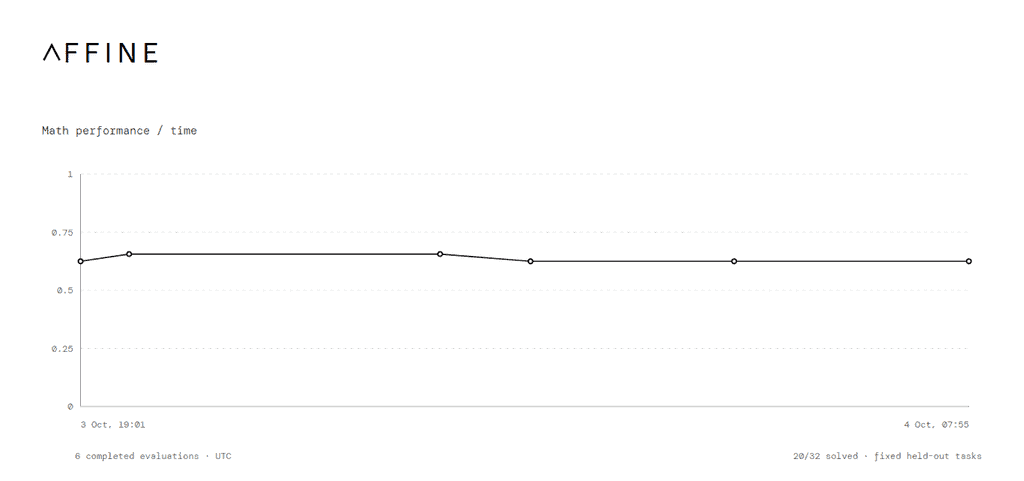
The main problem is architectural complexity: efficient cross-subnet operation requires reliable communication, compatibility, coordination and clear utility. Its long-term relevance thus depends on ecosystem uptake and real-world demand for interconnected subnet services.
Affine (SN120) Pros & Cons
| Pros | Cons |
|---|---|
| Supports utility across specialized decentralized AI environments. | Cross-subnet integration can introduce architectural complexity. |
| Algorithmic execution enables specialized computational use cases. | Interoperability may depend on participating subnet infrastructure. |
| Can connect different capabilities within the broader ecosystem. | Specialized functionality may be difficult for newcomers to understand. |
Conclusion
To summarize, Bittensor’s decentralized AI ecosystem provides dedicated subnets for inference, machine learning, robotics, security, storage, financial intelligence and GPU computation. Best Bittensor (TAO) Subnets for Decentralized AI. Aside from centralized infrastructure, specialized networks can enable a variety of AI workloads.
The ecosystem, along with subnet utility, performance, adoption, technology, and real world use cases will all be important considerations when thinking about their long term potential and relevance.
FAQ
What are Bittensor subnets?
Bittensor subnets are specialized networks providing different decentralized AI services.
What is Bittensor (TAO) used for?
TAO powers incentives, participation, and value exchange across Bittensor’s ecosystem.
Which Bittensor subnet focuses on AI inference?
Chutes and Targon focus primarily on decentralized AI inference services.
Which subnet supports decentralized GPU computing?
lium.io connects decentralized GPU resources with AI computational workloads.
