


In this post, I will review the Best Crypto Intent Trading Platforms. These platforms offer a new model for decentralized trading by providing access to better liquidity combined with automated strategies and smarter execution.
These platforms enable users to set goals for their trades while complex solver networks carry out the tasks of optimizing trades. I will observe their features, benefits, advantages, some limitations, and analyze their future relevance to crypto trading.
Key Points & Best Crypto Intent Trading Platforms
| Crypto Intent Trading Platform | Explanation |
|---|---|
| CoW Swap | Uses intent-based orders, MEV protection, and decentralized trading for crypto users globally |
| UniswapX | Enables intent-driven swaps with flexible execution routes across decentralized crypto markets efficiently |
| 1inch Fusion | Provides intent-based trading with competitive prices through professional solver networks and automation |
| Matcha | Offers simple crypto intents with smart routing and optimized trade execution tools |
| Hashflow | Supports permissionless intent trading using RFQ mechanisms for secure crypto transactions worldwide |
| Jupiter | Delivers intent-based swaps across Solana with advanced routing and liquidity aggregation features |
| dYdX | Combines derivatives trading intents with decentralized infrastructure and advanced crypto markets access |
| Bebop | Provides batch intent execution for efficient crypto swaps with reduced transaction costs |
| ParaSwap | Uses smart intent aggregation to improve decentralized exchange performance for traders globally |
| KyberSwap | Enables efficient intent-based exchanges with liquidity solutions and optimized trading experiences |
10 Best Crypto Intent Trading Platforms
1. CoW Swap
CoW Swap is a popular intent-based decentralized trading platform. Instead of executing transactions, users on CoW Swap can simply state their trade goal. Using a solver network, CoW Swap is able to find optimal execution paths while also safeguarding users from MEV, front-running, and slippage.
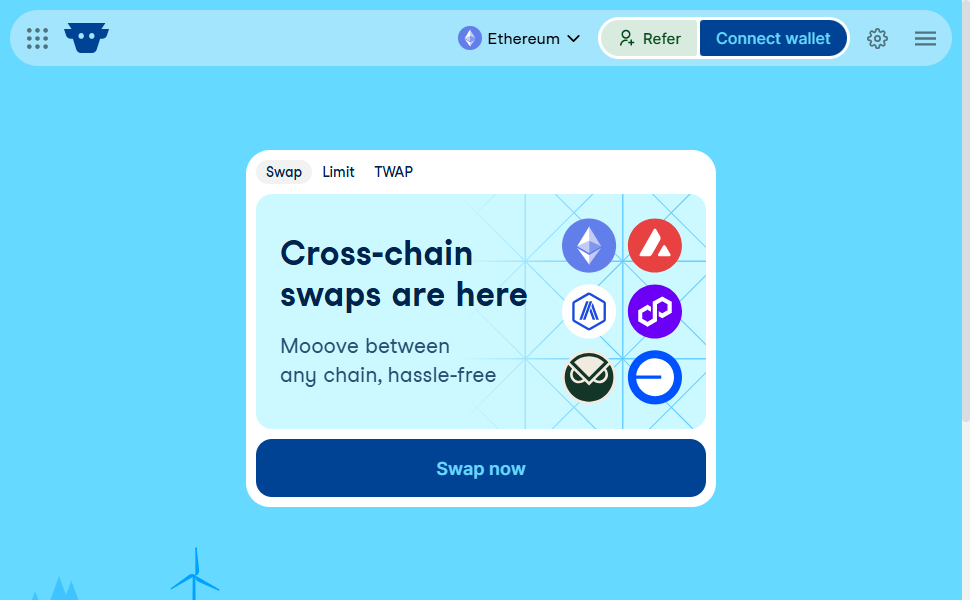
Due to CoW Swap’s batch auction system, orders are directly matched, increasing system efficiency. For users wanting to participate in DeFi, CoW Swap is a desirable platform due to its transparent, safe, and inexpensive system.
CoW Swap – Pros & Cons
| Pros | Cons |
|---|---|
| Protects users from MEV attacks through batch auction-based trading. | Limited availability of some trading pairs compared with major DEXs. |
| Solver competition helps achieve better swap execution prices. | Transaction settlement may depend on external solver networks. |
| Reduces unnecessary slippage and improves trading efficiency. | Beginners may need time to understand intent-based trading concepts. |
| Supports secure and non-custodial decentralized transactions. | Liquidity can vary depending on market conditions. |
| Provides gas-efficient trading through innovative order matching. | Advanced features may feel complex for casual traders. |
2. UniswapX
UniswapX is an intent-based trading system in which users can declare a goal to perform a trade and professional fillers compete to execute that trade. UniswapX is an advanced trading system and significantly less complex than its predecessors.
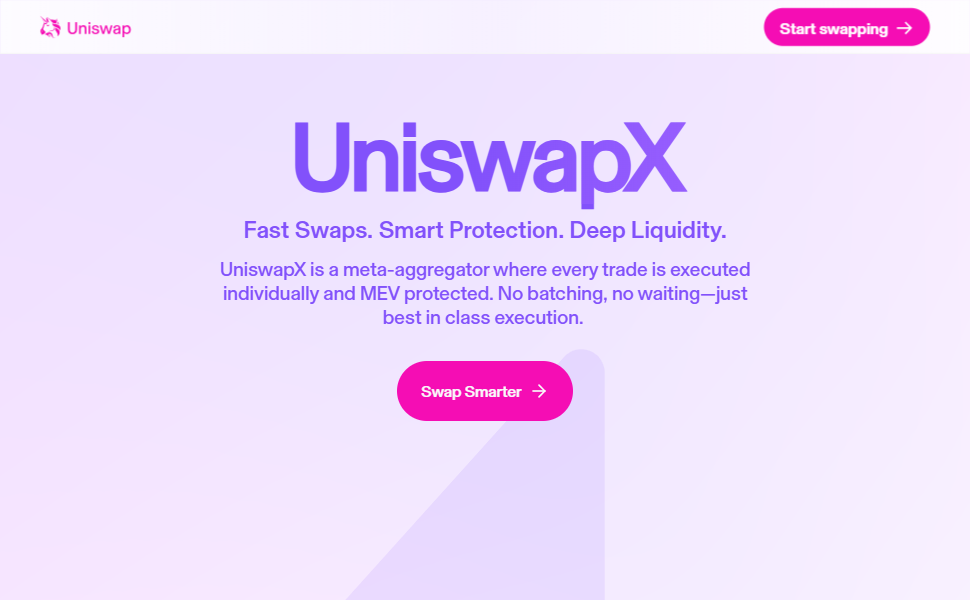
Trade routing, gas/fee optimization, and liquid sourcing are all automated and performed by the system itself. UniswapX is the first cross-chain trading system and improves the user experience by abolishing the majority of constraints of traditional DEXs.
UniswapX – Pros & Cons
| Pros | Cons |
|---|---|
| Provides automated trade execution through professional fillers. | Depends on third-party fillers for transaction execution. |
| Eliminates traditional DEX routing complexity for users. | Not all tokens may have sufficient filler competition. |
| Offers flexible liquidity sourcing across multiple markets. | Advanced features may confuse new DeFi users. |
| Improves user experience with intent-based swaps. | Execution quality depends on available market conditions. |
| Built on trusted Uniswap ecosystem infrastructure. | Some cross-chain capabilities are still developing |
3. 1inch Fusion
1inch Network Fusion is an intent-based trading system in which users are able to perform cryptocurrency swaps without incurring the customary gas fee.
Instead of making a direct trade with a liquid pool, users of 1inch Network Fusion create a trade order that is executed by a professional resolver at an optimal and fair execution price.

By integrating decentralized exchange (DEX) aggregation and automated settlement, 1inch Fusion improves security and efficiency across DeFi.
1inch Fusion is sought after by users trading on DeFi for its cost-effective solution and seamless experience of non-custodial trading.
1inch Fusion – Pros & Cons
| Pros | Cons |
|---|---|
| Allows gasless token swaps through resolver-based execution. | Supported tokens and networks may vary over time. |
| Provides competitive pricing through professional resolvers. | Resolver availability can affect execution speed. |
| Reduces transaction costs for frequent traders. | Less suitable for highly customized trading strategies. |
| Combines DEX aggregation with intent-based technology. | Beginners may require learning before using advanced options. |
| Maintains non-custodial trading security. | Market volatility can impact final swap rates. |
4. Matcha
Matcha is a straightforward crypto trading application that integrates smart order routing technology to facilitate intent-based trading.
Smart order routing technology enables Matcha users to discover optimal swap trades with the least price impact and execution risk across a variety of decentralized exchanges.
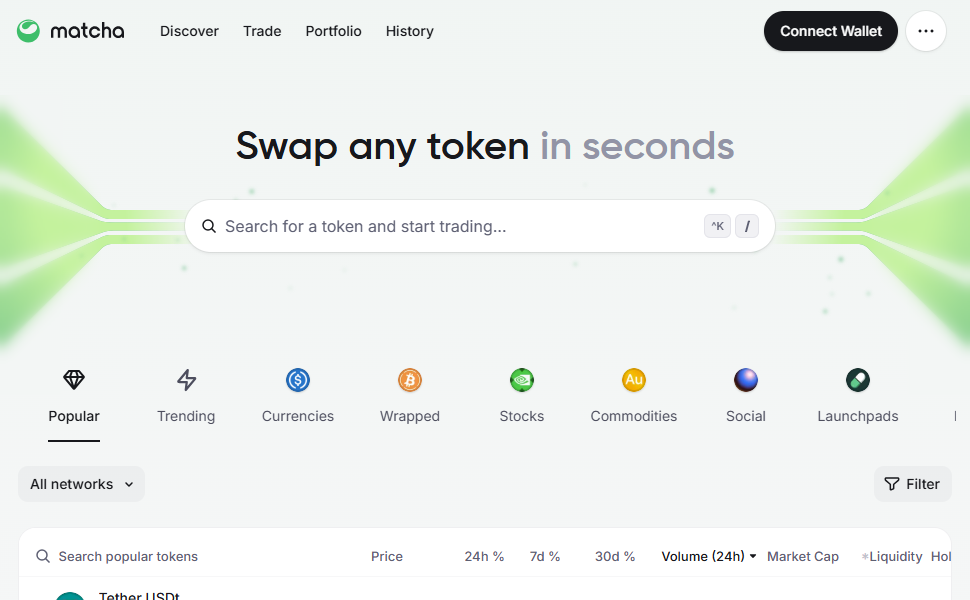
Matcha simplifies the process of accessing advanced DeFi liquidity, and is therefore, useful to both novice and highly skilled crypto traders.
Efficient route trading technology enables Matcha to improve the accessibility and functionality of crypto trading within a decentralized exchange.
Matcha – Pros & Cons
| Pros | Cons |
|---|---|
| Simple interface suitable for beginner DeFi traders. | Limited advanced trading tools compared with professional platforms. |
| Uses smart routing to find better swap prices. | Primarily focused on token swaps rather than derivatives. |
| Aggregates liquidity from multiple decentralized exchanges. | Performance depends on connected liquidity sources. |
| Provides transparent decentralized trading access. | May have fewer unique features than competitors. |
| Helps reduce manual comparison between exchanges. | Network fees still apply on blockchain transactions. |
5. Hashflow
Hashflow connects crypto traders to professional liquidity providers using an intent-based RFQ model. Automated market makers (AMMs) provide variable and unpredictable pricing, and are especially susceptible to both slippage issues and MEV attacks.
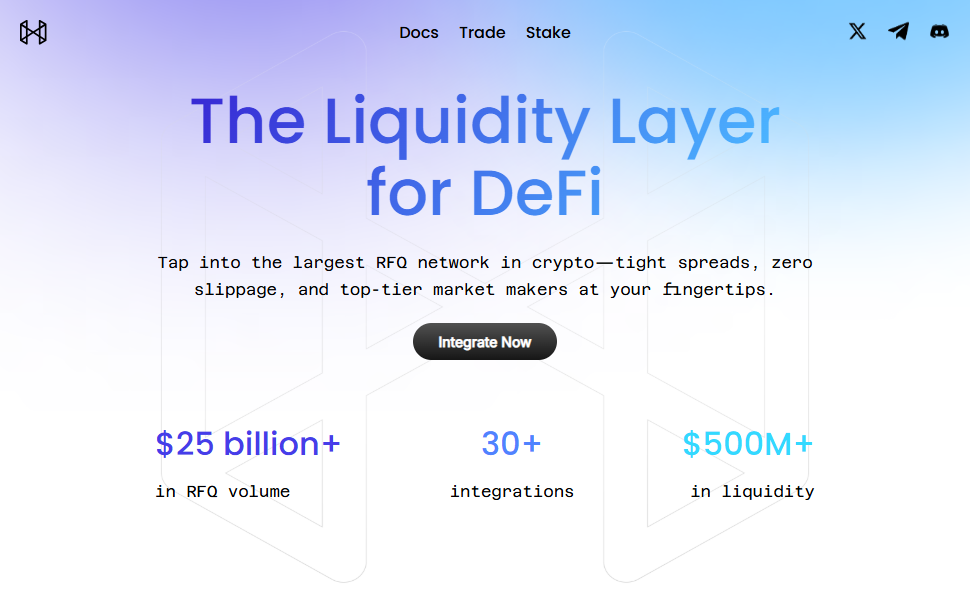
Unlike AMMs, Hashflow avoids pricing slippage, and builds trust within the trading community by closing the MEV gap.
Hashflow provides safe execution of fast, cross-chain swaps and provides grade-A liquidity to institutional clients, which enables Hashflow to compete aggressively with the rest of the crypto intent trading platforms.
Hashflow – Pros & Cons
| Pros | Cons |
|---|---|
| Uses RFQ technology for predictable trade pricing. | Relies heavily on professional market makers. |
| Protects users from slippage and MEV attacks. | Liquidity availability depends on participating providers. |
| Supports fast cross-chain crypto swaps. | May have fewer assets than larger DEX aggregators. |
| Offers institutional-grade trading infrastructure. | Less suitable for users seeking anonymous liquidity pools. |
| Provides efficient execution without traditional AMM issues. | Advanced features may require DeFi knowledge. |
6. Jupiter
Jupiter is a leading trading aggregator in the Solana ecosystem, and specializes in routing intent-based swaps. Located on the Solana blockchain, it utilizes advanced algorithms to optimize liquidity and price to improve transactions.
More recently, Jupiter has built beyond the simplicity of swap transactions to integrate advanced DeFi tools such as limit orders.

Jupiter is one of the most relevant trading platforms in the blockchain ecosystem, and especially so within the Solana ecosystem, due to the deep integrations and infrastructure it has built.
Jupiter – Pros & Cons
| Pros | Cons |
|---|---|
| Provides powerful liquidity aggregation on Solana blockchain. | Mainly focused on the Solana ecosystem. |
| Finds optimized routes across multiple liquidity sources. | Solana network issues can impact performance. |
| Supports advanced trading features like limit orders. | Users outside Solana have limited usage options. |
| Offers fast transactions with low network costs. | High dependency on Solana infrastructure. |
| Popular choice among Solana DeFi users. | Less diversified compared with multi-chain platforms. |
7. dYdX
dYdX offers an environment for trading derivatives with decentralized design and complex order execution.
Traders can set specific goals aided by technology. dYdX focuses on perpetual trading and offers professional tools and market infrastructure.
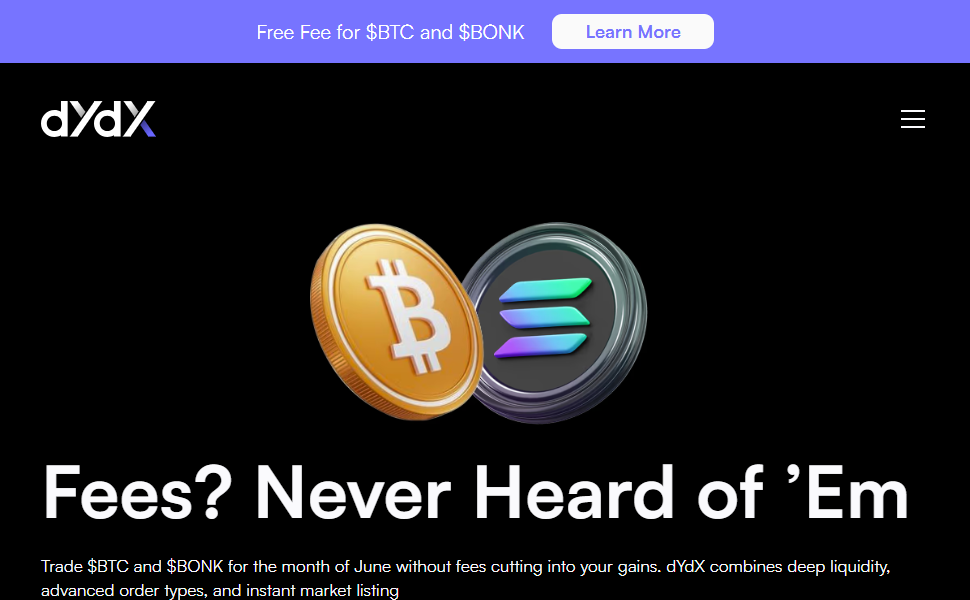
Scalability and innovative blockchain technology provide the advanced trader with automated execution, transparent, and non-custodial services. Traders can use dYdX for its intent-based systems to engage in efficient crypto derivatives trading.
dYdX – Pros & Cons
| Pros | Cons |
|---|---|
| Provides advanced decentralized derivatives trading tools. | Primarily designed for experienced traders. |
| Supports professional-grade perpetual contract markets. | Not focused on simple token swapping. |
| Offers non-custodial and transparent trading infrastructure. | Derivatives trading involves higher market risks. |
| Uses advanced blockchain technology for scalability. | Learning curve is higher for beginners. |
| Provides deep liquidity for professional traders. | Limited appeal for casual crypto investors. |
8. Bebop
Bebop allows its users to conduct multiple token swaps in one single transaction using its unique batch auction model.
This system enhances pricing, minimizes the occurrence of failed transactions, and executes the transaction with a high degree of efficiency.
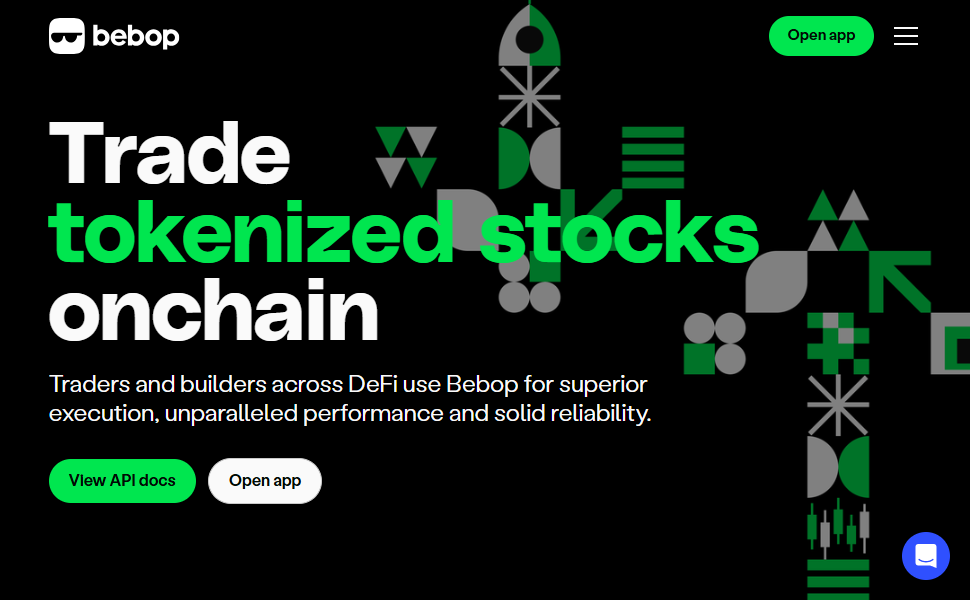
Bebop aims to provide a trading experience at an institutional level while remaining decentralized. Bebop transforms complex transactions and eliminates high fees to provide a modern solution to users requiring advanced transactional capabilities.
Bebop – Pros & Cons
| Pros | Cons |
|---|---|
| Enables efficient batch-based intent trading execution. | Smaller ecosystem compared with major competitors. |
| Reduces failed transactions and improves swap efficiency. | Limited awareness among mainstream crypto users. |
| Supports complex multi-token swap operations. | Liquidity coverage may vary by asset. |
| Provides institutional-focused trading solutions. | Fewer integrations compared with established DEX platforms. |
| Helps optimize transaction costs through smart execution. | Requires understanding of intent-based trading methods. |
9. ParaSwap
ParaSwap aims to streamline transactional efficiency in the crypto space with its advanced liquidity and intelligent routing systems. It is a decentralized exchange that connects multiple DEXs to find the best price and execution opportunities.
Its user intent-based functionality reduces the need for extensive manual legwork across multiple markets to achieve a trade goal.
With its highly advanced infrastructure and cross-chain capabilities, ParaSwap is optimal for advanced users wishing to trade within DeFi.
ParaSwap – Pros & Cons
| Pros | Cons |
|---|---|
| Aggregates liquidity from multiple decentralized exchanges. | Execution depends on external liquidity providers. |
| Helps users discover competitive swap rates. | Advanced functions may be overwhelming for beginners. |
| Supports multiple blockchain networks. | Some tokens may have limited routing options. |
| Provides efficient smart order routing technology. | Cannot fully eliminate blockchain network fees. |
| Improves decentralized trading convenience. | Competition from newer intent platforms is increasing. |
10. KyberSwap
KyberSwap is a decentralized trading platform that combines liquidity aggregation and smart routing to optimize the various aspects of a crypto exchange. The platform helps users minimize the costs and delays of a trade by aggregating liquidity.
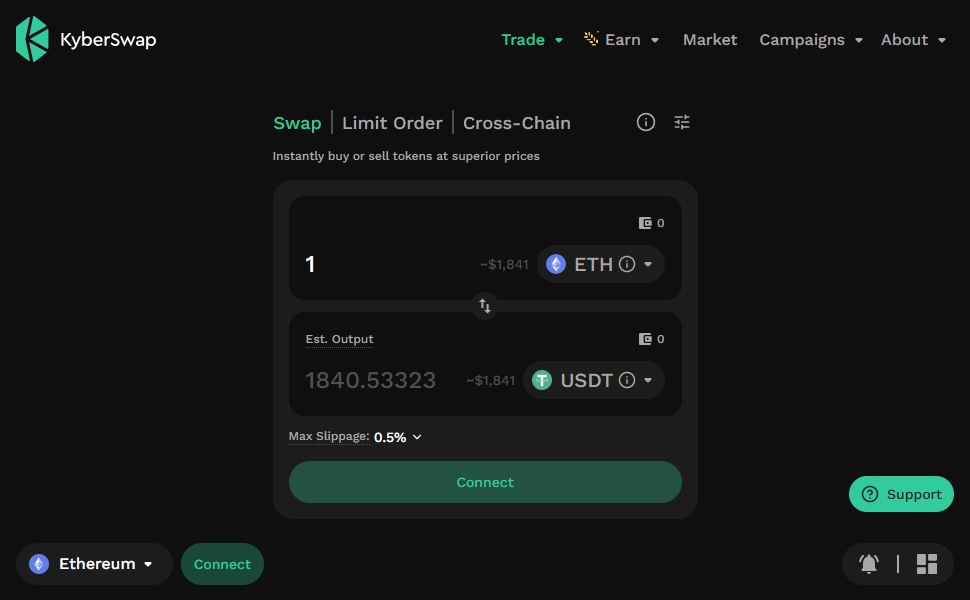
KyberSwap provides token swaps and liquidity management, as well as various technologies for decentralized finance (DeFi).
The user’s satisfaction, safety, and trading experience in crypto are prioritized through KyberSwap’s automated trade execution and optimization. These features are expected to cater to crypto traders, especially in 2026 who want to rely on based crypto trading.
KyberSwap – Pros & Cons
| Pros | Cons |
|---|---|
| Provides smart routing for optimized crypto swaps. | Liquidity depth varies across supported networks. |
| Supports multiple DeFi ecosystem integrations. | User interface may require DeFi experience. |
| Helps reduce trading costs through aggregation. | Some advanced features have limited adoption. |
| Offers decentralized and transparent trading infrastructure. | Market conditions can affect execution quality. |
| Provides liquidity solutions for crypto users. | Faces strong competition from larger DEX platforms. |
Conclusion
In summary, the Best Crypto Intent Trading Platforms are the future of decentralized trading and are improving trade execution, transaction complexity, and liquidity.
The modern crypto user is presented with the opportunity of various innovative platforms like CoW Swap, UniswapX, 1inch Fusion, and Hashflow.
Platforms that utilize intent-based technology are expected to continue optimus improvement and innovation, delivering the crypto community trading experience that is the best, most efficient, and most secure.
FAQ
How do Crypto Intent Trading Platforms work?
These platforms allow traders to submit an intent, such as swapping tokens at the best available rate. Automated solvers or liquidity providers then compete to complete the transaction with optimized execution.
Why is intent-based trading better than traditional DEX trading?
Intent-based trading simplifies the user experience by removing manual route selection and liquidity searching.
Is Crypto Intent Trading safe?
Crypto Intent Trading can offer improved security through decentralized settlement, solver competition, and MEV protection. However, users should always check platform security, smart contract audits, and liquidity reliability before trading.
Which Crypto Intent Trading Platform is best for beginners?
Platforms like Matcha, UniswapX, and Jupiter are suitable for beginners because they offer simple interfaces, automated routing, and easy token swap experiences without requiring advanced DeFi knowledge.
