

This article offers an overview of top stablecoin payment platforms for global businesses. These payment platforms are changing how we conduct digital transactions. Modern stablecoin payment platforms (such as USDT, USDC, etc.) facilitate cheap, secure, and instantaneous cross-border transactions.
Here, you will discover how leading market solutions simplify the cross-border payment process, eliminate the hassle of delays and inefficiencies of traditional banks, and easily expand global operations. All of this, thanks to the integration of blockchain finance.
Key Points & Best Stablecoin Payment Platforms for Global Businesses
| Platform | Explanation |
|---|---|
| Coinbase Commerce | Enables merchants to accept stablecoin payments with instant global settlement |
| BitPay | Supports crypto and stablecoin payments for merchants with low fees |
| Binance Pay | Allows instant stablecoin transfers and merchant payments across global users |
| Circle Payments | Provides USDC based stablecoin infrastructure for fast enterprise level payments |
| CoinPayments | Enables multi coin and stablecoin checkout solutions for online businesses |
| Crypto.com Pay | Offers stablecoin payments with rewards, refunds, and merchant integration tools |
| NOWPayments | Facilitates easy stablecoin acceptance with auto conversion and payout options |
| MoonPay | Provides fiat to stablecoin onramps and seamless global payment solutions |
| BVNK | Delivers enterprise stablecoin payment infrastructure for cross border settlements efficient |
| Fireblocks | Secures stablecoin transactions and custody for institutional digital asset operations |
10 Best Stablecoin Payment Platforms for Global Businesses
1. Coinbase Commerce
Coinbase Commerce is one of the most popular stablecoin payment gateways for merchants worldwide. It allows businesses to receive payments in USDC and other crypto assets directly to self-custodied or exchange-integrated wallets.
With recent enhancements, Coinbase instant settlement routing has improved with faster transaction confirmations and lowered volatility risks. It seamlessly integrates with online selling platforms, such as Shopify and WooCommerce.
It’s compliant with most regulations, allowing its clientele to conduct business in regulated marketplaces. There is an enhanced transactional visibility, reduced risk of chargebacks, and an improved operational flexibility with seamless conversion of the digital assets into fiat.
Coinbase Commerce Pros & Cons
Pros:
- Simplistic for both installer and customer
- Highly trusted regulatory compliance
- USDC and other major stablecoins are accepted
- Global fast settlement
- Shopify and WooCommerce integration
Cons:
- Less control than other custodial options
- DeFi alternatives cost less
- Limited features in different corners of the world
- Reliance on Coinbase
- Not a fully decentralized system
2. BitPay
BitPay is one of the original crypto payment processors, and after the addition of support for stablecoin, Bitcoin, and Ethereum payments, is now even more popular. BitPay effectively eliminates the banking delays and high transactional cost for cross-border payments.
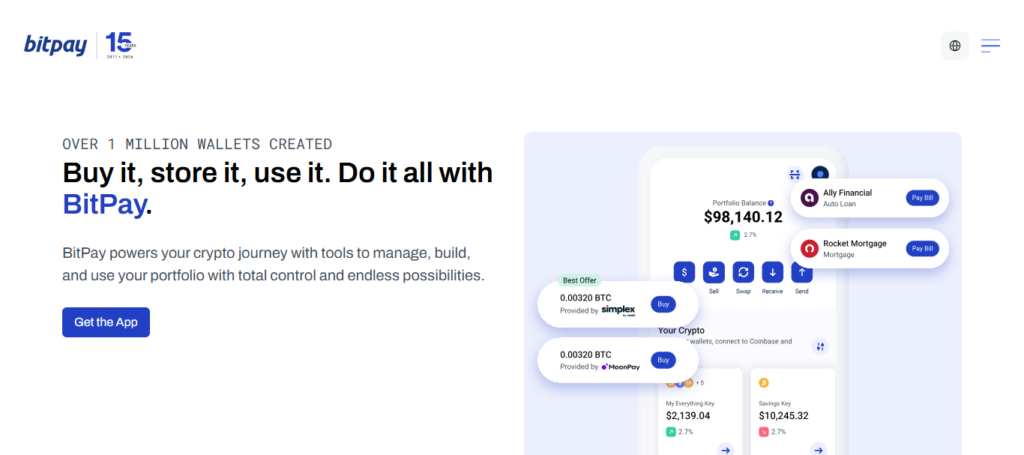
Stablecoins can be instantaneously converted to fiat currencies. Speed of blockchain settlements is maintained while users are protected from the volatility of the market. BitPay’s merchant dashboard continues to improve with invoicing, subscription billing, and settlement features.
It is popular with SaaS and other digital retailers. For large companies, BitPay’s ongoing improvements to compliance and protection against fraud are welcomed improvements.
BitPay Pros & Cons
Pros:
- Old and trusted payment processor
- Low Volatility risk (instant fiat)
- Excellent invoicing and billing
- Excellent fraud prevention
- Global payment support
Cons:
- Not many stablecoin options (in comparison)
- Onboarding is KYC
- Merchant services can be costly
- Reliance on Centralized systems
- API is not very flexible
3. Binance Pay
Pay allows customers and merchants using the Binance exchange to send and receive payments in stablecoins, contactlessly, and regardless of nationality. As a payment service that allows users to transact without incurring fees, it is designed for international commerce.

Recent updates have improved merchant payment processing via QR codes and APIs and have added greater flexibility for payment processing using the stablecoins, USDT and FDUSD. Merchants using Binance Pay have the advantage of Binance’s vast liquidity
As well as instantaneous transaction settlement. This solution is ideal for businesses in the travel, retail, and service sectors. Binance Pay is designed to meet the needs of users in Asia and Europe who exchange funds internationally and who require the fastest transaction settlement times.
Binance Pay Pros & Cons
Pros:
- Fast transactions that cost nothing for payments
- Instant Global stablecoin transfers
- Binance liquidity
- QR merchant payments
- Fast settlement
Cons:
- Internal reliance on Binance (means almost no adoption)
- Centralized control
- Not very suited for classic enterprise solutions
4. Circle
Circle is a leader in corporate payment solutions with the infrastructure it built to support USDC, one of the most widely used stablecoins.
Regulated stablecoins allow instant and final payment settlement no matter where in the world you are, and Circle has built a payment network that is compliant with rules and regulations.
Circle’s recent development has included the introduction of APIs for financial institutions and global payroll and fintech systems.
These API solutions are being utilized for corporate treasuries, business-to-business payments, and international remittances. Circle is a foundational player of stablecoin commerce and of regulatory-compliant payment solutions.
Circle Pros & Cons
Pros:
- Fiances found in issuer infrastructure and trusted USDC
- Excellent global compliance
- Instant Cross-Border with settlement in real-time
- Advanced and ready for the enterprise
Cons:
- Focused on USDC and not much else
- Onboarding can be costly and complex for enterprise customers
5. CoinPayments
CoinPayments is a multi-cryptocurrency payment processor that handles many coins, including the prominent stablecoins, USDT and USDC. It enables online businesses to quickly add crypto checkout systems to their stores with little to no advanced infrastructure.
Risk of payment request volatility can be diminished by auto-conversions that the processor conducts to the merchant’s currency of choice. CoinPayments has made refinements to its support for CMS plugins and tools to help with fraud.

CoinPayments is a popular choice for e-commerce and digital service providers.Fairly priced and low transaction fees make CoinPayments a practical choice for businesses that aim to service an international clientele that prefers payment methods that do not involve traditional banking systems.
CoinPayments Pros & Cons
Pros:
- Over 200 cryptocurrencies supported
- Easy to use integrations for e-commerce
- Automatic conversion removes volatility
- Lower fees
- All merchants worldwide can access it
Con:
- User interface is older and not as innovative as newer platforms
- Slower and less responsive customer service
- Questions on security
- Complicated fees
- Lacks a lot of advanced tools for businesses
6. Crypto.com
Businesses that use Crypto.com Pay can now provide their clients with a currency that is settled using stable coins and offers cashback. Because of the design of the settlement system and connection to the Crypto.com financial system, the user payments are settled instantaneously.

Some of the upgrades include better merchant APIs, easier refunds, and stable coin support. Rewarded payments naturally result in more purchases, and therefore, this system is excellent for retail and subscription businesses.
If you are interested in leveraging more payment systems and user rewards to boost your conversion with safety and compliance, this system is for you.
Crypto.com Pros & Cons
Pros:
- Users get cash back and rewards
- Great mobile and wallet options
- Fast stablecoin and instant settlements
- Good global retail adoption
- High security and compliance
Con:
- Rewards make it more complicated
- Lots of fees
- Very centralized
- Lacks custom options for businesses
- Not available everywhere
7. NOWPayments
NOWPayments provides a customizable gateway for businesses wanting to accept crypto payments. With features like auto coin conversion, tools for setting up donations, and billing subscriptions, it aims for efficiency and accessibility.
Recently, automated payouts were added, meaning businesses can now seamlessly receive payments in either fiat or crypto. Freelancers, SaaS, and e-commerce businesses have adopted NOWPayments due to its simple and effective API.
Since it’s a non-custodial system, businesses retain full payment control. As demand for a secure, effective payment method grows, NOWPayments aims to be a top solution for medium and small businesses by offering a stablecoin payment option.
NOWPayments Pros & Cons
Pros:
- Easy to use API for devs
- Non-custodial and control funds
- Automatic coin conversion
- Great for subscriptions and donations
- Low business setup cost
Con:
- Limited features focused on larger enterprises
- Dependent on third party and outside liquidity
- Limited customer service
- Less trusted and smaller business
- Volatility is dependent on how you setup
8. MoonPay
MoonPay is a major player in infrastructure that connects fiat and crypto, and focuses on global user access to stablecoins. With MoonPay, businesses can implement features to allow users to purchase stablecoins with a credit card or bank transfer, and even with mobile payment methods.
Recent upgrades have focused on a more automated compliance process, and an increase in the number of countries in which MoonPay is licensed to operate. Crypto wallets and platforms, NFT infrastructure, and finance tools all integrate with MoonPay.
MoonPay facilitates stablecoin payments, which helps businesses meet global standards for compliance and prioritize safe payment methods, while also streamlining customer acquisition, making MoonPay indispensable.
MoonPay Pros & Cons
Pros:
- Easy conversion of fiat to stablecoins
- Great worldwide support for payment methods
- Very easy to use and integrated in a lot of Web3
- High compliance and licensing
- Great user experience
Con:
- Card payments are more costly
- Not a full payment processor
- Limited infrastructure for payouts
- More focused on onboarding than payment processing
- Needs multiple integrations
9. BVNK
BVNK offers cross border stablecoin payment solutions with regulatory compliant treasury management systems. BVNK’s settlement rails allow instant settlement along with management tools for liquidity and programmable payouts.
BVNK is useful for payment processors and fintech companies that focus on global money movement, thus avoiding reliance on the traditional banking system while expediting cross border payment settlement. BVNK’s stablecoin payment system has an API-integrated approach which makes global payment systems easily modernized by enterprises with stablecoin.
BVNK Pros & Cons
Pros:
- Highly robust stablecoin systems
- Promotes operational efficiency
- Offers advanced treasury management
- Easy to integrate
- Lessens dependency on banks
Cons:
- Highly technical
- Small, less utilized system
- Focuses mainly on large enterprises
- Difficult for novices
- Limited retail usage
10. Fireblocks
Fireblocks is designed for stablecoin custody and settlement for institutional customers. Fireblocks offers secure systems for storage, transfer, and settlement of stablecoin transactions at large scale.
Fireblocks has recently enhanced its security and tokenization of transactions policies by adding multi-party computations.
Fireblocks is primarily used by banks, hedge funds, and fintech companies that require managing substantial amounts of digital assets.
Fireblocks is the main platform for enterprises adopting stablecoins because of its security and compliance. The settlement of transactions flows worldwide and offers businesses low operational risk and the assurance of safety.
Fireblocks Pros & Cons
Pros:
- Top-notch MPC security
- Great custody systems
- Scalable transaction infrastructures
- Great compliance tools
- Trusted by banks
Cons:
- High cost
- Complex
- Doesn’t service retail
- Limited direct consumer services
- Highly technical
Conclusion
In Conclusion, Due to stablecoin payment systems, international business transactions are occurring at increased speed with diminished costs and no cross-border restrictions.
Platforms such as Coinbase Commerce, BitPay, Binance Pay, Circle, and Fireblocks target a broad spectrum of clients from the retail seller to the enterprise financial systems.
There are varying emphases among the systems. This could be ease and convenience for the customer and integration to the e-commerce framework, security and the institutional underpinning, and a multiplicity of other systems.
Regardless of the varying emphases, these systems will bring a new level of efficiency, transparency, and scalability to international digital payment systems.
FAQ
What are stablecoin payment platforms?
Stablecoin payment platforms allow businesses to accept and send digital payments using stablecoins like USDT or USDC.
Why are stablecoin payments better for global businesses?
They offer faster settlements, lower fees, and borderless transactions compared to traditional banking systems.
What makes Binance Pay popular?
It offers zero-fee transfers, instant settlement, and strong global liquidity support.
Why is Circle important in stablecoin payments?
Circle powers USDC and provides regulated, enterprise-grade payment infrastructure.
