

In this article, I will discuss Crypto Trading Platforms Offering Advanced Demo and Paper Trading. I will focus on the top exchanges that provide realistic simulated trading for novice and professional traders.
You will discover the ways in which these platforms assist users in practicing spot, futures, and leverage trading risk-free.
I will also examine the platform’s key features as well as the tools and options that they provide to assist users in learning more safely prior to engaging in real investments in crypto.
Key Points & Crypto Trading Platforms Offering Advanced Demo and Paper Trading
- Binance offers demo trading features enabling beginners to practice crypto strategies safely.
- Bybit provides a testnet environment for paper trading and a risk-free learning experience.
- OKX supports demo trading mode for practicing futures and spot trading strategies.
- eToro offers a virtual portfolio, allowing users to simulate real market trading conditions.
- KuCoin provides demo trading accounts for learning crypto trading safely and practicing.
- Kraken offers a sandbox environment enabling users to test trading strategies freely online.
- Bitget provides a demo trading feature for beginners practicing futures trading without risk.
- TradingView paper trading lets users practice strategies using real market data simulations.
- Deribit testnet allows options and futures trading practice without financial risk exposure.
- Coinbase paper trading helps users learn crypto investing before real trading starts.
10 Crypto Trading Platforms Offering Advanced Demo and Paper Trading
1. Binance
Founded in 2017, Binance supports 350+ Cryptos including BTC, ETH, and altcoins on spot, futures, and margin trading.
Binance Futures Testnet has advanced demo trading. Binance offers 0.1% spot trading fees, which are lower for BNB users.
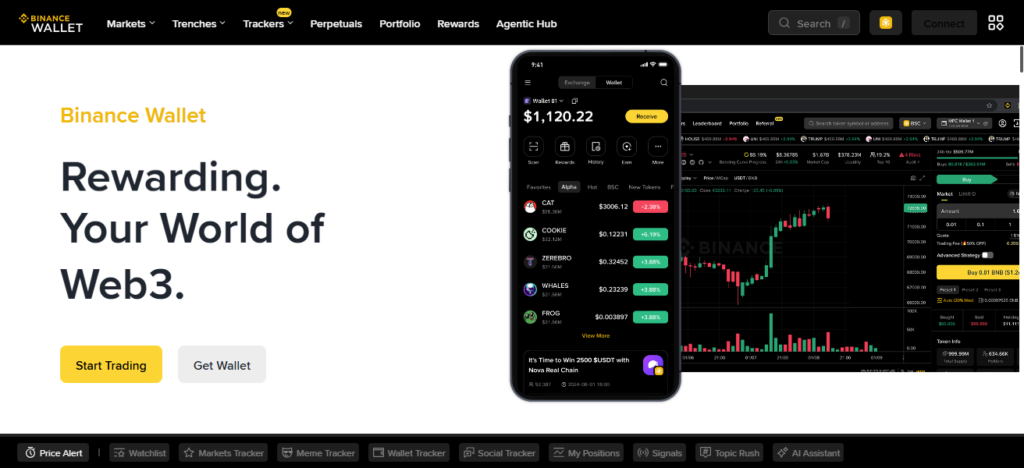
Binance has 100+ country operations with limited regional restrictions. Binance offers 24/7 customer support through live chat and the ticket system. Binance demo systems are one of the most realistic training platforms for crypto trading.
| Pros | Cons |
|---|---|
| Highly realistic market simulation with live-like data | Interface can feel complex for beginners |
| Supports both spot and derivatives practice | Limited beginner guidance inside demo mode |
| Advanced order book and leverage testing | Requires account setup for full access |
| Strong global liquidity simulation accuracy | Not fully identical to real trading emotions |
2. OKX
OKX, which began operations in 2017, has 300+ supported cryptocurrencies, including derivatives, DeFi tokens, and NFTs.
OKX offers demo trading for both spot and futures, with slippage considered. OKX offers trading fees of 0.08% and 0.1% for makers and takers, respectively.
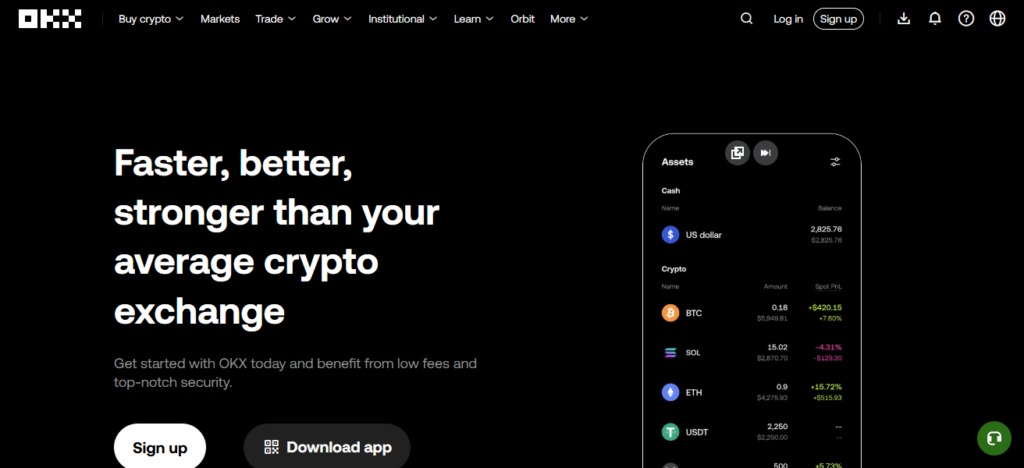
OKX has 180+ countries of support. OKX offers 24/7 customer support through chat. OKX is one of the most advanced crypto trading platforms, providing demo systems for trading concepts and educational purposes.
| Pros | Cons |
|---|---|
| Supports both spot and futures trading practice | Interface may overwhelm new users |
| Advanced order types like stop-loss & trailing stop | Demo liquidity not always perfectly realistic |
| Improved slippage and market depth simulation | Requires time to fully understand tools |
| Good for intermediate strategy testing | Not heavily gamified or beginner-focused |
3. Bybit
Launched in 2018, Bybit is a crypto platform focusing on derivatives trading. Bybit offers BTC, ETH, and USDT-settled contracts.
Bybit Testnet provides paper trading with full leverage and trading fees of 0.01% for makers and 0.06% for takers.
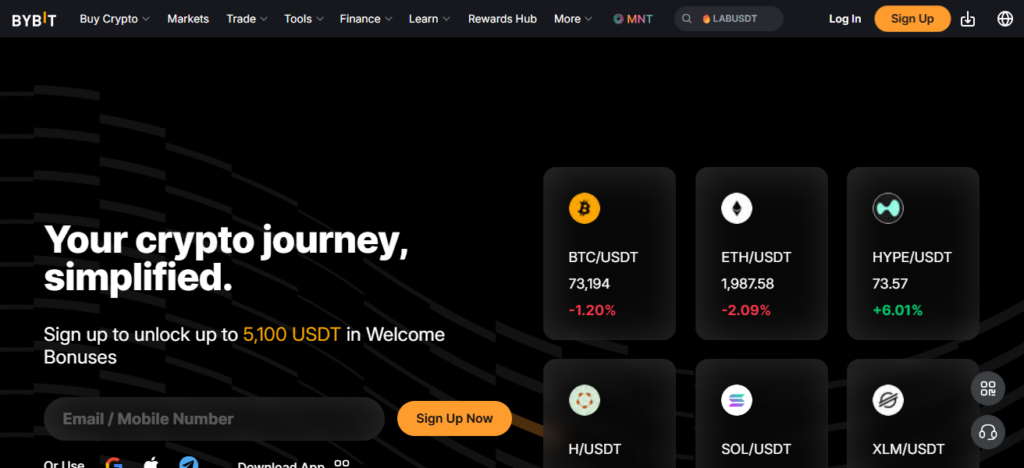
Bybit has 160+ countries of support. Bybit also offers 24/7 customer support through live chat and the help center.
Bybit demo systems are ideal for futures trading and practicing risk and liquidation management.
| Pros | Cons |
|---|---|
| Very close replication of live derivatives trading | Focus mainly on futures, less on spot |
| Fast matching engine improves realism | Testnet sometimes disconnects from live data |
| Ideal for leverage and liquidation practice | Requires technical understanding for beginners |
| Smooth transition from demo to live trading | Limited educational guidance inside platform |
4. Deepcoin
Deepcoin is a new trading site with great paper and demo trading options. It has BTC, ETH, and USDT derivative pairs and offers leveraged trading.
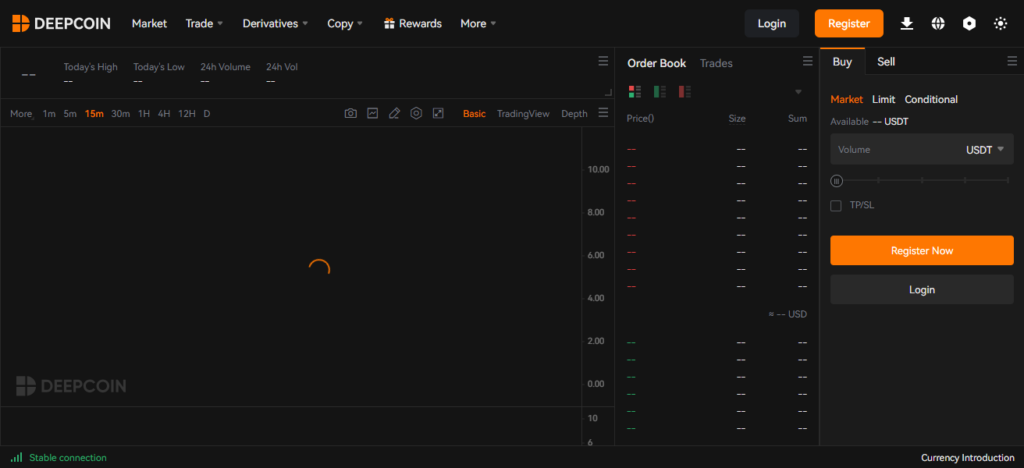
There is a lot of focus on futures trading, market replication, and copy trading. Deepcoin has low trading fees and support via chat and a help center. This makes it a great site for beginner and intermediate traders who want to practice strategies.
| Pros | Cons |
|---|---|
| Supports BTC, ETH, and USDT-based derivatives | Fewer spot trading features compared to major exchanges |
| Copy trading tools help beginners follow strategies | Limited educational resources for new traders |
| Futures and leverage trading simulation available | Not as widely audited or established as older exchanges |
5. eToro
eToro was established in 2007. eToro allows Bitcoin, Ethereum, other cryptocurrencies, stocks, and ETFs. A virtual portfolio is available.
Trading fees are 1% via the spread, and paper trades are free. eToro is available in 140+ countries. It is highly regulated.
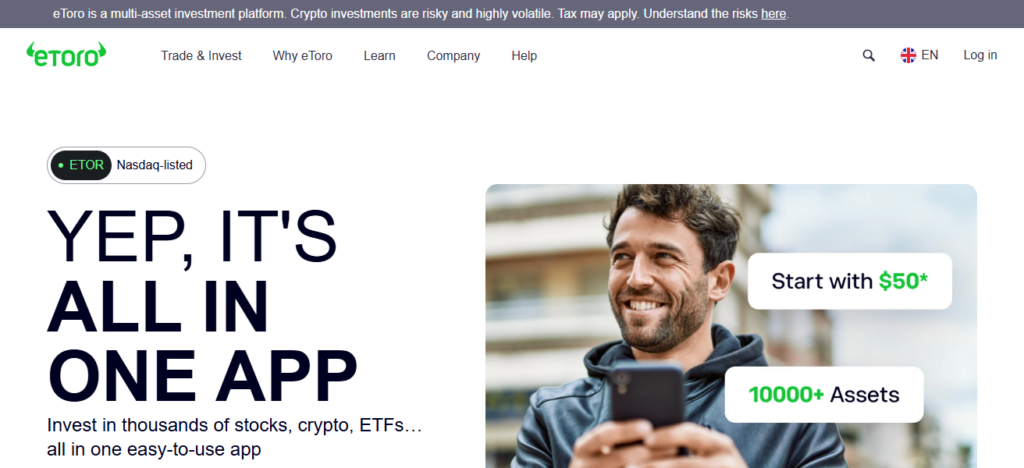
The help center and tickets are available for customer support. New users can start learning social trading, copy trading, and long-term investments through eToro’s risk-free demo system.
| Pros | Cons |
|---|---|
| Includes crypto, stocks, ETFs in one demo account | Crypto features less advanced than exchanges |
| Strong social/copy trading simulation features | Limited advanced derivatives trading |
| Beginner-friendly interface | Spreads may differ from real trading |
| Great for learning investing psychology | Not ideal for professional traders |
6. KuCoin
KuCoin was created in 2017. KuCoin has a large variety of 700+ cryptocurrencies, including new and emerging altcoins. KuCoin has demo trading for both futures and spot trading.
Trading fees are 0.1% with a discount for KCS token holders. KuCoin is available in over 200 countries. KuCoin has live chat and support tickets for customer support.
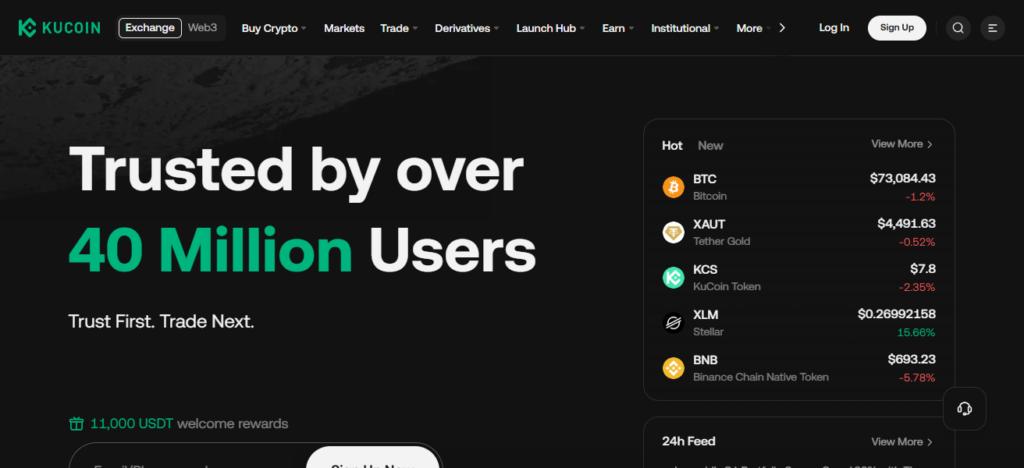
KuCoin’s demo environment allows users to practice their strategies for trading in new altcoins as well as understand the volatility of the emerging crypto markets.
| Pros | Cons |
|---|---|
| Supports spot and futures practice | Demo tools not deeply advanced |
| Good altcoin trading simulation | Interface can feel cluttered |
| Improved charting and execution realism | Not fully identical to real liquidity |
| Helpful for beginners learning crypto basics | Limited educational integration |
7. Kraken
Kraken was established in 2011. Kraken has over 200 cryptocurrencies, including BTC and ETH, as well as USD and EUR fiat pairs. Kraken has a sandbox environment to simulate advanced trading and a demo for the API.
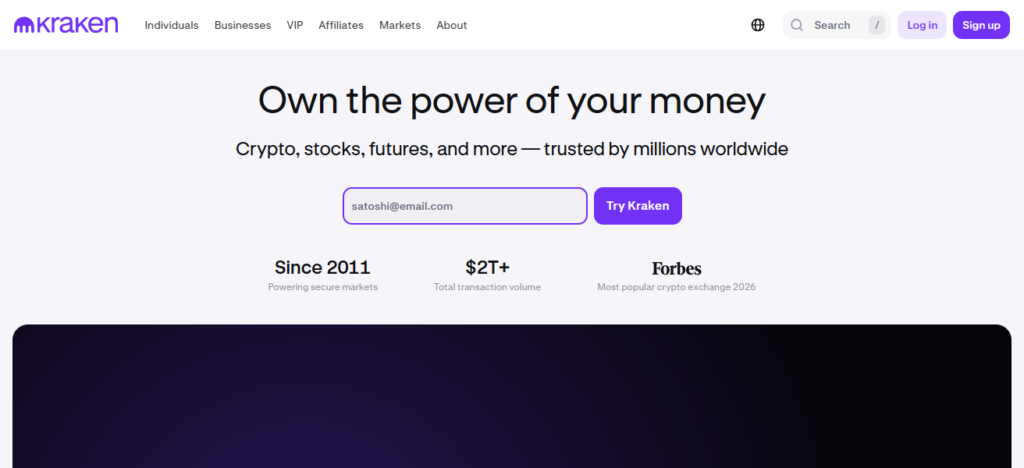
Trading fees range from 0.16% to 0.26% and decrease with trading volume. Kraken is available in 190+ countries. Kraken has excellent regulatory compliance.
Customer support is live chat and email. Kraken’s demo system is widely trusted for institutional-level strategy testing and advanced algorithms.
| Pros | Cons |
|---|---|
| Highly accurate exchange condition simulation | Setup process more technical |
| Excellent API support for bot testing | Less beginner-friendly UI |
| Strong focus on security and execution logic | Limited casual learning features |
| Useful for professional algorithm testing | Smaller demo community support |
8. Bitget
Bitget launched in 2018, specializing in derivatives and copy trading. Bitget supports major cryptocurrencies (e.g., BTC, ETH, USDT).
They offer a demo trading feature that simulates full futures. Their fees are ~0.02% for makers, ~0.06% for takers.
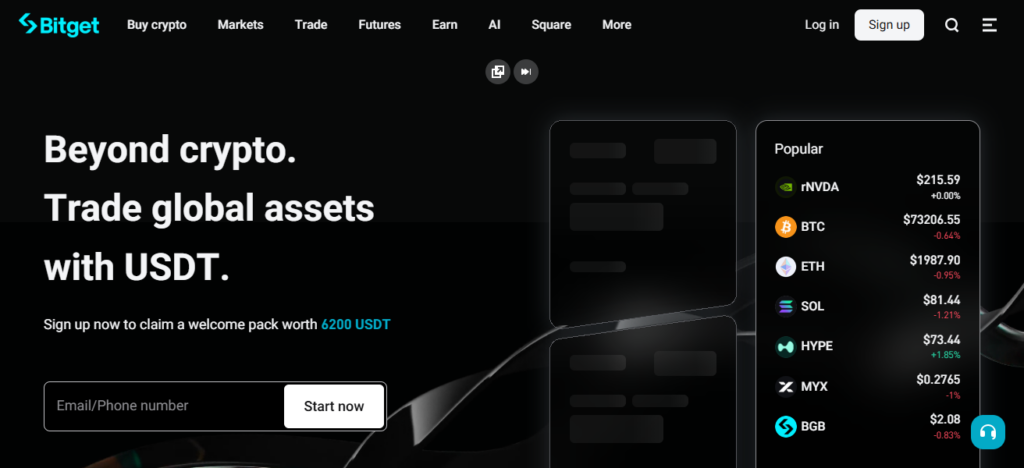
They offer coverage for ~100 countries. Their 24/7 customer support is via chat. Their paper trading is popular for practicing leverage trading, liquidation risk, and copy trading.
| Pros | Cons |
|---|---|
| Strong futures and leverage simulation | Focus mainly on derivatives |
| Mobile-friendly demo experience | Limited spot trading emphasis |
| Helps with liquidation and risk learning | New users may find margin complex |
| Fast interface and smooth trading flow | Educational content is minimal |
9. TradingView
TradingView was founded in 2011. Their focus is on chart-based analyses, and as a consequence of that, they do not offer custody for crypto trading.
Their paper trading uses live data for the market. Their subscription model has a ~free to ~14 to 60 dollar per month premium.
They serve nearly all countries, and their customer support features a help center and community forums.
TradingView is excellent for T.A. and I.B. trading practices (before executing on a real exchange).
| Pros | Cons |
|---|---|
| Uses real market charts for simulation | Not an exchange, no real execution |
| Excellent for technical analysis practice | Requires external broker for live trading |
| Supports indicators and strategy testing | Limited order type realism |
| Very popular among traders globally | Execution differs from real exchanges |
10. Deribit
Deribit launched in 2016 and serves the Bitcoin and Ethereum options and futures markets. Their testnet offers advanced paper trading for volatility strategies.
Their fees are ~0.03% for makers and ~0.05% for takers (depending on volume). They offer paper trading to professional traders, but have some area restrictions due to regulations.
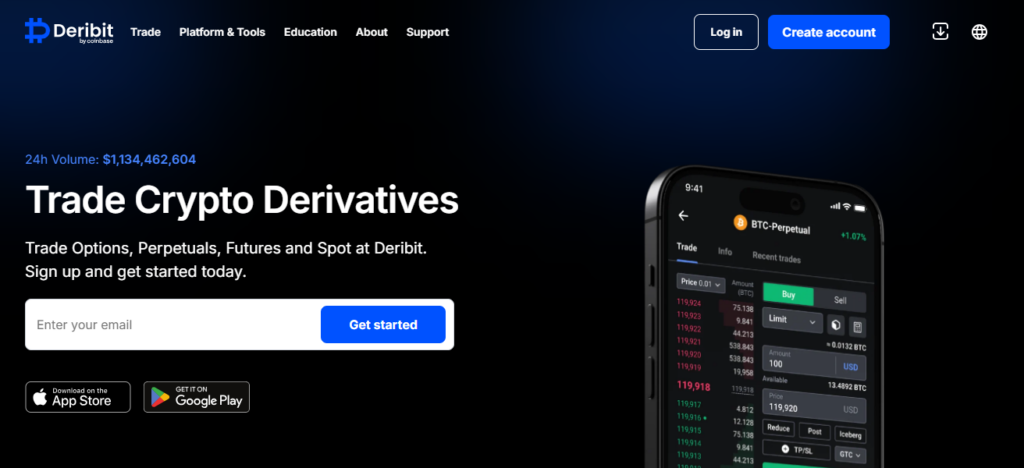
Their customer support is via email and a help desk. Their demo system is for advanced derivatives training and includes trading strategies like hedging, spreads, and options pricing.
| Pros | Cons |
|---|---|
| Advanced options and futures practice | Very complex for beginners |
| Realistic derivatives pricing simulation | Focus only on derivatives trading |
| Great for hedging and volatility strategies | Requires strong trading knowledge |
| Institutional-grade learning environment | Not suitable for casual users |
10. Coinbase
Dedicated to over 200 cryptocurrencies and counting – as well as paper trading and investing tools – Coinbase considers user experience a priority.
Registered since 2012, Coinbase has a trading fee of 0.5% – 1.5% (trading method dependent). The company operates around the globe; its 100+ country international presence is a testament to its superior compliance and a winning customer service strategy.
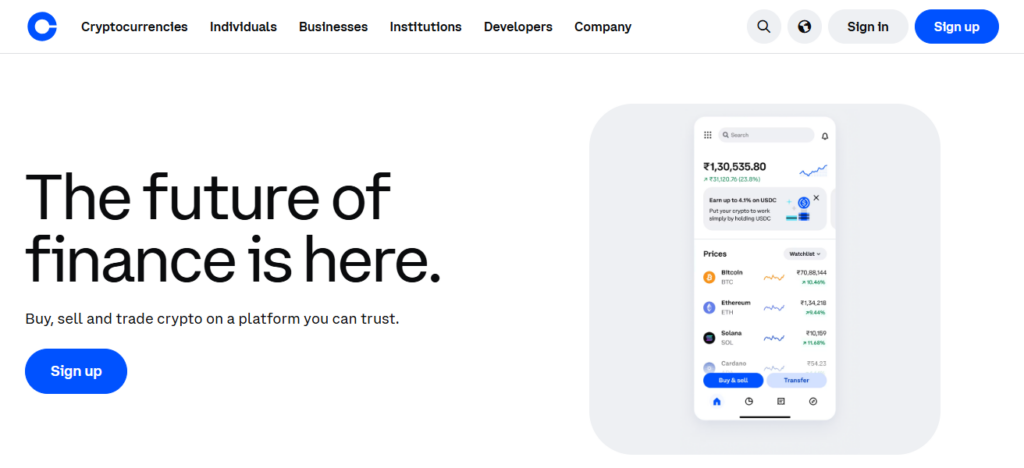
Live chat and email serve as two important modes of customer care, alongside a demo environment.
This last feature is especially helpful for novice traders who are dipping their toes into the world of crypto safely for the first time.
| Pros | Cons |
|---|---|
| Extremely beginner-friendly interface | Limited advanced trading tools |
| Strong learning and onboarding support | Not suitable for professional trading practice |
| Safe environment for first-time users | Less realistic market depth simulation |
| Simple portfolio simulation tools | Few derivative features available |
How We Choose Crypto Trading Platforms Offering Advanced Demo and Paper Trading
- Platforms must have realistic demo or paper trading environments.
- Exchanges that have futures and spot simulation are ranked higher.
- We check the availability of crypto assets like BTC, ETH, and other altcoins.
- We check the structure of trading fees and calculate the cost for users.
- We check the market simulation accuracy for trades, including price and order.
- Platforms are ranked higher with Global accessibility and Country support.
- We check the trading platform UI for beginners and professional traders.
- We check available trading features like leverage, margin, copy trading, etc.
- We also check the customer support and response.
- We check platforms with a long reputation or a fast-growing user base.
Conclusion
In conclusion, Crypto Trading Platforms Offering Advanced Demo and Paper Trading prioritize safety and efficiency.
The fundamental purpose of these platforms is to allow both beginner and advanced traders to practice without financial risk.
They offer the user the ability to learn about market behavior, develop and refine trading strategies, and develop trading skills in an environment that is as realistic as possible.
Demo and paper trading tools allow individuals to build confidence in their trading strategies as well as better risk management skills before shifting to live crypto trading.
FAQ
Why is paper trading important?
It helps users practice strategies before investing real money.
Which platforms offer demo trading?
Binance, Bybit, OKX, and eToro are popular demo trading platforms.
Is demo trading free?
Yes, most crypto exchanges provide free demo or testnet accounts.
Can I trade futures in demo mode?
Yes, platforms like Bybit and Bitget support futures paper trading.
Does demo trading use real market data?
Yes, most platforms replicate live market prices and conditions.
