


This article will outline the 2026 essential AWS Developer Skills for success, from Lambda serverless computing mastery to the grasp of AI integration, cost optimization, and multi-cloud strategies to enable developers to provide scalable, secure, and application-innovation in the ever-changing and growing cloud world.
Key Points & Must-Have AWS Developer Skills In 2026
| AWS Developer Skill | Key Point |
|---|---|
| AWS Lambda | Serverless application development |
| Amazon EC2 | Scalable compute management |
| Amazon S3 | Secure object storage |
| AWS IAM | Identity and access control |
| Amazon RDS | Managed relational databases |
| Amazon DynamoDB | NoSQL database expertise |
| AWS CloudFormation | Infrastructure as code |
| AWS CDK | Modern IaC with programming languages |
| AWS DevOps Tools | CI/CD pipeline automation |
| Amazon CloudWatch | Monitoring and observability |
| AWS Security Hub | Centralized security management |
| Generative AI Integration | AI-augmented development workflows |
| AWS SageMaker | Machine learning deployment |
| Edge Computing | IoT and real-time processing |
| AWS Step Functions | Workflow orchestration |
| API Gateway | API management and scaling |
| Containerization (ECS/EKS) | Docker & Kubernetes on AWS |
| AWS Cost Optimization | FinOps and resource efficiency |
| Multi-Cloud Strategy | Hybrid and cross-cloud integration |
| Soft Skills | Collaboration, problem-solving, adaptability |
20 Must-Have AWS Developer Skills In 2026
1. AWS Lambda
AWS Lambda is a pioneer of the Serverless Computing model, as it allows the developers to run code without provisioning or managing servers. Lambda also scales applications to meet varying demand, thus lowering operational overhead costs.
Lambda allows its developers to event trigger from other services. These services include S3, DynamoDB, or API Gateway, thus creating event driven architectures.
Customizing Lambda is very technical as it requires execution time, cold starts, and monitoring integrations to be finely tuned. Even in Lambda’s core application of simplifying the developer’s ability to create lightweight scalable applications in an evergreen manner
Lambda is still very much in its prime. Applications that require instant deployment and execution by the user or through backend/backend IoT processes, are still very much in demand. Lambda is still is a very much in demand skill as it creates agility in a cloud-native system.
| Feature | Description |
|---|---|
| Event-driven | Executes code in response to triggers |
| Serverless | No server management required |
| Auto-scaling | Scales automatically with demand |
| Cost-efficient | Pay only for execution time |
2. Amazon EC2
Amazon Elastic Compute Cloud (EC2) is the most used cloud application platform as it is the most used by developers to cloud deploy their applications. EC2 creates virtually unlimited number of instances that can run on different operating systems to host and train machine learning models.
EC2 can run multiple tasks in parallel from website hosting to workflows in deep learning and is very optimized for use in projects that require parallel processing of multiple tasks. EC2 is the best service of its kind in the market and is well in demand.
To be in demand as well, a developer must be good in understanding the complex system of interprets and layering of services executed by the user. Optimization and understanding the basic security of layering of services is key, and must be known in order to be as readily in demand as EC2 is, and core service that is.
| Feature | Description |
|---|---|
| Elastic compute | Resizable virtual servers |
| Instance variety | Wide range of CPU/GPU types |
| Auto-scaling | Adjusts capacity automatically |
| Security groups | Network-level protection |
3. Amazon S3
Amazon Simple Storage Service (S3) is a pioneer in the provision of secure, multifunctional, and scalable object storage. It’s used for variety of services from hosting static websites, and storing data backups to big data management and analytics.
Important S3 skills include manipulating lifecycle policies, S3 versioning, data encryption, and access control. In 2026, S3’s integration with analytics tools and streaming AI algorithms will make the service a cornerstone of data-drive application architecture.
Developers must also understand the Cloud cost management strategies like intelligent tiering and the use of Glacier for archiving data. Familiarity with S3 will make data management a breeze and will also ensure compliance and smooth interoperability with the rest of the AWS services.
| Feature | Description |
|---|---|
| Object storage | Stores files and data |
| Durability | 99.999999999% reliability |
| Lifecycle policies | Automates data management |
| Encryption | Ensures secure storage |
4. AWS IAM
AWS Identity and Access Management (IAM) defines access to AWS services and resources, establishing the foundational security and compliance model for the cloud environment. Developers must apply the principle of least-privilege when designing policy access, role management, and federated identity provider integrations.
By 2026, the importance of IAM will increase with the with a growing focus on zero-trust architecture and increased compliance requirements. Some of the skills to learn include multi-factor authentication, service linked roles, and attributes of fine-grained permission.
Developers must also have a theoretical understanding of the interoperability of IAM and services like S3, EC2, and Lambda in securing access. Mastering IAM will make sure your applications are secure from unauthorized access while also being collaborative across services and teams. In a complex cloud environment, Many IAM security features will facilitate application access and collaboration across services and teams.
| Feature | Description |
|---|---|
| Access control | Manages permissions |
| Role-based | Assigns roles to users/services |
| MFA support | Multi-factor authentication |
| Policy management | Fine-grained security rules |
5. Amazon RDS
The Amazon Relational Database System automates processes such as updating, modifying, increasing, and backing up the data, making it easier to manage databases. Relational Database Service (RDS), like other databases such as MySQL, SQL Server, Microsoft’s Oracle, and PostgreSQL, are deployed without the need for administrator actions.
As for the year 2026, RDS will still be of great importance due to its ability to work with applications with pre-determined and customized data. Skills including query optimization, configuring read replicas, and adding availability with Multi-AZ deployments are very important. Developers should also have knowledge of the successful integration, cost efficiency, and usage of analytics.
With such knowledge and understanding of RDS, developers will be able to build scalable applications, outstandingly lowering the operational workload, making this ability even more outstanding for those developers working with the relational data in the cloud and building scalable applications.
| Feature | Description |
|---|---|
| Managed service | Automates backups and patching |
| Multi-engine support | MySQL, PostgreSQL, Oracle, SQL Server |
| High availability | Multi-AZ deployments |
| Read replicas | Improves scalability |
6. Amazon DynamoDB
This relational data offering for NoSQL applications has fully integrated and operational databases, offering iconic performances for under capitalized tasks with only several seconds delay. It operates for the benefit of the application as the Amazon DynamoDB provides the application with the needed data for more demands such as IoT, and even real-time data analytics without pressure.
Based on those skills needed for the applications, including capacity mode control for more smooth operating tasks, seamless integration with other applications, and even easy, faster, more efficient load tasks. Even in 2026, the ability to integrate DynamoDB with AI and even more convenient server-less applications and works will make it be more than ideal.
Developers need more understanding in cache building, cost optimization, and consistency for easier applications with more control over focused data. It offers abundant performance and constant reliability in various apps with a chance to fully take on more than the ordinary workload.
| Feature | Description |
|---|---|
| NoSQL database | Key-value and document store |
| High performance | Millisecond latency at scale |
| Streams | Event-driven integration |
| Global tables | Multi-region replication |
7. AWS CloudFormation
AWS CloudFormation lets developers define their infrastructure as code by automating provisioning and managing resources. Writing templates by teams on YAML or JSON can help achieve consistency and compliance across environments.
As of 2026, CloudFormation is still critical for enterprises overseeing intricate architectural management at scale. Skill sets comprise designing modular templates, updating stacks, and CI/CD integration.
Developers should also know drift detection and rollback strategies to keep things stable. Achieving mastery of CloudFormation allows infrastructure to be version-controlled, auditable, and replicable quickly, leading to less manual error and rapid advancement in innovation.
| Feature | Description |
|---|---|
| Infrastructure as code | Define resources in templates |
| Automation | Consistent provisioning |
| Drift detection | Identifies changes outside IaC |
| Rollback | Restores failed deployments |
8. AWS CDK
With the AWS Cloud Development Kit (CDK), developers can define their cloud infrastructure using programming languages they are already familiar with, such as Python, TypeScript, or Java.
CDK offers a more flexible experience than CloudFormation for the declarative approach. As of 2026, CDK is also more common for contemporary DevOps workflows, allowing reusable constructs and CI/CD integration.
Skills comprise designing modular stacks, using constructs, and managing deployments. Developers should also know how CDK works with other AWS services to ease infrastructure management. Mastery of CDK lets developers create a more scalable and maintainable infrastructure, amplified by modern software energetic practices.
| Feature | Description |
|---|---|
| Code-based IaC | Uses Python, TypeScript, Java |
| Constructs | Reusable infrastructure components |
| Integration | Works with CI/CD pipelines |
| Flexibility | More developer-friendly than YAML/JSON |
9. AWS DevOps Tools
With tools like CodeCommit, CodeBuild, CodeDeploy, and CodePipeline, AWS automates software delivery. Developers are required to implement CI/CD pipelines for dependable and rapid deployments.
By 2026, the demand for DevOps skills increases as businesses require quicker cycles of innovation. Important skills include strategically integrating testing, monitoring, and rollbacks of deployments.
Developers are also required to know containerized workloads and serverless deployments. Complete command of the DevOps tools by AWS allows applications to be deployed safely, devoid of inefficiencies, and with as little downtime as possible, which coincides with the principles of modern Agility and supports continual advancement in cloud-native applications.
| Feature | Description |
|---|---|
| CodeCommit | Managed Git repositories |
| CodeBuild | Automated builds and tests |
| CodeDeploy | Automated deployments |
| CodePipeline | CI/CD orchestration |
10. Amazon CloudWatch
Amazon CloudWatch is the center for the monitoring, logging, and observability of AWS resources and applications. Developers use Cloud Watch to track metrics, set alarms, and visualize performance data.
In 2026, CloudWatch stays vital for preventive incident management and optimization. Skills include dashboard design, Lambda logging for response automation, and log analysis for troubleshooting.
Developers must also understand how CloudWatch integrates with distributed tracing and AI-driven insights. Mastery ensures applications remain reliable, scalable, and cost-efficient, enabling teams to detect issues early and maintain high availability in complex cloud environments.
| Feature | Description |
|---|---|
| Monitoring | Tracks metrics and logs |
| Alarms | Automated alerts |
| Dashboards | Visualize performance |
| Integration | Works with Lambda & Step Functions |
11. AWS Security Hub
AWS Security Hub allows for the collection and consolidation of all security findings across all of your AWS accounts and services and provides customers with a single pane view of all security compliance and threat posture across the AWS.
Understanding how to integrate with Security Hub, GuardDuty, and Inspector, as well as IAM, are important for developers. Security threats are expected to evolve and get more sophisticated as time goes on, making Security Hub a must have to have the ability to stay cyber resilient.
Skills include the ability to set up and configure automated remediation, compliance framework management, and SIEM integrations. Developers should also have the ability to plan their response to an alert, and in what order.
Without mastery of these, applications run the risk of threats that are modern, sophisticated and cloud ecosystems became more difficult, with a smaller chance of remaining compliant and cyber resilient, as well as degraded threat security posture and wounded data and infrastructure.
| Feature | Description |
|---|---|
| Centralized view | Aggregates security findings |
| Compliance checks | Aligns with standards (CIS, PCI) |
| Integration | Works with GuardDuty, Inspector |
| Automated remediation | Responds to threats quickly |
12. Generative AI Integration
Generative AI integration is about the use of AI models in AWS applications for automation and increased personalization and innovation. Developers exploring how to integrate AWS services with AI models for enhanced scalability and compliance.
In 2026, the core use of AI will be integrated into and used to power many technologies such as predictive and prescriptive analytics, intelligent assistants and automated content creation.
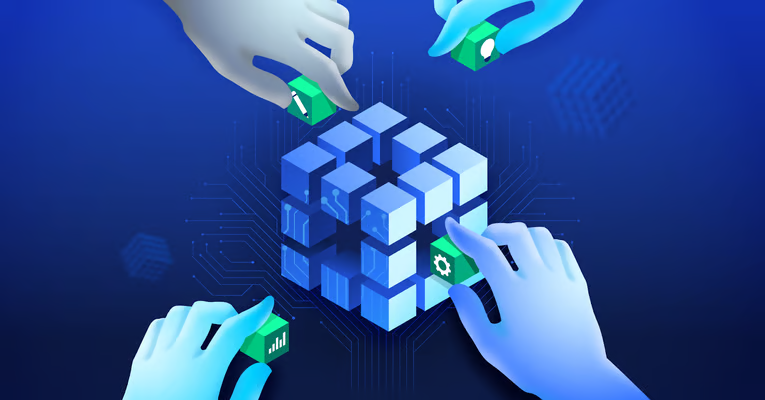
Skills such as integration with SageMaker and having the ability to manage data pipelines and inference cost optimizations will be useful. Developers are expected to maintain compliance, as well as the AI’s ethical use.
Mastery of these will be of value to the user. In the current and expected AI landscape, users will have enhanced experiences by using the applications with more business value and in the AI new modern era.
| Feature | Description |
|---|---|
| AI workflows | Automates content creation |
| Personalization | Enhances user experiences |
| SageMaker integration | Deploys generative models |
| Ethical AI | Ensures compliance and fairness |
13. AWS SageMaker
SageMaker is a service specialized in helping developers build, train, and deploy machine learning models seamlessly. Developers engage in a wide range of activities, from predictive analytics to generative AI.
By 2026, SageMaker is bound to be important as the AI revolution is spreading across all sectors. The skills to train models, deploy endpoints, and connect to data sources like S3 and DynamoDB are essential.
Developers also need to learn and apply cost optimization strategies while keeping track of the proper functioning of the model and performance monitoring. This will enable organizations to harness the power of AI and provide smart applications that respond in real-time to the user demands and problems of the business.
| Feature | Description |
|---|---|
| Model training | Scales ML workloads |
| Deployment | Managed endpoints |
| Data integration | Connects with S3, DynamoDB |
| Monitoring | Tracks model performance |
14. Edge Computing
Edge computing is a data processing method that brings the computing power physically closer to the data source. This method reduces latency and bandwidth consumption. AWS supports this type of computing with services like Greengrass and IoT Core.
By 2026, Edge will be an important aspect of IoT and autonomous systems. Developers should be able to create balanced architectures for cloud and edge workloads in a distributed environment.
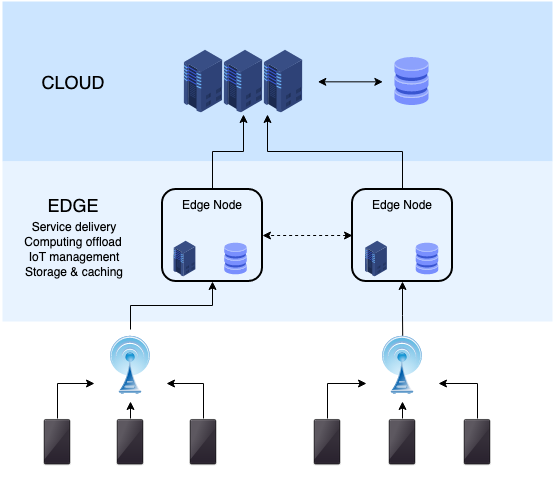
This includes managing device security and data synchronization and cloud service integration. Mastery is important for edge computing since many applications will require real-time processing of data, like in healthcare, smart cities, manufacturing, and more.
| Feature | Description |
|---|---|
| Local processing | Reduces latency |
| IoT integration | Works with AWS IoT Core |
| Greengrass support | Extends AWS to devices |
| Real-time analytics | Immediate insights at the edge |
15. AWS Step Functions
AWS Step Functions are workflow orchestration services. They help developers build complex applications with minimal coding by streamlining the use of multiple AWS services. By 2026, Step Functions are pivotal to handling distributed, event-driven architectures.
Skills entail the design of state machine workflows, the implementation and handling of retries, and the integration of AWS services like Lambda, DynamoDB, and S3.
Developers must also learn to streamline workflows to balance cost and performance. Mastery enables reliable and scalable modern cloud-native systems to coordinate applications and complex workflows seamlessly while lowering operational overhead.
| Feature | Description |
|---|---|
| Workflow orchestration | Coordinates multiple services |
| State machines | Visual representation of flows |
| Error handling | Built-in retries |
| Serverless integration | Works with Lambda, DynamoDB |
16. API Gateway
Amazon API Gateway helps developers design, secure, and scale APIs for applications. In 2026, API Gateway is still very important for the linkage of microservices, serverless applications, and external clients.
Skills entail RESTful and WebSocket API design, throttling management, and IAM integration for secure access. Developers must also learn to implement and manage effective monitoring strategies and caching mechanisms to optimize overall API performance.
Mastery helps applications deliver reliable and scalable APIs that support modern architectures to improve communication between services and enhance overall user experience.
| Feature | Description |
|---|---|
| API management | Creates REST & WebSocket APIs |
| Security | Integrates with IAM & Cognito |
| Throttling | Controls traffic |
| Monitoring | Tracks API performance |
17. Containerization (ECS/EKS)
With the Elastic Container Service (ECS) and Elastic Kubernetes Service (EKS) containerization on AWS, developers are able to package apps and all of the dependencies needed, in a lightweight, portable, and easily transportable unit.
ECS facilitates the orchestration of a container, and EKS is able to handle the management of Kubernetes features for complicated work. The year is 2026, and containerization is indispensable with respect to microservices, CI/CD pipelines, and scalable cloud-native applications.
The developer expertise needed are an understanding of Docker, Kubernetes, and networking, alongside security best practices. Mastery of these best practices would ensure reliable deployment across many environments and scaling of integrated applications with the use of monitoring tools.
| Feature | Description |
|---|---|
| ECS | AWS-managed container orchestration |
| EKS | Managed Kubernetes service |
| Scalability | Auto-scaling containers |
| Portability | Consistent deployments across environments |
18. AWS Cost Optimization
Cloud expenses must be managed flexibly while maintaining productivity and performance. Developers use tools like Cost Explorer, Trusted Advisor, and Budgets to manage and lower expenses.
Techniques like right-size, spot instances, auto-scaling, and tiered storage to keep costs down and manage expenses. In 2026 due to the balance needed between innovation and costs, this will be a core skill.
Developers will create and implement architectures that sustainably reduce costs, increase ROI, and align with FinOps. Optimizing costs is a core skill needed for the overall sustainable adoption of the business value derived from investments in the cloud.
| Feature | Description |
|---|---|
| Cost Explorer | Monitors spending |
| Trusted Advisor | Recommends savings |
| Spot instances | Reduces compute costs |
| Storage tiering | Optimizes S3 usage |
19. Multi-Cloud Strategy
Distributing applications across a number of cloud providers, like AWS and Azure, is a multi-cloud strategy which helps avoid vendor lock-in and strengthens app resilience. Developers need to understand interoperability, data migration, and cross-cloud networking.
In 2026, cross-cloud expertise will be in demand for flexibility, compliance, and disaster recovery. Skills include designing portable architectures, containerization, and API use for integration. Reducing risk and improving scalability across diverse environments. Future solutions can adapt to business and regulatory requirements.
| Feature | Description |
|---|---|
| Flexibility | Avoids vendor lock-in |
| Resilience | Improves disaster recovery |
| Interoperability | Works across AWS, Azure, GCP |
| Portability | Containerized workloads across clouds |
20. Soft Skills
For instance, an AWS Developers/Engineers needs a wide range of interpersonal, emotional and personality attributes, and proficiency outside of technological and analytical skills to be successful and more marketable in the field of cross-cloud development e.g.

Communication, Team Collaboration and Cooperation, Relationship Building, and Refinement of Soft Skills as these allow the creation and maintenance of cross-cloud development & engineering collaborative, multi-disciplinary, and cross-functional teams.
| Feature | Description |
|---|---|
| Communication | Explains technical concepts clearly |
| Collaboration | Works well in teams |
| Adaptability | Adjusts to evolving tech |
| Problem-solving | Tackles complex challenges effectively |
Conclusion
In conclusion, the year is 2026 and mastering the skills of AWS developers means combining knowledge of the fundamentals of the ordinary cloud system and knowledge of the developments that are being made in the systems of the clouds that are available today.
Developers are required to familiarize themselves with technical skills and knowledge, and find ways to save money without sacrificing quality, to provide balanced knowledge in these areas.
Dev. takes knowledge of Lambda and expert knowledge of EC2, S3, AI, and embedded systems to provide and multi cloud strategies. This will give systems the knowledge and skill to provide scalable and secure systems that keep applications that are actively driving and growing systems that are in business to keep systems active.
FAQ
What is AWS Lambda used for?
It runs code serverlessly in response to events, scaling automatically without managing servers.
Why is Amazon EC2 important?
It provides flexible, resizable compute capacity for diverse workloads like web apps or ML training.
What makes Amazon S3 essential?
It offers secure, durable, and scalable object storage for data, backups, and analytics.
How does AWS IAM help developers?
It manages user access, roles, and permissions to ensure secure resource usage.
Why learn Amazon RDS?
It simplifies relational database management with automated backups, scaling, and high availability.