


In this article, I will examine the Most Trusted Platforms for Tokenizing Corporate Carbon Credits, focusing on pioneering approaches that improve transparency, liquidity, and accountability in the carbon market.
Such platforms help businesses attain sustainability targets, improve ESG compliance, and collaborate with meansful climate initiatives using blockchain to provide systems for verifiable, trackable, and trustworthy carbon credit offsets.
Key Points & Most Trusted Platforms for Tokenizing Corporate Carbon Credits
| Platform | Key Point |
|---|---|
| Toucan Protocol | Pioneered tokenized carbon credits on Polygon, enabling transparent and liquid carbon markets. |
| Flowcarbon | Backed by major investors, focuses on scaling voluntary carbon markets with blockchain integration. |
| Thallo | Uses multi-chain interoperability to connect buyers and sellers of carbon credits efficiently. |
| Solid World DAO | Provides forward carbon credit liquidity, helping projects secure funding before issuance. |
| KlimaDAO | Community-driven DAO that incentivizes carbon retirement through staking and bonding mechanisms. |
| Carbonplace | A global carbon credit transaction network backed by major banks for secure transfers. |
| Open Forest Protocol | Specializes in forest-based carbon verification using blockchain for transparency. |
| Moss Earth | Latin America’s leader in tokenized Amazon rainforest credits, widely adopted by corporates. |
| Regen Network | Focuses on ecological data and regenerative finance for nature-based carbon credits. |
| Carbonable | Offers NFT-based carbon credit investments tied to verified environmental projects. |
10 Most Trusted Platforms For Tokenizing Corporate Carbon Credits
1. Toucan Protocol
Toucan has been leading the way in the integration of certified carbon credit tokens on the blockchain based on the Polygon network. It allows companies to convert their bridged credit tokens into a digital format that can be transparently bought and sold.
This way, Toucan assists companies in managing their emissions more than by means of making sure the credits are traceable. Toucan’s modules are designed to be used by dApps and are centered around carbon tokens, providing the tools to broaden the scope of sustainability ecosystems.
Toucan’s core value proposition lies in the fact that it enables participants in the carbon markets to be both large and small players, allowing them to take action on climate change by providing verified, on-chain evidence that the risks of double counting are eliminated.
Toucan Protocol Features
- Carbon Bridge: Converts verified carbon credits to on-chain tokens for added transparency.
- Liquidity Pools: Improves market efficiency by creating carbon assets that can be traded.
- Polygon Integration: Operates on a scalable blockchain which ensures low-cost transactions.
- Open Access: Participants may be corporate entities or individuals and are free to enter the carbon market.
- Traceability: Ensures verified credits and cannot be double counted.
2. Flowcarbon
Flowcarbon, like its peers, is using the blockchain to tokenize carbon credits. Obtaining backing from several prominent VCs (Venture Capital firms) she is trying to establish MVP (Minimum Viable Product) for scaling voluntary carbon markets.
Their platform is meant to allow companies to purchase, integrate, and sustain their carbon credits to meet corporate sustainability goals. The credits will be transparent, accessible, and aligned to some standards.
The blockchain relies on a smart contract, and this will presumably help reduce inefficiencies and add liquidity to the recorded credits. They can be bought and sold, and can be recorded (and reevaluated) for maturity, like other documents, in the system.
The aim is to accelerate the finance for the climate by connecting businesses to frim (not sure this is a typo) carbon projects, so that the corporates can meet their ESG (Environmental and Social Governance) claims and positively contribute to a carbon opportunity.
Flowcarbon Features
- Tokenized Credits: Converts carbon offsets to fungible digital credits.
- Investor Backing: Large Venture Capital firms provide support for the platform.
- Market Scaling: Focuses on shaping the voluntary carbon market on a global scale.
- Transparency: Maintains a blockchain for the tracking of the origin and the retirement of the credits.
- Corporate Integration: Offers seamless design and integration for ESG and Sustainability reporting.
3. Thallo
Thallo is specifically designed as a multi-chain carbon credit marketplace to help buyers and sellers interact seamlessly. By using blockchain interoperability, Thallo ensures that carbon credits are able to be traded across different networks, which improves accessibility and efficiency.
Thallo builds trust with customers by using integrated verified registries and keeps tracks of credits from issuance to retirement. This allows corporations to buy carbon offsets knowing that they are real and that they meet compliance standards.
By seamlessly connecting different carbon markets, Thallo reduces the friction that corporations face. Thallo’s innovation is the first of its kind to combine both the transparency of blockchain with real business usability on a global scale.
Thallo Features
- Multi-chain Support: Empowers cross-blockchain capabilities and interoperability.
- Registry Integration: Links verified registries for authentic carbon credits.
- Marketplace: Establishes and fosters a trusted relationship and environment for buyers and sellers.
- Efficiency: Enhances the seamless state of carbon trading by added streamlined processes.
- Corporate Confidence: Credits are traceable from issuance to retirement.
4. Solid World DAO
Solid World DAO tackles a major problem in the carbon markets: liquidity for forward carbon credits. Numerous projects lack funding prior to credit issuance, and Solid World offers a decentralized answer by tokenizing these forward credits.
This enables a diversified pool of corporations and investors to stimulate temporarily frozen climate projects, sustaining climate action in the long run. The DAO’s community governance model promotes transparency and accountability in the stewardship of carbon assets.

By establishing a marketplace for forthcoming credits, Solid World energizes the development of climate projects and amplifies the financing of climate solutions. For corporations, securing advance offsets and funding climate projects directly provides a global ESG align and a powerful environmental advocacy.
Solid World DAO Features
- Forward Credits: Provides early liquidity by tokenizing future expected carbon credits.
- DAO Governance: Community-led decisions guarantee accountability.
- Funding Access: Assists projects in obtaining funding prior to credit allocation.
- Decentralized Marketplace: Enables the buying and selling of future carbon assets.
- Corporate Benefits: Enables companies to obtain offsets in advance.
5. KlimaDAO
KlimaDAO is a Decentralized Autonomous Organization (DAO) focused on incentivizing the retirement of carbon through blockchain mechanisms. KlimaDAO generates a demand for carbon credits by offering credit staking and bonding, which encourages users to sink (or “lock in”) credits with Klima.
This “sinking” of credits reduces supply in the conventional market, driving climate-positive action. The community of KlimaDAO is transparent and self-governing, dynamically building trust with large corporations who need to support climate-positive initiatives.
With the integration of DeFi principles, KlimaDAO creates a flexible financial instrument out of carbon credits. With KlimaDAO, corporations meet their sustainability goals while practicing climate-positive action through flexible financial solutions.
KlimaDAO Features
- Carbon Retirement: Encourages the deletion of credits from circulation.
- DeFi Mechanisms: Applies staking and bonding to fuel demand for credits.
- Community Governance: Decisions are made collectively by the community of token holders.
- Market Impact: Lessens the supply in conventional carbon markets.
- Corporate Alignment: With the provision of innovative financial instruments, it supports the attainment of ESG objectives.
6. Carbonplace
Carbonplace partners with leading banks like UBS and Standard Chartered to create a global network for carbon credit transactions. They offer a safe and scalable way for buyers and sellers to transfer carbon credits.
By using the trust that financial institutions have, Carbonplace gains trust and compliance for credit transactions. Carbonplace ensures credits are transparent and inter-operates with registries.
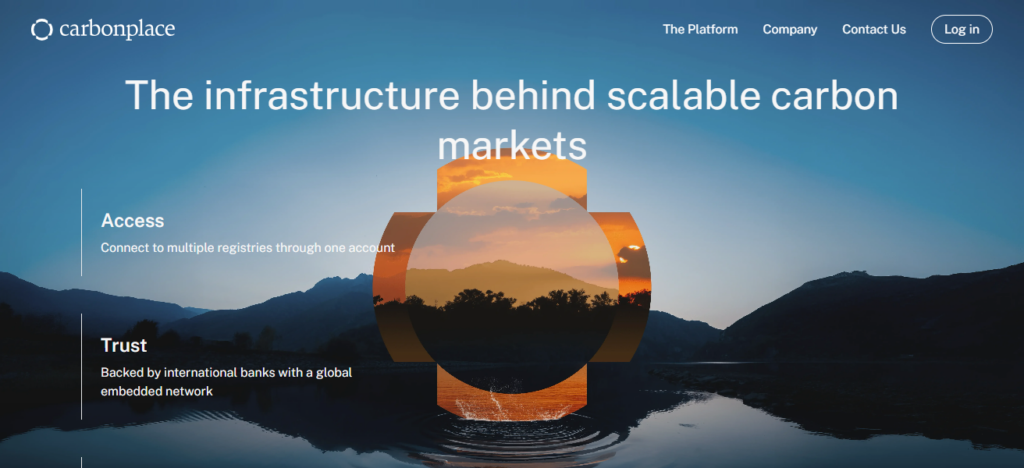
Businesses gain a safe and secure environment that reduces the risks of fraud and double counting. Bridging traditional finance and carbon markets makes Carbonplace one of the most important players in the industry. Multinational companies looking for reliable, bank-backed carbon offsetting find it especially valuable.
Carbonplace Features
- Bank-backed Network: Endorsed by the world’s leading investment banks.
- Secure Transactions: Reliable framework for the transfer of credits.
- Interoperability: Compatible with various registries and standards.
- Scalability: Structured for mass adoption by corporations.
- Fraud Prevention: Minimizes the risk of duplicated and invalid credits.
7. Open Forest Protocol
Open Forest Protocol uses blockchain technology to verify carbon offset projects. Using this technology, projects can submit ecological data to the system which is checked and then recorded.
This keeps data logged on the blockchain to ensure projects on the conservation and restoration of forests are validated and projects adjusted to the course. Companies can buy credits and be sure data supports the credits.
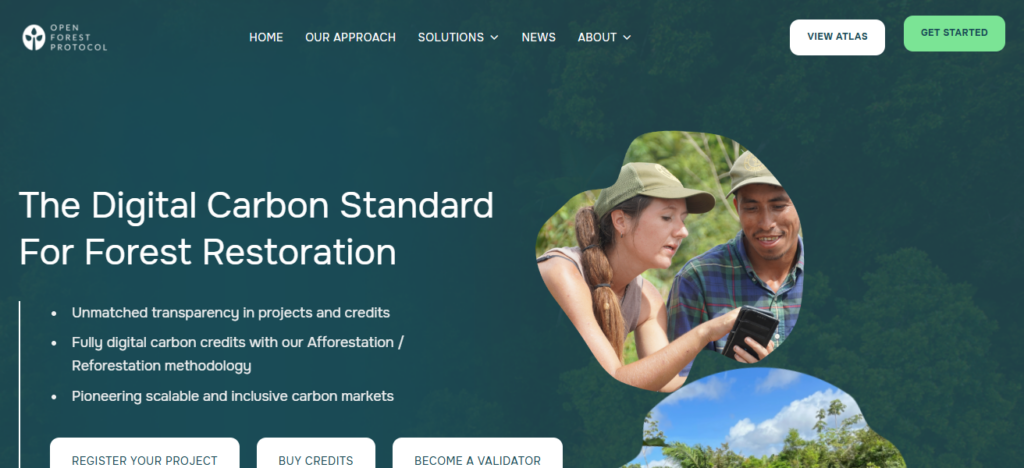
With its unique data logging system, Open Forest Protocol reinforces the empowerment and decentralization to local communities and project implementers.
The blending of ecological data and blockchain technology represents the creation of reliable systems restoring trust in ecosystem projects. Commercial partners gain from the ecosystem service of the credited carbon being validated to the support of biodiversity and the climate.
Open Forest Protocol Features
- Forest Verification: Expertise in overseeing and assessing forest carbon projects.
- Blockchain Transparency: Ecological data is recorded and made transparent on the blockchain.
- Community Empowerment: Local initiatives are supported to authenticate and disseminate data.
- Nature-based Solutions: Specializes in credits for reforestation and biodiversity.
- Corporate Assurance: Offers scientifically substantiated credits that are backed by ecology.
8. Moss Earth
Moss Earth is one of the top companies in Latin America tokenizing carbon credits, especially in the Amazon rainforest. They sell the MCO2 token, which corresponds to verified carbon credits from conservation projects.
Moss Earth secured corporate clientele due to their offsets being accessible, simple, and impactful. Instead of donating to NGOs, Moss Earth protects the Amazon through climate finance and blockchain technology.
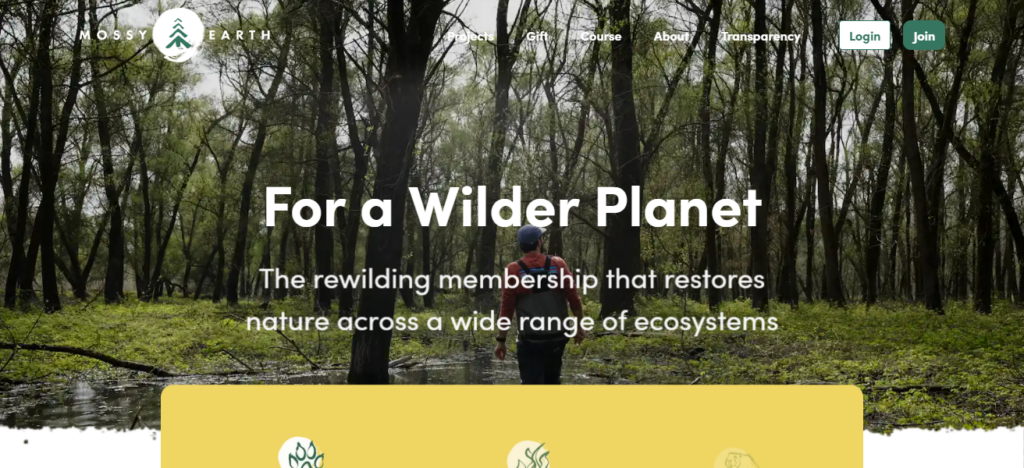
Corporations’ purchase of credits that go towards the preservation of rainforests grants them an ESG win. Moss Earth is a trusted partner because of their market and creditable as a regional leader to companies hoping to make a difference in the conservation of high-value ecosystems.
Moss Earth Features
- Amazon Focus: Tokens credits from Amazon rainforest conservation projects.
- MCO2 Tokens: Provides well-established tokens for carbon credits.
- Regional Leadership: Most prominent in the Latin American market.
- Corporate Adoption: Utilized for genuine impact offsetting.
- Rainforest Protection: Provides financing for dedicated protection.
9. Regen Network
Regen Network uses blockchain technology to collect ecological data and integrate it with regenerative finance. The platform focuses on nature-based carbon credits and on ensuring that its credited projects are scientifically verified and recorded transparently.
Through its blockchain platform, Regen Network allows companies to finance regenerative practices, such as soil and biodiversity restoration, while also achieving their carbon offset targets. Its decentralized model promotes community governance and accountability.
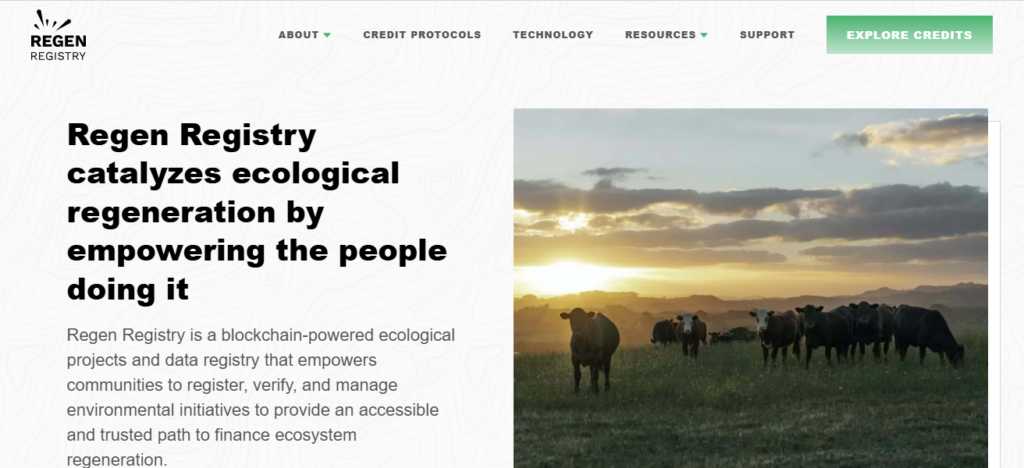
By merging blockchain technology with ecological science, Regen Network fosters a reliable marketplace for sustainable credits. Through sustainable credits, companies benefit from financing practices that support long-term ecological restoration and climate resilience.
Regen Network Features
- Ecological Data: Consolidates science-based evidence with carbon credits.
- Regenerative Finance: Extends beyond offsets, supporting sustainable finance.
- Blockchain Marketplace: Provides a market for nature-based credits.
- Community Governance: A democracy of the people, for the people.
- Corporate Impact: Offsets financing with future-focused ecological restoration.
10. Carbonable
Carbonable provides investment opportunities in carbon credits NFTs linked to documentaries and trusted environmental projects. The company uses innovative financial instruments and the transparency of blockchain technology to offer carbon credits to a larger range of customers.
Businesses buy carbon credits as NFTs from environmental projects and maintain traceability, responsibility, and accountability of the carbon credits.
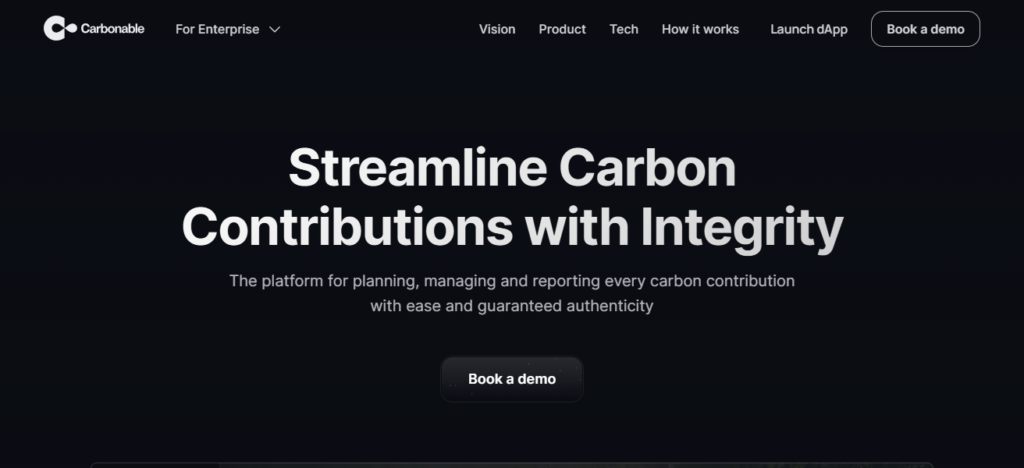
Carbonable focuses on the simplicity of the interface design, allowing companies to easily embed the carbonable.com widget into their websites and operate sustainably.
The company s market positioning focuses on breaking the barrier to access carbon markets, and providing companies with environmentally sustainable digital assets with a permanent positive impact on the climate.
Carbonable Features
- NFT Integration: Connects carbon credits with non-fungible tokens.
- Verified Projects: Ensures credits’ real-world attributable projects.
- User-friendly Design: Corporates can easily engage with the carbon market.
- Traceability: Offers ownership and retirement documentations.
- Innovation: Merges advanced blockchain with ecology.
Conclusion
In summary, leading platforms such as Toucan Protocol and Carbonable, tailoring tokenization for corporate carbon credits, and merging sustainable, transparent blockchain climate solutions, are pioneering sustainability.
Most Trusted Platforms are changing the sustainable blockchain landscape. Corporations are meeting ESG requirements and strengthening global climate responsibility through impactful projects and secure, innovative, and credible digital carbon ecosystems.
FAQ
What is carbon credit tokenization?
It is the process of converting verified carbon credits into blockchain-based digital tokens for transparency and trading.
Why do companies use tokenized carbon credits?
They provide traceability, prevent double counting, and make offsets easier to trade globally.
Which platform pioneered tokenized carbon credits?
Toucan Protocol is widely recognized as the pioneer in this space.
Which platform focuses on scaling voluntary carbon markets?
Flowcarbon emphasizes expanding access and liquidity for voluntary carbon credits.
