

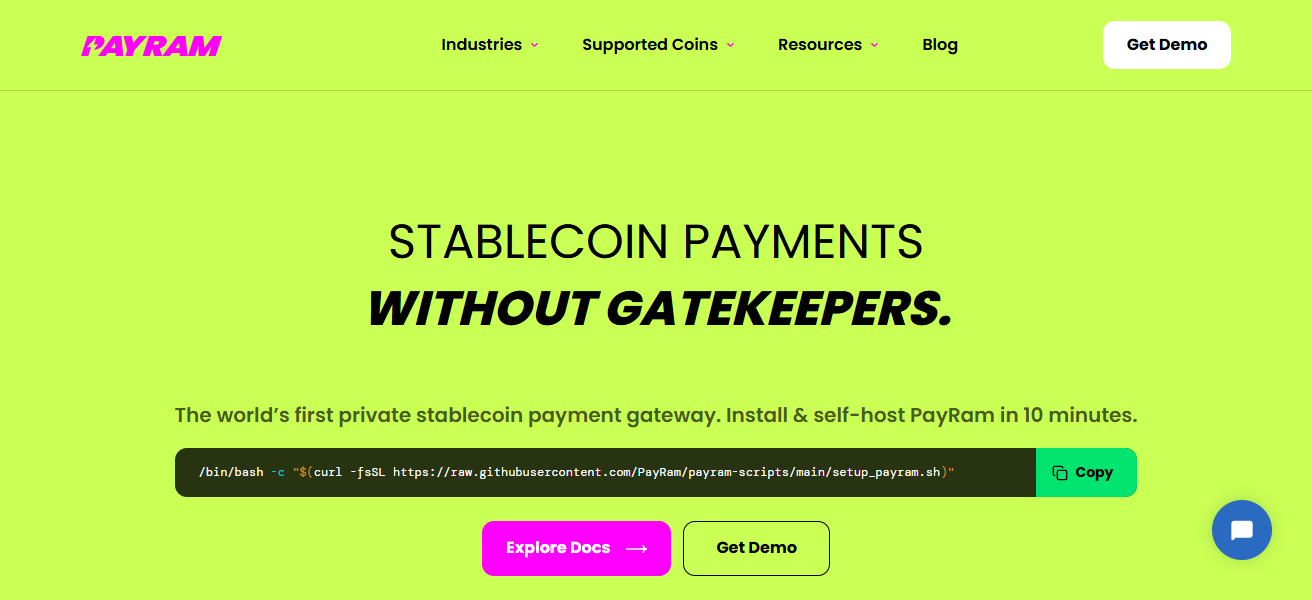
In this particular article, I will explain PayRam vs CoinPayments. Both of these crypto payment systems have been widely used by many merchants and freelancers. Relative to their competitors, both payment systems are nimble, reliable, and offer safe crypto payment systems.
However, there are differences in some aspects like features, fees, integrations, and cryptocurrencies. This article will help select the payment system that will best suit your business.
Overview of PayRam
PayRam is designed for small and medium-sized businesses that want easy and seamless payment flows, simple merchant onboarding, multi-currency support and easy withdrawals. PayRam is focused on opening cash flow to SMBs with clear and uncomplicated payment processing.
PayRam is a rapidly growing and stable crypto payment processor. The platform’s fast-growing nature is increased due to their easily navigable dashboards, seamless integration processes, and overall low friction for entry into the crypto market.
Key Highlights of PayRam:
- Supports major cryptocurrencies
- Low transaction fees
- Quick settlement cycles
- Beginner-friendly UI
- Ideal for freelancers, SMEs, and digital service providers
Overview of CoinPayments
Founded in 2013, CoinPayments is among the oldest gateways dealing in cryptocurrency transactions. Merchant acceptance worldwide. Has a built in wallet and can handle approximately 2,000 different cryptocurrencies.

In the crypto field, CoinPayments is also well known for the wide variety of tools and services offered. For instance, there are API integrations, and there is the ability to connect to Shopify, WooCommerce and Magneto for added functionality.
Key Highlights of CoinPayments:
- Supports thousands of coins
- Long-standing reputation
- Global merchant base
- Extensive plug-and-play integrations
- Vaulting and auto-conversion features
PayRam vs CoinPayments: Comparison Table
| Feature | PayRam | CoinPayments |
|---|---|---|
| Founded | Newer emerging platform | Established in 2013 |
| Supported Coins | Major cryptos (BTC, ETH, USDT, etc.) | 2,000+ cryptocurrencies |
| Fees | Low transaction fees | 0.5% standard fee |
| Integrations | Basic API + Plugins | Shopify, WooCommerce, APIs & more |
| User Interface | Simple and beginner-friendly | Advanced with more tools |
| Settlement Speed | Fast settlements | Quick but depends on coin network |
| Wallet Support | Basic support | Built-in multi-coin wallet |
| Ideal For | Freelancers, SMEs, digital sellers | Large businesses, global merchants |
| Security Features | Standard encryption & compliance | Multi-layer security + vaulting |
Ease of Use
PayRam sets up in a breeze. No hassle for a new merchant or freelancer wishing to accept crypto. Configuring crypto won’t take long. Their tallness is clean and bareboned for those advanced users who do not encounter deep technical settings.
Of course, CoinPayments is vastly different. It is, rather, feature-rich. Offering much greater tools and settings, which means, for advanced users, a wealth to customization, but for newbies, a lot to capture.
Supported Cryptocurrencies
This is one of the biggest differences.
PayRam’s system is more convenient because it is able to use the primary networks of Bitcoin, Ethereum, USDT, and BNB, and the like — more convenient for efficient transactions.
CoinPayments, on the other hand, works with over two thousand coins. This makes it perfect for merchants engaging with more specific and niche cryptocurrencies, and for bigger businesses with more flexible requirements.
Fees and Costs
For processing fees, PayRam is the lower processing fee option, perfect for high-volume freelancers or SMEs. CoinPayments has a flat fee of 0.5%, which has been the industry average for a long time. However, this value is a bit higher than PayRam’s cheaper options.
Merchant Tools & Integrations
Integrations are the area where CoinPayments wins. It has pre-built plugins for Shopify, WooCommerce, WHMCS, Magneto, and other custom APIs, making it built for scalable architecture.
PayRam has the bare minimum as far as API support and plugins go, which is enough for small businesses, although CoinPayments is still better.
Security and Trust Factor
On both platforms, security protections like encryption and secure merchant wallets are in place. CoinPayments has vaulting and other features, like auto-conversion and cold storage, which provide a large merchant with more than enough tools to manage a large asset base.
PayRam Security is reliable, although less impressive. Their focus is more on simplicity which lacks some of the more advanced crypto custody tools.
Customer Support

Merchant-friendly fast human support is a focus for PayRam. CoinPayments has good support, although it may be slower due to higher demand, which is forgivable since the user base is larger.
Who Is Each Gateway Best Suited for?
PayRam is for merchants and developers who value intact financial control, privacy and censorship-resistance. Its self-hosted, non-custodial structure is especially useful for high-risk sectors or businesses wanting to circumvent third-party custody and restrictions. You keep your own keys, infrastructure and control over the transactional flows.
CoinPayments is a better choice for businesses wanting a quick-to-implement crypto payment system needing little technical attention. It is great for ecommerce stores, smaller businesses and users without server or blockchain management skills as it is easy to set up, requires zero server maintenance and covers a large number of cryptocurrencies.
Which One Should I Pick?
Employ PayRam for exercise additional control, financial sovereignty, enhanced privacy, and great scalability, suitable for businesses that are fine handling server, security, and infrastructure themselves. It is built for people who don’t want third-party custody and opt for independence.
Employ CoinPayments for ease of use, extensive support for different cryptocurrencies, and the least handiwork. CoinPayment is a plug-and-play solution that manages wallets, maintenance, and upgrades for you, and is best for e-commerce merchants and small businesses that are fine with custodial trade-offs.
Conclusion
Depending on your business requirements, you should choose either PayRam or CoinPayments. If you want simplicity, lower fees, and straightforward setup, PayRam should be your go-to, especially if you are a freelancer, a new merchant, or a small business.
If you want to have support for a large number of cryptocurrencies, and enjoy advanced integration features and enterprise-level tools, then CoinPayments is the more advanced and more global solution.
Both services are reputable and dependable, but the best option should be a reflection of the size and sophistication of the operations you will be running.
FAQ
What is the main difference between PayRam and CoinPayments?
PayRam focuses on simplicity and low fees, while CoinPayments offers advanced features and supports 2,000+ cryptocurrencies.
Which platform supports more cryptocurrencies?
CoinPayments supports thousands of coins, far more than PayRam.
Is PayRam cheaper than CoinPayments?
Yes, PayRam generally offers lower transaction fees compared to CoinPayments’ standard 0.5% fee.
Which gateway is easier for beginners?
PayRam is more beginner-friendly due to its simple interface and easy setup.
Does CoinPayments offer plug-in integrations?
Yes, CoinPayments provides plug-ins for Shopify, WooCommerce, WHMCS, and more.
