


In this article, I’ll share the best Carta competitors for cap table software, to help startups, founders and established businesses choose the right equity management solution.
We will look at their key features, pros and cons, pricing models, fundraising support, and compliance tools. This comparison will allow you to find the best platform to manage ownership, employee equity and investor relationships effectively.
Key Points & Best Carta Competitors for Cap Table Software
- Shareworks – Provides cap table management, equity compensation administration, shareholder reporting, and compliance tools for businesses.
- Eqvista – Offers cap table management, company valuations, equity issuance, and shareholder tracking for growing businesses.
- Cake Equity – Simplifies cap table management, equity grants, investor relations, and fundraising for startups and founders.
- Pulley – Helps startups manage cap tables, model fundraising scenarios, track ownership, and administer employee equity.
- Ledgy – Streamlines equity management, employee share plans, cap tables, and reporting for international companies.
- Global Shares – Delivers equity compensation management, employee share plans, and shareholder services for global organizations.
- Qapita – Supports cap table management, equity administration, valuations, and employee ownership programs for startups.
- EquityList – Offers cap table management, employee stock options, equity administration, and investor tracking for startups.
- Certent Equity Management – Provides equity compensation management, regulatory compliance, financial reporting, and employee stock plan administration.
- SeedLegals – Combines cap table management with fundraising documents, investment agreements, and employee share option plans.
10 Best Carta Competitors for Cap Table Software
1. Shareworks
Shareworks by Morgan Stanley at Work is an equity management platform designed for companies with complex employee ownership and compensation needs. Its equity compensation capabilities include stock options, restricted stock units (RSUs) and employee share schemes.
The target audience is established businesses, multinational organizations and pre-IPO companies. Its fundraising support is more geared toward equity administration and ownership management than startup fundraising workflows.

Equity plan administration and financial reporting requirements are supported by compliance and reporting capabilities. Its price is usually adjusted to fit the needs of the company. The factors compared include global administration, enterprise scalability, reporting capabilities, and implementation complexity.
Shareworks Pros & Cons
| Pros | Cons |
|---|---|
| Strong enterprise-level equity compensation and share plan administration. | Pricing is generally quote-based, making direct cost comparisons difficult. |
| Suitable for multinational companies and complex employee ownership programs. | May be more complex than necessary for early-stage startups. |
| Supports established corporate reporting and equity administration workflows. | Implementation and integration may require additional time and resources. |
| Designed to support organizations with large employee populations. | Startup-focused fundraising tools are not its primary strength. |
2. Eqvista
Eqvista offers services to companies at different stages of growth, such as cap table management, tracking shareholders, issuing equity, and valuing the company. Its equity compensation offerings include stock options, vesting schedules and employee equity plans.
Ownership transparency is the target market for startups, small businesses and growing private companies. Its fundraising support involves tracking equity transactions, convertible instruments and ownership changes tied to financing rounds.

Features for compliance and reporting include shareholder records and 409A valuation services for qualified US companies. It offers a free option for qualifying smaller cap tables and paid plans based on usage and requirements. The comparison factors are affordability, valuation services, and ease of ownership management.
Eqvista Pros & Cons
| Pros | Cons |
|---|---|
| Offers free cap table management for smaller shareholder groups. | Some advanced features may require paid plans or additional services. |
| Provides company valuation and equity management tools. | Complex international and multi-entity structures may require additional evaluation. |
| Published pricing helps businesses estimate costs more easily. | Interface and reporting workflows may feel less polished to some users. |
| Supports ownership tracking, equity plans, and financial modeling. | Valuation services can increase the overall cost. |
3. Cake Equity
Cake Equity offers cap table management and equity administration to help startups and growing companies easily manage ownership. Its equity compensation tools include employee share plans, stock options, vesting schedules and stakeholder portals.
The target audience is early-stage startups, founders and companies across Australia, New Zealand and other international markets. Its fundraising support helps companies with ownership structures and equity transactions for investment rounds.

Compliance and reporting capabilities include tools for employee share schemes and regional equity administration, as may be relevant to the applicable plan. The price depends on the plan, the number of stakeholders and the services that are included. The comparison factors include the usability of the startup, regional support, clarity of pricing and management of employee equity.
Cake Equity Pros & Cons
| Pros | Cons |
|---|---|
| Startup-focused interface simplifies equity management for founders. | Advanced enterprise reporting may be less extensive than specialized enterprise platforms. |
| Supports employee options, vesting, and ownership tracking. | Some features depend on the selected subscription tier. |
| Includes tools for fundraising scenarios and equity planning. | Costs can increase as the company and feature requirements grow. |
| Offers employee-focused equity communication tools. | Complex corporate structures may require checking specific plan capabilities. |
4. Pulley
Pulley Pulley offers cap table management and equity planning tools for startups, including ownership tracking, equity grants, and fundraising scenario modeling. Its equity compensation features include stock options management, vesting, and employee equity management.
Its target audience has been startups, founders, and finance teams preparing for investment rounds. Its fundraising support includes fundraising scenario modeling and tracking of instruments like SAFEs and convertible notes. Its compliance and reporting features include equity records and valuation workflows.

Its historical pricing model includes paid plans based on company needs and number of stakeholders. Important: Pulley announced plans to shut down its services in September 2026, so businesses should check on current availability and migration arrangements before considering it as a new solution.
Pulley Pros & Cons
| Pros | Cons |
|---|---|
| Historically offered intuitive cap table management for startups. | Reports published in 2026 indicate that Pulley announced a shutdown. |
| Supported equity grants, vesting, and dilution modeling. | New customers should verify whether onboarding is still available. |
| Included tools for modeling financing scenarios and tracking convertible instruments. | Existing users may need to plan a platform migration. |
| Was designed around startup and founder workflows. | Long-term product support and service continuity are major concerns. |
5. Ledgy
Ledgy is a company that provides equity management solutions for companies with distributed workforces and international ownership structures. It has equity compensation features like employee share plans, stock options, vesting management and access to equity information for stakeholders.
We target European businesses, international start-ups and growing companies that have employees operating in multiple jurisdictions. Its fundraising support includes cap table updates and ownership tracking around the time of financing events. Based on local requirements and plan availability, businesses can manage equity administration across relevant markets with compliance and reporting capabilities.

The cost depends on the package, the size of the company and the features you require. We look at them on international coverage, multi-entity management, employee experience and regional compliance support.
Ledgy Pros & Cons
| Pros | Cons |
|---|---|
| Strong support for international equity management and employee share plans. | Advanced functionality may be more than smaller startups need. |
| Supports multi-entity ownership structures and equity administration. | Paid pricing can become significant as requirements expand. |
| Offers employee dashboards and equity communication workflows. | Complex implementations may require additional onboarding. |
| Helps businesses manage equity across multiple jurisdictions. | Local tax and legal compliance still require jurisdiction-specific verification. |
6. Global Shares
Global Shares, a J.P. Morgan company, provides equity compensation administration and employee share plan management to organizations with operations in multiple markets. Its equity compensation services support employee stock plans and share awards and their related administration workflows.

The target group is mainly medium and large companies, international employers and organizations with large numbers of participating employees. It’s not its fundraising support that sets it apart, as the platform is more about managing existing equity programs than startup fundraising.
Compliance and reporting capabilities enable share plan administration and the regulatory processes relevant to the jurisdiction. Pricing often depends on the company size, services and plan complexity. The comparison criteria include international administration, service coverage, integration needs and enterprise suitability.
Global Shares Pros & Cons
| Pros | Cons |
|---|---|
| Supports employee share plans for international workforces. | Pricing is generally customized rather than transparently published. |
| Suitable for large organizations with complex equity programs. | May be excessive for startups with simple cap tables. |
| Provides equity compensation administration and shareholder services. | Implementation can involve more coordination and configuration. |
| Benefits organizations needing established enterprise-level services. | Startup fundraising and scenario modeling are not its primary differentiators. |
7. Qapita
Qapita is an equity management solution that helps businesses manage ownership records and administer employee equity programs. It has equity compensation functionality such as employee stock options, equity grants, vesting schedules and related plan administration.
Our target audience are startups, venture backed businesses and growing companies, particularly those in Asian markets. Its fundraising support helps companies monitor investor ownership and track cap table changes related to financing rounds.

Compliance & reporting capabilities help with equity documentation, ownership records and related regional administration obligations. Pricing varies according to the package, company requirements, and services selected. We compared things like regional know-how, how equity plans are administered, fundraising workflows and whether they’re suitable for growing teams.
Qapita Pros & Cons
| Pros | Cons |
|---|---|
| Combines cap table management with employee equity administration. | Advanced features may require higher-tier subscriptions. |
| Supports ownership tracking and financing-related equity changes. | Costs should be evaluated against shareholder count and required features. |
| Offers solutions for growing businesses and international structures. | Some specialized features may not be available in every region. |
| Provides migration support under eligible plans. | Businesses should verify integrations and compliance coverage before switching. |
8. EquityList
EquityList provides cap table management and equity administration solutions to help companies manage shareholder data and employee ownership. Its equity compensation capabilities include employee stock options, equity grants, and vesting administration (based on services you select). Target audience is startups, founders and growing companies who want to have centralized ownership records.

Its fundraising support is intended to maintain cap table accuracy as investors participate in financing rounds and ownership structures change. Compliance and reporting features allow for the organization of equity documentation and offer visibility into ownership and equity plans.
Pricing depends on the available plans and the business needs. Comparison factors include core cap table capabilities, ease of adoption, equity administration features and total cost compared to alternatives.
EquityList Pros & Cons
| Pros | Cons |
|---|---|
| Offers cap table management and equity administration in one platform. | Advanced capabilities and pricing should be checked against company requirements. |
| Supports employee equity grants and shareholder management. | Complex enterprise needs may require confirmation of specific functionality. |
| Provides valuation and compliance-related services. | Regional compliance coverage can vary by jurisdiction. |
| Publishes pricing for certain plans, helping with initial budgeting. | Additional services may affect the total ownership-management cost. |
9. Certent Equity Management
Certent Equity Management is a specialist in equity compensation administration, financial reporting, and regulatory workflows for established organizations. Its equity compensation capabilities support employee stock plans, stock options, restricted stock units and related award administration.
The target audience is public companies, large private companies and finance teams managing complex compensation programs.

It is less involved in fund-raising than in the administration of equity and reporting to the company. Key strengths are compliance and reporting capabilities, including support for accounting requirements (e.g. ASC 718 and IFRS 2) depending on product configuration.
Its pricing is usually on a quote basis, depending on the implementation and complexity of the organization. Reporting depth, accounting workflows, audit requirements, integrations and enterprise scalability are compared.
Certent Equity Management Pros & Cons
| Pros | Cons |
|---|---|
| Designed for complex equity compensation administration. | May be too sophisticated for small startups with basic requirements. |
| Supports financial reporting and accounting-related equity workflows. | Pricing is generally quote-based and less transparent. |
| Suitable for public companies and established enterprises. | Implementation may require specialist knowledge and internal coordination. |
| Helps manage employee awards and regulatory reporting processes. | May offer less emphasis on early-stage fundraising workflows. |
10. SeedLegals
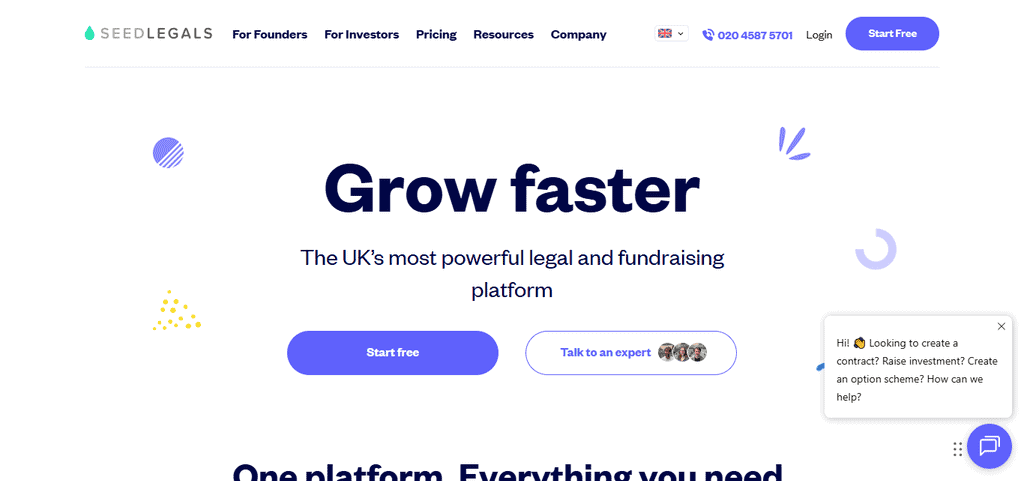
SeedLegals provides legal tools for startups to manage fundraising and company documentation, as well as equity management. It offers equity compensation services including employee share option plans and related equity documentation.
The audience is founders, early-stage startups and growing businesses, especially those based in the UK and supported markets. Its fundraising support is a big differentiator, with tools for investment rounds, financing documents and investor agreements.
Compliance & reporting support may include company documentation and equity-related legal workflows, depending on the jurisdiction and service selected. The pricing structure depends on the subscription or service package.
The factors for comparison are: built-in legal support, fundraising efficiency, equity paperwork, geographic coverage, and appropriateness for startups looking for a single legal/equity solution.
SeedLegals Pros & Cons
| Pros | Cons |
|---|---|
| Combines fundraising documentation with equity-related legal workflows. | Geographic availability and legal-document coverage vary by market. |
| Helps startups prepare investment agreements and financing documents. | May be less suitable for large enterprises with complex global equity programs. |
| Supports employee share option plans and equity documentation. | Subscription costs depend on the services and package selected. |
| Integrates fundraising activities with startup legal processes. | Companies with advanced equity accounting needs may need additional software. |
How To Compare these Carta Alternatives
These are the factors to consider when evaluating the best Carta alternatives for cap table software:
- Equity compensation: Stock options, RSUs, vesting schedules and employee stock plans.
- Suitability for startup, private company, multinational or public-company target audience.
- Fundraising Support: SAFE tracking, convertible notes, investment documentation, scenario modeling
- Compliance & reporting: Accounting standards, valuations, audit trails and regional requirements.
- Pricing model: Subscription fees, stakeholder restrictions, implementation costs and other service charges.
- Comparison factors Ease of use Integrations Scalability Customer support Migration options
Conclsuion
Choosing the best Carta competitors for cap table software depends on your business size, budget, equity management needs, and fundraising goals. In conclsuion Platforms like Eqvista, Cake Equity, Qapita and SeedLegals are good options for startups, while Shareworks, Ledgy and Certent are more geared toward complicated needs.
Make sure to evaluate features, pricing, compliance support, and scalability to find the best solution for effective ownership and employee equity management.
FAQ
Which platform is best for startups?
Eqvista and Cake Equity suit many startup needs.
Which offers fundraising support?
SeedLegals provides fundraising documentation tools.
Are free options available?
Some providers offer free or limited plans.
Which suits enterprises?
Shareworks and Certent.
